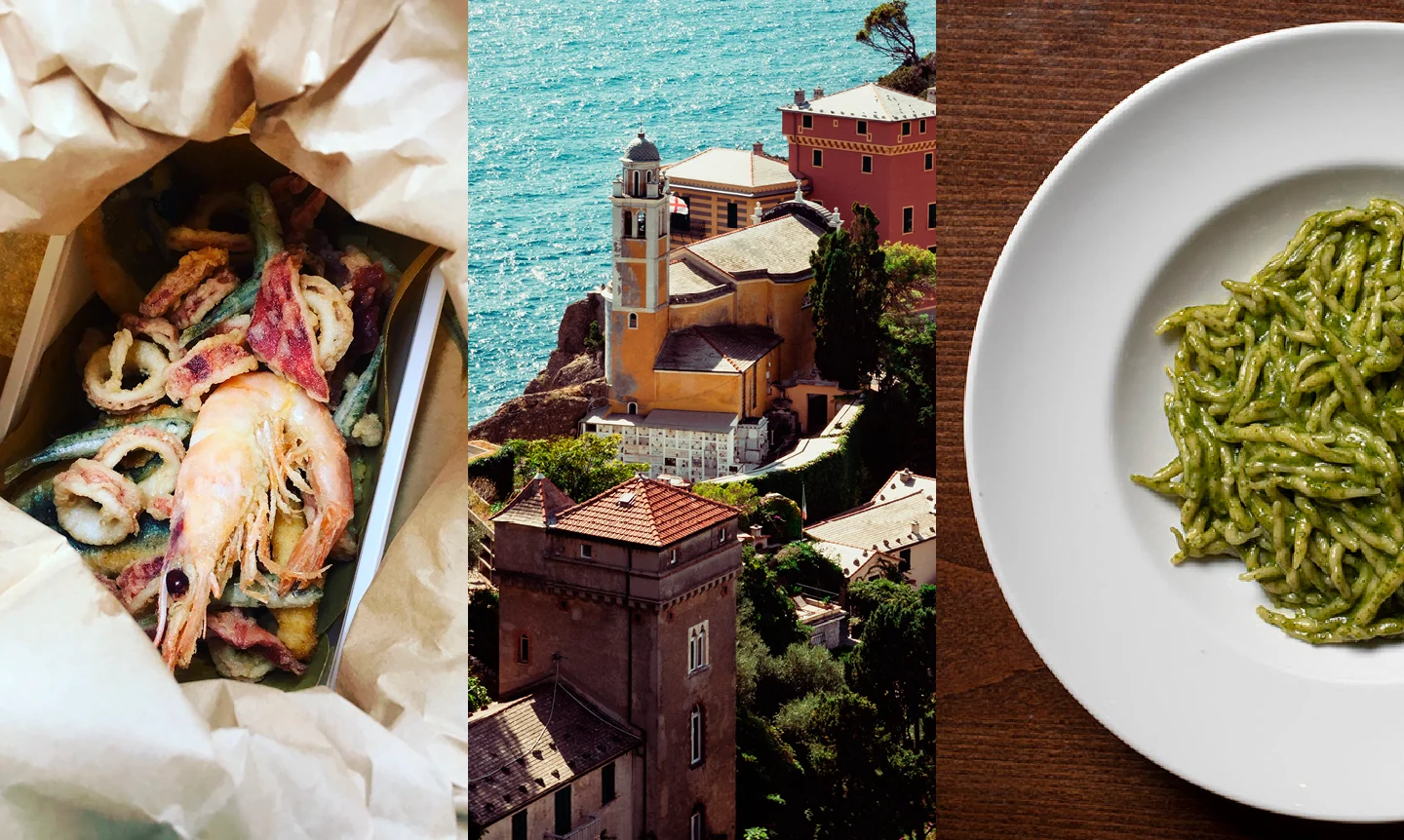
The largest city on the Italian Riviera, Genoa has long been outshined by its more picturesque neighbors, the glamorous beach resorts and pastel-hued fishing villages found just beyond the bustling port. Despite the city’s many attractions—its stately palazzi and art museums, its well-preserved medieval center—Genoa is forever being discounted for what it lacks: the Renaissance history of Florence, say, or the romantic splendor of Venice.
But these days, there’s a fresh energy blowing through the ancient carrugi, as the city’s mazelike alleyways are called in the inscrutable Ligurian dialect. A project to revitalize the port area—orchestrated by Renzo Piano, a native son of the city—has the place abuzz with activity. The shopping district is now lined with stylish boutiques and design shops. And a new generation of Genoese are revisiting the region’s culinary heritage, from its famous focaccia and pesto to lesser-known specialties of the territory—reason alone to give the city a second look.
Often referred to as la cucina povera, or the food of the poor, the culinary traditions of Genoa are still evident in the city's thriving street food culture, but also reflect the region's terrain: steep hills tumbling into the Mediterranean Sea. With little land to raise livestock, the resourceful Genoese instead transformed what was abundant—the fragrant basil and wild herbs in the hills, plentiful acciughe (anchovies) in the sea—into a culinary canon that today can be sampled in both old-school and new-school interpretations. As they say in Genoa: Buon pro’!
Focaccia
Old school: Panificio Mario
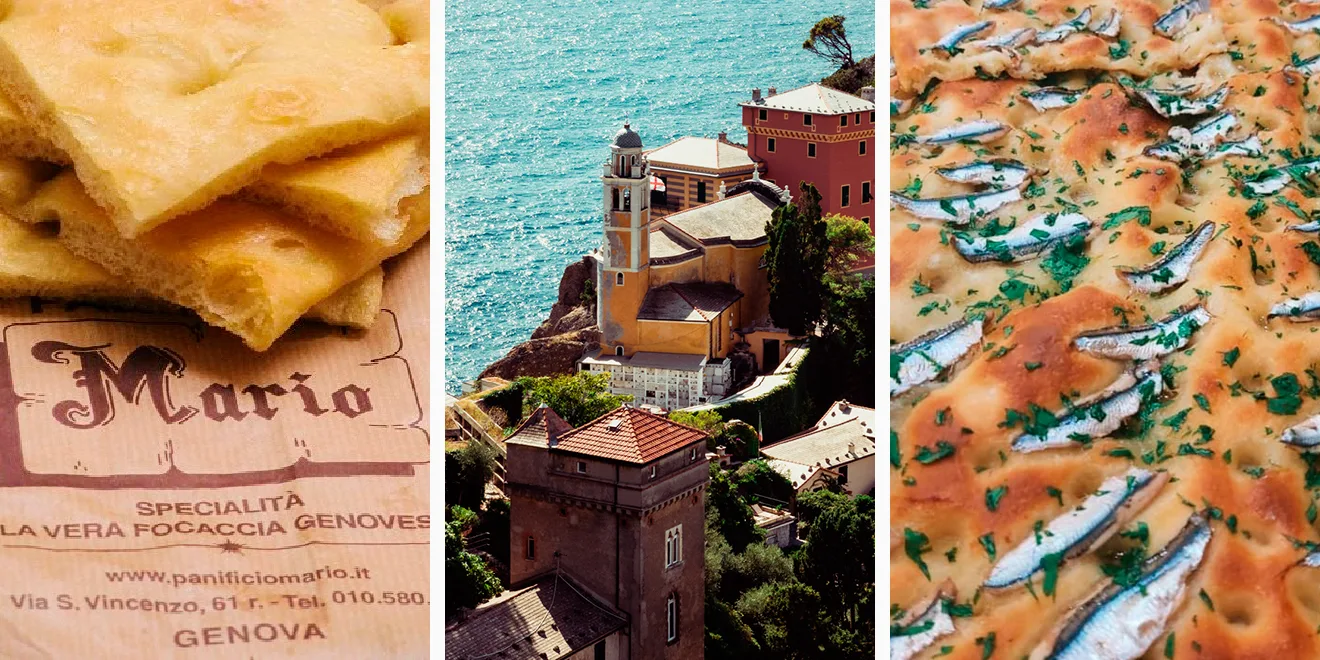
Dimpled and golden brown with a light sheen of olive oil, the classic focaccia Genovese has both a crisp, salty exterior and a soft, chewy interior. Every Genoese has an opinion on where to find the best fügassa, as focaccia is called in the regional dialect, but at the top of many lists is Panificio Mario, a historic bakery on a pedestrian street near Brignole train station. At this family-run panificio, the highlight is the traditional, unadorned focaccia, which is baked throughout the day to ensure that your afternoon snack is as fresh and fragrant as the morning piece that locals buy to dip in a cappuccino.
New school: Il Focaccino
These days, even the most traditional bakeries offer a few varieties of focaccia with toppings like pesto, olives or gorgonzola. But some are going further. At Il Focaccino, a long narrow shop in the Foce neighborhood, the young staff cuts fresh slices of focaccia, crowned with figs and salami, eggplant and Parmigiano, salsiccia and leeks, for their many regulars, from retirees to teenagers who pop in before heading to the beach. Traditionalists will also find classic focaccia in the mix, as well as the delicate, cheese-filled focaccia di Recco, another regional delicacy.
Pesto
Old school: Baccicin dü Carü
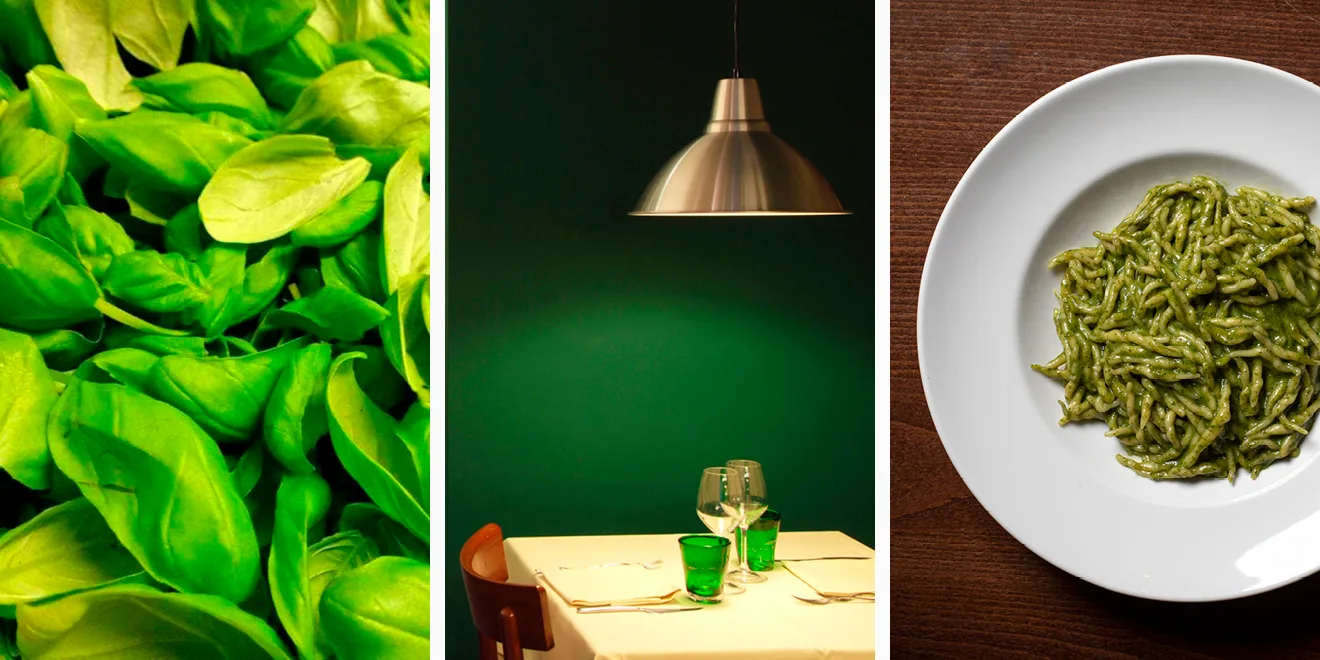
Up in the hills west of the city, osteria Baccicin dü Carü has the feel of a nonna’s home, with its lace curtains and familial atmosphere, and has long been revered for its superlative pesto di mortaio, made by hand with a marble mortar and pestle. The seemingly simple recipe—just fresh basil leaves, pine nuts, garlic, Parmigiano, pecorino Sardo and Ligurian olive oil—melds into a vibrant, bright-green sauce. Try it atop the pillowy gnocchi or the house-made taglierini di borragine, a Genovese specialty made with wild borage, an herb native to the region that gives the fresh pasta a light green hue.
New school: Trattoria Rosmarino
Blending modern culinary techniques with respect to tradition, Trattoria Rosmarino quickly established itself as one of the finest restaurants in the city for Genovese cuisine. Steps from Piazza de Ferrari in the city center, this stylish trattoria, with industrial pendant lights and green leather banquettes, sources ingredients from small local producers, including fresh basil from the village of Celle Ligure, garlic from nearby Vessalico, and olive oil from the Ligurian Riviera. The smooth, aromatic pesto—made in a blender—is dolloped on small twists of pasta native to Liguria, called trofie, as well as swirled into minestrone Genovese.
Farinata
Old school: Antica Sciamadda
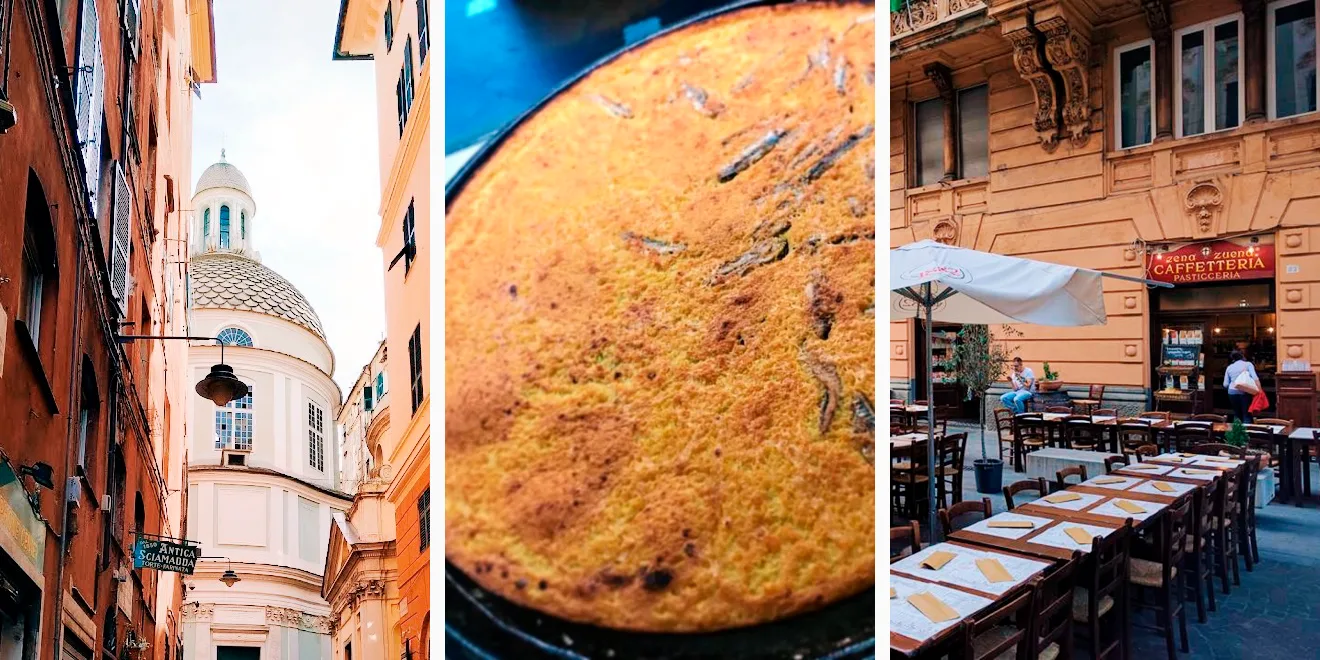
Crucial to the canon of Genovese street food, farinata is a thin pancake made with chickpea flour, water and olive oil. One of the oldest vendors in the city, Antica Sciamadda has been slinging round copper pans into a wood-fired oven since 1850. Located on a shady caruggio in the centro storico, this no-frills spot is the place to grab a piping-hot slice of crisp farinata for a quick lunch or on-the-go snack.
Via S. Giorgio, 14R