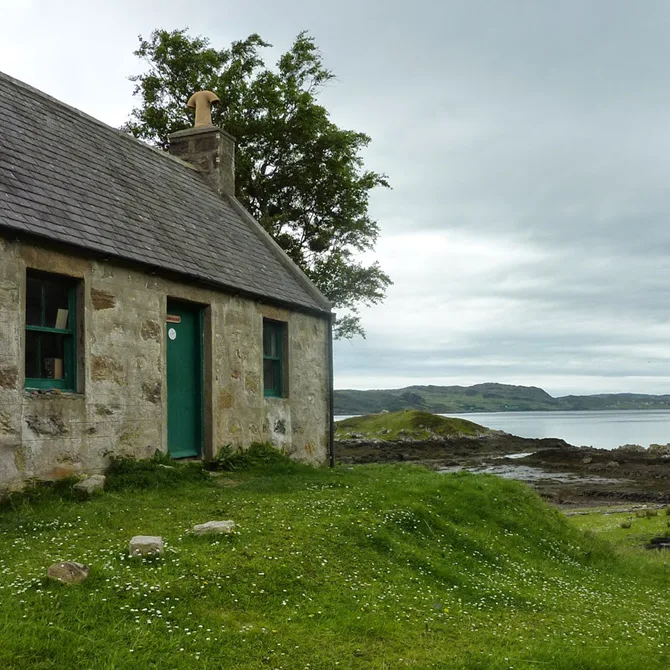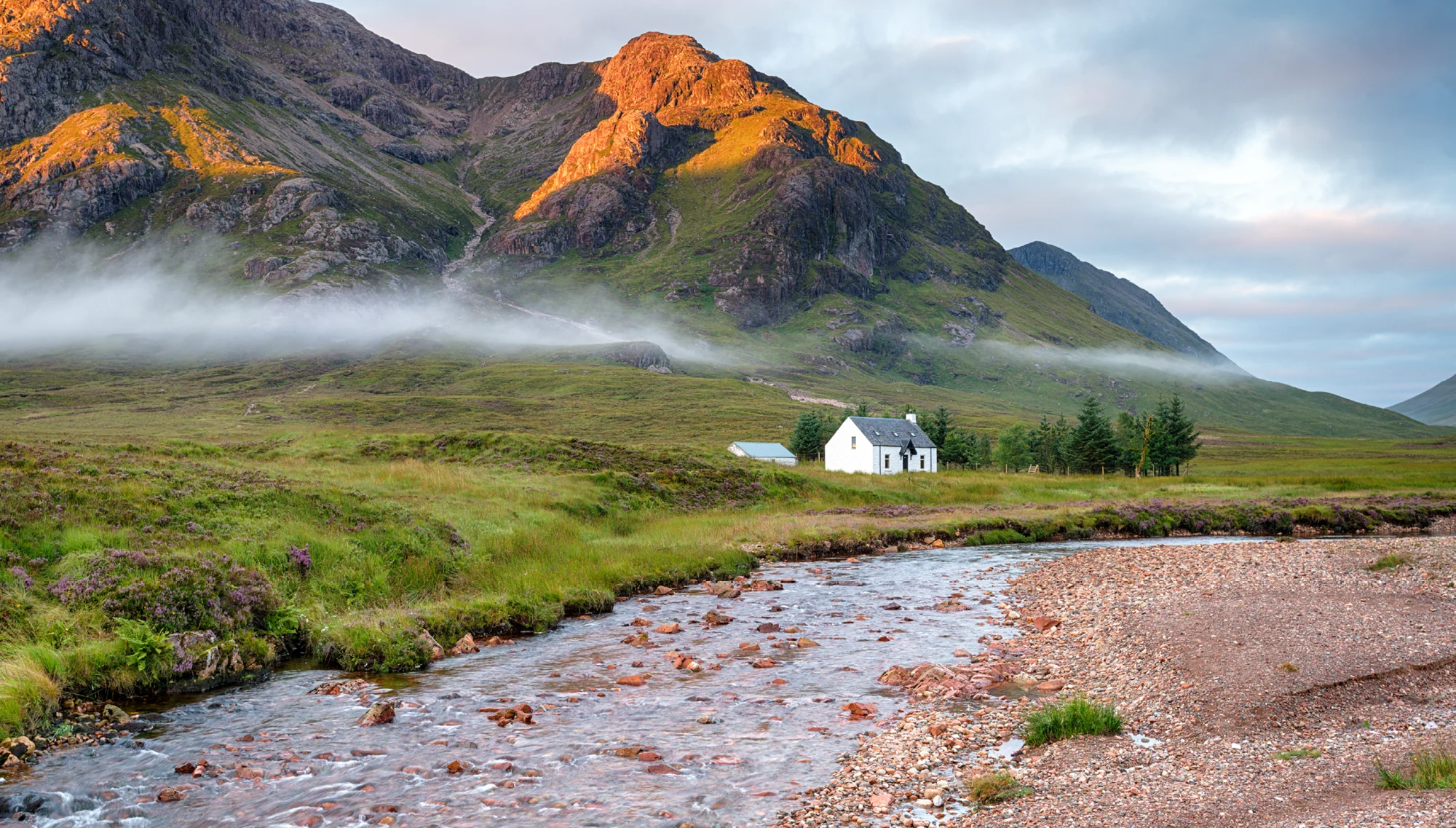
Travel through Scotland’s ranging, magisterial landscapes and you’ll inevitably come across the rustic cottages and historic crofts known to locals as “bothies.” They’re typically the most basic of shelters—offering a roof overhead and a hearth to keep warm by. Traditionally, they’re available free of charge or by reservation, but require skill and a keen eye to find.
In centuries past, bothies were home to gamekeepers, shepherds, farmers, and fishermen. Now they provide a welcome refuge to intrepid hikers and travelers enjoying the Scottish “right to roam” and seeking a measure of tranquillity amid remote glens, on craggy cliffs, or by beautiful lakes.
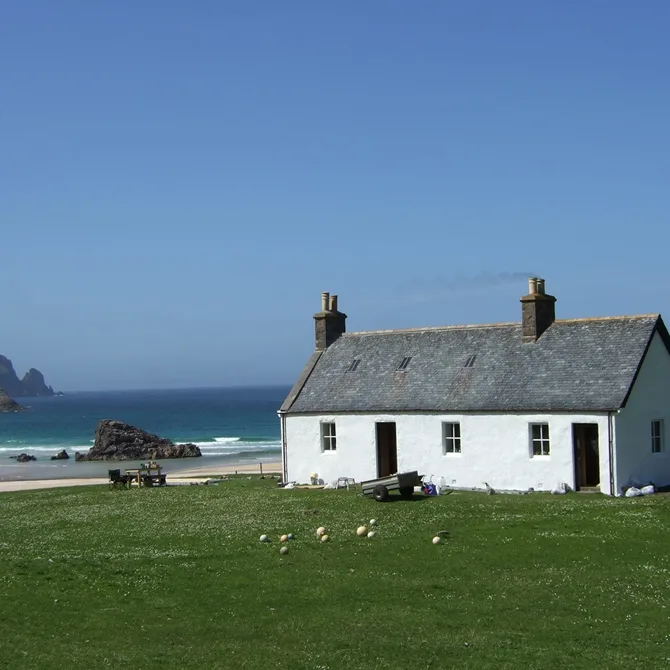
KEARVAIG
In Cape Wrath, at Scotland’s northwesterly edge, cormorants, puffins, and kittiwakes breed on the same cliffs that Vikings used for navigation more than a thousand years ago. A short walk from there is a secluded cove with its own whitewashed bothy and pristine beach. This is Kearvaig bothy, a former hunting lodge built in the late 1800s when the area was home to crofting communities, shepherds, and fishermen—now all long gone.
The living quarters of the cottage are generous, with an old parlor, adjoining apartment, and attic rooms. Seasonal visits offer vastly different experiences: rise early in summer to let the waves slowly lap at your feet, or venture here in autumn to find solitude by the granite hearth.