The Taj Mahal Palace has become synonymous with much more than maharajas and movie stars during its storied lifetime. Kendall Hill recalls his many visits to the hotel, including during one of its most tragic hours.
It took a tragedy—two in fact—before I grasped the significance of the Taj Mahal Palace to Mumbai.
When I first set foot inside its marbled, mosaicked, and chandeliered extravagance in 1987, I hadn’t the faintest idea what the hotel symbolized beyond sublime luxury—two words rarely used to describe Mumbai. I was seeking an escape from the teeming masses and noisome streets of this wonderfully berserk city and found it in the chilled, perfumed air of the Taj. It was, still is, and always has been a paradise amid the pandemonium.
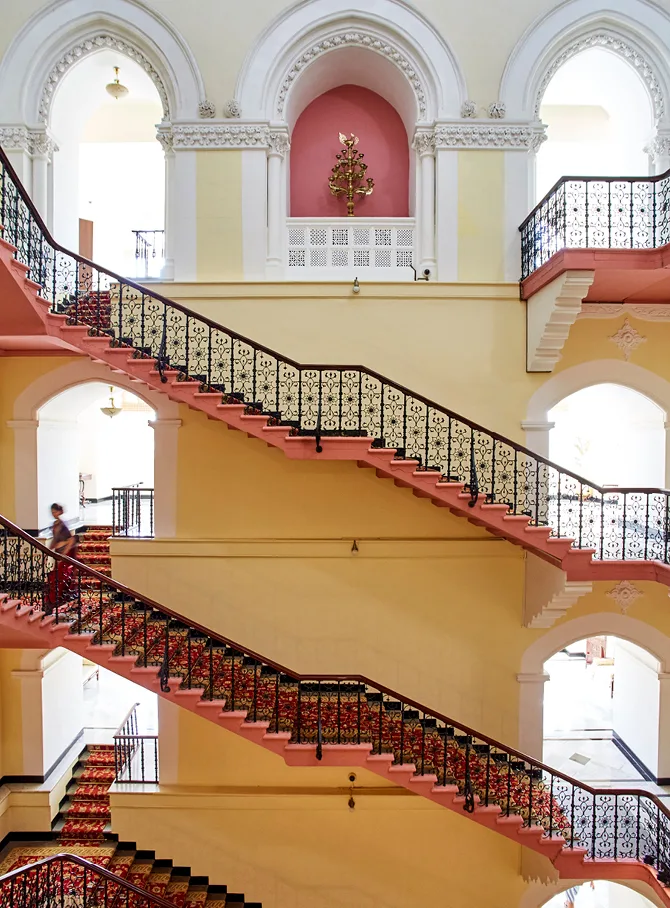
The cantilevered Grand Staircase. Photo: Gentl & Hyers
The hotel has been a constant of my many return visits to Mumbai. Usually I drop by for a long G&T at the Harbour Bar, holder of the city’s first liquor permit, issued circa 1933. But I have also stayed there, both in the blandly corporate 1970s tower block and in the 1903 palace hotel, Mumbai’s most envied address.
And I have dined there many times, most notably on August 25, 2003, the same day two car bombs exploded in the city—one across the road at the Gateway of India; the other some two miles north at the swarming Zaveri (Jewelry) Bazaar.
I was due to meet a local tourism chief for dinner at the hotel, but after the bombs, which killed fifty-two people and injured 300, I called to suggest we postpone. He wouldn’t hear of it.
So that evening I skirted broken glass and a lurching chandelier above the porte cochère to join him in the Taj’s Golden Dragon restaurant at 8pm. Behind boarded windows we ate king prawns and salt-and-pepper water chestnuts as he assured me that India is “… one of the safe destinations. We may fight against each other but we treat the tourist like the god.”
Far more deadly and crippling were the 2008 attacks by the Pakistani terrorist group Lashkar-e-Taiba that paralyzed Mumbai for three days. There were twelve strikes but the epicenter of the murderous rampage was the Taj Mahal Palace, where six bombs exploded and fires raged, gutting parts of the hotel and leaving thirty-one dead (166 in total across the megacity). The terrorists realized that if they wanted to bring India’s economic powerhouse to its knees, they must pierce its heart.
*
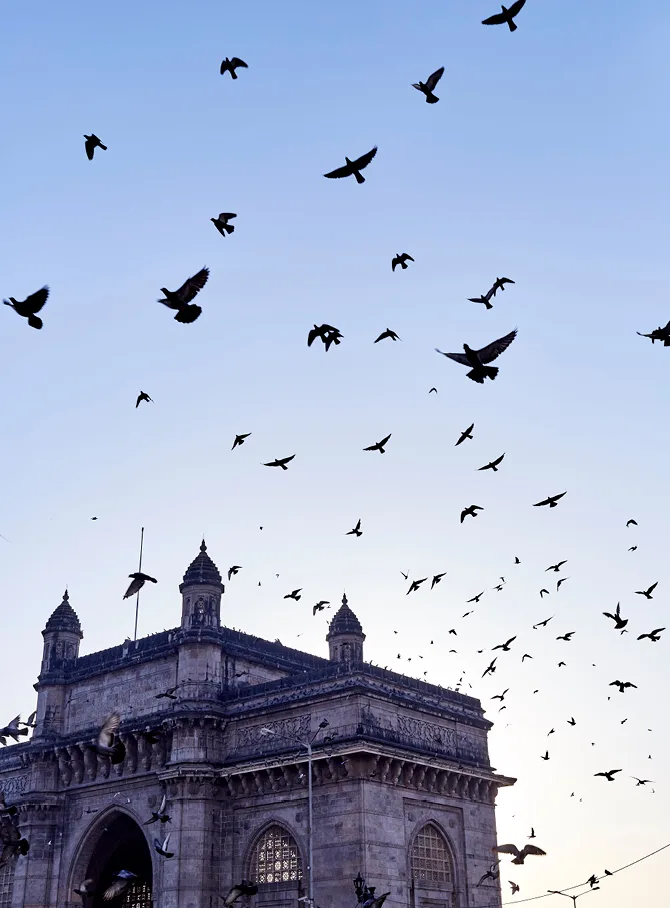
The Gateway of India neighboring the hotel. Photo: Gentl & Hyers.
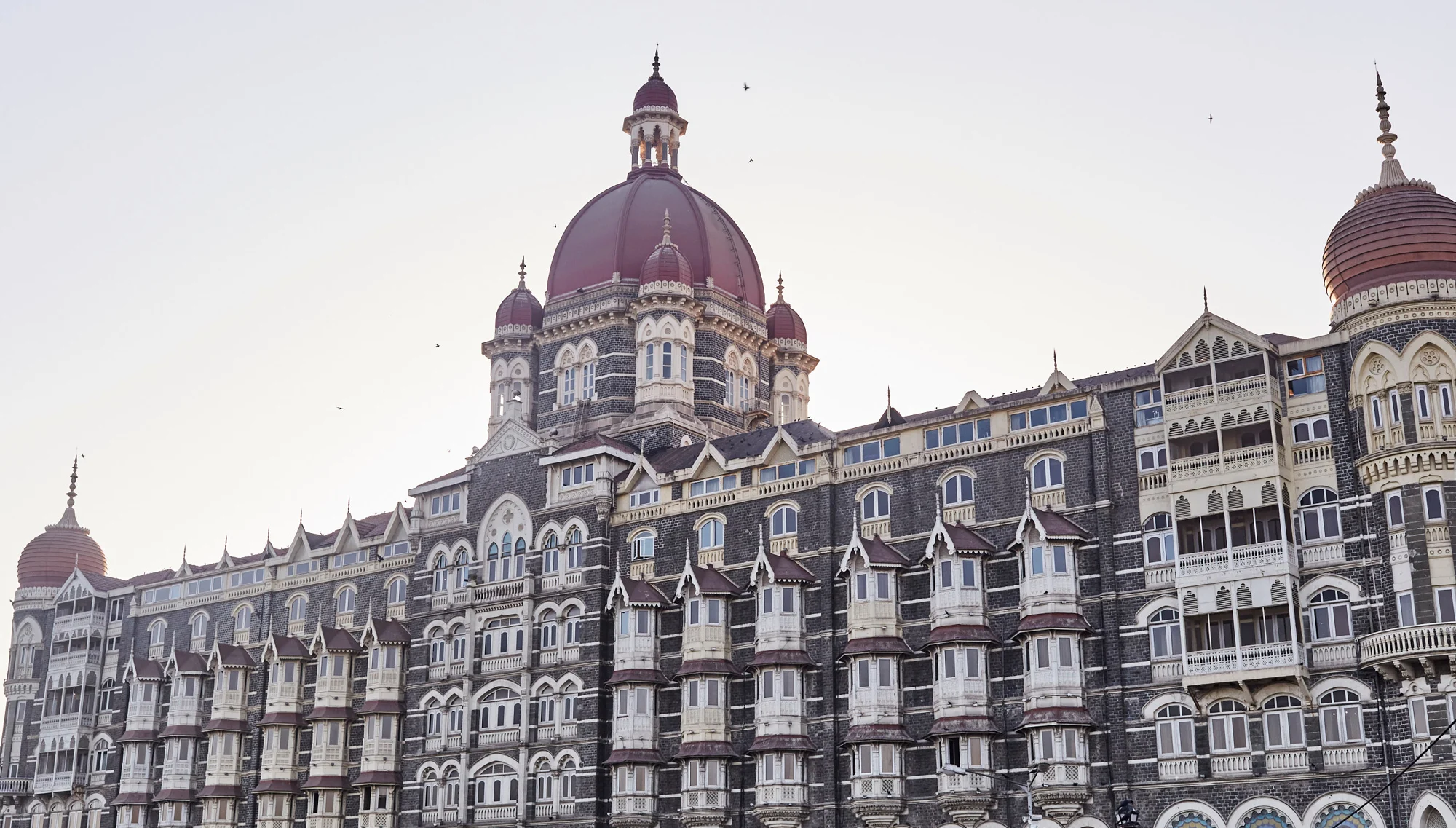
On any normal day, crowds throng Apollo Bunder to gaze longingly at the hotel’s glorious seafront facade—cobbled grey, red domed, neo-Gothic, and so distinctive that in 2017 the Taj Mahal Palace became the first property in India to trademark its image. All these onlookers dream of one day setting foot inside. But for days after the attacks, people gathered outside and cried.