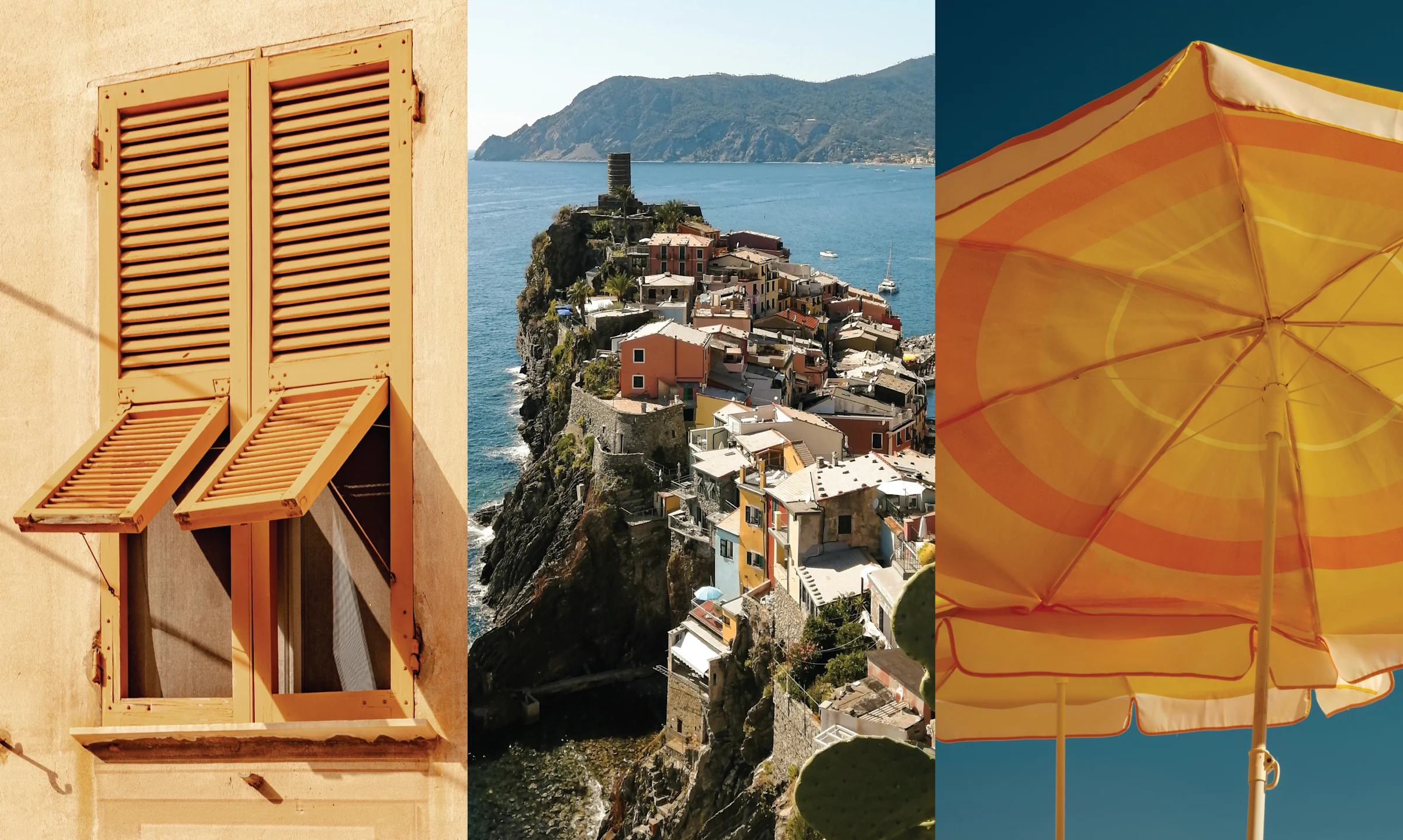
The Italian Riviera lives large in the imagination, not only for Italophiles in search of a storybook escape, but also for Italians, who return year after year chasing the nostalgia of summer's past. This slender crescent of coastline curves between the foothills of Tuscany and the French border, plunging from the misty wine country of Piedmont to the glimmering Ligurian Sea below. At its heart lies Genoa, decadent, crumbling, and once one of the world’s most powerful maritime republics. While the city is quietly reviving beyond its status as a pesto pilgrimage, it’s the string of seaside towns that continue to enchant.
Snaking perilously between the beginnings of the Tuscan foothills and the French border, the region is split in two: the Riviera di Levante to the east and the Riviera di Ponente to the west, with Genoa as its anchor. In the Levante, you’ll find baroque hilltop churches, literary history, and villages shaped by myth. In the Ponente, faded belle époque grandeur meets Roman relics, olive groves, and sun-bleached art nouveau villas.
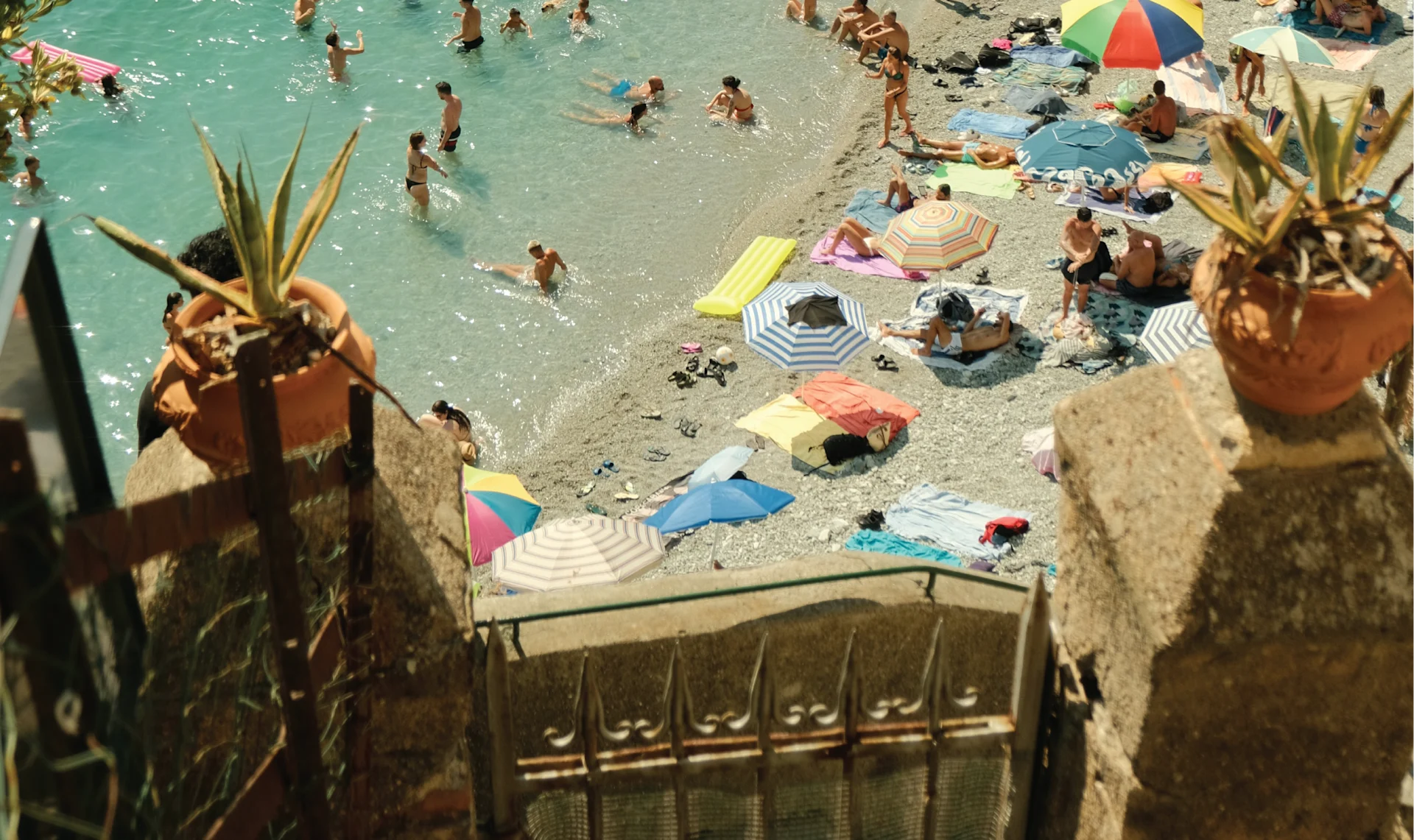
More than perhaps even the Amalfi Coast, Liguria has defined the image of the Italian seaside town. And unlike Amalfi where foreign crowds dominate and post-pandemic prices have risen sharply, Liguria remains accessible and deeply Italian. Portofino, the most famous, is often mistaken for being part of the Amalfi Coast, and understandably so: its jewel-box harbor rivals Capri’s glamour. Then there’s the Cinque Terre, impossibly picturesque, though now often overrun. Yet it’s in the lesser-known towns that the true spirit of Liguria endures.
Take a romantic trail through nine towns still largely untouched by a certain type of tourism, where to swim, savor, and sleep along these charming shores. Starting in the Levante and winding westward, this path reveals the region’s shifting moods, flavors, and rhythms as it approaches the French border in search of an idea of summer past.
Levante (Eastern Liguria)
Tellaro
The Gulf of Poets, named for the Romantic-era writers who found inspiration here, Tellaro once played host to Lord Byron, who famously swam across the bay from Portovenere, and to Percy and Mary Shelley, who lived nearby. This quiet fishing village, with its pink and ochre buildings and tightly packed stone alleyways, feels much the same as it did two centuries ago.
Where to stay and swim
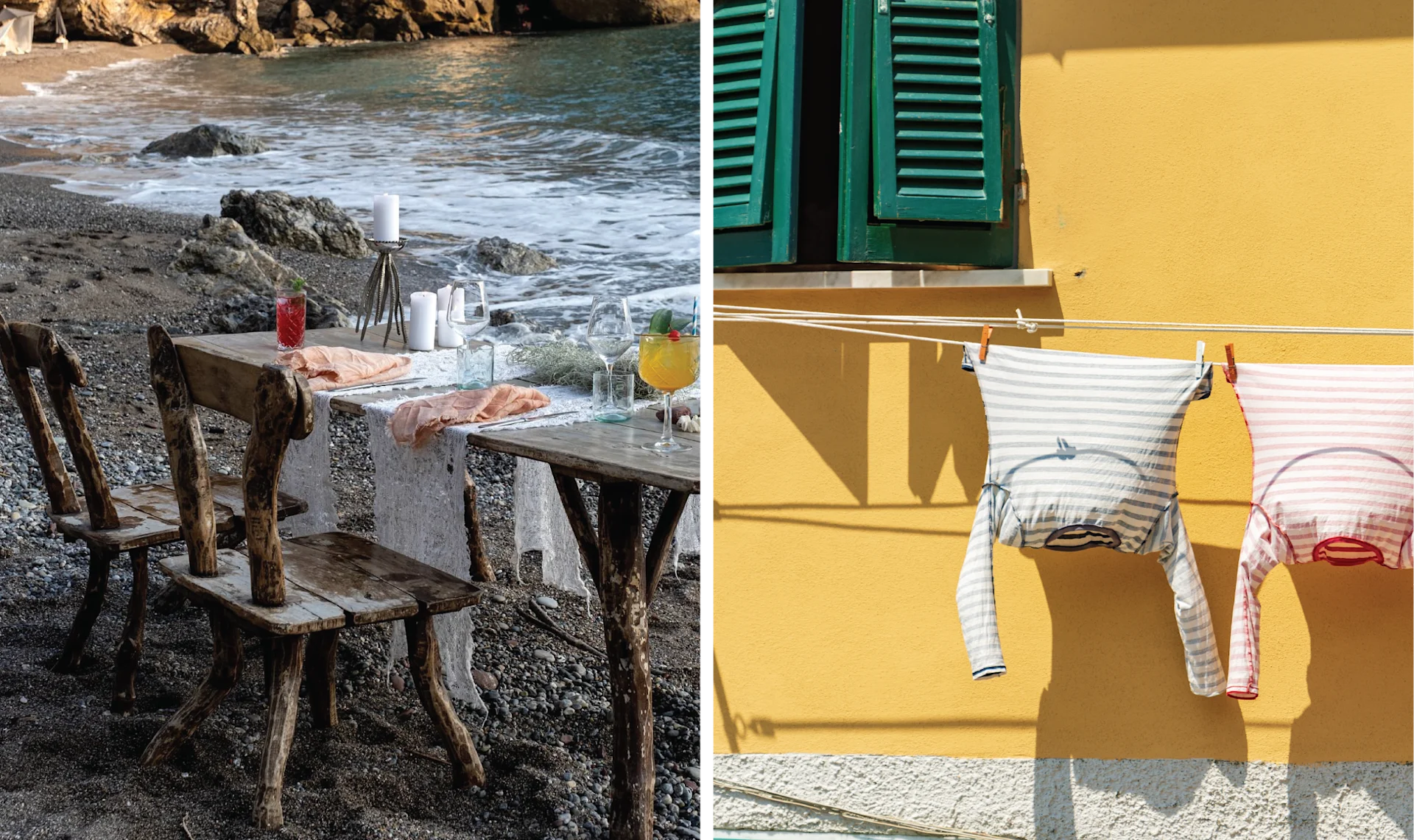
Eco del Mare hotel and beach club, a private pebbled cove framed by cliffs and pines and accessed by stone steps from the road above, was captured in a now-iconic image by photographer Luigi Ghirri. The hotel offers an understated luxury charm with just six rooms - think linen-draped beds, carved stone terraces, and the sound of surf just beyond your door.
Where to eat
La Barca is known for its bay views and elevated takes on local seafood like mussels in vermentino or the region’s signature, trofie al pesto. This refined osteria on the second and third floors of a building on the town’s main square. It is recognisable only by its hand-painted sign that simply reads “ristorante” and if you let your imagination go wild enough you’ll also find a town perhaps most reminiscent of the Pixar film Luca with it’s simple pleasures in daily seaside life.
Sestri Levante
A peninsula split between two seas: Baia del Silenzio (Bay of Silence) and Baia delle Favole (Bay of Fables). Legend has it that the town inspired Danish author Hans Christian Andersen to write The Little Mermaid.