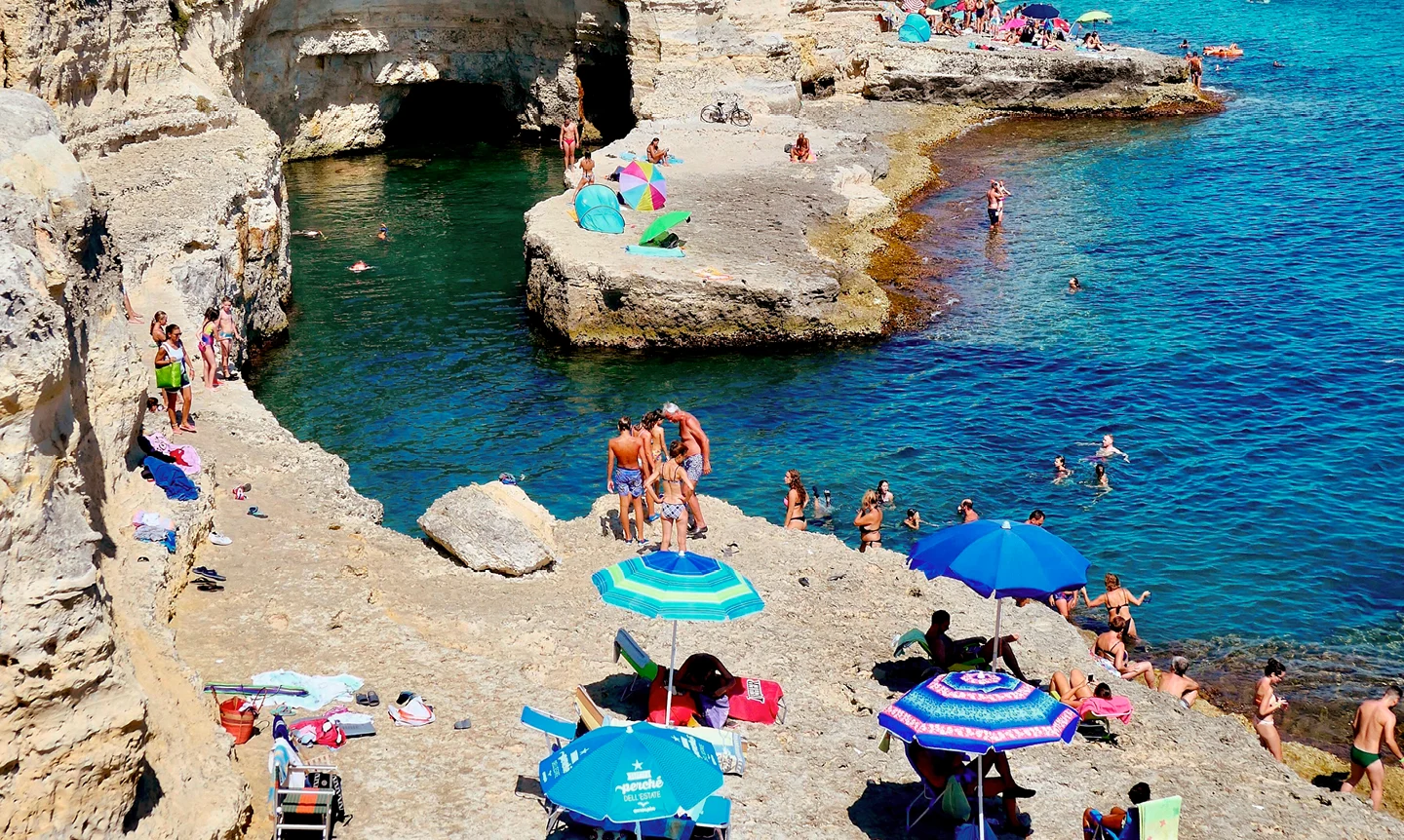
Over the last few years, the heel of Italy’s boot has come onto the radar of beach-going travelers, thanks to a clutch of swanky resorts, but Puglia has long been a favorite summertime destination for in-the-know Italians. Jutting out from the peninsula, it touches both the Adriatic and Ionian Seas, which swirl together dramatically at Santa Maria di Leuca on Puglia’s southernmost tip. Up and down the coast are whitewashed villages that look plucked from the Greek islands, endless fields of olive trees, vineyards, large stretches of sand, and hidden coves. The beaches range from wide stretches of sand to wild nature reserves, many of which have earned the prestigious Blue Flag designation, awarded to the most pristine beaches around the world.
But there’s more to Italy’s famous beach culture than just the natural beauty. Italy’s beach clubs— known as stabilimenti balneari—have been attracting sun-seekers since the first one opened in 1827. From the simplest ones, where you can rent basic lounge chairs and umbrellas by the day, to elaborate set-ups with DJs and drinks, they’re an essential part of Italian culture. Now though, pressure from Brussels and the European Union has mounted, with critics citing a lack of competition, poor service, and high prices. In response, Prime Minister Mario Draghi has agreed to terminate all of Italy’s beach concessions next year and hold auctions for new ones, leading some to worry that Italy’s mom-and-pop stabilimenti balneari— some of which have been family-run for generations— will be outbid by multinational corporations. Before that happens, though, you can still find some of the best beaches— and stabilimenti balneari—in Puglia, Italy’s beach destination par excellence.
Capitolo
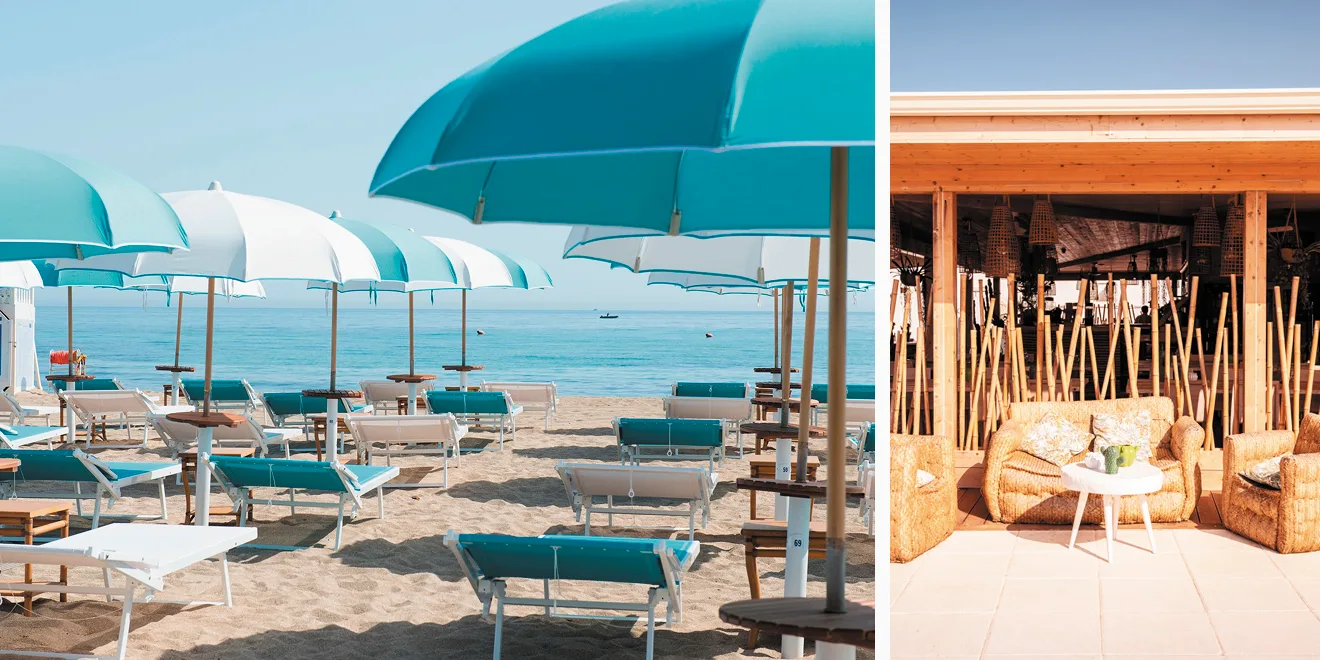
A stretch of azure water and white sand beach on the Adriatic coast near Monopoli, this beach is the place to go when you want to be pampered. Swanky beach clubs like Le Palme and Lido Bambù draw affluent travelers with their plush sunbeds and gourmet restaurants. The former has a range of options, including private cabanas and oversize sun loungers with mattresses. The latter is run by Rocco Forte Hotels, which operates the five-star Masseria Torre Maizza hotel nearby, and features an all-day dining menu of local specialties curated by lauded chef Fulvio Pierangelini.
Punta Prosciutto
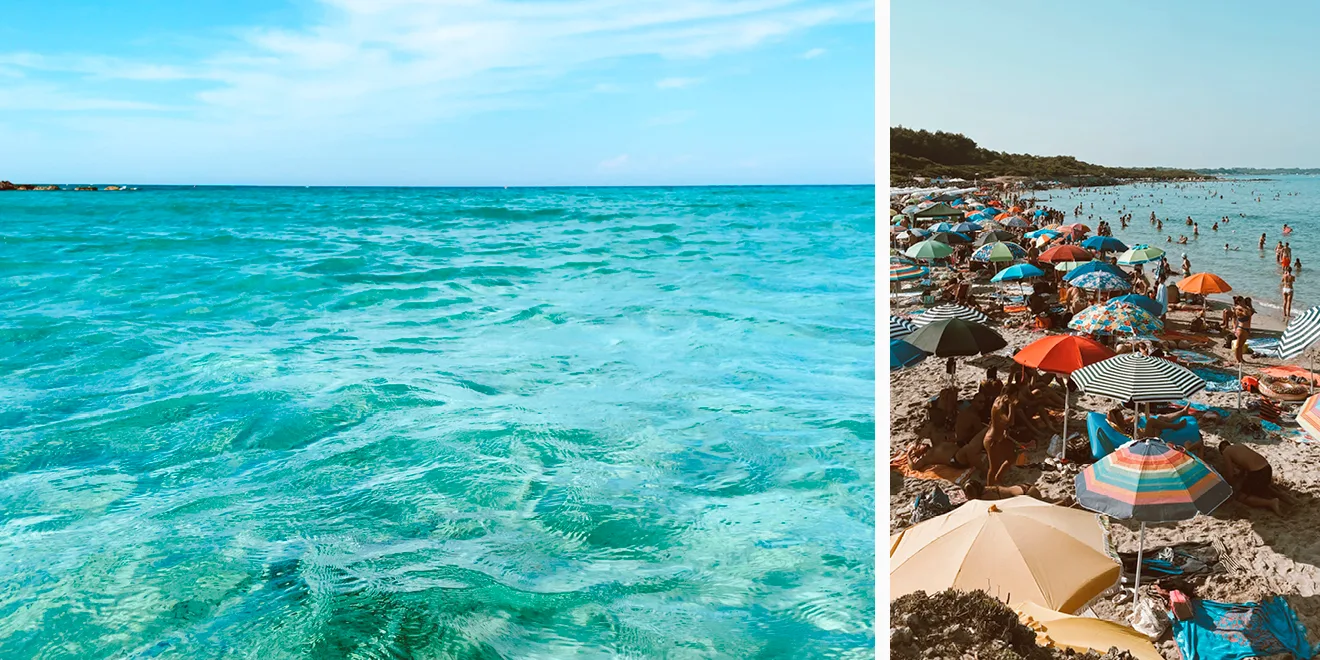
When the sea is agitated on the Adriatic side, locals swear by the beaches on the Ionian side, where the water is always calm. One of the best beaches on the Ionian side is this stretch of sand and crystalline water just ten kilometers from Porto Cesareo. Just a few minutes away is Salina dei Monaci, a nature reserve with salt flats and pink flamingos.
Pescoluse
Sometimes called the Maldives of Italy, this Blue Flag beach spreads over 2.5 miles, with undulating dunes. Located on the Ionian side about 15 minutes from Puglia’s southernmost tip, this picturesque beach has shallow water and is surrounded by vegetation, including acacias and white lilies. There are plenty of beach clubs here, plus opportunities to explore the sea by boat.
Baia dei Turchi
Located between Otranto and Alimini Lakes, this bay’s name alludes to an invasion by the Ottoman Turks in 1480. The wild coastline is protected by FAI (the Fondo Ambiente Italiano) and can only be reached by foot. Once you arrive, you’ll find powder-fine white sand and turquoise water. Luxury-seekers can stay at the newly-open Baglioni Masseria Muzza, which has a guests-only beach club equipped with sunbeds and umbrellas.
Punta della Suina
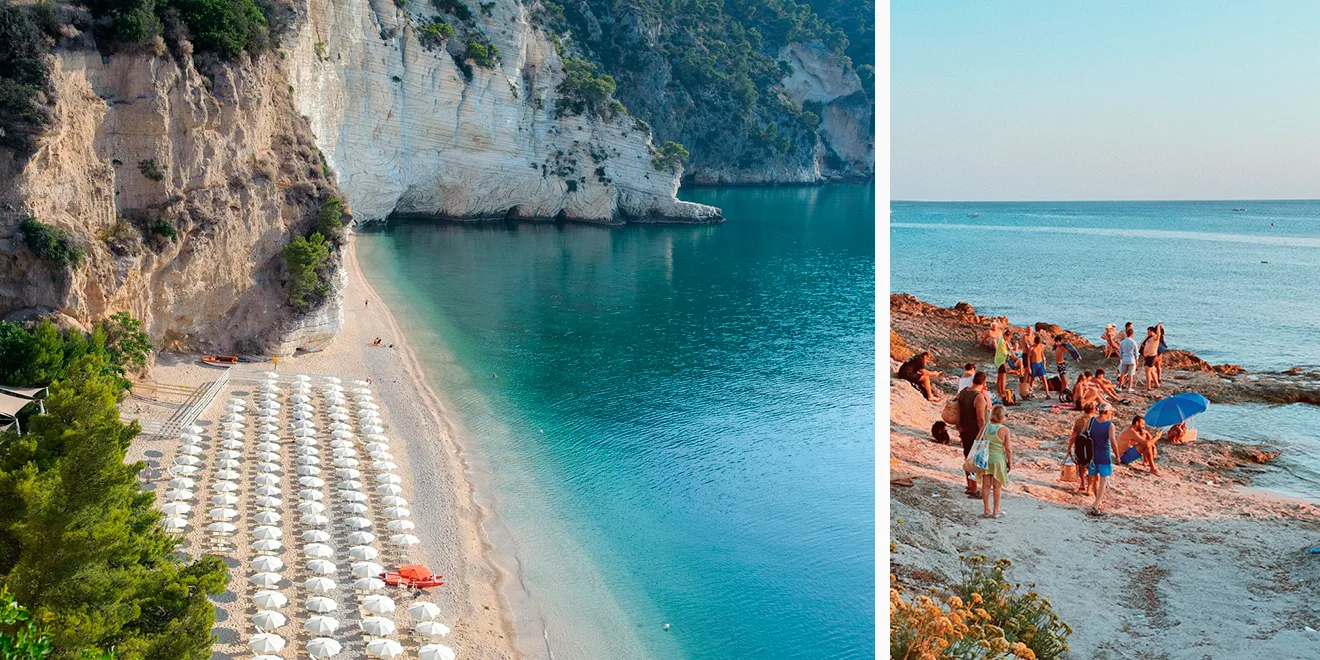
Featured in the film Mine Vaganti, this beach boasts water so turquoise you’d be forgiven to think you’re in the Caribbean. Located near Gallipoli on the Ionian coast, it’s characterized by rocky outcroppings that stretch into the sea as well as sandy coves lapped by calm waves.
Baia delle Zagare
Located in Gargano National Park, this peaceful bay is famous for its two limestone sea stacks jutting out of the sea. It gets its name from the orange and lemon trees that perfume the landscape (zagara means orange blossom in Italian). One of the sea stacks is called Arco Magico because, as legend has it, it brings good luck to whoever swims through it. The beach clubs are accessible to guests of hotels like the Hotel Baia delle Zagare, which was established by a young sailor in 1957.