It really takes something for a cookbook to catch my attention these days. There are so many wonderful cooks with heartfelt works, from piles of intimidatingly perfect chef monographs to books for every technique. My shelves became too packed with familiar names and my kitchen too small to absorb all their recipes. I now content myself with perusing the food section of my local bookstore in New York for a couple of hours each new cookbook season. Yet Parwana immediately caught my eye. First, there is the impossible-to-ignore color palette that grabs you, then the shock that it is about Afghan food (something I had never read about, let alone tasted), and then, lastly, that it found its way to the US from suburban Adelaide, Australia, of all places. It is there that the author, Durkhanai Ayubi, and her family opened a restaurant in 2009, after leaving Afghanistan during the Cold War in 1985. I needed to know more, and so here within is my chat with Ayubi.

To me this is not just a “cookbook,” but also a quite didactic history of Afghanistan. Yes, it ultimately intersects with your family history but actually the recipes feel more like punctuation points in the wider story of the Afghan people. That structure really surprised me, to be honest: I thought the words would be a personal reflection of an immigrant family and recipes from their neighborhood restaurant. But it is so much more than that. Can you explain why you took that approach?
For me, it was super important to write an account of Afghanistan that took it beyond the superficialities that kind of dominate its narrative in our world today. I grew up knowing it intrinsically, having a connection to my own culture and ancestry. When you're told, “You don't know the ins and outs,” you just know there's something more. And then my teenage years were in the post–September 11 world, when the world was all about Islamophobia and this war on terror takes over and dominates the narrative about Afghanistan and the Middle East. I knew that there was a story that transcended far beyond the last 20 or 40 years of narratives of Afghanistan.
I thought, If I'm going to write this book, I want it to be a book that ties together this immense, glorious history of Afghanistan, that makes the food as palatable and as familiar and as tasty as it is, and that comes from this really long history of interconnection and cultural exchange that is kind of the neglected story of how human civilization has evolved, I think. And so much of it evolved in Afghanistan.
The saying about Afghanistan is that it’s where empires go to die. Everyone has been there at some point, from the Zoastrians all the way to the Taliban. It ended the Russians and the British, the Mongols and the Mughals. How do you think all of the different empires occupying that piece of land have shaped the culture?
Basically every single kind of empire and culture that's been through there has left its mark. I think now we see the world through this lens of Western domination over everything else and there's no other space for other stories of progress or modernity or culture or civilization. But it hasn't always been like that. All those people that passed through, a lot of them stayed for centuries. And it's not to paint this rosy, nice picture of what conquest is or was, but that there were often these centuries-long intertwining of cultures and history. It's shaped Afghanistan's artwork. You can see it in the language. Afghanistan was like this spiritual hub, so all of the major base and spiritual belief systems have had really significant evolutions in Central Asia. Zoroastrianism, for example. I mean, people think that it's just this really obscure, millennia-old concept, but it underpins all the Abrahamic faiths.
The Silk Route ran directly through Afghanistan. The luxuries, the goods and the culinary and cultural exchanges that happened over the centuries on that road and maybe had their nexus there. How did that influence the food, and I'm thinking about ingredients specifically?
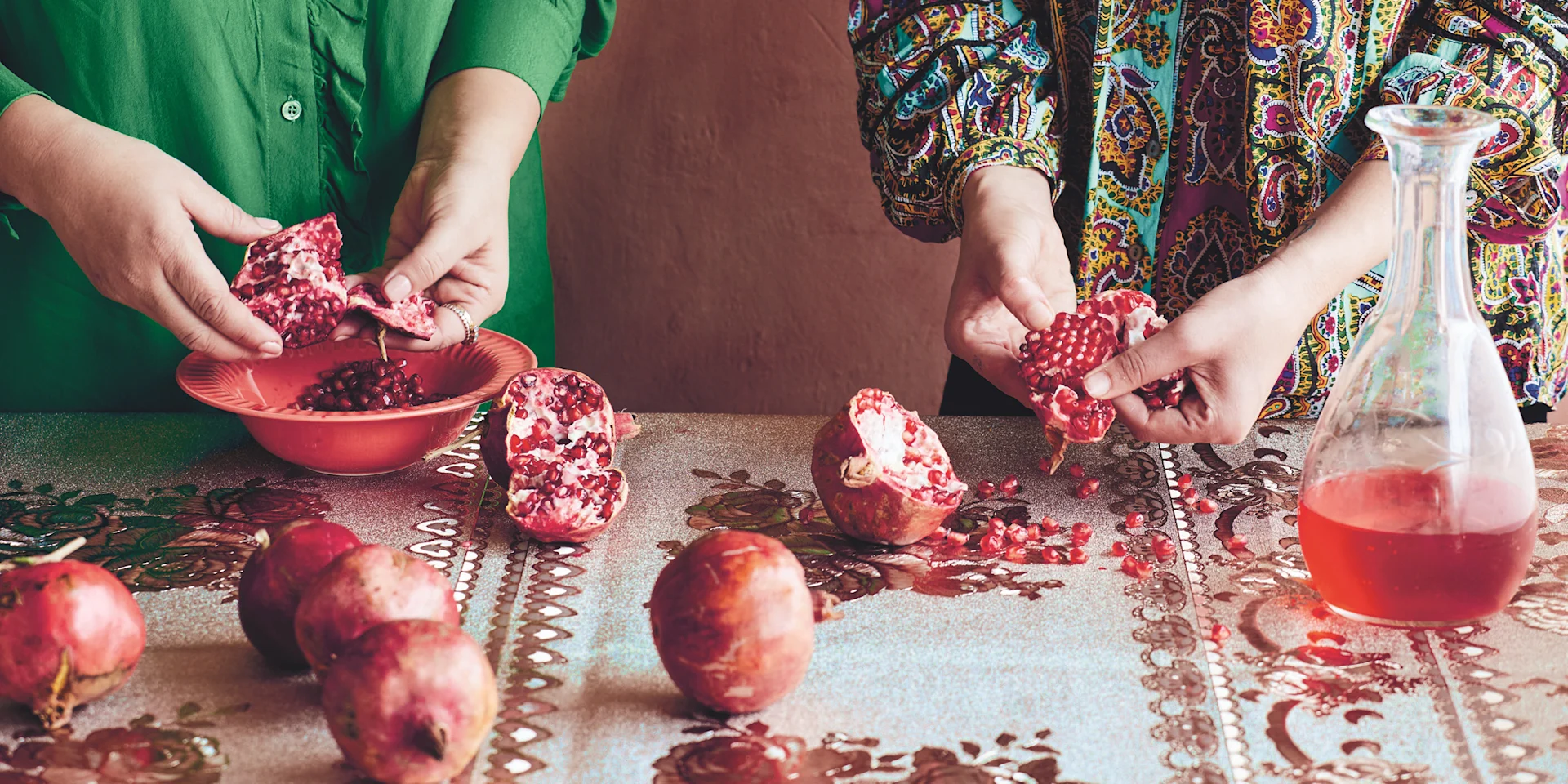
We had spices from the Spice Islands and India come through Central Asia into the rest of the world—cardamom, turmeric, cumin, those kinds of ingredients. The really warm spices that form the bedrock of Afghan flavors. But then there are also the dals, the lentils — they're a really big part of Afghan cooking — and rice dishes as well, that kind of thing from India. And then we had the influence that came from the north, which was the Chinese and Mongolian influence. That's really strong in our food, but it's blended with indigenous ingredients and indigenous flavors. The dumplings and hand noodles, that's all influenced by the Asian connection. And then from the West, from Turkey and the Middle East, there's a lot of nuts and syrupy-sweet desserts. Then of course right next door you have Persia, where you’re getting saffron and little tart cranberries and that kind of thing. It all converged and mixed with indigenous ingredients and flavors, and it creates something that almost anybody in the world can have and feel like they know a flavor or they know that dish. And I think that's a really beautiful part of Afghan cuisine: It is its own thing, but there is a comforting familiarity.