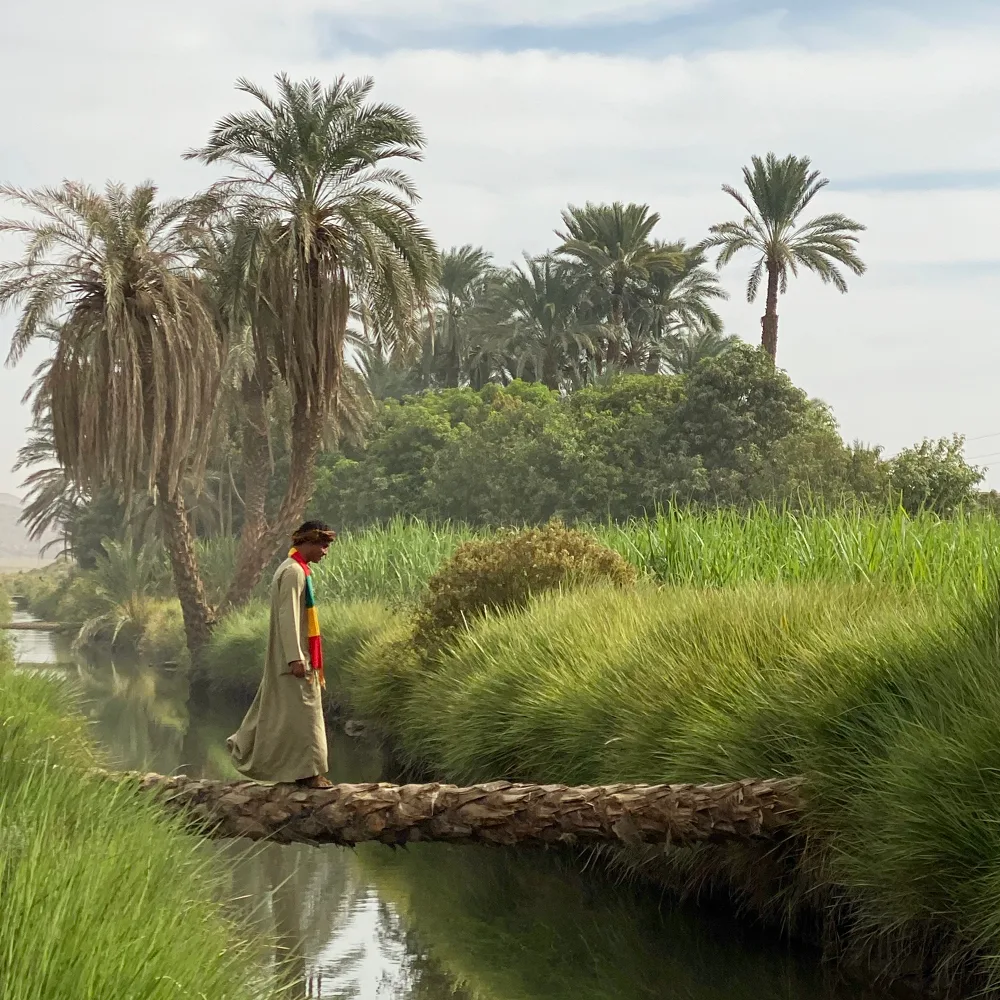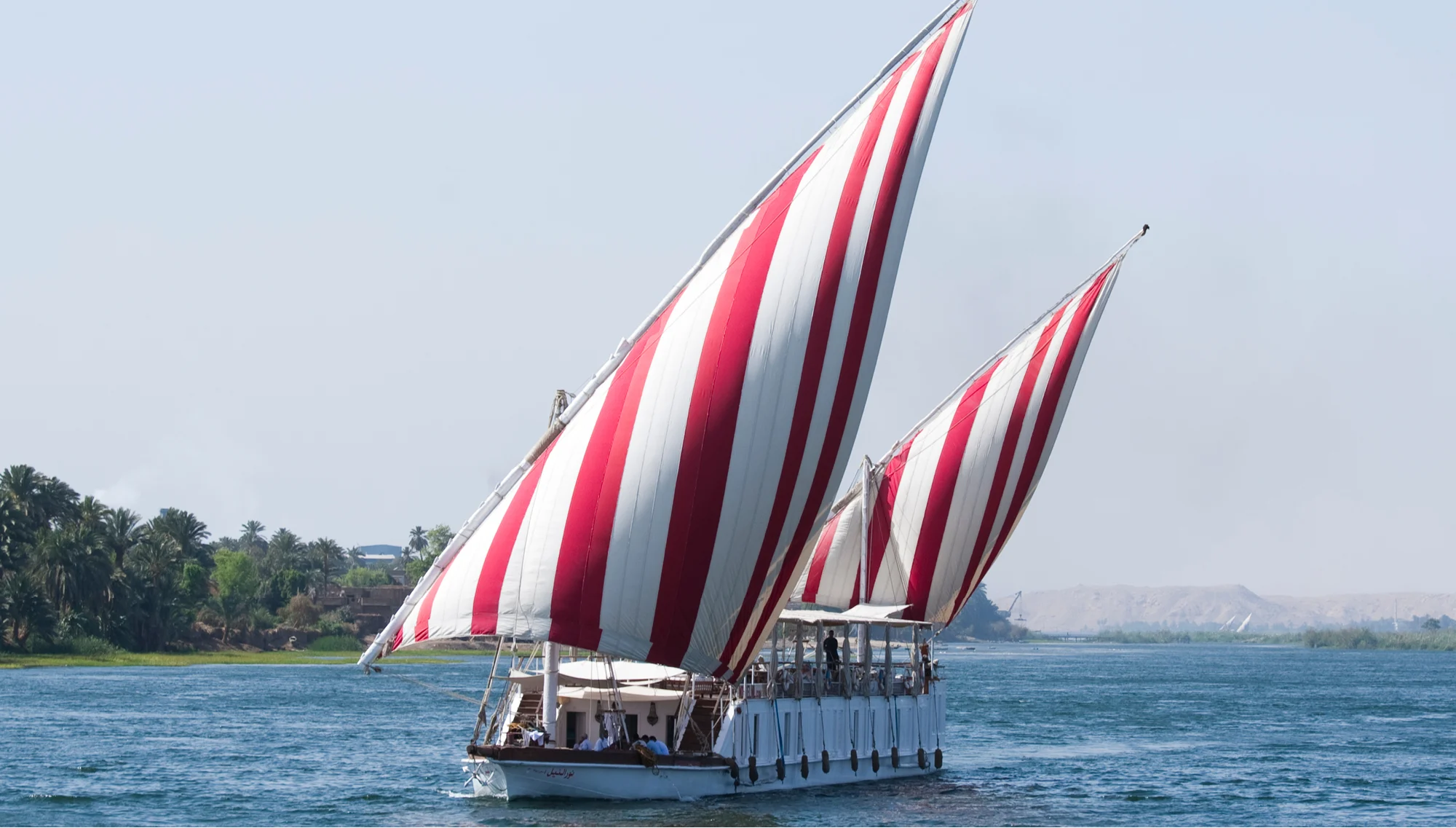
There is something about drifting on a dahabiya—a traditional double-masted sailboat with a dozen or so cabins—that makes you forget not only about the dusty chaos of Cairo, but about time itself. The dahabiya, as we’ve seen carved in low relief on the tombs of El Kab—the former capital of upper Egypt—was the preferred means of long-distance transport from the days of the pharaohs through to the aristocrats and the kings themselves during the days of the monarchy. In the late 19th century British author, journalist and Egyptologist, Amelia Edwards, was so at home on her vessel she brought her piano aboard.
Sailing from Luxor to Aswan over six days, as opposed to a three and a half-hour 150-mile drive, you experience the Nile as these ancient Egyptians and intrepid Victorians once did. About an hour into our first sail, I realize the unfolding scene has barely changed from the earliest depictions inked in hieroglyphs onto papyrus, to such an extent that the scrolls come alive as you drift down the mythical river.
We pull up to Gebel Silsileh, a rocky gorge between Kom Ombo and Edfu, a stretch so narrow it’s as if you can touch both banks. There’s something about the flatness of the light, the starkly contrasting palette of sandstone cliffs jutting out from the river’s edge against the blue sky, that seems almost too oversimplified to be real.
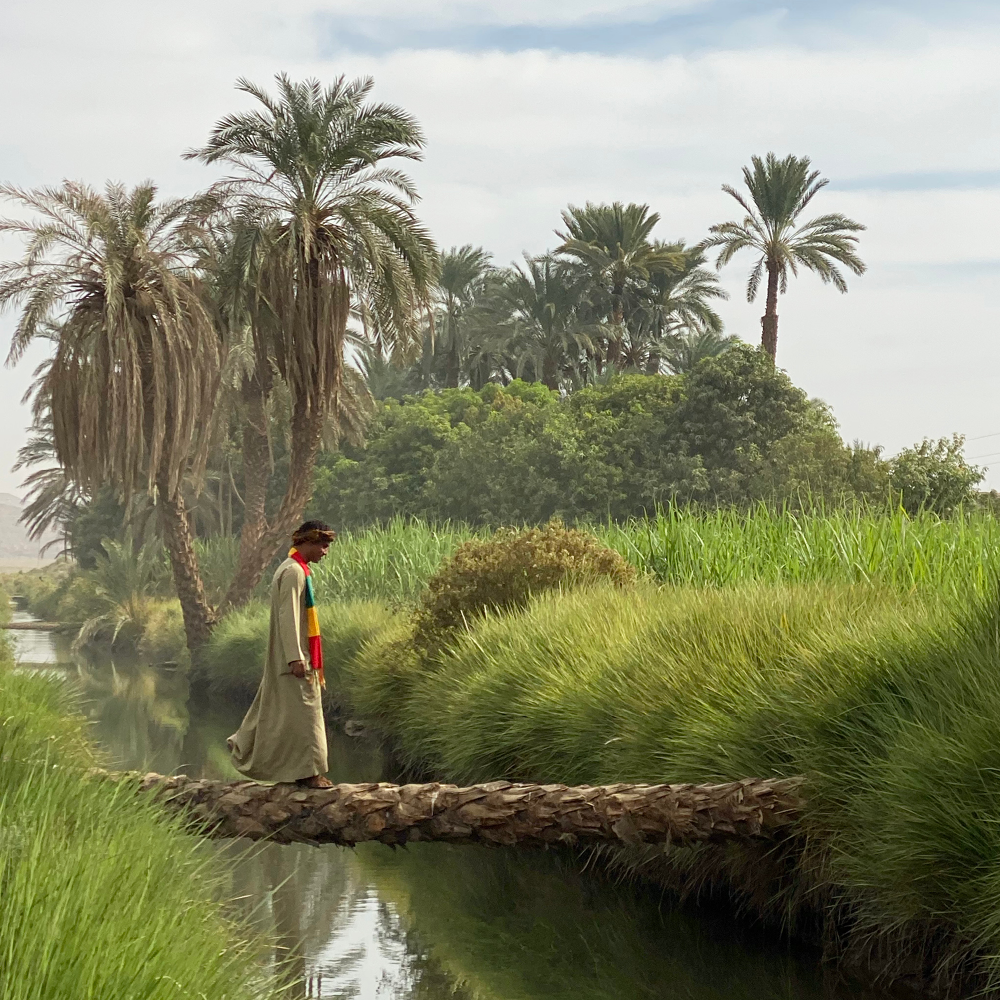
It is hard to imagine that the dahabiya was edged out by the advent of the steam train for those Europeans on the Grand Tour—a tradition that itself was compromised by The Great Depression. The languorous pace—and the hypnotic, almost balletic, manning of tiller and sails by the efficient yet never hurried crew in their full-length pale blue, white brown, and grey galabeyas is a refreshingly luddite antidote to the oversized cruising vessels that roar past every so often, breaking the spell.
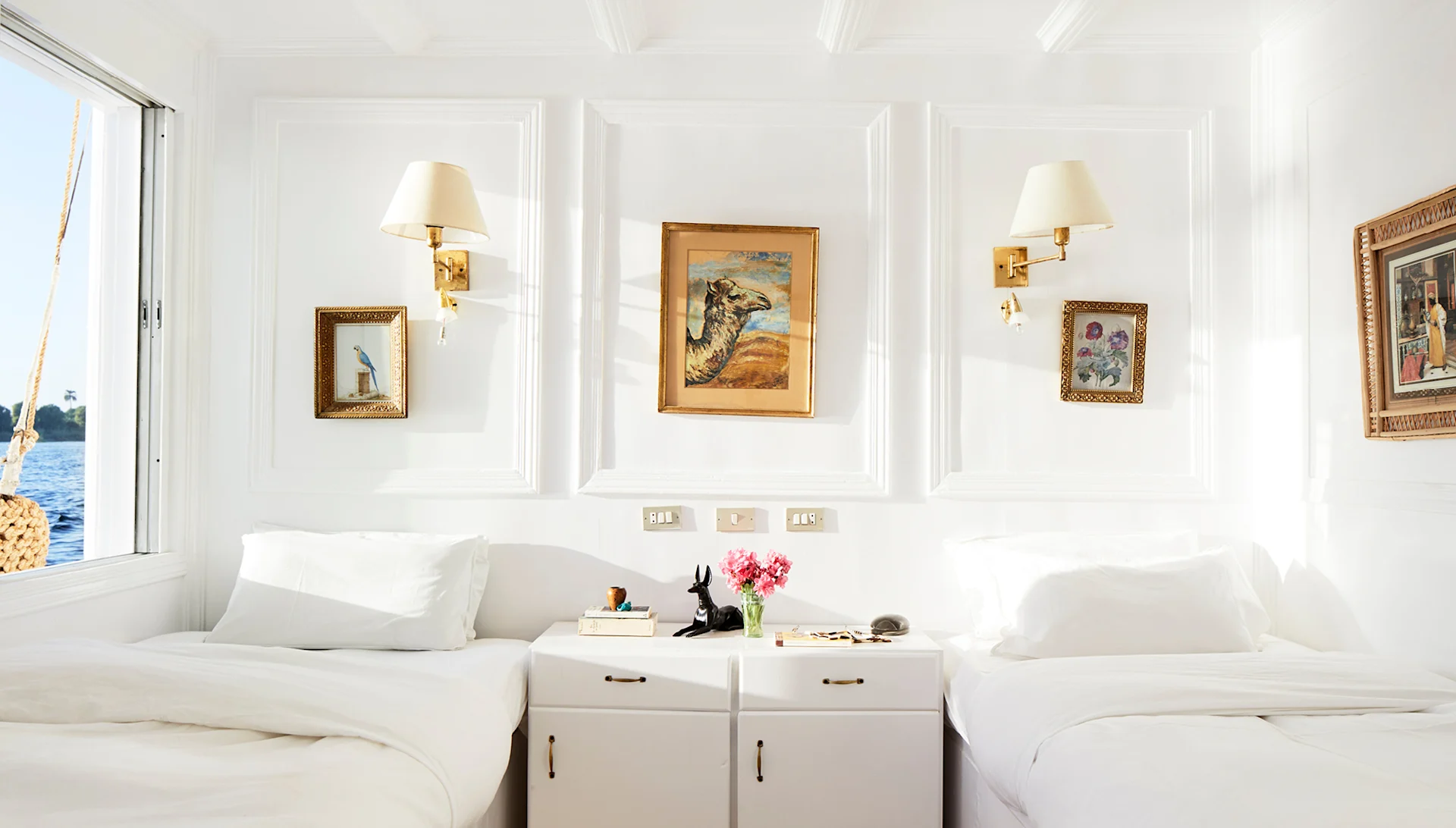
The 10 strong staff of our 12 cabin boat, Meroe, are everywhere and nowhere, offering just the right amount of service –a cup of mint tea or a fresh plate of fruit appears out of nowhere before you knew you wanted it. It takes a level of confidence—not to mention a deep personal network at every stop—to allow for this artful and seemingly improvisational itinerary. Like the night a bowl of homemade honeydew ice cream appears after one of the staff overhears my 12-year-old mutter that he was craving an ice cream.
In reviving the art of travel by dahabiya, Nour El Nil (the company which owns the four strong fleet comprising the vessels: Meroe, Malouka, Assouan and the latest—El Nil) has mastered the art of over-delivery and brings a level of emotional intelligence that no hospitality school can teach. Most of all, they understand that timing is everything. We pull up at a muddy bank and out comes a gangplank for a moonlit stroll to a scarcely populated village of Gebel Silsleh for “tea with some friends.” When we arrive as the magic hour starts to glow and make our way through the tiny, colorful village before making a mile long loop just as the sun is setting behind the peaked sand dunes. The resulting photos from the excursion could very well be a default screensaver for the latest Apple software upgrade.
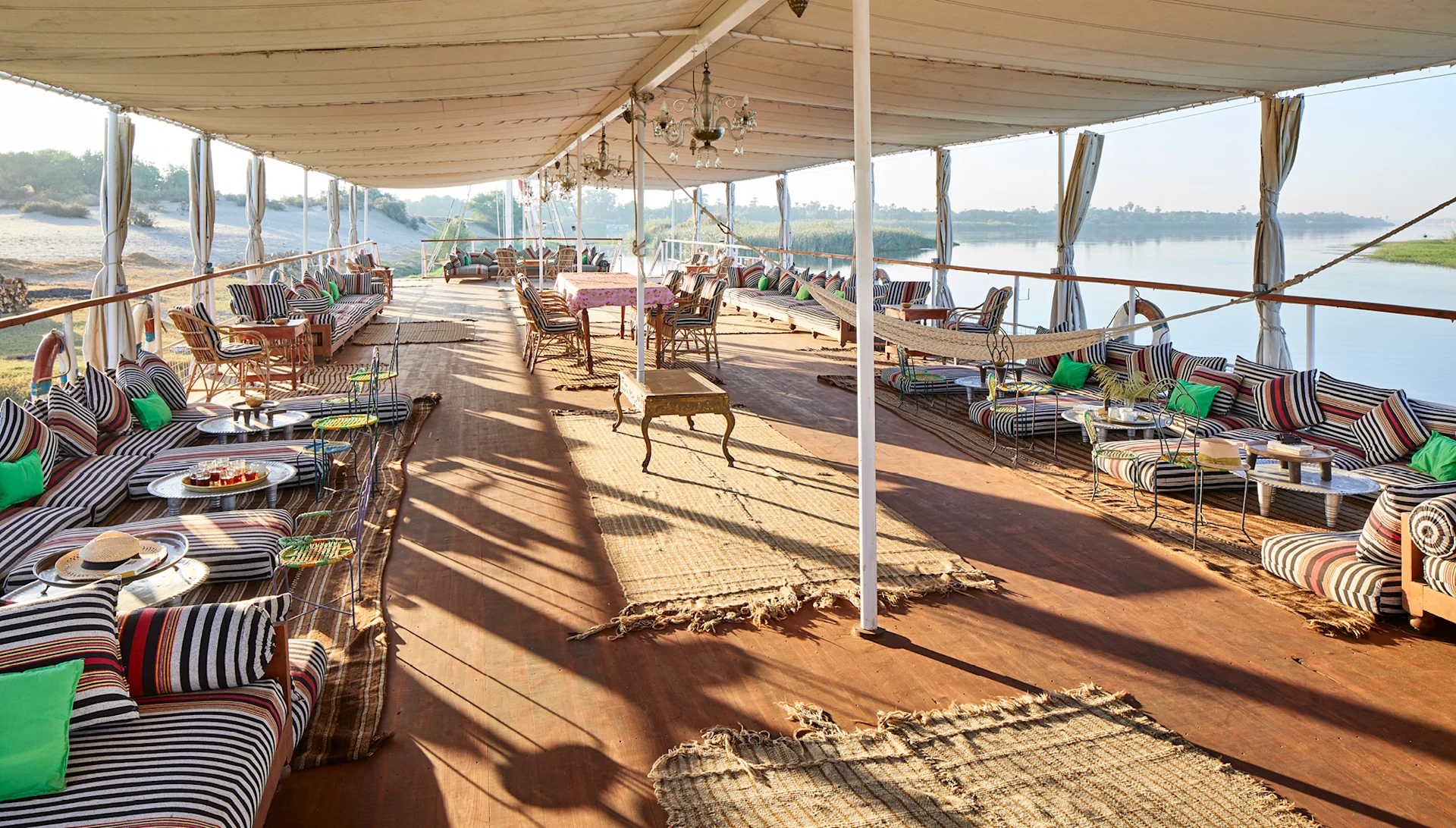
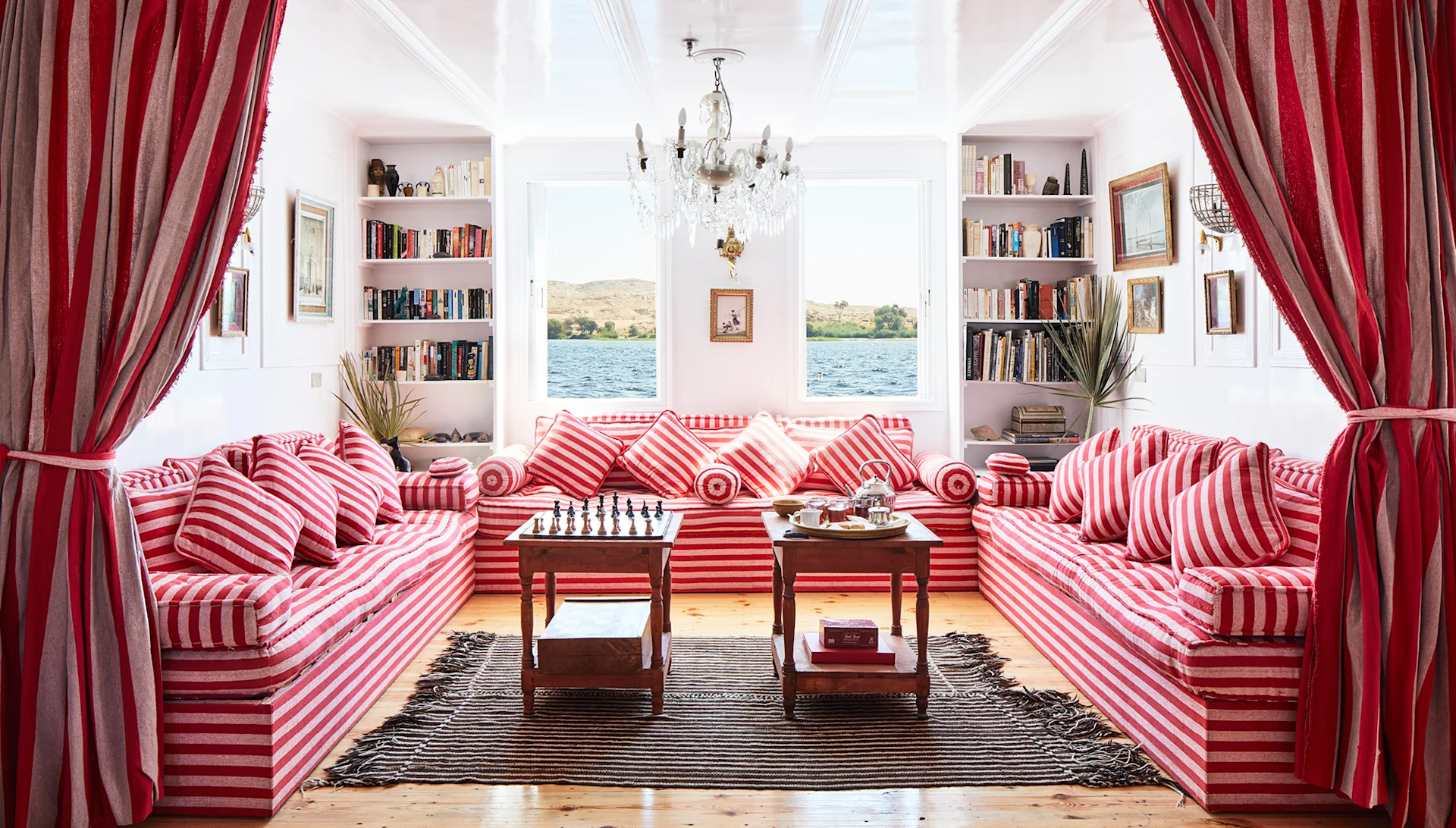
The fleet’s owners are French-born global nomad Eleanore Kamir, who had made Egypt her home some 30 years ago when she joined forces with Egyptian boat maker Memdou Sayed Khalifa and Mexican-born Enrique Cansino, who handles bookings but also leads some of the trips. Eleanore’s background is in interior design and together they have faithfully restored the four vintage vessels from the ground up, save for replacing the traditional wooden hulls with steel. Meroe’s kilim-strewn decks are outfitted with low-slung banquettes upholstered in a mix of black, white and pink boldly-striped Egyptian textiles with Kelly green throw pillows. French chandeliers strung from canvas hang above wooden tables topped with oversized brass serving trays. Eleanore’s style— the result of a lifetime of collecting and expert sourcing from France and North Africa—is loose yet has a point of view. Below deck is a similarly decorated common area filled with books and boardgames with custom galebayas for sale that Eleanore sources in the very best cotton and with silhouettes that are a bit trimmer and less billowy than what you find elsewhere.
Rising early I don’t know that I’ve ever breathed so deeply than when watching sunrise with the faint song of robins, plovers and larks punctuating the silence. Following Eleanore, each morning we would take a swim just before breakfast. The current is deceptively strong, however, and since the boat travels upstream, against the current (the Nile flows south to north and we were traveling north to south), we would walk south along the banks and essentially float back to Meroe.