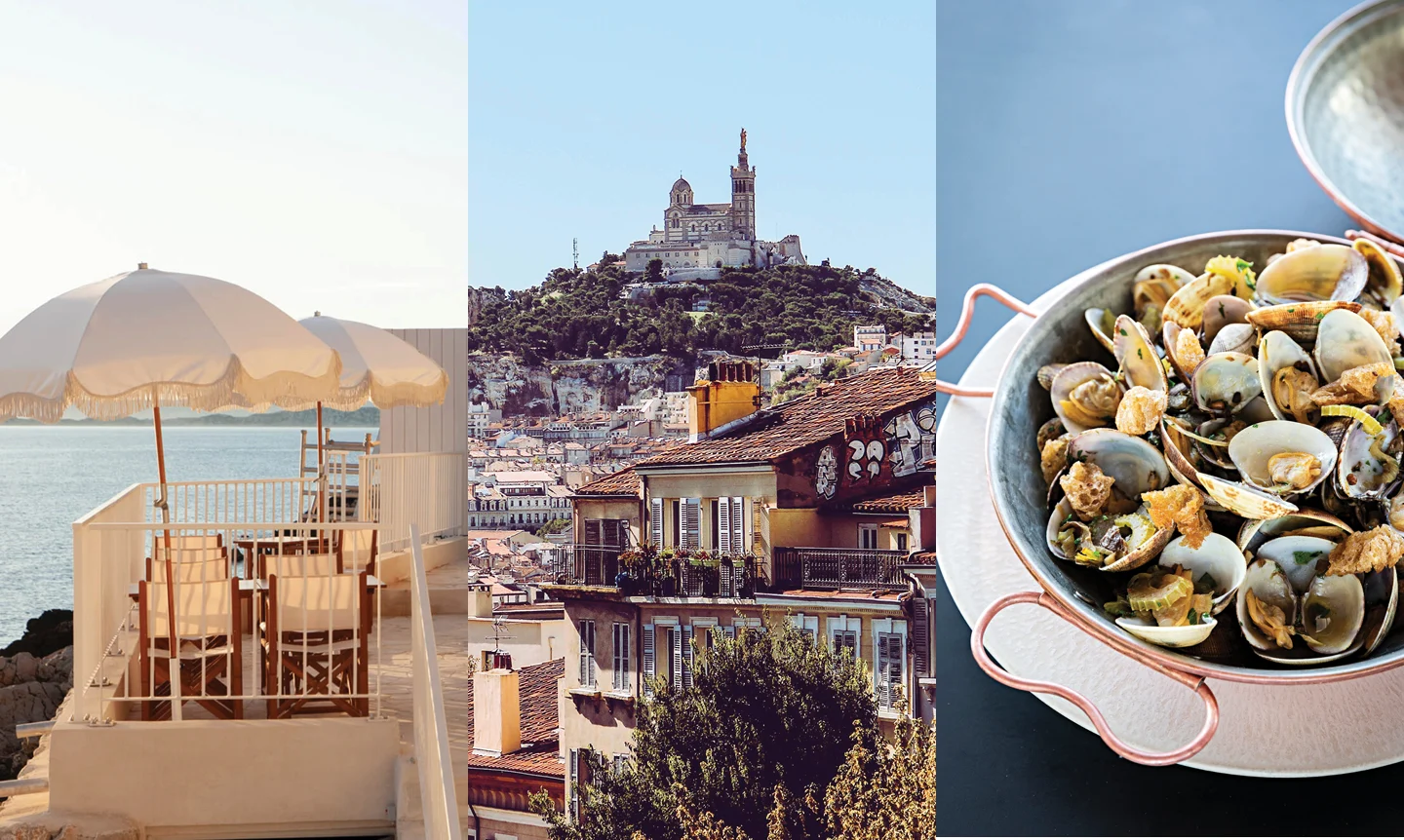
We’ll always have Paris, but now when people ask where they should go to eat in France right now, I send them to Marseille. I’ve known this brawny, briny port city ever since I first stopped here as a backpacking student on a mission to taste its bouillabaisse, one of the world’s most exalted fish soups and the dish the city has long been known for. It was a daringly impecunious journey (with my $10 a day dining budget), but worth it to taste the potent, umber-colored contents of the bowl, which was a sort of a primal concentrate of the Mediterranean and the kind of earthy, hearty, no-nonsense cooking for which I’ve consequently had an insatiable taste in the 30 years since.
The city’s pan-Mediterranean foodways began in earnest after the Suez Canal opened in 1869 and traffic in its expanded port exploded. It became one of the fastest growing cities in the world, alongside Chicago at the time, as immigrants arrived from Sicily, Spain, Greece and a dozen other countries to work in its booming port, factories, and mills. The influx created a city which reminds me of what Queens, the New York City borough, is today—one of the most culturally and culinarily diverse places in existence.
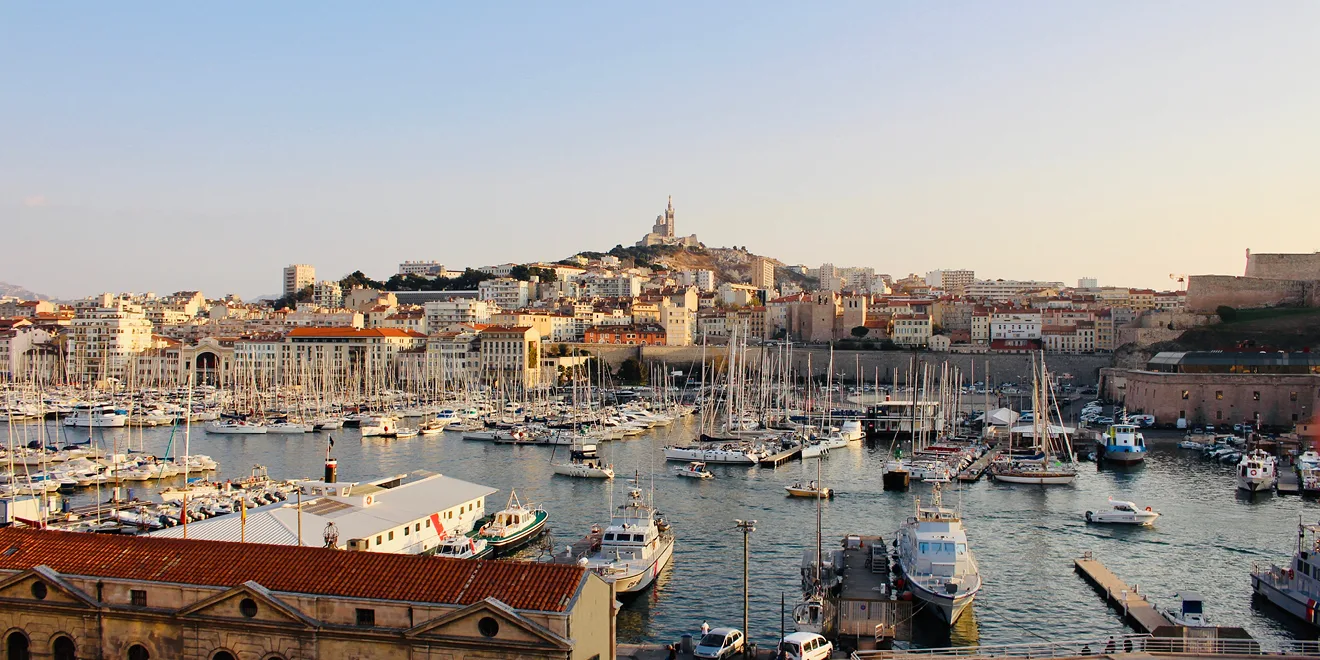
Upheavals on both nearby shores (the 19th century pogroms) and distant ones (the Ottoman massacres in Armenia before and during World War I) endowed Marseille with a substantial Jewish and Armenian population. After the independence of Algeria in 1962, thousands of repatriating French colonists and Algerians going into exile made France’s second largest city (population 860,000) their home. They’ve recently been joined, for example, by 75,000 from the Comoros Islands in the straits of Mozambique in East Africa. And from so many regions, including Paris, cooks and creatives have been steadily trickling in.
Theirs isn’t the kind of Edison bulb signaled hipster migration that lit up and changed Barcelona and Berlin and so on. Rather, the gastronomic movement in Marseille of late has been something more subtle and more respectful of local life and tradition. To wit, the newcomers have moved here to become a part of the city, not to transform it, which has given an already fascinating place an edgy new energy.
The change has been a slow yet thrilling build. Twenty years ago, when a thunderstorm in Marseille had driven me up the stairway to dine at Lionel Levy’s restaurant Une Table au Sud, the Toulouse native—who had worked for Alain Ducasse before boldly choosing Marseille as the site for his own project—called it in conversation: that someday Marseille would become a great food city. His space overlooked Le Vieux Port, the city’s harbor, and at the time, his peers thought him crazy to do ambitious food where they saw no bourgeoisie to support it. Levy remains there today, deservedly self-satisfied with his predictions, and cooks at the Hotel Intercontinental, which is perched on a hillside in a beautifully renovated old hospital.
If Levy proved that there was an audience for inventive, upmarket cooking in Marseille, Pierre Giannetti, a native of neighboring Martigues who cooked in Barcelona for five years, as well as the grandly named chef Arnaud Carton de Grammont, both pioneered the new idiom of a bistro du Sud—a register of bistro cooking inspired by southern French produce and the kitchens of countries around the Mediterranean and, at times, further afield. Their restaurants Le Grain de Sel and Café des Epices, respectively, helped put Marseille on the culinary map.
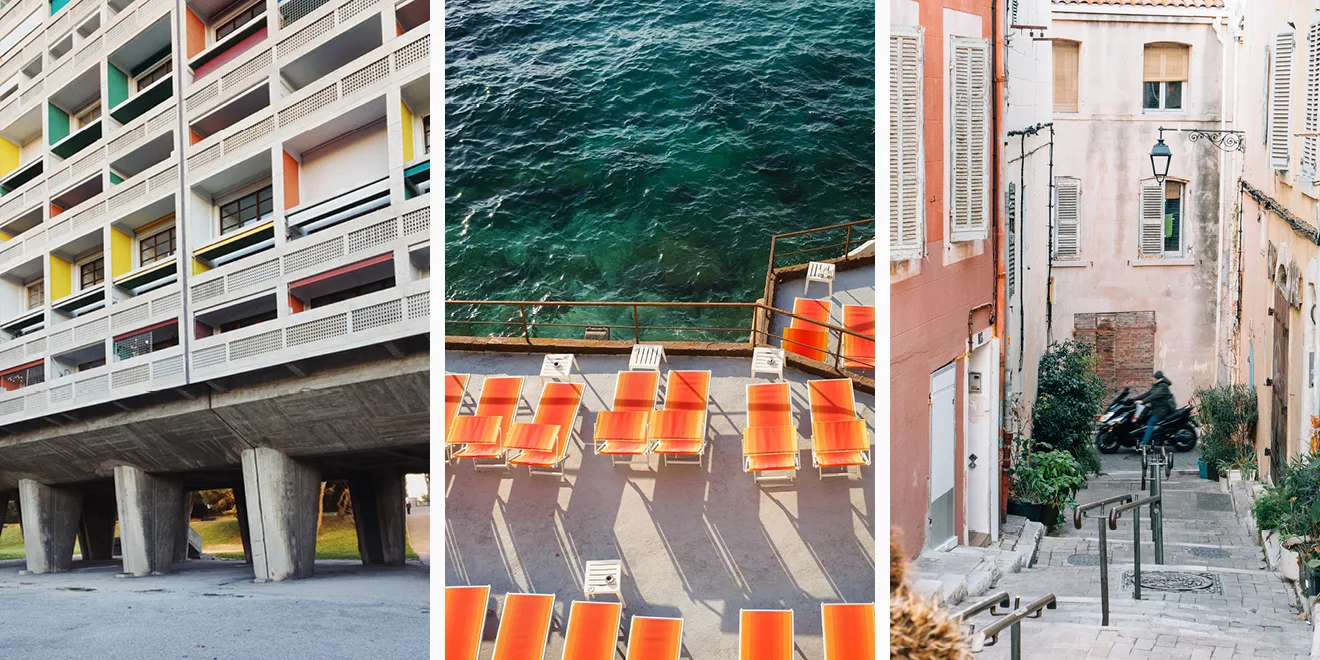
Montreal native Laura Vidal, a sommelière who worked in New York and Paris before moving to Marseille to open her popular market-driven bistro du Sud, La Mercerie, two years ago with her partners, sang the city’s praises to me. “We’d worked in Paris, we’d done pop-ups all over Europe, and we’d considered settling in Barcelona, but in the end, we fell in love with Marseille. The setting is beautiful, the produce is fantastic, the city’s affordable and easy to get around. Maybe best of all, it’s a real place, not a tourist town, and coming here was a chance to be part of the city’s next chapter,” says Vidal.
“There’s a special but totally low-key culinary literacy in Marseille that doesn’t exist anywhere else in France in exactly the same way,” says Eric Maillet, chef of Cedrat, one of my favorite bistros du Sud. He attributes it largely to the mix of cultures concentrated in the city. “We grow up eating each other’s foods, so we know a lot of different kitchens and ingredients in an uncomplicated way. But in Marseille this knowledge isn’t about creating fusion cooking, as much as it is a steady source of gastronomic inspiration.
While there are a few restaurants who have won prestigious recognition, fine dining or old-school French technique are not what defines brilliance here. “Here, there’s no warp and woof of tradition or codes in the kitchen. Marseille’s an uncomplicated and unselfconscious city filled with many different kinds of people,” says Coline Faulquier, who won a Michelin star for her restaurant Signature in 2021. “Whatever you’re cooking, if you do it well, it can work and find an audience,” she says. The starred chefs that do exist put forth a humility that permeates Marseille’s gastronomic community from the inside out. “My kitchen would be nothing without the catch-of-the-day of the fisherman,” says Gerard Passedat of the three-star Le Petit Nice. “I cook to share pleasure,” says Alexandre Mazzia, the city’s other three-star chef, who grew up in Pointe-Noire in the Congo, where his father was a merchant dealing in rare woods. “This is why my new food truck is so important to me. Not everyone can afford a three-star table, so I wanted to find a way to share with the whole city.”