Logging a few months’ worth of nights a year, every year for a decade, in hotels—and tents, and lodges, and riads and dars and ksars and castles and palaces and palapas and villas and treehouses (really) and even a Mongolian ger or two—tends to give you a comprehensive idea of what constitutes a great hospitality experience. I’ve got a full sensory reference catalog in my mind of stays past: design details, color palettes, Proustian roll calls of scents and flavors, snippets of background (and foreground) soundtracks, the voices and faces of concierges and servers and housekeepers who made me feel happy to be where I was.
The things that stand out as excellent don’t necessarily conform to any set criteria of what a hotel should be. Sometimes, quite the opposite—some unexpected factor surprised and pleased me with its distinctive un-hotel-ness. That said, there are a few truths my PRIOR colleagues and I have come to recognize as axiomatic. The first: stars mean very little, in the grand scheme of what makes a place that really gets your attention, and makes you want to come back again.
Second: people matter. Hugely. To hoteliers I’d say, your rooms can be a bit faded, or a bit wonky, with not-great water pressure or slightly scratched furniture or elevators and air conditioning that creak when they’re running. But if the staff hit their marks, go that extra bit in terms of effort or friendly inquiry to presage your guests’ happiness, and do it with smiles and a bit of character—chances are you’ve got a winner on your hands. (Equally, all the Carrara marble and plush Frette towels in the world won’t compensate for the fundamental fail of people not caring enough, or not in the right way.)
And finally: not all hotels need to feel like homes. Never underestimate the salutary power of a stay in a big-city hotel engineered to feel a million light years away from normal life—see: Hong Kong’s Upper House, a Hall of Famer as far as I’m concerned, though by design it is in every way, as the Dutch would say, “very far from my bed.” But that said, not much beats a small, painstakingly curated, lovingly run maison.
In truth, though, it’s tricky and a bit spurious to build a perfect hotel. The ones we love tend, in their individuality, to be the sum of parts found nowhere else, and the magic is mostly to do with that arcane bit of addition. So perhaps better to call this what it is—something between a paean and a wish list, that recognises gestures and moments of brilliance and delight that, to us at PRIOR, are what make a place memorable. Which, really, is what it’s all about.
The Arrival
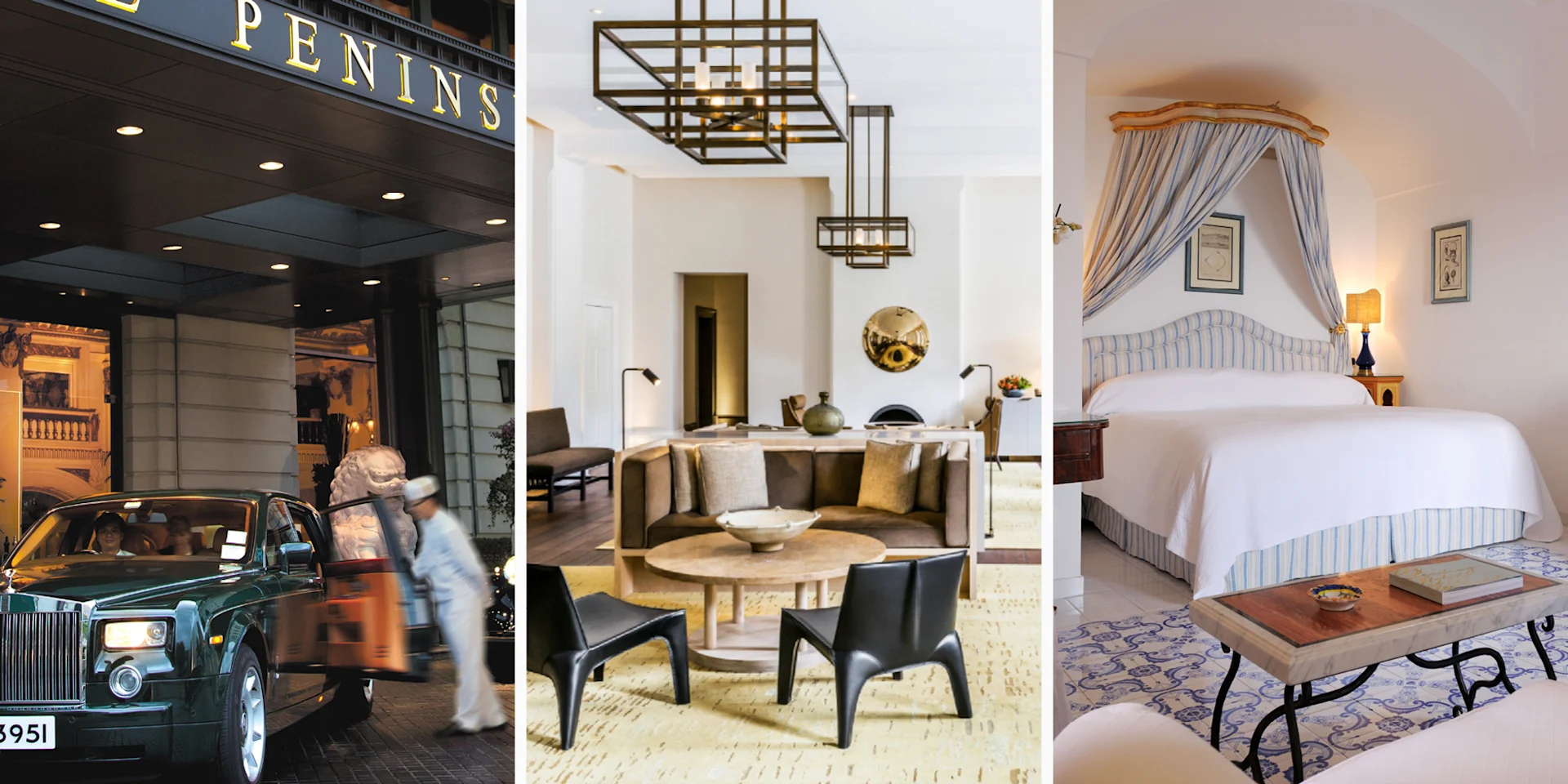
For urban glamour, I’m going with The Peninsula Hong Kong, where you can choose between an airport pick-up in one of the hotel’s vintage Rolls Royces and a 20-minute helicopter transfer, which lands you on the roof of the 38-story tower, with access to its own penthouse aviators’ club.
For a truly place-specific welcome, it has to be Dar Ahlam, in southern Morocco’s Skoura palmeraie. When guests arrive, they are led into the impeccably-restored fortified palace via the formal entrance—a slow, ritualistic walk along a spiralling lantern-lit corridor, lasting at least a couple of minutes, which is how visitors to the original 18th-century household would have arrived, thereby giving the women time to veil themselves.
The Design
Hard to pick just one here. But going with places that hew laudably to original design that reflects the place they’re in:
COMO The Treasury, in Perth, created from the ceiling cornices and metal joinery down to the last hexagonal travertine bathroom tile by the late, great architect Kerry Hill, Western Australia’s favorite son. Spare, warm, rigorous of line and sexy of finish—think buttery beige kidskin, hand-planed oak, low-burnish brass—it is for my money the chicest city hotel in Oz.