I wake up from my melatonin-induced coma and stumble down to my hotel’s restaurant for my very first taste of Shanghai. What I find: a breakfast spread I could have encountered at a Holiday Inn in Scottsdale, Arizona: gloppy scrambled eggs, mealy hash browns, pork sausages stacked in metal tubs. If it weren’t for the kink in my neck, I’d have no idea I’d just spent the last 25 hours in transit and arrived in an entirely unfamiliar land, 7,364 miles away from home. Where were my Four Warriors, or si da jin gang, the indispensable symbol of Shanghai breakfast culture: glutinous rice rolls (ci fan), soy milk (dou jiang), fried crullers (you tiao) and sesame pancake (da bing)?
The “international” buffet-style breakfast that has become customary in so many hotels across the world is meant to give travelers a sense of comfort and familiarity in a foreign place. You’ll now see labneh and tabbouleh in the breakfast buffet at Claridge’s, and congee at the St. Regis in Mumbai. More than any food-related travel experience, they make us ponder what travel is, and should be. Because isn’t the point to detach from the familiar? To experience—even only for an hour, around 8 am—the life of the people who make the place we’re in what it is?
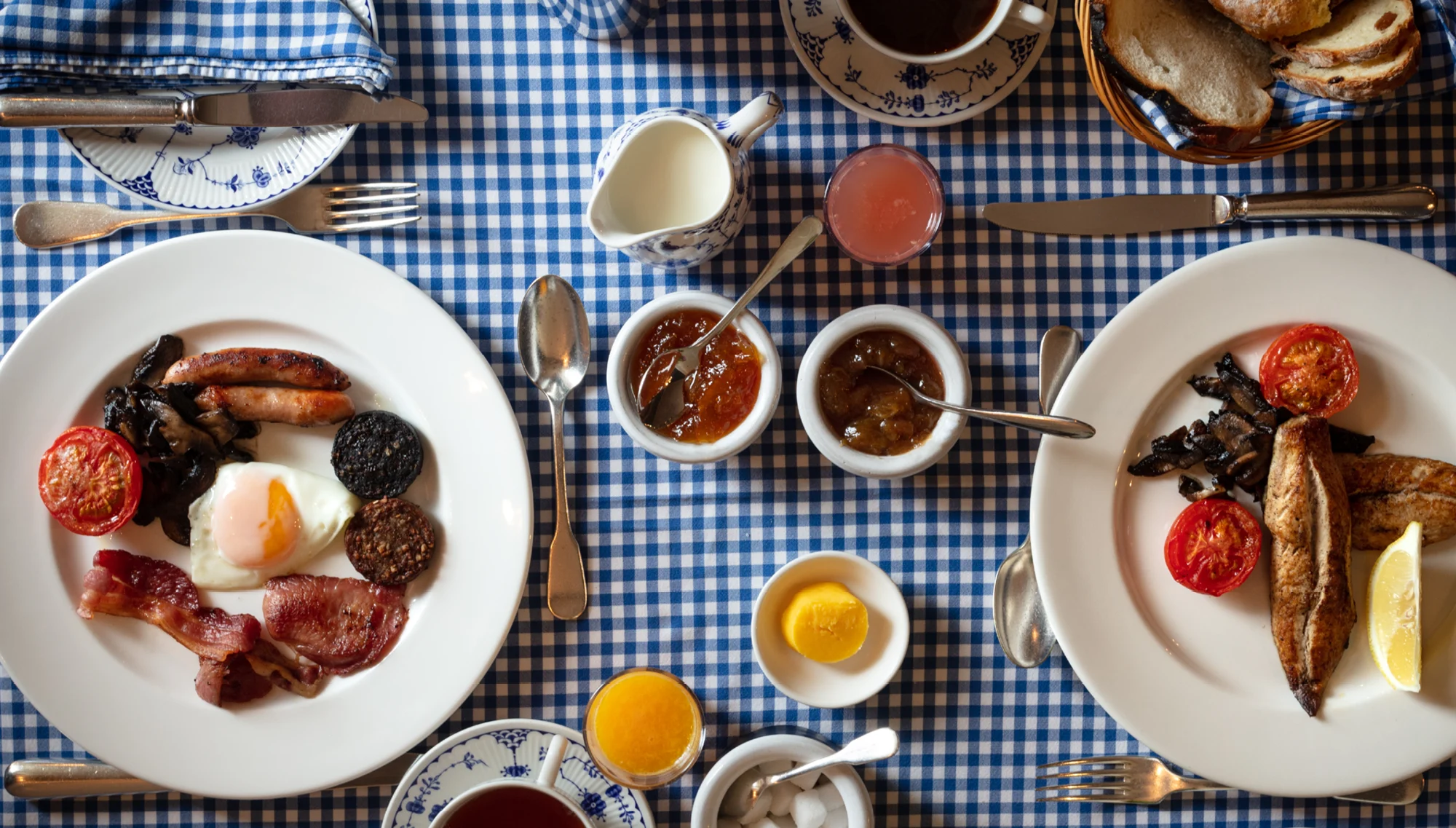
Because you know when you’re getting the real deal. Witness three of our favorites: Ballymaloe in Cork, Ireland (Crowe’s rashers, Jack McCarthy’s sausages, mushrooms and tomatoes with Rosscarbery black & white pudding and rhubarb compote); HOSHINOYA in Tokyo (an Okamochi bento box of steamed rice, miso soup, fermented soy beans, grilled fish, pickled vegetables, and dried seaweed); and Ett Hem in Stockholm (a breakfast that changes daily, often with Scandi granola, charcuterie and local cheeses, with house-made jams of Swedish berries). They’re emblematic of the kind of unmistakably place-specific hospitality that a thoughtful leisure hotel should be about.
We asked a handful of our favorite friends in food, in four far-flung cities, to share their visions of what the ideal hotel breakfast would look like in their respective cities:
Tel Aviv:
Adeena Sussman (@adeenasussman), author of bestselling cookbook, Sababa
“With a culinary culture that straddles the Bible, the beach, and everything in between, Tel Aviv is truly a melting pot nonpareil. Sun, spice, and the freshest market-driven produce are throughlines in virtually every dish—think lemons, chili, tomatoes, and spices, used to delicious effect at every turn.
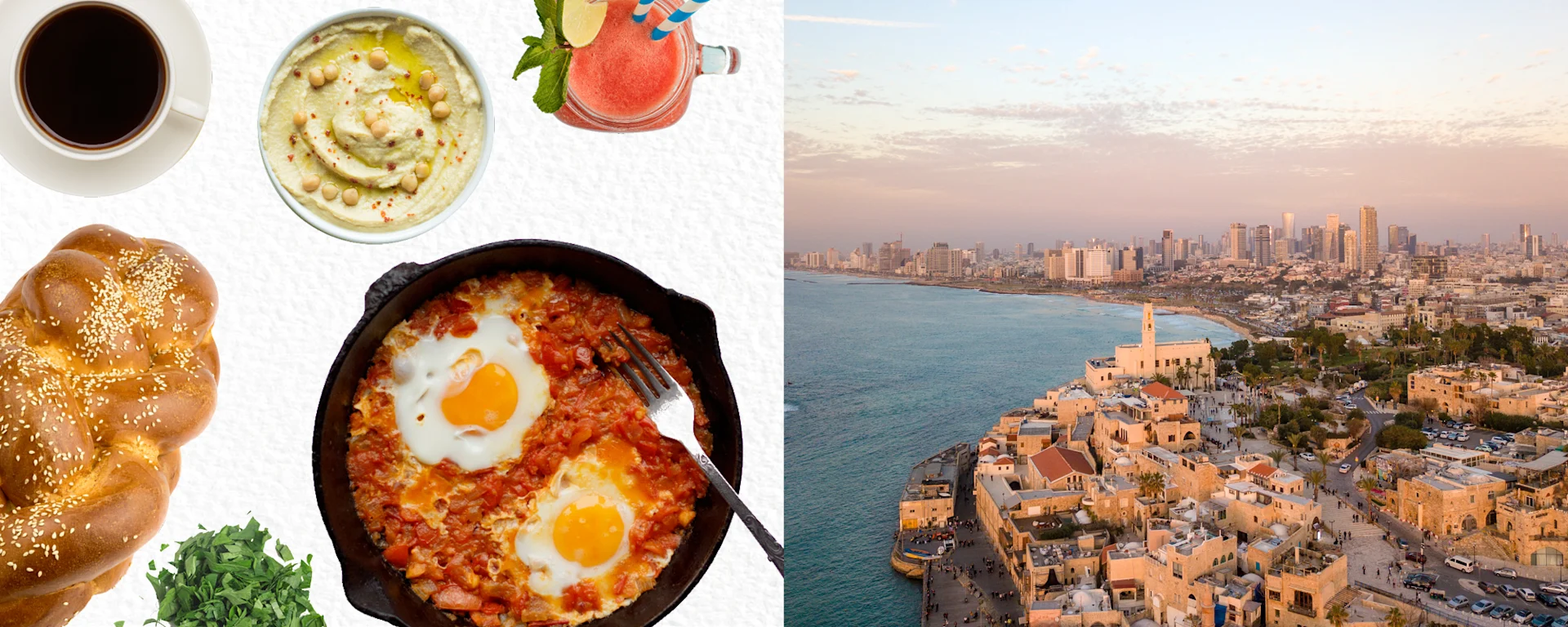
The city’s breakfast culture is an all day affair; it's no coincidence that hummus and shakshuka, two breakfast dishes here, are consumed all day. It’s all about the spread: a groaning table laden with a representation of everything local here in all its bounty. Powered by coffee after strong coffee, it's as social a meal as it is a sustaining one, with friends coming and going from an ongoing gathering that changes its cast of characters at the cafe, beach, or garden, with every hour.”
The ideal hotel breakfast in Tel Aviv:
"A super-spicy skillet of indvidual shakshuka filled with fresh herbs and studded with creamy local feta cheese; a mortar and pestle of tableside hummus made with just-cooked, meltingly tender chickpeas mixed with pure Palestinian tahini paste and fresh lemon juice; a chopped salad topped with toasted mixed nuts and seeds; a basket of sliced challah bread and pilllowy, still-hot pitas, and a killer cocktail made with local botanical gin; pureed watermelon, and fresh lime juice."
Helsinki:
Helena Puolakka (@chefpuolakka), Chef Patron of Savoy and Sasu Laukkonen (@sasulaukkonen), head chef and owner of ORA
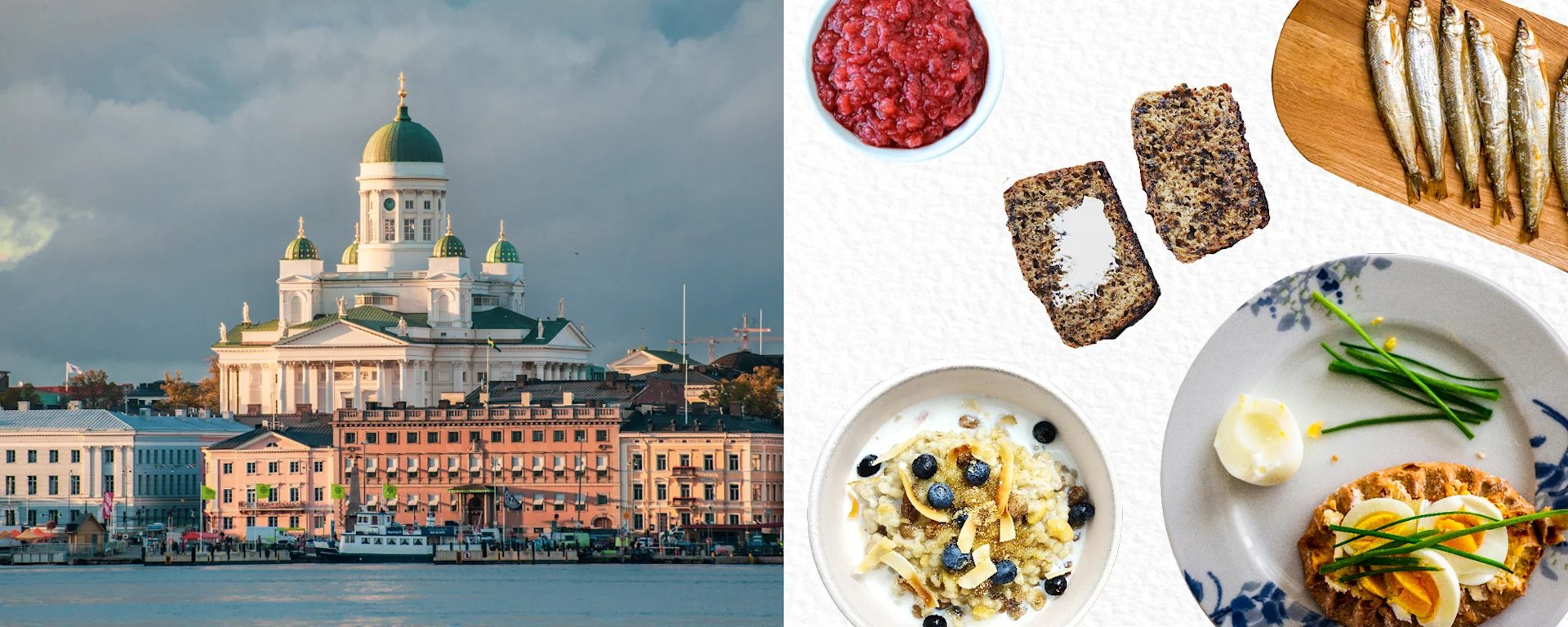
Compared to Scandinavian cities like Copenhagen and Stockholm, Helsinki’s food scene is “a bit less in your face…it’s more subtle in a way,” says Sasu. “One has to remember that us Finns, we are modest and shy people, so lots of original and great business ideas, and in a nice way.” Helena adds “there’s a strong, but underlying, design element” in the city’s restaurant culture, “as Finland has a long tradition of architecture and design, with architects like Aalto and Saarinen.” She also points out that breakfast in Finland “does not have the same ‘status’ as a meal, as it does in NYC or London. People rarely have breakfast meetings, or go out for breakfast, especially during the week." But to fully experience Finnish food culture, they suggest visiting the Hakaniemi, a marketplace by the harbor where one can find strong coffees and traditional meat pies.