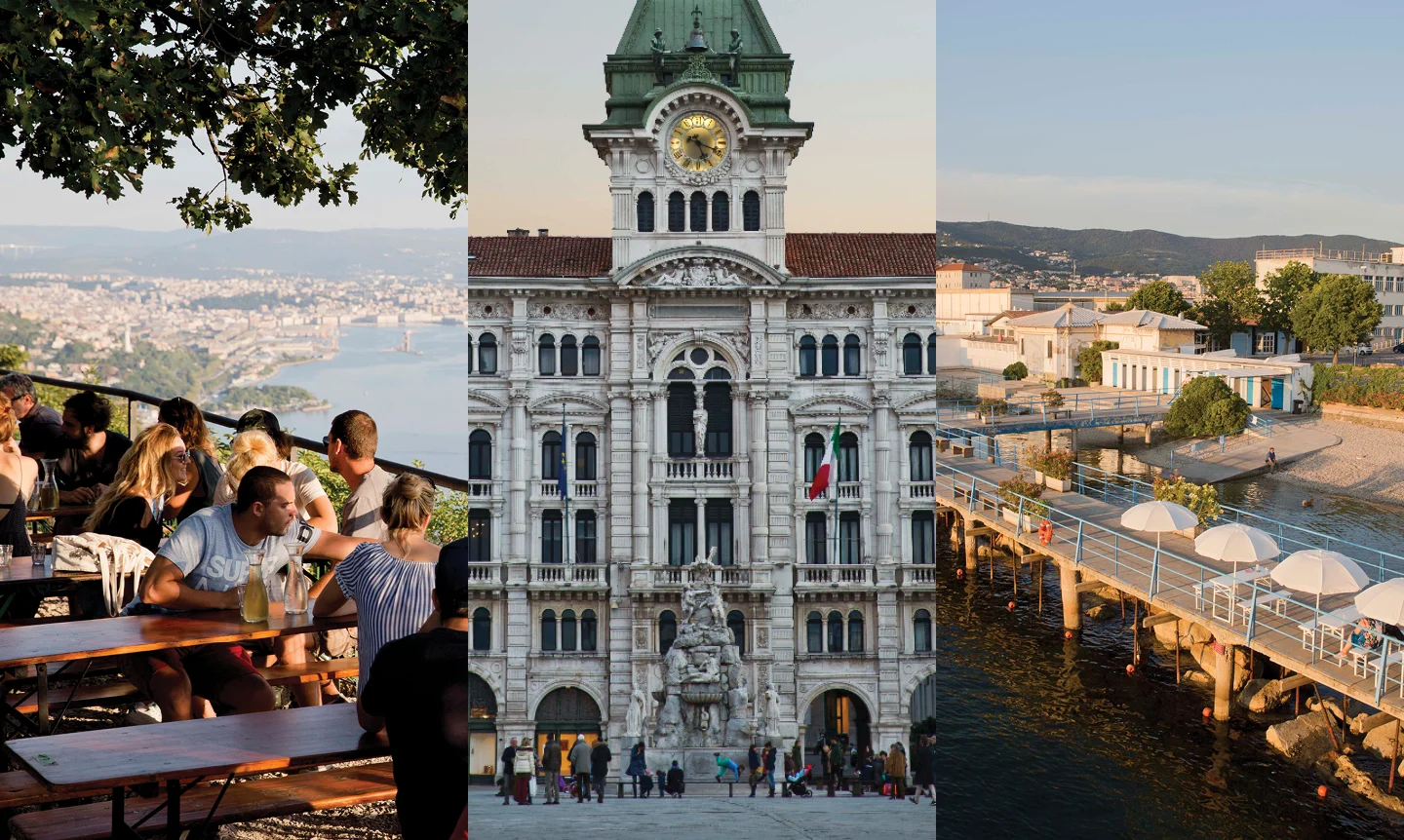
Compared to other Italian cities, Trieste has it somewhat rough. There are no enchanted canals and Gothic palaces as in Venice, no charming ancient glories as in Rome, and no Renaissance treasures as in Florence. There is, however, the “Bora”, a ferocious wind coming from the mountains that blows through the city, particularly impressive on chilly winter days.
The often-overlooked “forgotten city,” as they used to call it, does not open up to you at once—this requires time, which is something that many tourists appear to lack nowadays when they rush through Italy's cities in search of strong impressions and spectacular selfie motifs. Trieste, on the contrary, challenges a visitor. The city demands a certain degree of involvement—that you deal with its turbulent history, with its special geographical position on a narrow little strip of Friuli-Venezia-Giulia that looks like it’s more in Slovenia or Croatia than Italy, and with its melancholic charm. Trieste, it is often believed by many visitors, some Italians, and quite a few Triestini, is not “real” Italy, or the Italy you expect. But this, the unique mixture of peoples, languages, and cultures that has shaped it, is precisely what makes Trieste itself.
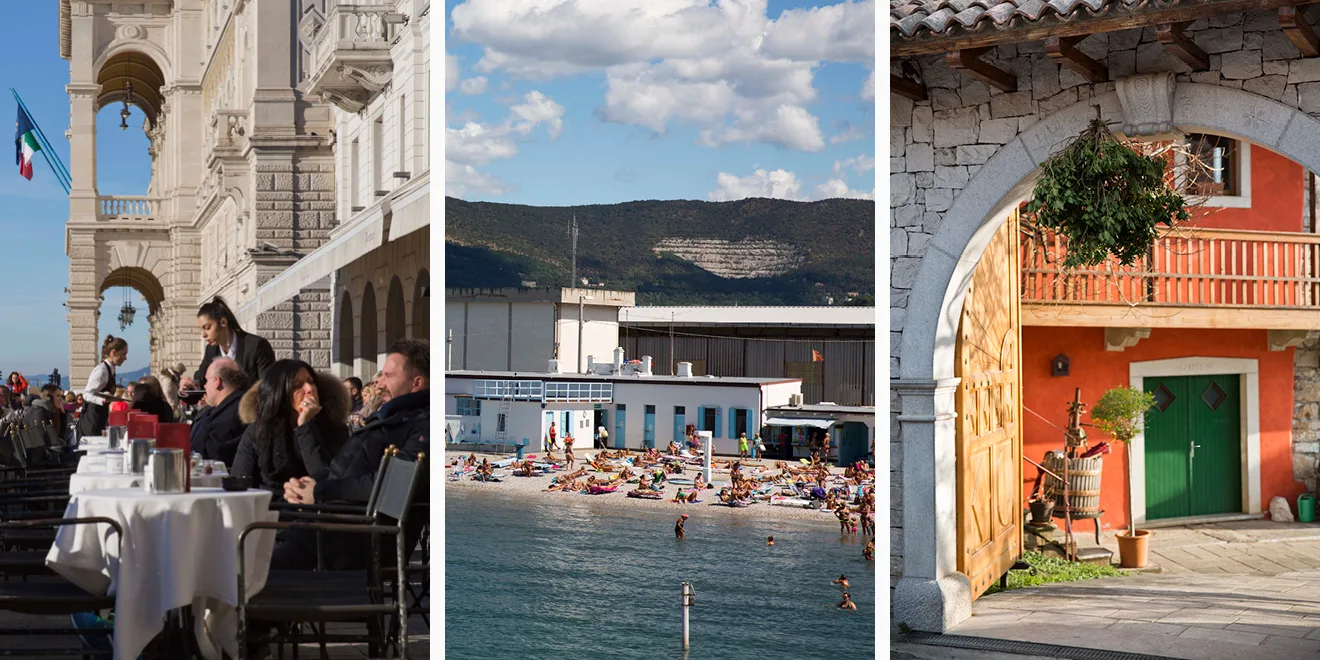
Trieste has been part of Italy for a little over one hundred years. Before that, it was part of Austria for nearly 600 years prior. Those six centuries have shaped the culture, architecture, and cuisine of the city to this day. Trieste and its culture and food are also where Central Europe meets the Mediterranean and the Balkans, the Latin linguistic area meets the Slavic and Germanic, the East meets West and the North meets the South.
To this day, a significant Slovenian-speaking minority lives in and around the city. The once largest port of the vanished Habsburg monarchy also attracted a number of international groups (among them, Germans, Greeks, Serbs, Jewish populations, and Armenians), to which Trieste is still home. And the much-vaunted light of the Italian south, albeit filtered and sometimes refracted, ultimately also shines its light in Trieste as well. The very essence of the city is its cultural crossroads.
Just like the city itself, its cuisine is far more than purely Italian. Around noon, the smell of cooked sauerkraut fills the streets, whereas elsewhere in Italy, a sun-flooded country with long growing seasons, fermented vegetables are rarely seen. The same goes for the region’s smoked pork, which—in addition to its boiled sausages and the potatoes—the Triestini love so much. In the evening, however, many locals prefer a lighter, more Mediterranean-style fare and eat grilled fish, spaghetti alle vongole (clams), or fritto misto, a mix of fried seafood from the Gulf. Grilled specialties from the nearby Balkans are also popular, such as Bosnian-inspired ćevapčiči, small kebabs made of minced meat, as is gibanica, a multi-layered cake filled with cheese, poppy seeds, apples, and walnuts. Others, such as presnitz—a strudel-esque wreath of puff pastry filled with nuts, almonds, and dried fruit—rather evoke Jewish delicacies from Central Europe.
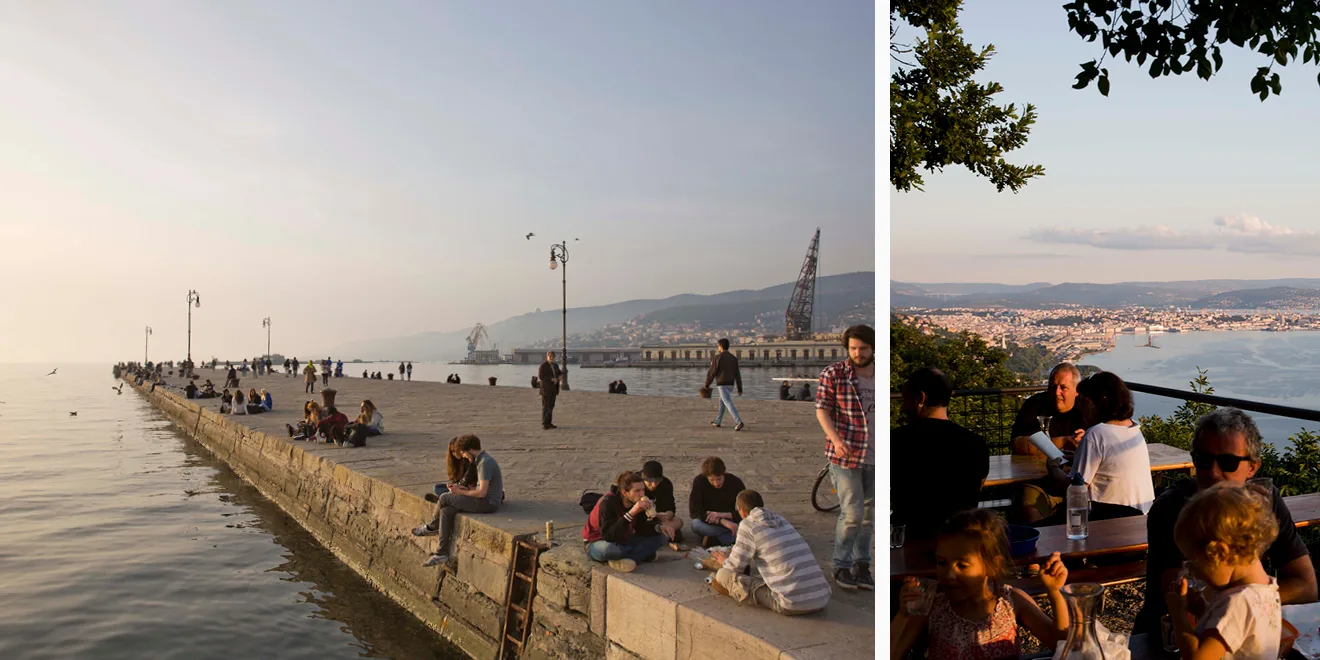
An ideal day in Trieste includes a walk through the ruins of Porto Vecchio, the Old Harbor (which feels like a dystopian science fiction film), as well as following the “Napoleonica”, a path on the rim of the Karst Plateau with breathtaking views of the city, its Gulf, and down to the Istrian Peninsula in Slovenia and Croatia. It also might land you in a non-Mediterranean lunch of smoked sausages, sauerkraut and beer in one of the many typical “buffets” (or quick-service counters); or in front of a glass of local vitovska (a minerally white wine) and a plate of homemade prosciutto in one of the numerous “osmize”, rustic, private establishments often owned by Slovenian speaking vintners in the Karst. Here are some of the best.
Where to Eat and Drink in Trieste
The Top Buffets
Trieste’s so-called buffets are very simple inns where people eat ready-made food sitting or standing, buy local street food like sandwiches of cooked ham, mustard, and fresh grated horseradish or stop for an aperitivo with cicchetti (small, Venetian-style snacks).
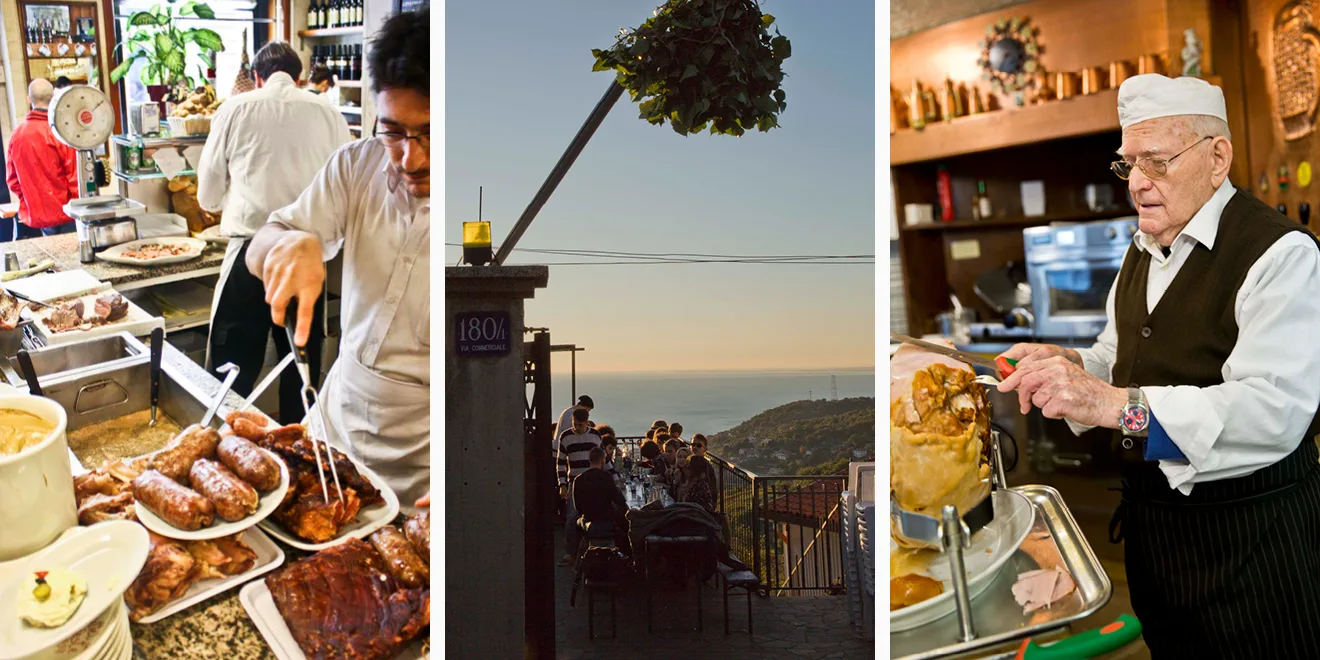
Buffet da Pepi
Undoubtedly the most famous buffet of all is located in the city center, near the former stock exchange. The offering is almost exclusively limited to meat, mainly boiled from the caldaia—the emblematic Triestine boiling pot.
Via della Cassa di Risparmio, 3.