If home is where the heart is, the Milanese apartment is where you’ll find the discerning eye. It’s only natural that Italy’s fashion capital is where you’ll find some of the world’s most spectacular homes— where renowned designers, architects, aesthetes, and aristocrats allow their personal style to reign free. With his 2022 book Inside Milan— a follow-up to Inside Tangier— designer and author Nicolò Castellini Baldissera invites readers into the glorious domestic spaces of his creative circle, which includes fashion insiders (Jacopo and Veronica Etro, J.J. Martin), artists and architects (Filippo Perego, Lola Schnabel, Natalia Bianchi, Nathalie and Virginie Droulers), and his own family (his father, Piero Castellini, and great-grandfather, renowned architect Piero Portaluppi). Whether it’s a refined 16th-century palazzo, a flamingo pink top-floor flat, or the splashy, book-lined atelier of the Fornasetti design dynasty, Inside Milan peels back the curtain to some of the most stylish homes in this eternally chic city. Below, Baldissera discusses the stories behind some of the book’s best interiors, and how he and photographer Guido Taroni came to photograph them.
Nicolò Castellini Baldissera
Author, interior designer, and self-proclaimed “garden dilettante”
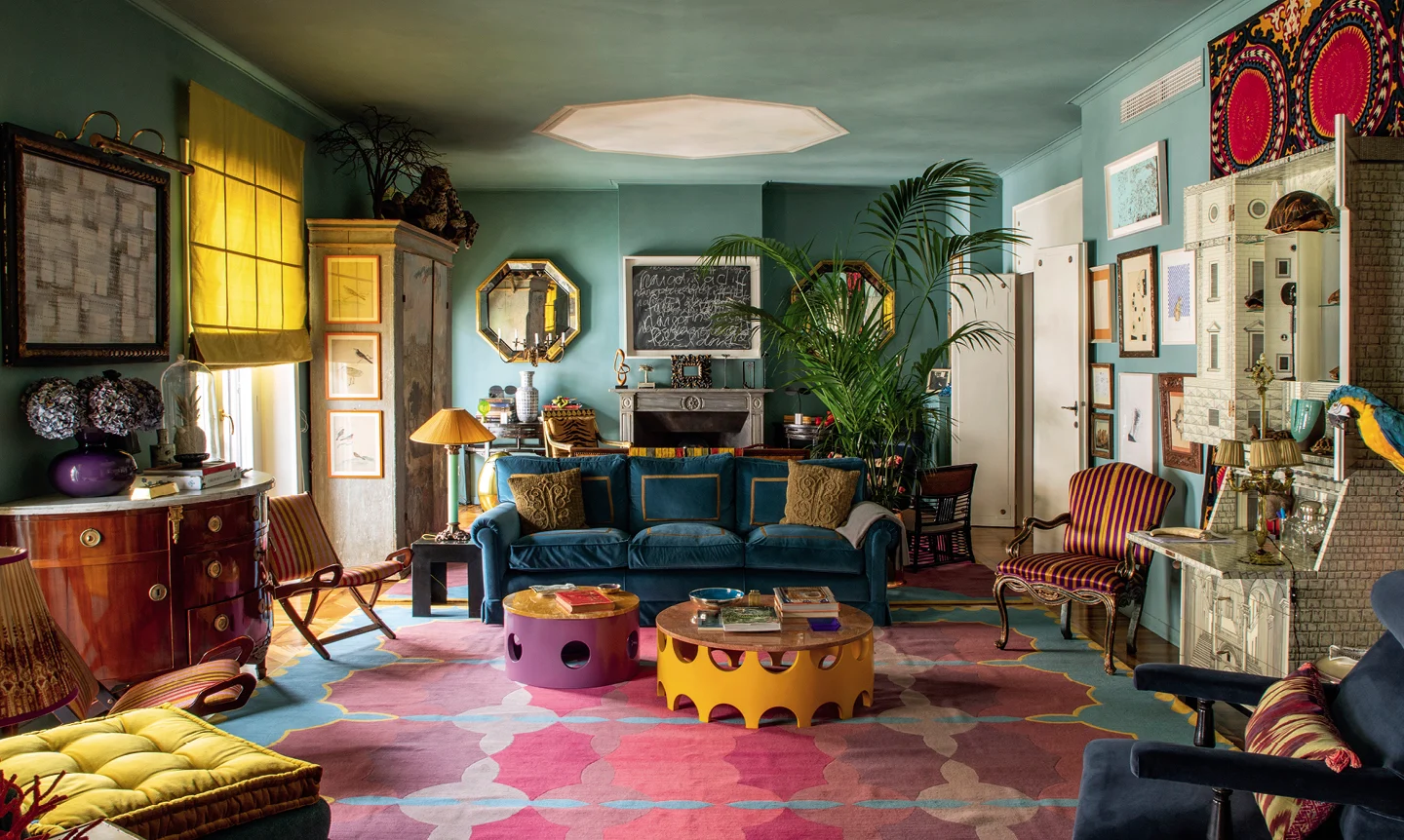
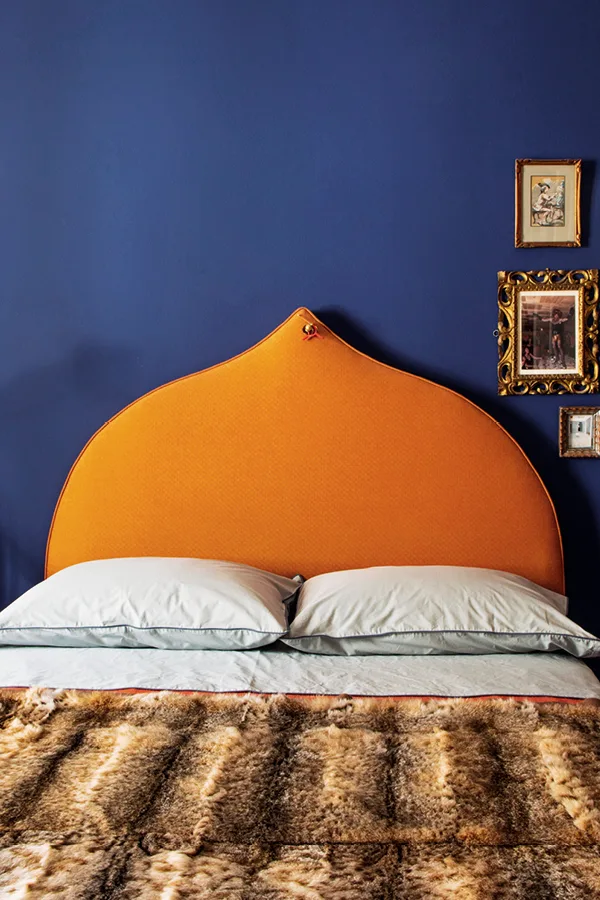
This apartment doesn't exist anymore because it was a transitional apartment that I lived in when I moved back to Milan after 33 years. I decided to stay away from my family home just because I wanted my own space. And so that's what I found— it was far from what I imagined, but it was all there was on the market at the time. And so when we found it, as I wrote in the book, we nicknamed it “Lo Squallidone” (“The Squalid One).” It was so sad and characterless. So it was really fun to do it over. Although I always knew I'm a nomad. I don't get very attached to my home. I've had so many, but so did my parents, and so I've got used from an early age to part with them because of the lifestyle, and multiple divorces and marriages. Some of the properties have stayed in the family for over a century, but the ones that were dearest to me growing up are gone. I've done this apartment with a certain knowledge that I wouldn't be living in it for longer than maybe three, four years. Because of the short period of time, sometimes I dare more with colors. If you know you're leaving, you can probably put up with stronger hues than if you bought the place. My relationship with my homes is definitely a strong one, but not necessarily an everlasting one. I get tired. I'm restless at heart.
Carlo Alberto Beretta and Jacopo Venturini
Brand General Manager, Tod’s; Chief Executive of Valentino
I came to know that apartment fairly recently because I met Carlo Alberto only three, four years ago in Tangier on holiday. And then I met Jacopo subsequently in Milan. When I came to dinner, at their house the first time, that was before we had planned to do the book, and I immediately knew that house had to be published somewhere. Every room has wonderful proportions. Soon after that first visit, we decided to do this book on Milan, and I remember calling Carlo Alberto and securing the place for my book.
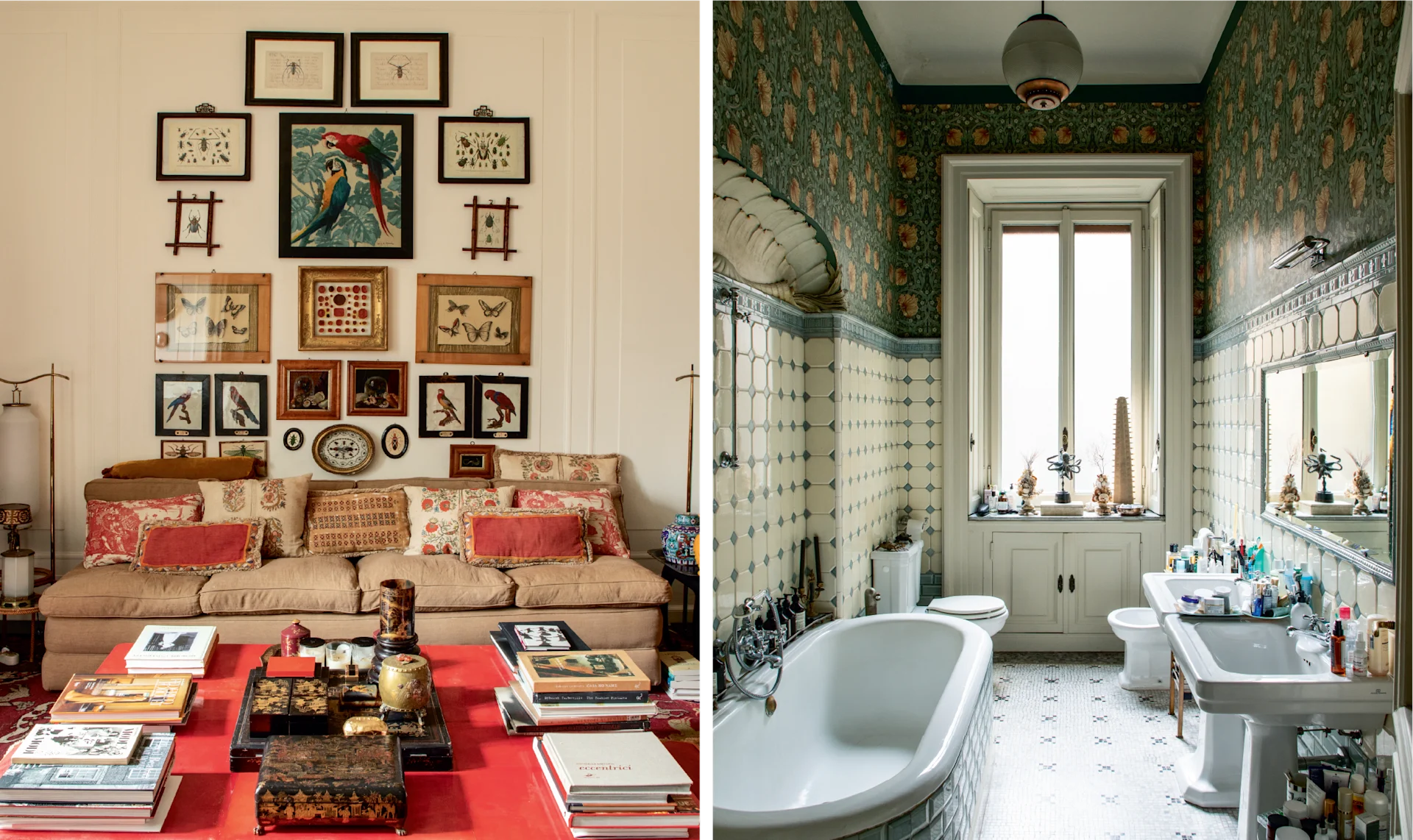
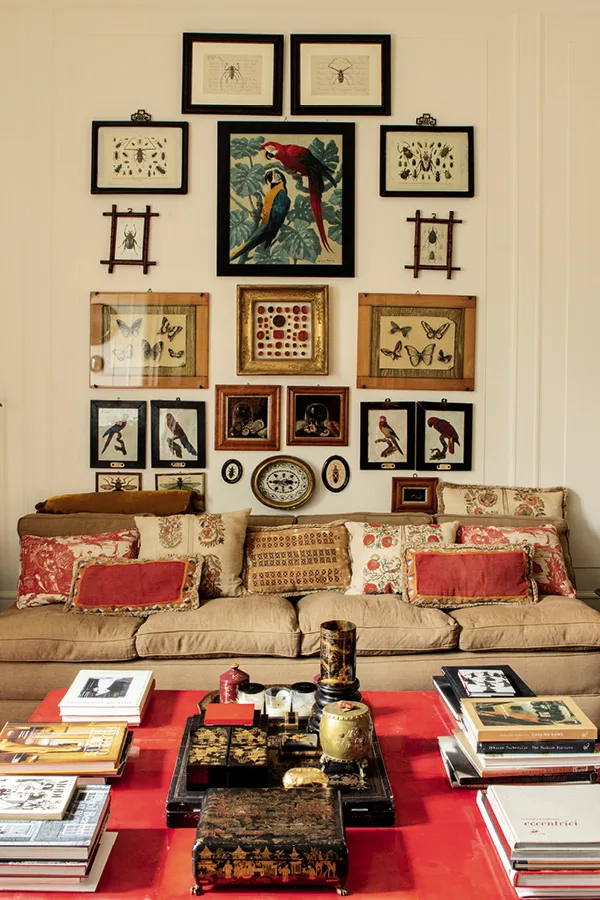
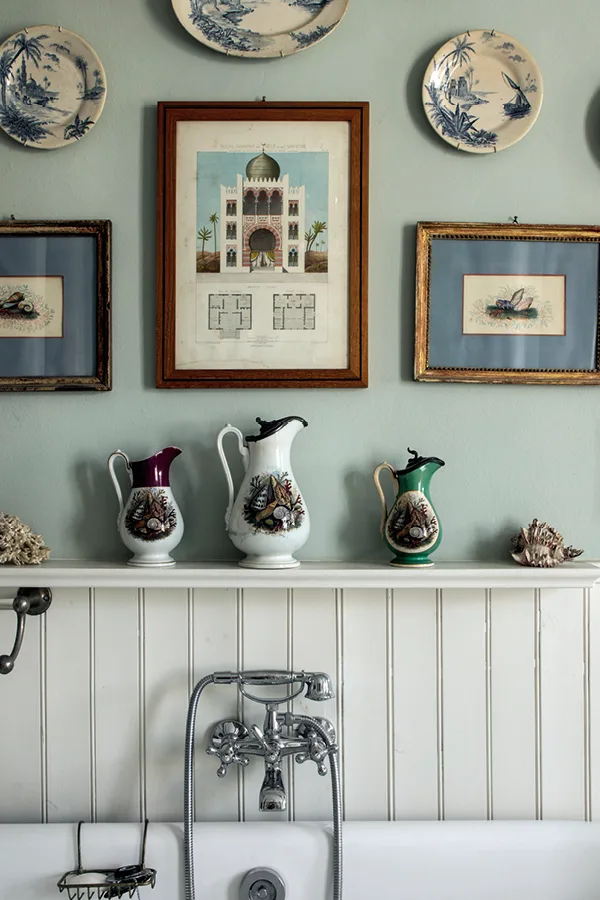
They were very enthusiastic. They're avid collectors. It's actually one of the few apartments that reminds me of a Parisian flat. Also, the stairs to access it, which are part of the building, are wonderful. They are very Belle Epoque, Neoclassical style. There are no pictures of them in the book, but it's definitely a very charming apartment. Funnily enough, it used to be an office, so when they bought it it was completely concealed by partitions and low ceilings, neon lights and lighting set within the ceiling like those horrible 1970s sealed boxes. So they really started to discover themselves by taking down these partitions and seeing what was there. And then there’s the fabulous bathroom. We don't have many bathrooms in the book, but that definitely is the star. That was the original wallpaper. The building was built in 1900, 1905, I would say, in that Italian style called Neo-Renaissance, overflowing with details. But that wallpaper is definitely a Belle Epoque Liberty from the 1920s or 1910s. It reminds me also of William Morris bathrooms. They're actually using this bathroom a lot. There’s an outrageous amount of cosmetics. I said, “Guys, oh my goodness.” Maybe that's why they look younger than they are! That’s why when I have mine photographed, I hide everything except the toothbrush. It gives away a lot.
Barnaba Fornasetti
Son of Piero Fornasetti; founder of the eponymous Italian design label
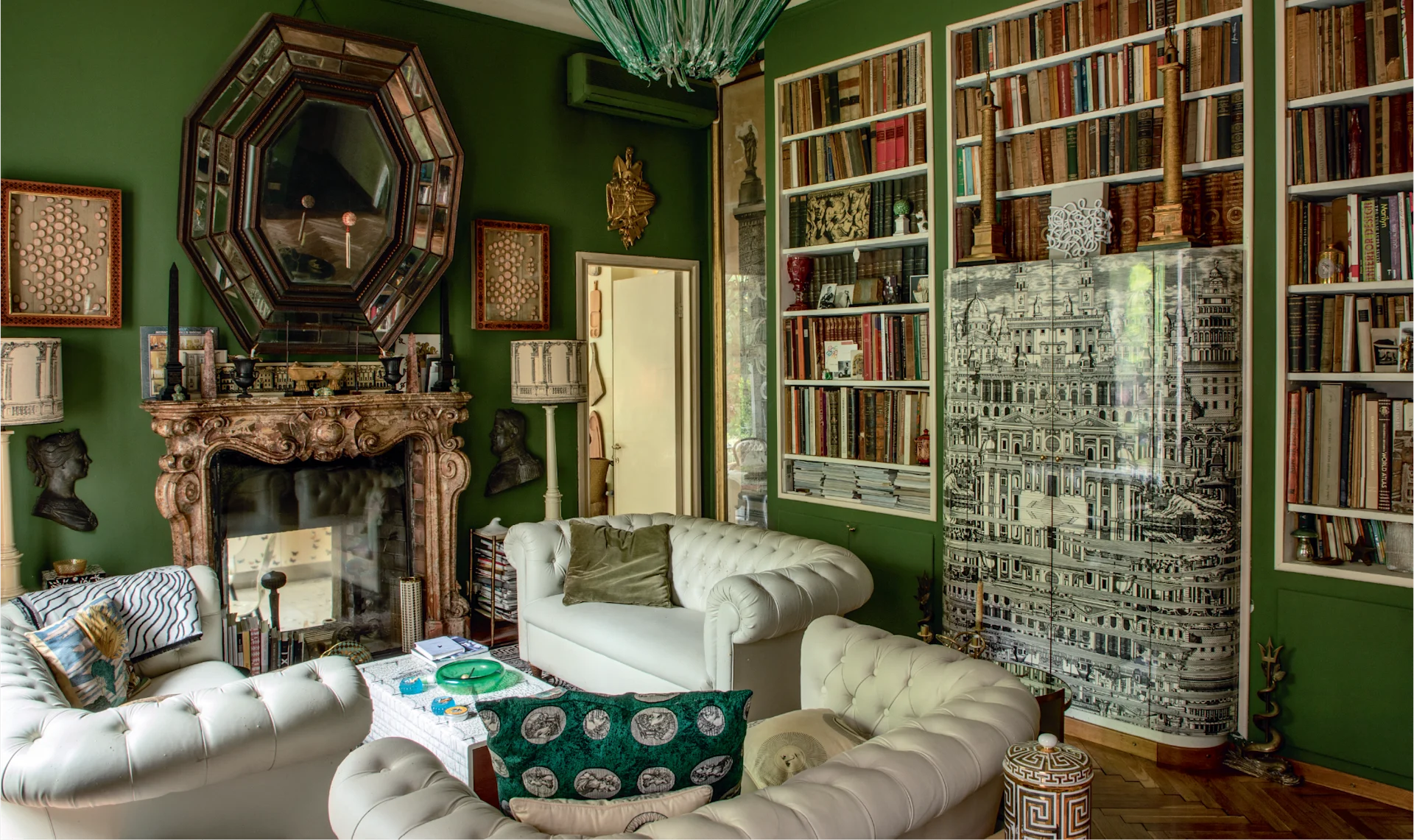
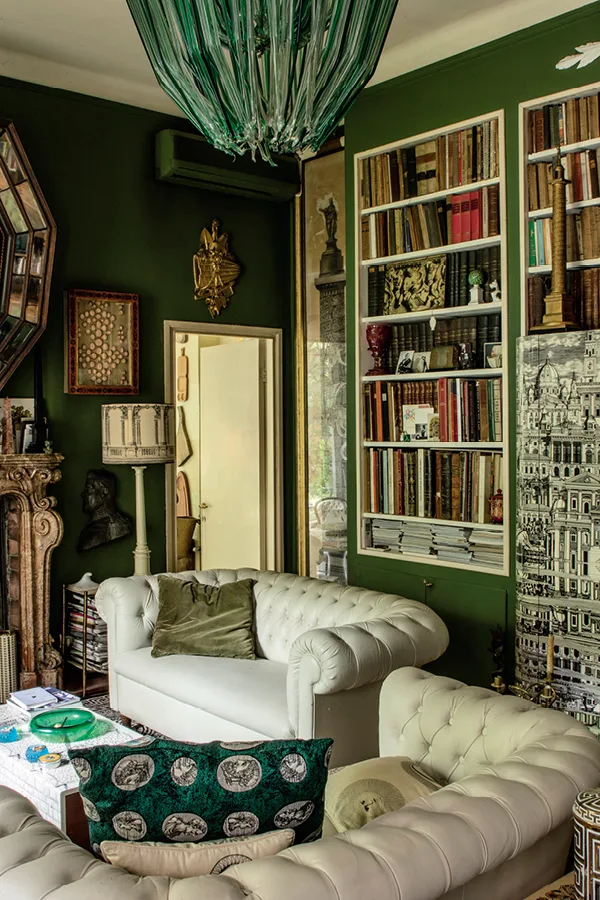
This one, funnily enough, I discovered thanks to the book. Although Piero Fornasetti was a great friend of Gio Ponti and a great friend of my great-grandfather, Piero Portaluppi, who was an architect, it was seriously a mind-blowing experience. I was very impressed by his show at Musée des Arts Décoratifs in Paris a few years ago, but going to this place and seeing the real thing, in their house, which is still lived in by him— it was tenfold. It was just incredible. Every single inch is covered with his father's creations and memories and pictures. His father was a hoarder and highly creative. And so the place is big, but it's packed. Every single detail is thought out, down to the smallest piece of stationary and up to the wallpapers and fabrics and objects, ceramics, ashtrays, tiles— you name it. We spent a full day shooting, unlike other homes where we would typically spend a few hours. We just wandered freely. We felt like we could move in.
The portrait is quite fun. It was Guido's idea to ask Barnaba to pose behind this very large umbrella stand made of ceramic AND with a foot. And he agreed. I didn't think he would because he's quite shy and not particularly friendly as a consequence, but he's actually a lovely man.
You’ll find there the original archives of his father's design. You are actually looking at a small part of it. There are at least a hundred volumes. Every single piece has been sketched with notes and measurements. It's incredible.
Enrica Stabile Saibene
Interior designer, antique dealer, founder of Milan-based styling studio Solamente Giovedi
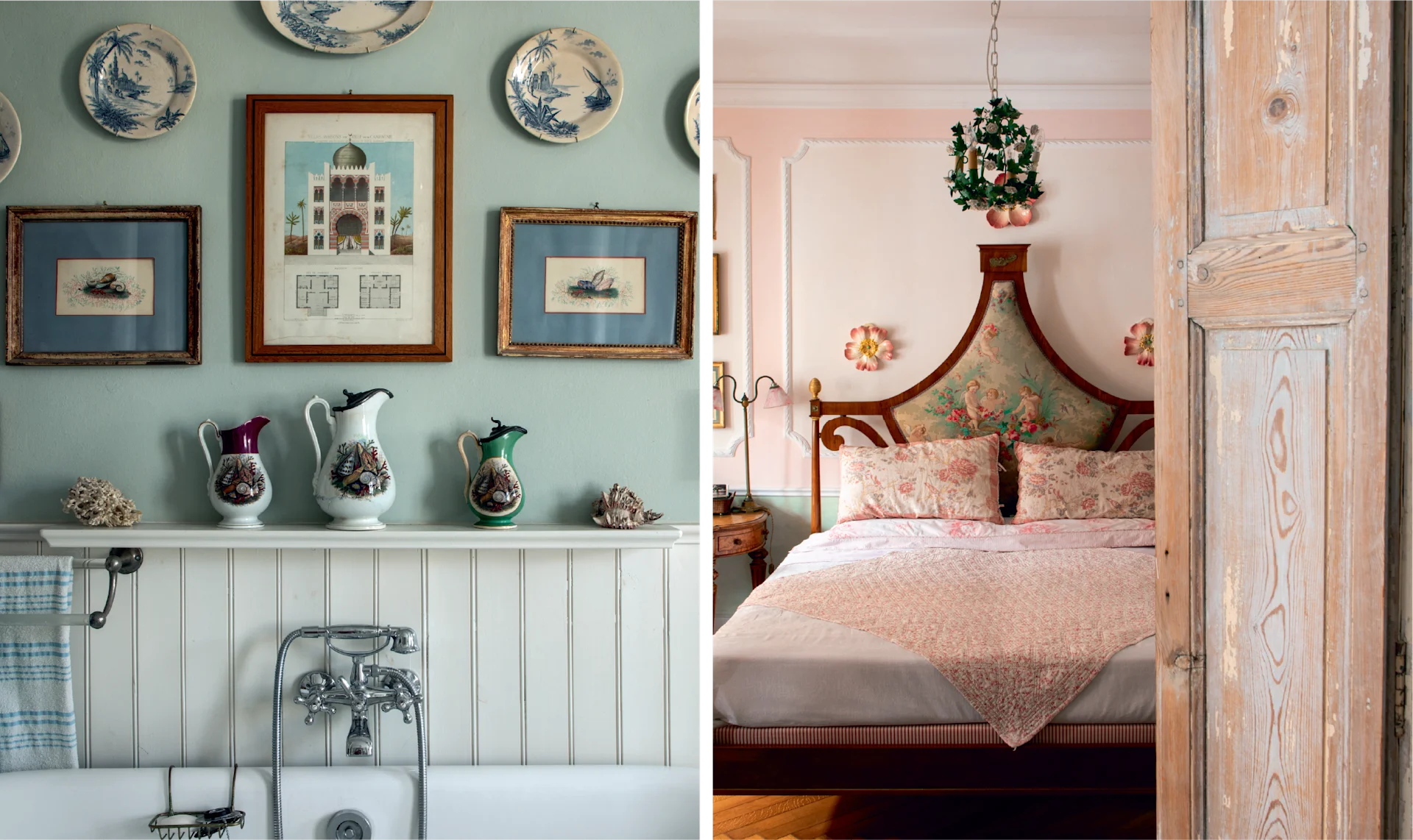
Enrica Stabile is an old friend of my family, and she’s considerably older. She's probably one of the closest friends of Guido Taroni, the photographer, despite the fact that he is 34 and Enrica is in her 80s. She was one of the few people that Guido asked me to photograph, although I've known her all my life. And I thought that her style would bring something unexpected to the book. She has a beautiful home in Provence, and you can tell. She's a decorator in her own right.
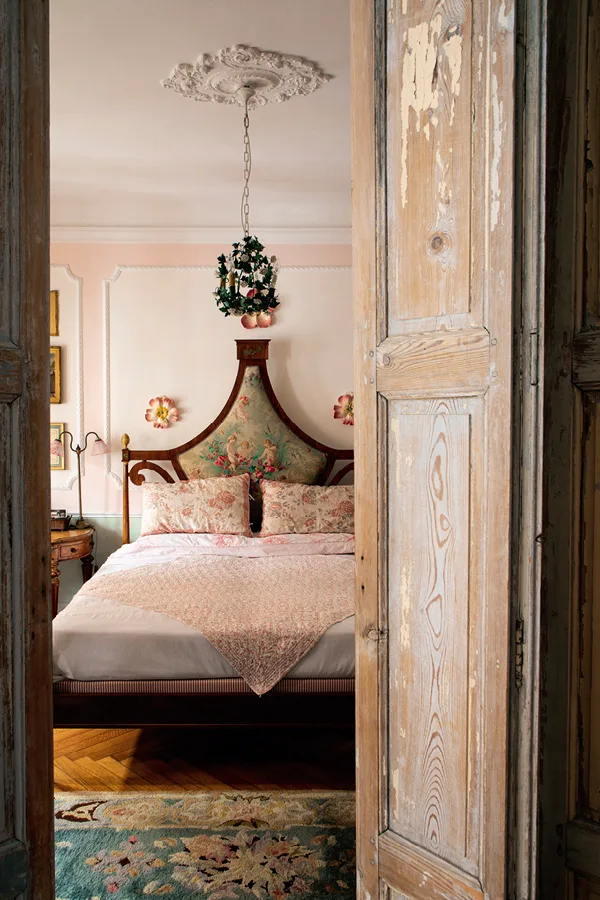
She owned a beautiful shop in Milan back in the '80s and '90s. She's always been a fan of this Gustavian, sort of Scandinavian, or South of France look. And she brought it together well in her apartment in Milan, which is set in a funny small building in a very Neo-Renaissance style. She's on the top floor. The proportions are very traditional Milan, wealthy bourgeoisie: big apartment, large central corridor, the reception area to one side and bedrooms and bathrooms to the other side and the service at the end with kitchen and staff quarters. It's like being in the country, I feel. It's definitely not what you would expect in a city like Milan, which can be quite mineral. But none of those homes, I feel, really match the cliche of how people imagine Milan— cold, modern, very hostile. All of the homes in the book, in fact, say the opposite.
Palazzo Trivulzio Brivio Sforza
Annibale Brivio Sforza, member of the Marchesi Brivio Sforza, an aristocratic Milanese family, businessman, and investor in organic agriculture methods; Marta Brivio Sforza, lawyer and patron of the arts
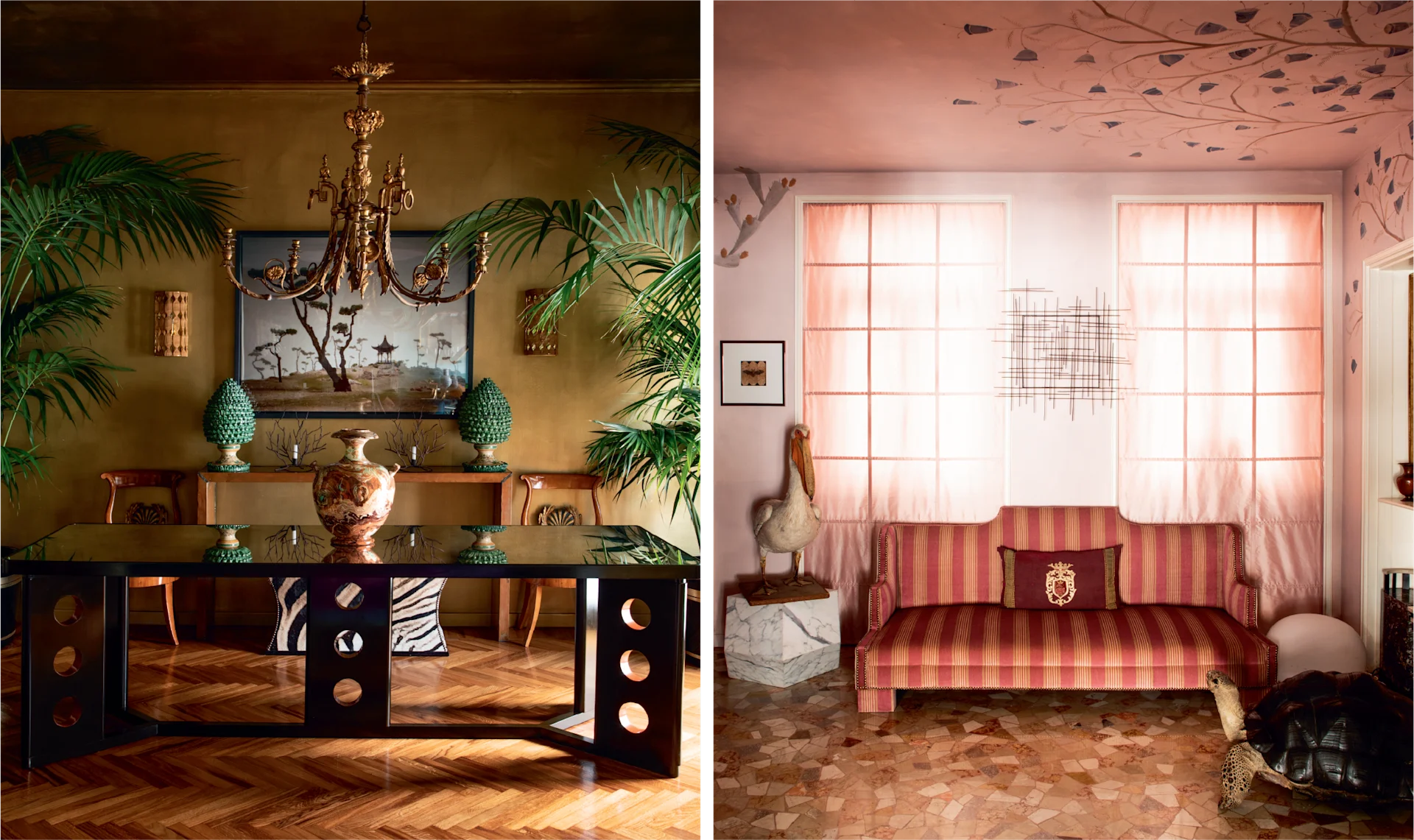
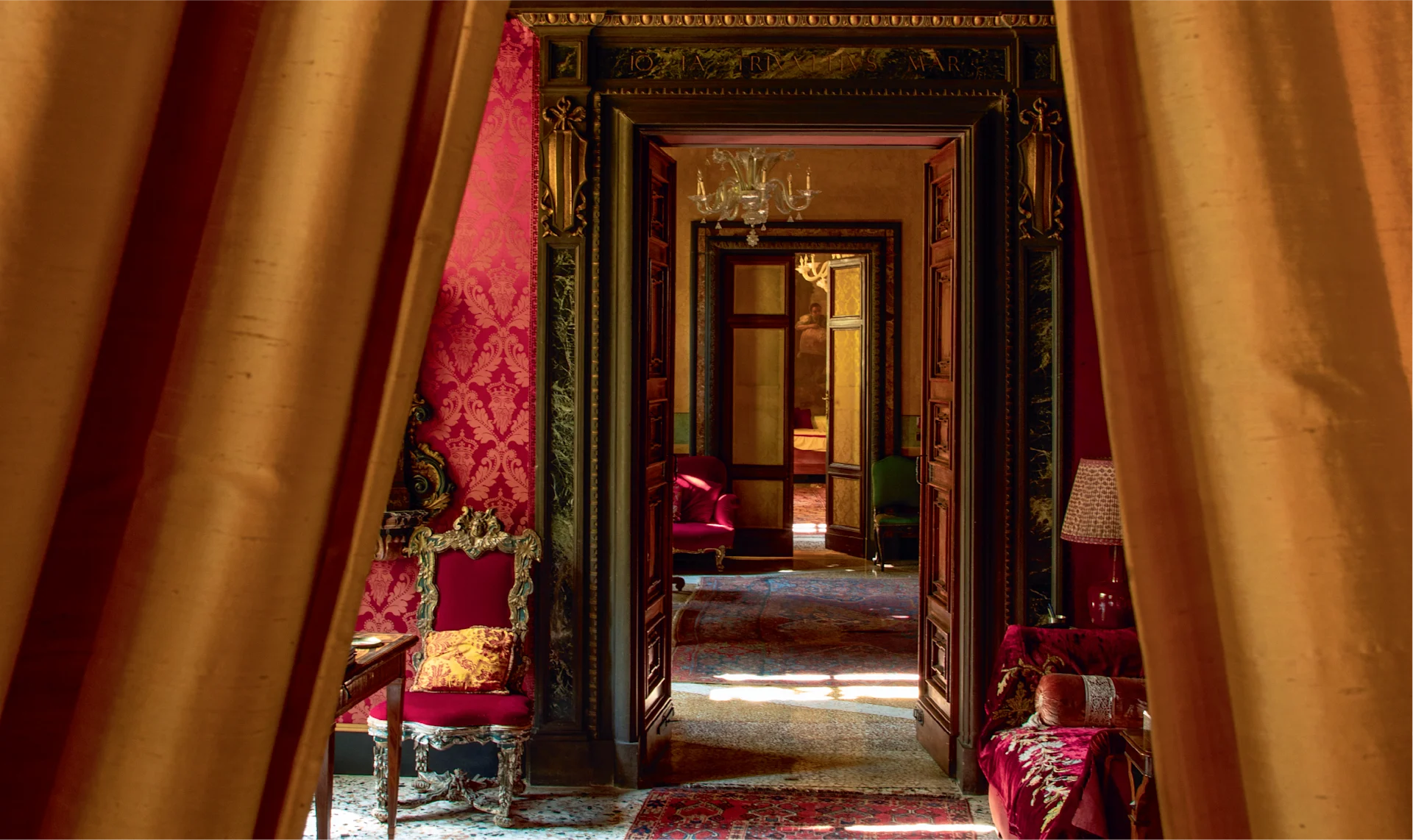
Well, the story behind this one is a story that could keep us on the phone ‘til tomorrow. I’ve known the Marchesi Brivio Sforza all my life— Annibale and his wife Marta. His family has owned the whole building since the 1500s, and it's definitely one of the most beautiful in the city. The Marquis Brivio Sforza was, and has always been, very reluctant in having his interiors photographed. He is quite conservative. His wife, on the other hand, being a very sparkling Neapolitan, fun, generous, lady, has always been trying to have it photographed. So, with a strategy, we managed to do it. We said, “Look, let's get to the palazzo and tell your husband that we're going to do a portrait of you on the main stairs.” Which is what we did. “And then as soon as he goes to the office, we'll come and sneak into the house and take some pictures, and then you'll sign the release form waiver.” She was very excited to do all this and go behind her husband's back. As soon as he left, we went upstairs to the back of the flat. She had prepared some champagne. It was only 10:30 in the morning and we had three glasses. She had given the day off to her staff, so it was just the three of us drinking champagne.
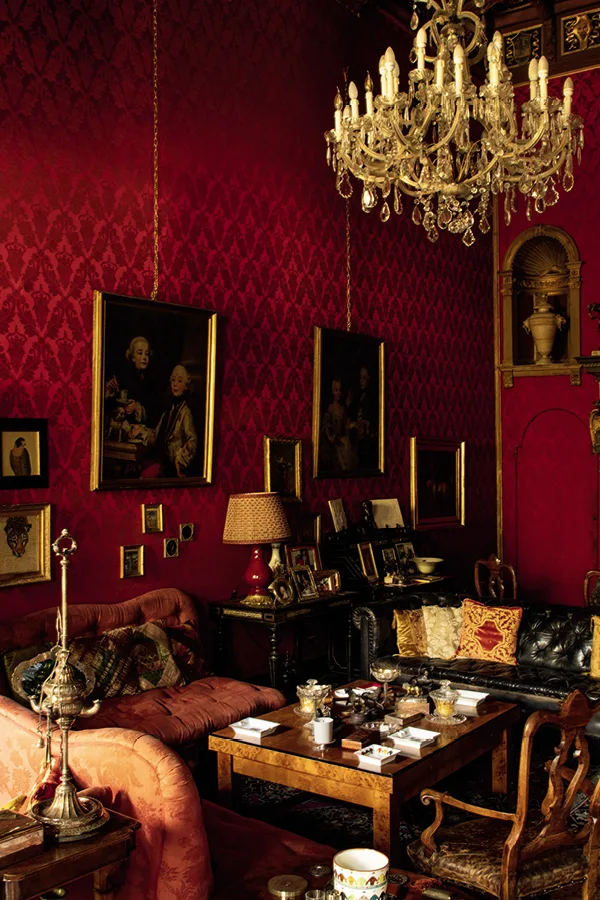
Guido was shooting away with the terror that the husband might walk back in because his office is on the ground floor. But what is interesting is that, while the building is a late-16th century building, the interiors have all been redone from 1884 and on. It's a complete remake. The original interiors would've been truly Renaissance and then Baroque, but what you see has been entirely redecorated with all these revival styles, where everything is a little heavier than the original. This was typical of Milanese society. The aristocracy were so wealthy that they would, in stages, redo what was already perfectly beautiful. A little bit like the Americans, like Henry Clay Frick and the Frick Collection. I mean, there's so much to talk about that. It housed the most important library in Milan, the Biblioteca Ambrosiana, amongst which had the Atlantic Code by Leonardo Da Vinci.
Hannes Peer and Philippe Rinaudo
Artist-architect; Creative Director at the fashion house No21
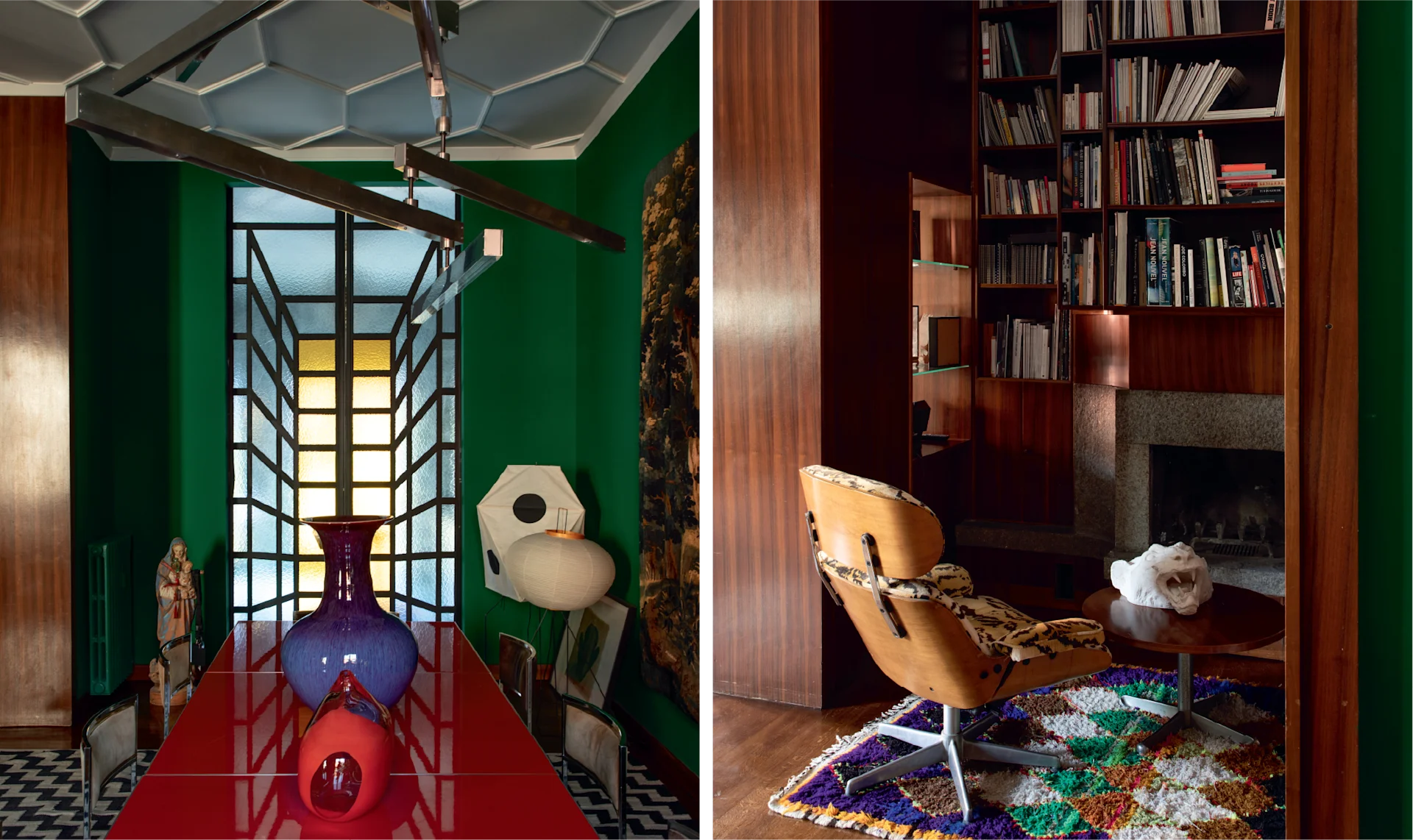
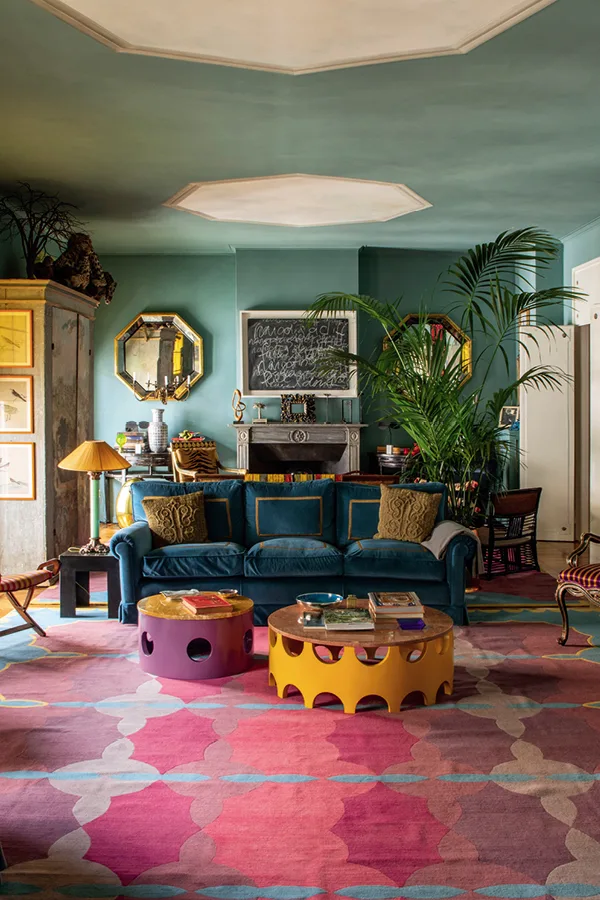
These people I didn't know before. I met them through my partner Christopher, who wrote an article for Elle Decor US about one of Pier's projects. I was desperately looking for something a little more cutting edge. We struck gold. If you go on his Instagram, he's actually very bold and minimal, but his house is colorful and warm. It’s a combination of both sensibilities.
Most architects and designers in the pure sense of the word are very intellectual, so they find a coffee table book, by definition, very superficial. Some of them turned me down for that reason because it wasn't good enough. Hannes was the opposite and really embraced the project. And I think that his house is incredibly interesting.
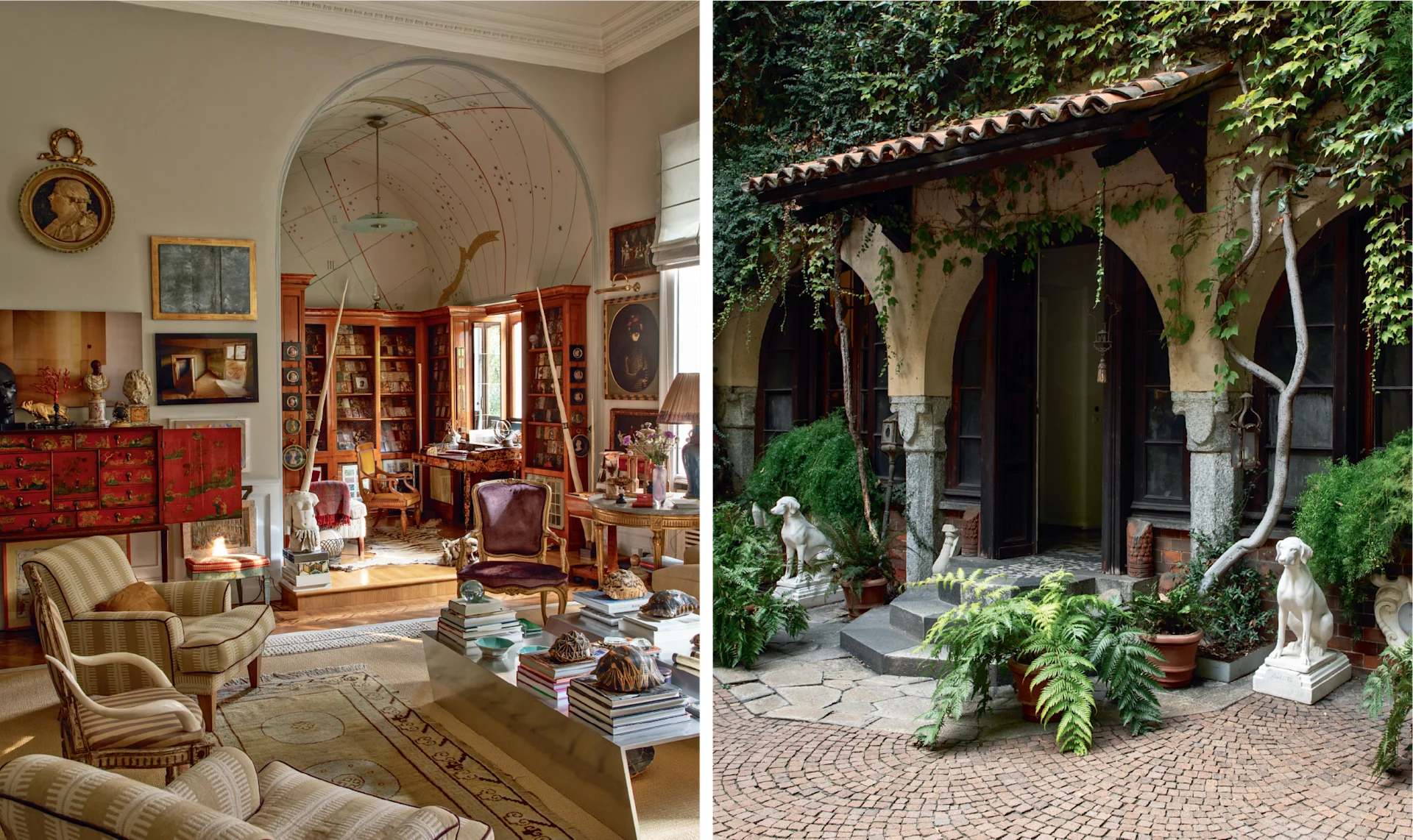
Casa degli Atellani
Piero Castellini Baldissera, architect and interior designer
The apartment that is featured in the book was my great-grandfather's (the renowned architect Piero Portaluppi) and is my father's today. I have been coming here since I was four. He passed away the year before I was born, but my great-grandfather's widow, my great-grandmother, lived until 1978, so I enjoyed her company for 10 years. And I remember that for six of them, every Thursday, we would be invited for lunch.
And so I've known that house. She had left it absolutely intact. She hadn't moved one single object since the day he died in '67. My relationship with that house is very intense and my memory is incredibly vivid. It’s something that has accompanied me as far as I can remember.
During the interim between the deaths of my great-grandmother and my father's moving in, there were a few years where some of the rooms were rented out as a fashion showroom for Valentino, and then to Emanuel Ungaro. My grandmother— the only daughter and the heiress to the whole building— wouldn't hear of having anyone moving in. But at the same time, she allowed her parents' house to be used as a fashion showroom, which was very unlike my grandmother, who was incredibly conservative and considered fashion terribly vulgar. So those rooms that you now see a lot were abandoned, then they were used as a showroom. And then finally my father forced her to let him move in, and he's been there since ‘85. As I'm talking to you, I mean, I have a slideshow in my mind that goes from black and white to color, because the house has a lot of history. You feel it. And I'm just talking about half a century. But that building has been standing for over 500 years.

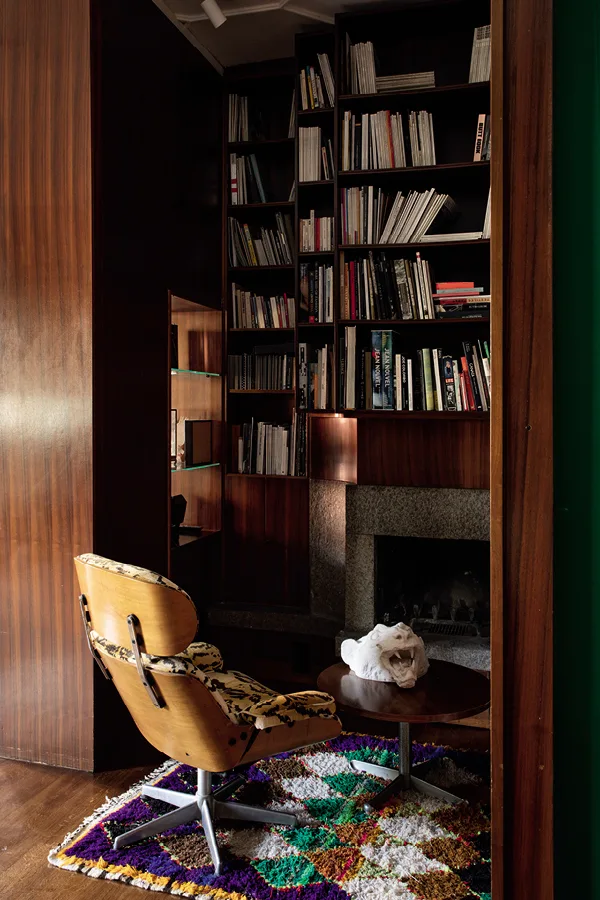
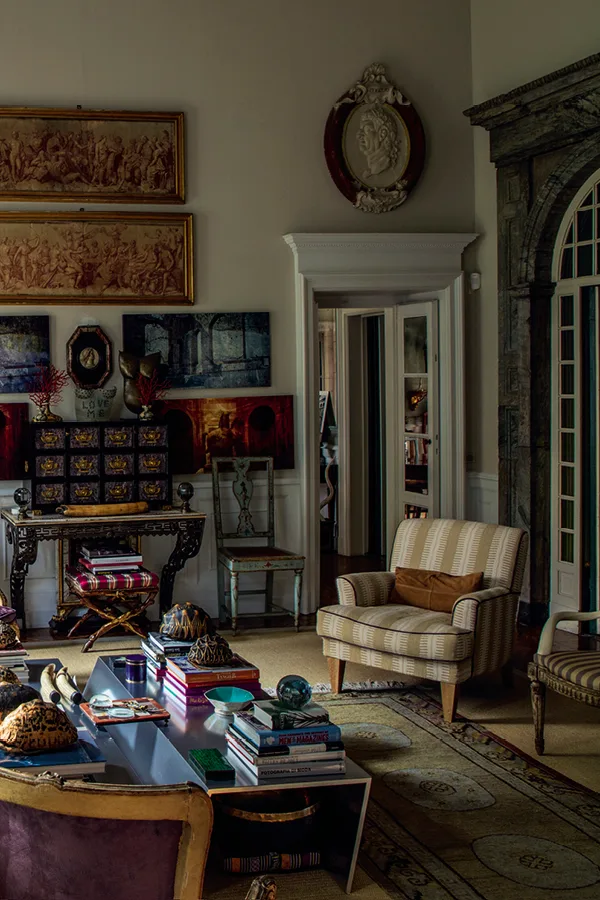
Top photo: Guido Taroni (courtesy Nicolò Castellini Baldissera)