On a ferry ride across the Irish Sea, a green-eyed missionary named Tiffany asked me where I’d be sleeping that night. I had no idea. I’d been traveling solo during the fall of 2000 and I tended to let fate determine my sleeping arrangements.
Tiffany’s question was purely Christian. She only cared to put a roof over my head, so she led me to a church and promptly sent me off to its male dormitory. My burly roommates there introduced themselves as Nepal’s national Judo team.
I had decided to travel by myself out of a deep reverence for my great-grandfather, Barney Kasoff, who drew strength—and conveyed it—from being alone. Throughout his eighties and nineties, the time of his life that intersected with my own, Papa Barney would spend hours quietly reading the paper or putting together jigsaw puzzles. He’d emerge from those tasks content and present, and I understood it all to mean that creating boundaries around oneself could all but guarantee a recharge inward and a smile outward.
Papa Barney passed away the morning after his hundredth birthday. He had always known this is how it would happen, and he told me that when it did, there was no need to stay home and mourn. I left for Europe as funeral arrangements were being made. I was 22, straight out of college and hoping to one day work as a writer (without having a clue what that would mean), and I wanted to see if Papa Barney’s practice of solitude might somehow help me along.
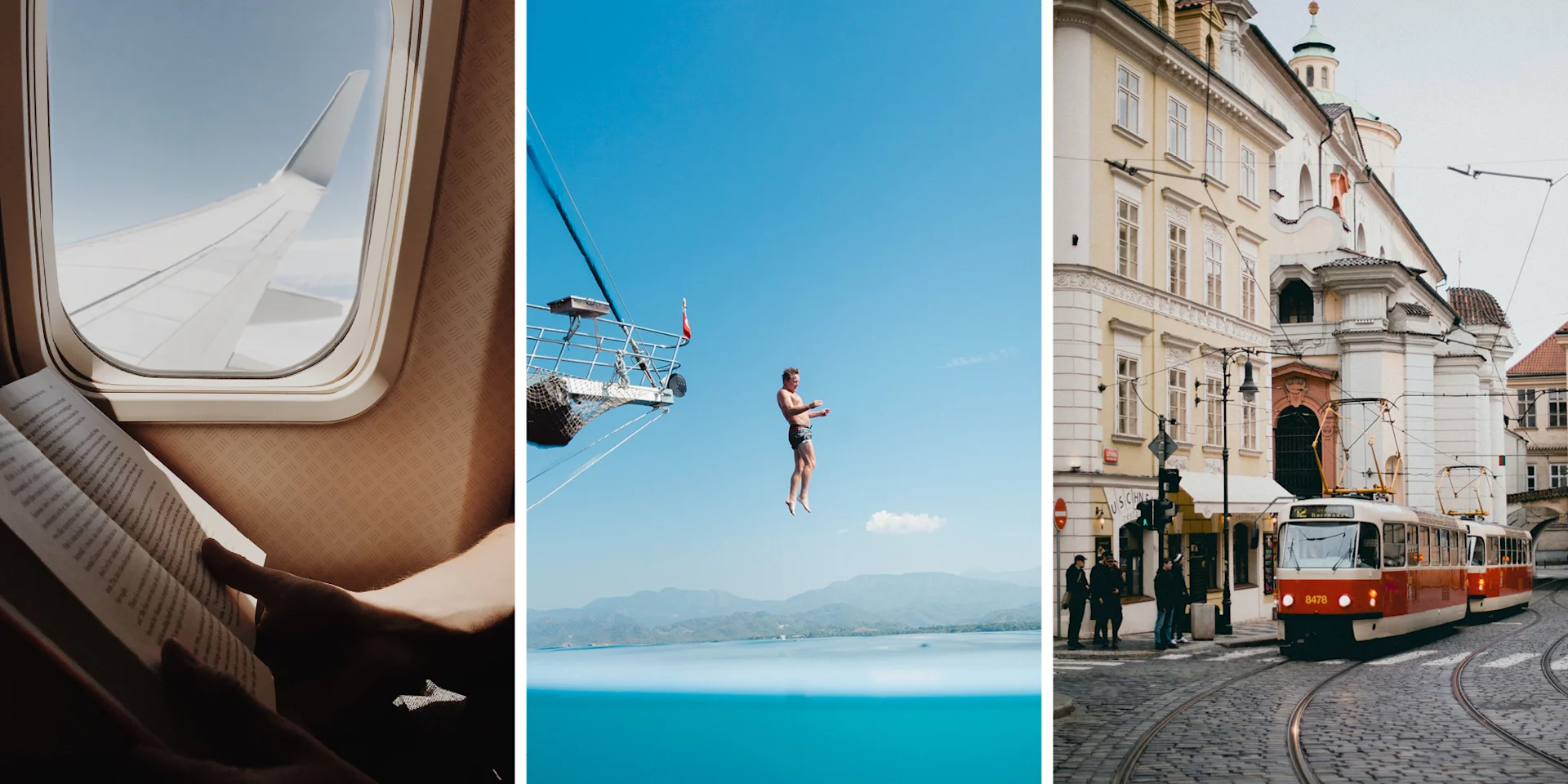
After surviving the Dublin dormitory surrounded by martial artists whose fists and elbows could have qualified as weapons, I said goodbye to Tiffany and headed on to Amsterdam. There, my hostel’s adjacent bunks filled up with Israelis fresh from military service. Looking for hash and sex, they appeared to be doing some kind of post-traumatic work of taking themselves apart and putting themselves back together. In Prague, I met a coven of Canadians consumed by club drugs and Infinite Jest. No matter where I went, pods of Australian backpackers introduced themselves and their grand plans of circling the globe until their youth ran out.
Groups were everywhere to float between, to pass through their cells without ever attaching. They provided me with laughter and flirtation, but I had an adult-writer-self to build, which I took to mean collecting as many observations as possible. I thought of Papa Barney, my own personal Russo-Polish-Midwestern Dalai Lama, and decided I needed to be a better student of solitude.
That fall, I was by myself far more than with anybody else. There was too much to be excited about to ever be lonely and too much to do to ever feel stuck. Books became more like relationships than objects. I’d read Tolstoy and Rilke for hours, only taking breaks to order trofie al pesto in a Ligurian trattoria or to ask a Swiss farmer the way back to town after I had aimlessly wandered into his pasture to learn of Anna Karenina’s ultimate fate. Every day, from Tiffany to Tolstoy, from poetry to paccheri, it felt to me that the world was expanding, and I was expanding along with it. There’s a way in which travel can make you feel like a tiny speck in a grander scheme, but the very opposite was happening to me. For the first time in my life, and during my longest stretch of solitude, I felt big and capable of infinite growth.
By some miracle, an adult-writer-self did eventually emerge. Since then, I’ve been lucky enough to work alone all over the world with so many varieties of solitude to enjoy.