Venice, as you may have heard, is crowded — exceedingly so.
One way to avoid getting drowned out by the thousands of visitors clogging the canals? Head 40 miles outside the lagoon city to Palladio country, a tranquil patchwork of manicured north Italy farmland and historic architecture that rolls gently up and down toward the Alps.
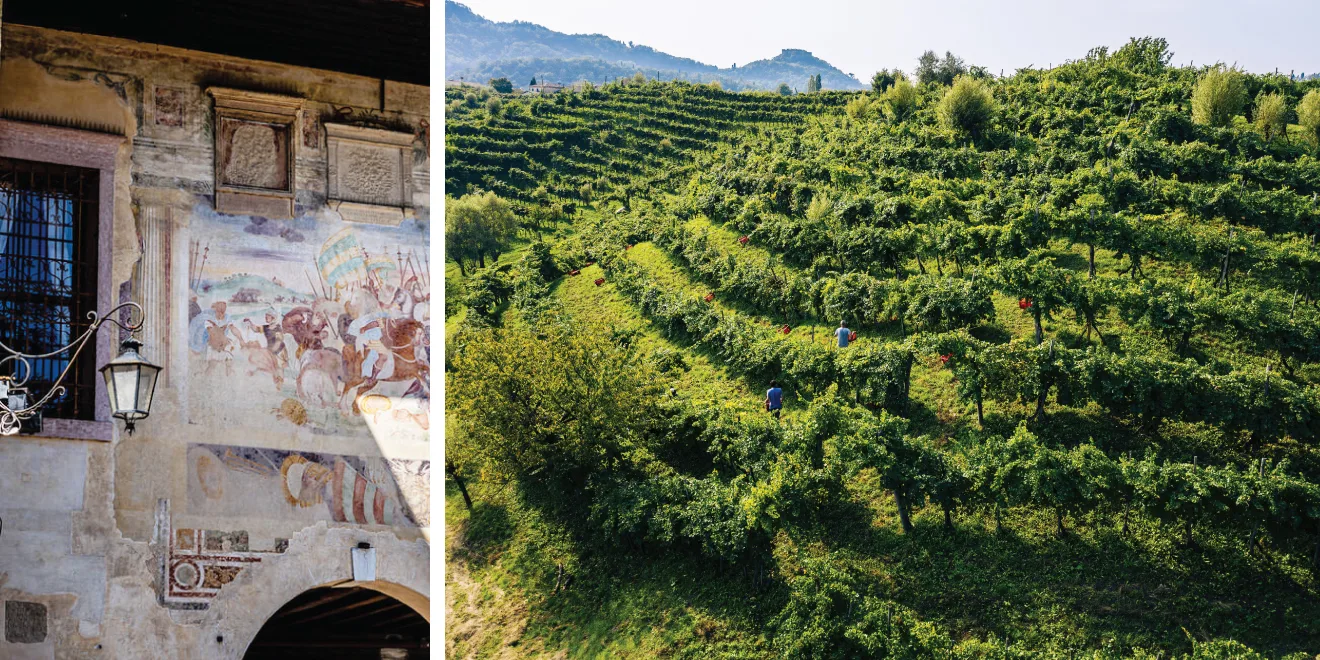
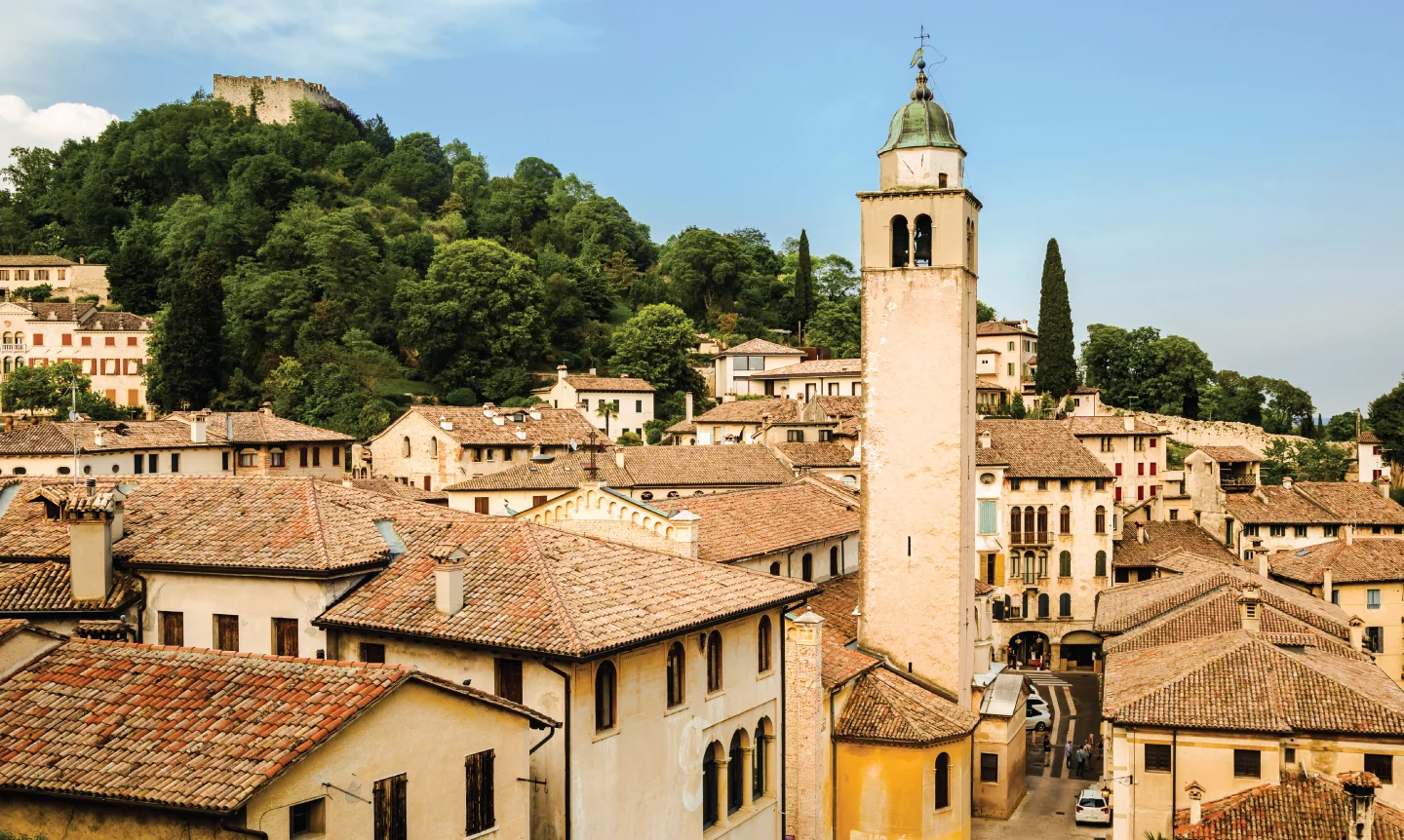
For centuries, the mass-tourism antidote in the Veneto has quietly been Asolo, a charming slip of a town perched in the foothills with compact arcaded streets and rows of centuries-old stucco houses plastered with faded frescoes. Asolo's name comes from the Latin word “asylum,” meaning “refuge;” so it’s fitting that its high medieval walls have guarded the summer villas and second palaces of wealthy poets, writers and royal tastemakers as far back as the 15th century, when ex-Queen of Cyprus Catherine Cornaro declared it an “it” destination for Late-Renaissance thinkers, creatives and worldly adventurers.
Still, for an off-the-grid Veneto pit stop, Asolo is surprisingly accessible — only an hour taxi from Venice; about a half-hour to 45 minutes longer drive from Verona, Padua and the palatial masterpieces of Vicenza; and just a handful of minutes from the Villa Barbaro at Maser. The most opulent — and historic — properties owned by nobles of the Venetian Republic are strung along the banks of the Brenta, from Trentino to the Adriatic Sea just south of the lagoon. Between the 15th and 18th centuries, the riviera doubled as a scenic waterway for well-heeled summer seekers — including Casanova, Galileo, Byron and D'Annunzio — who used elegant canopied boats called Burchielli, often decorated with mirrors, custom carvings, multiple colors and with three or four balconies, to shuttle back and forth between Venice and their Palladio playpens. “Let’s sing,” Goethe once wrote, “Burchiello's delicious, comfortable carriage, in which one travels along the Brenta.”
Today, cruising along the canal is still the best way to soak in the spectacle of splashy Venetian real estate. Two of the most unmissable are Villa Foscari, which sits on a massive pedestal and is decorated with wall-to-wall frescoes depicting “the pleasures of Earth.” The villa was renamed La Malcontenta ("The Discontented”) after a spouse of one of the Foscaris was accused of cheating and left locked inside the house. That drama pales in comparison to Villa Pisani, “the queen of the villas on the Brenta,” with its perfect classical proportions, 144 rooms, immense side stables, maze garden, private lake and ballroom with a painted ceiling that reads: "Every step is a new sight and a new beauty."
Like a cobblestoned version of Hollywood’s Walk of Fame, a constellation of steel plaques in Asolo’s main square pays homage to the town’s many charismatic habitués. Robert Browning wrote of Asolo in his 1841 poem, Pippa Passes. Decades later, he moved into a towering palazzo in the heart of town. In the 1960s, Browning’s estate was secured by the Guinness family, who commissioned Giuseppe Cipriani, the founder of Harry's Bar in Venice and inventor of the Bellini cocktail, to transform the property into Hotel Villa Cipriani. The Queen Mother and Barbra Streisand have both stayed at the prim-and-picturesque boutique hotel, and, come June, you can add PRIOR to that list. The first destination for PRIOR x Cabana Caravan, a travel series hosted by PRIOR”s David Prior and Martina Mondadori of the cult interiors magazine Cabana, is the Veneto. (Sign up here.)
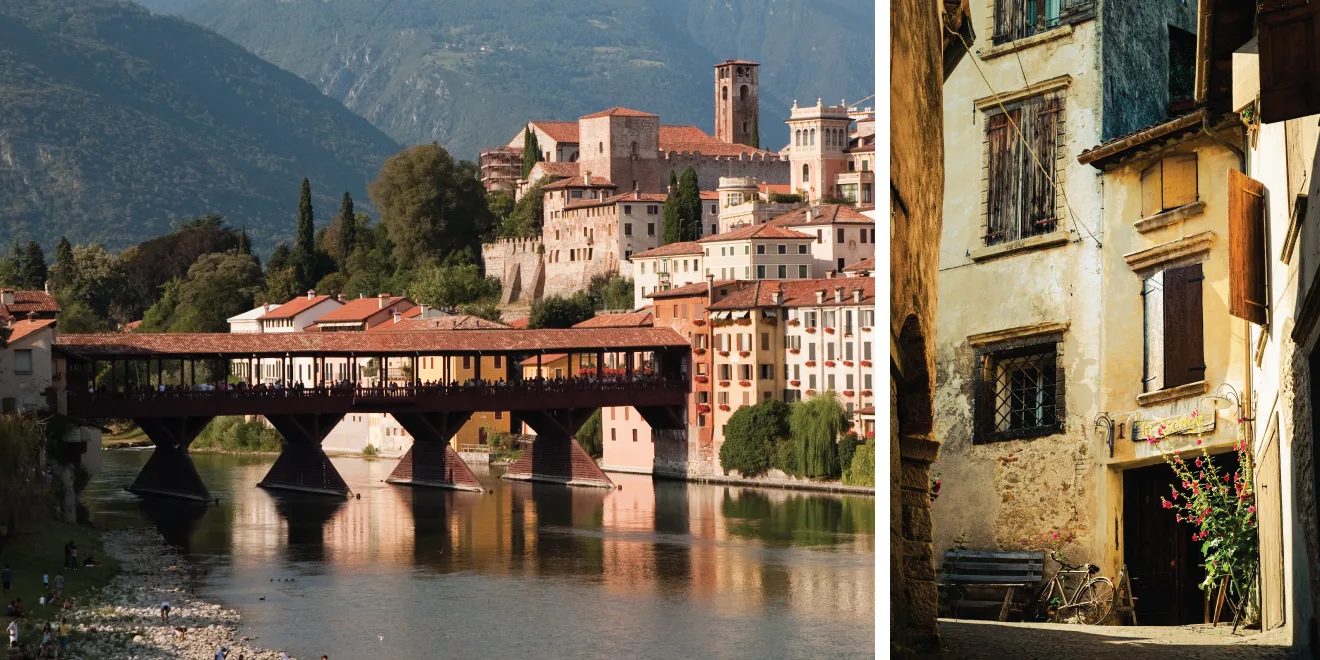
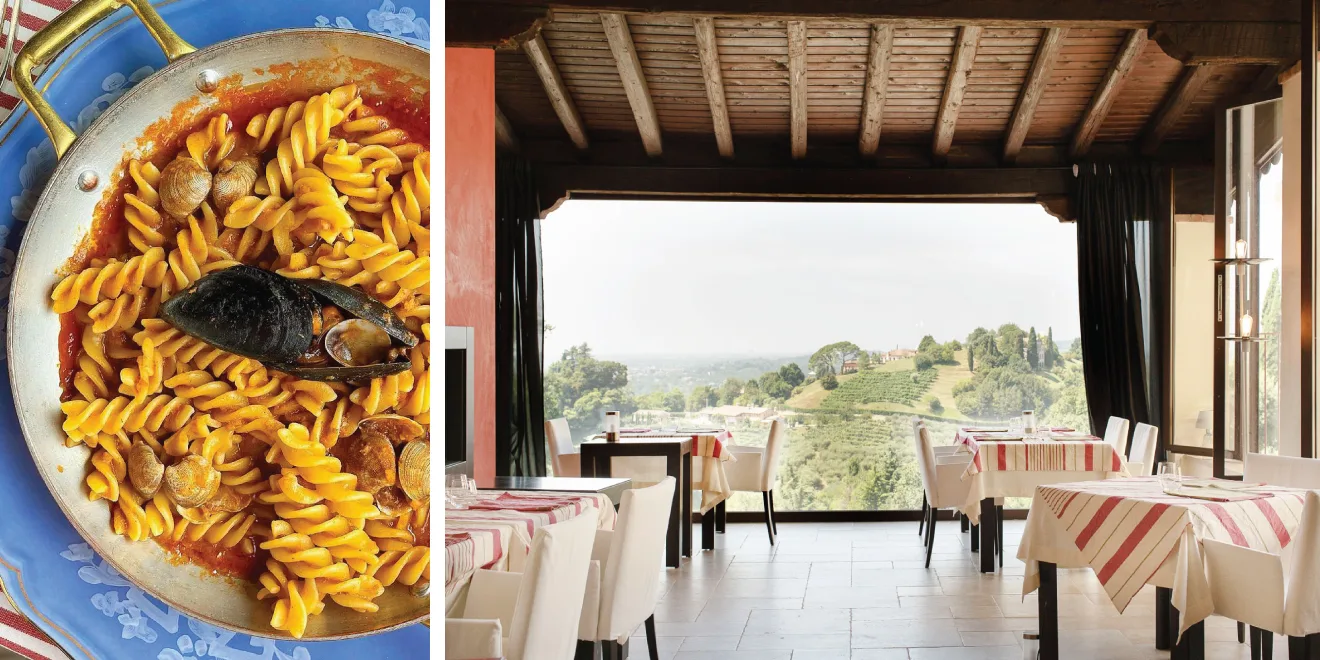
In many ways, Asolo has remained largely untouched since Browning’s day. Even in 2023, there are remarkably few tourists at the local cafés serving pinza, Asolo’s local cake stuffed with apple, currants and dried figs. In fact, it’s easy to imagine Browning and Henry James, who wrote part of The Aspern Papers while in town, enjoying tagliatelle with local clams from Chioggia over a glass (or two) of Venetian Spritz followed by a glass (or two) of grappa — most likely from somewhere like Distilleria Nardini, an ancient distillery overlooking the Ponte Vecchio bridge in Bassano del Grappa that has been in business since 1779. It’s easy, perhaps, since that type of only-in-the-Veneto dining experience is very much still on the menu at popular present-day spots like Trattoria Moderna Due Mori, an excellent restaurant with Mussolente striped tablecloths and panoramic views of the villa-studded hills, and Osteria Al Bacaro, a rustic family-style osteria.
Flanked by the Monte Grappa and terraced vineyards gripping the sides of the Dolomites, the region surrounding Asolo is the birthplace of two iconic Italian drinks of choice: grappa, a liquor made by distilling grape debris left in the press, and Prosecco, a sparkling white wine. Liquor production, in particular, is considered a heroic feat of viticulture, since the high-altitude hills produce limited yields. Thankfully, smaller batches keep the quality of bubbly high. (Glera is the main grape used for Prosecco, but the region’s vines also produce indigenous varieties like Bianchetta Trevigiana, Verdiso and Perera, which are largely unknown to visiting oenophiles.) Many local wineries, such as Bele Casel and Cirotto Vini, are family run, and have been so for generations. It’s not uncommon to hear today’s operators chatting about their parents hand-labeling bottles featuring grapes harvested by their grandparents.