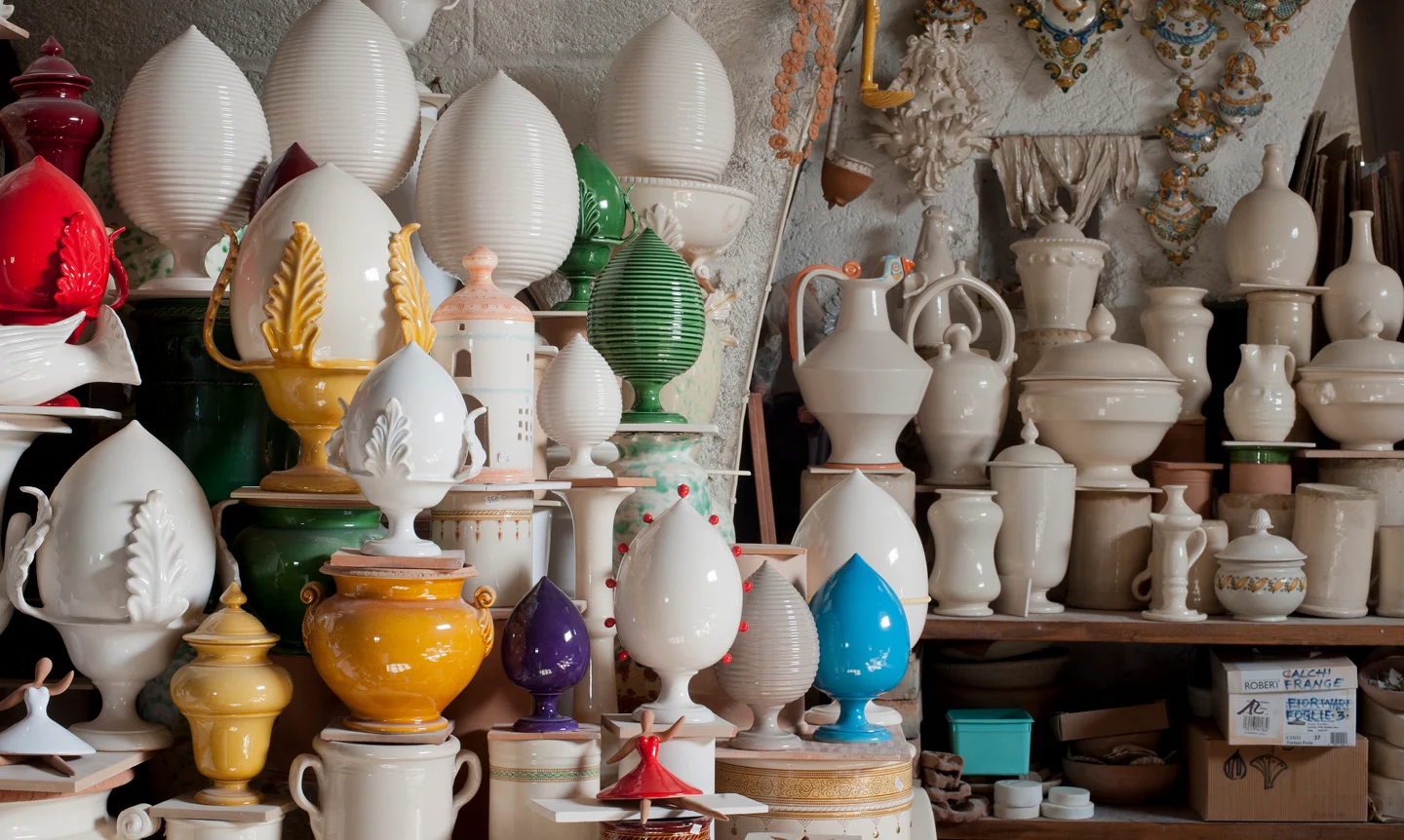
Puglia, Italy has long been admired by flaneurs and oenophiles for its sense of idyllic Mediterranean escapism, whitewashed architecture and sweeping farmland and vineyards. The dry sunny region that forms the heel of Italy’s boot is also known for its ceramics – a craft that’s been upheld for centuries due to the region’s abundance of red clay.
Around the world, Apullian ceramics are most commonly associated with schizzato (colorful splatter paint) earthenware, which has found its way onto many a tablescape and Instagram feed. Ruagnara or capasonara (everyday kitchenware) and faenzara (precious ornamental pieces) are other distinctive forms of ceramics specific to Puglia, but no ornament is as precious to Puglia as the beloved Pumi di Grottaglie, ceramic flower buds (or some say they resemble pine cones) that serve as good luck charms, symbolizing fertility and prosperity that adorn every home in the region. The town of Grottaglie is the hub to more than 50 ceramic workshops, making it the region’s pottery capital. Many of these businesses are family-run, passed down through generations and remain committed to the preservation of their ancient craft.
The Fasano name, in particular, you’ll see on nearly every other storefront; that’s because for 18 generations, the Fasano family has continued carrying out the craft of their ancestors– of which there are many. The skilled ceramicist Nicola Fasano had five brothers and one sister– all of whom, along with his kids and their kids, remained in the business– many opening their own studios to showcase their respective modern interpretations of the centuries-old craft. Though it may seem that the Fasano’s run the gamut in Grottaglie, there are many skilled artisans from other families who’ve spanned generations. Below are some of the best.
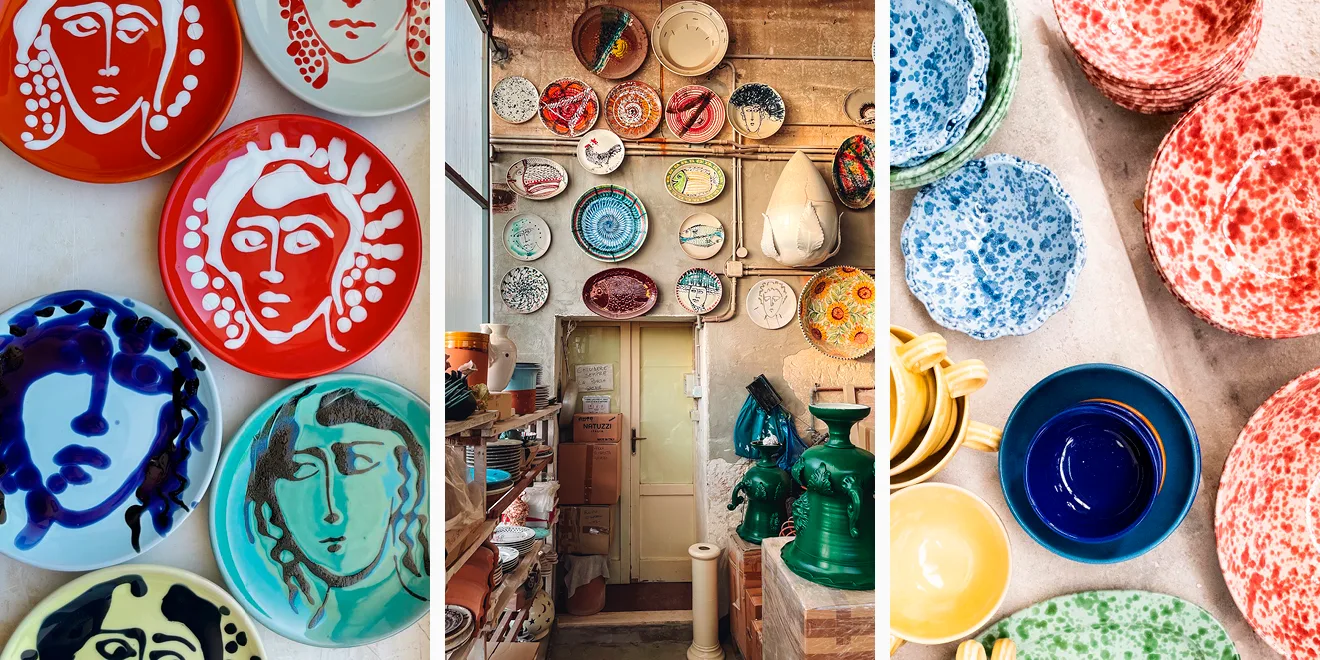
Ceramiche Nicola Fasano (CNF)
The most famous and by far the largest operation is Ceramiche Nicola Fasano, established in 1968 by the late ceramicist Nicola Fasano, whose family roots in the field of ceramics date back to the 19th century. For 18 generations, the Fasano’s have continued to carry out their family legacy, expanding into international territories with retail partners, like Merci and The Conran Shop. Today, the company is run by Nicola’s eldest son, Franco Fasano, his wife Filomena and their daughters Carmen and Nicoletta. Pay visit to their workshop then head up the hill to the store for a truly immersive experience.
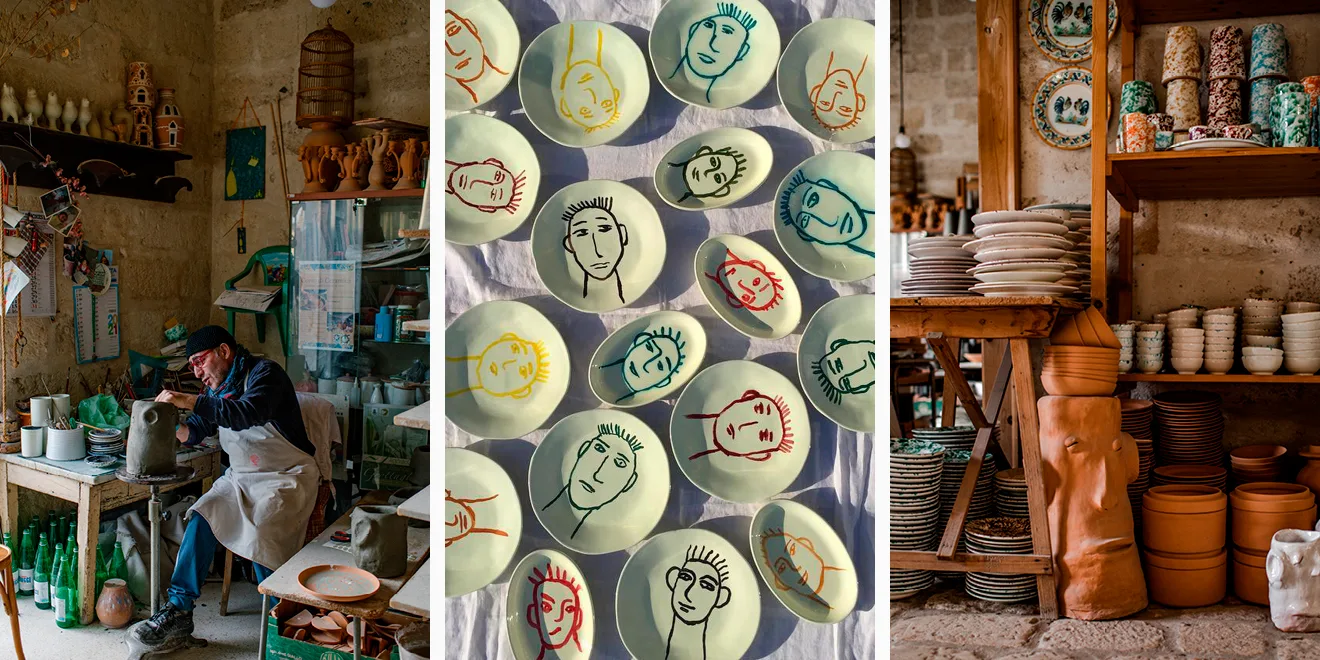
Bottega Ceramica Di Fasano Antonio
One of the most enchanting shops in Grottaglie belongs to Antonio Fasano, the son of late ceramicist Gaetano Fasano, the brother of Nicola. Antonio spent his childhood working in his father’s shop before receiving his masters in art and returning to work at his father’s bottega. Shortly after his father’s death, in 2003, Antonio opened his own shop with long-time friend and collaborator Tonino Zoppo. Against the backdrop of the ancient wood-burning furnace, you’ll find historical majolica wares whose use of monochrome turchina, a particular shade of blue, is distinctive to their workshop, as well as a colorful assortment of marmorizzato, a decorative marbled collection that uses an ancient technique of splashing the object with color to create a smooth, blended finish. The shop’s most coveted collection, arguably the brand’s signature, is the “Ciro Faces” line, which Antonio’s eccentric brother, Ciro, now 64, has been designing since he was young. The family recognized Ciro’s artistry early on and encouraged him to pursue his talents which he does through his collection of quirky, abstract face plates and sculptural vases that use an archaic technique called Lucignolo, resulting in whimsical pieces.
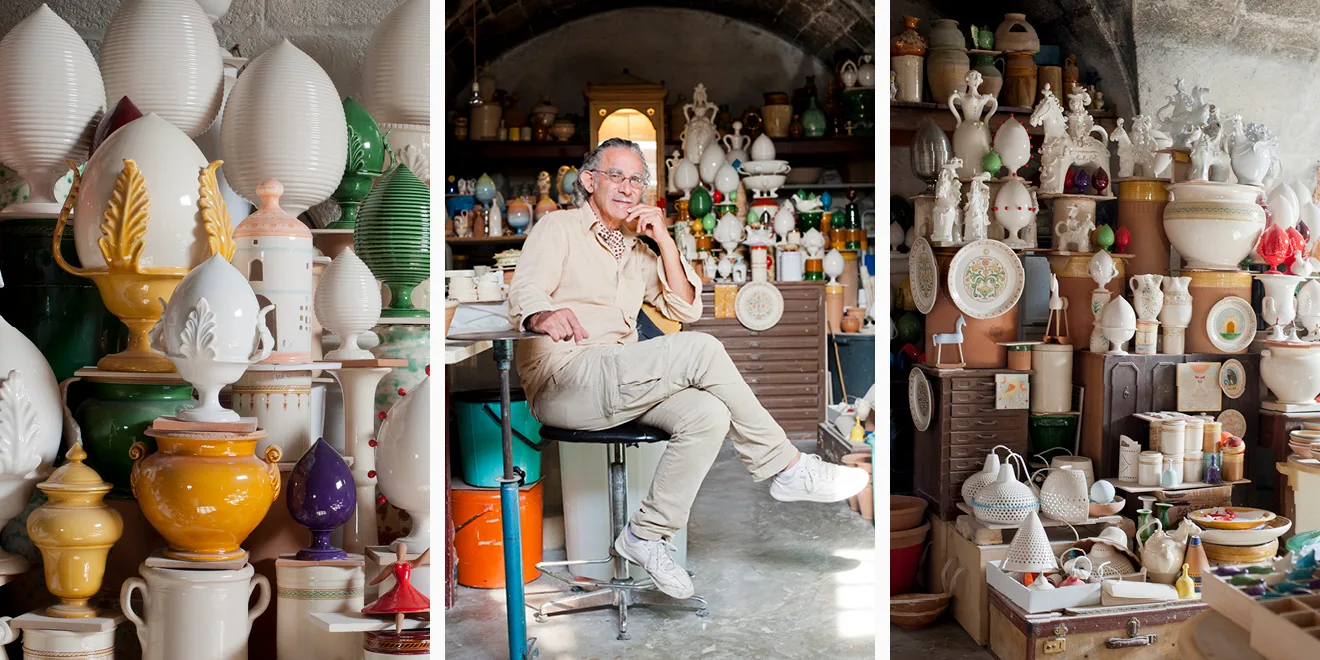
Bottega Vestita
One of the most soulful workshops in Grottaglie belongs to Cosimo, more affectionately known as Mimmo Vestita, who runs the business with his brothers Carmelo and Antonio, whose memories working with clay in their father’s studio date back to their childhood. At their workshop at the top of Via Santa Sofia, which has a rooftop terrace overlooking the village, rustic shelves brim with piles of ceramics in revived ancient shapes, like colorful variations of the pumo, Grottaglie’s lucky charm that symbolizes new life. A half century of design sketches hang on the walls, documenting the evolution of the family’s craft, while traditional capasone’s (earthenware jars historically used to carry water, wine and oil) of varying shapes and sizes hang overhead. If you’re lucky, the knowledgeable Mimmo will escort you to Casa Vestita, his stunning mansion next door which features Byzantine frescoes and a spectacular 19th century garden.
Ceramiche Enza Fasano
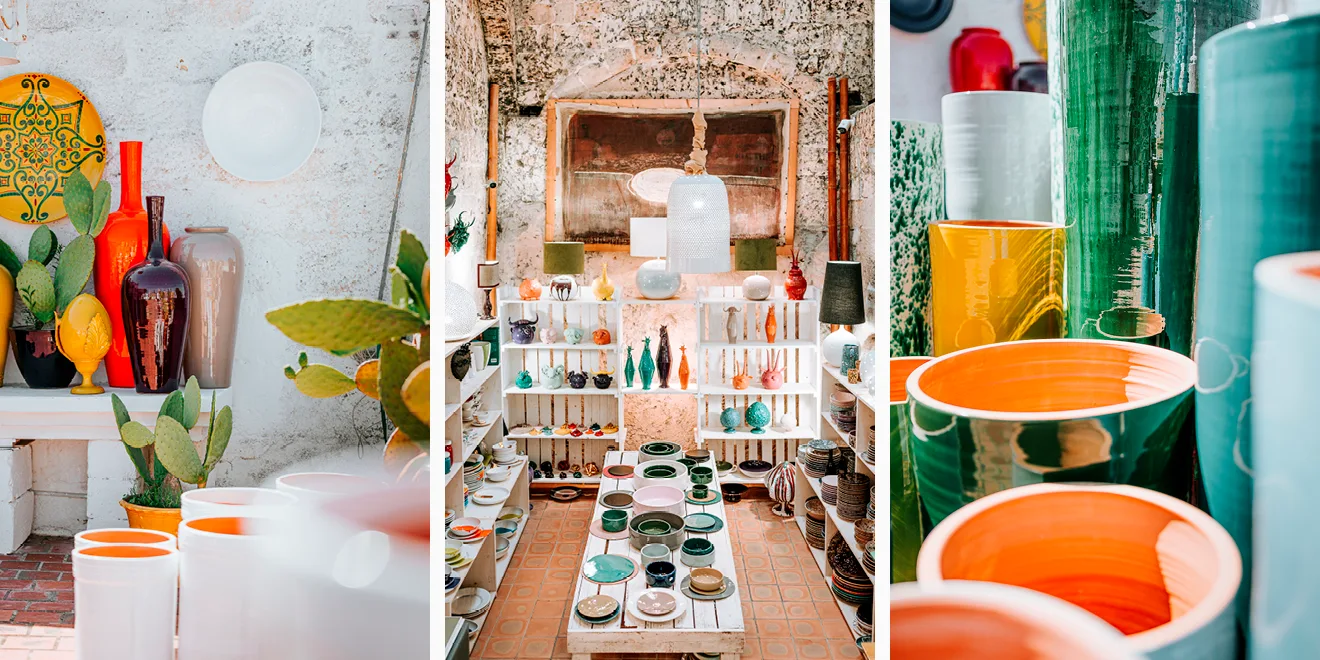
Ceramiche Enza Fasano, which opened in 2006, is a family-run ceramics studio and shop housed in an ancient monastery from the 15th century. Enza is the only daughter of master Nicola Fasano and currently runs her bottega with her husband Salvatore Santoro and daughter Giovanna, who works as a designer. Spread across three floors and the terrace, you’ll find a wide assortment of traditional and contemporary items, but what Enza has become most famous for is her line of I vasi slim, or slim vases in bright colors– her workshop is one of the most colorful in all of Grottaglie. Enza has always focused on putting a modern spin on traditional objects. The “Slim Collection” features chic elongated objects that were traditionally used to store wine, water and oil.
La Grotta Ceramiche
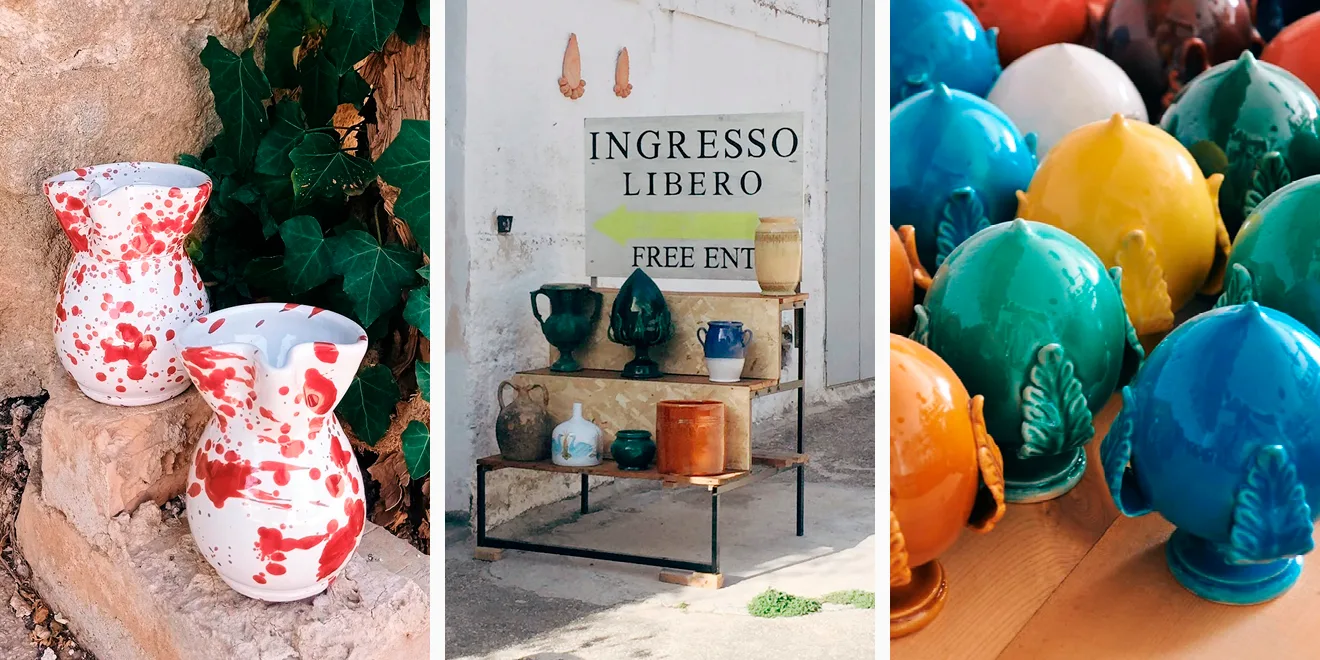
Coming from a long line of ceramic artisans dating back to the late 19th century, Antonio La Grotta is one of the few that has made a name for himself outside of the Grottaglie ceramics community. With a particular expertise in etching, he is often tapped to restore artifacts, frescoes and historic monuments. Today, he runs his ceramics workshop where he specializes in ceramics distinctively hand-painted with original illustrations, traditional pieces using Taranto-style techniques, and his spin on schizzato, or splatterware, featuring plates with two-tones.