The Location
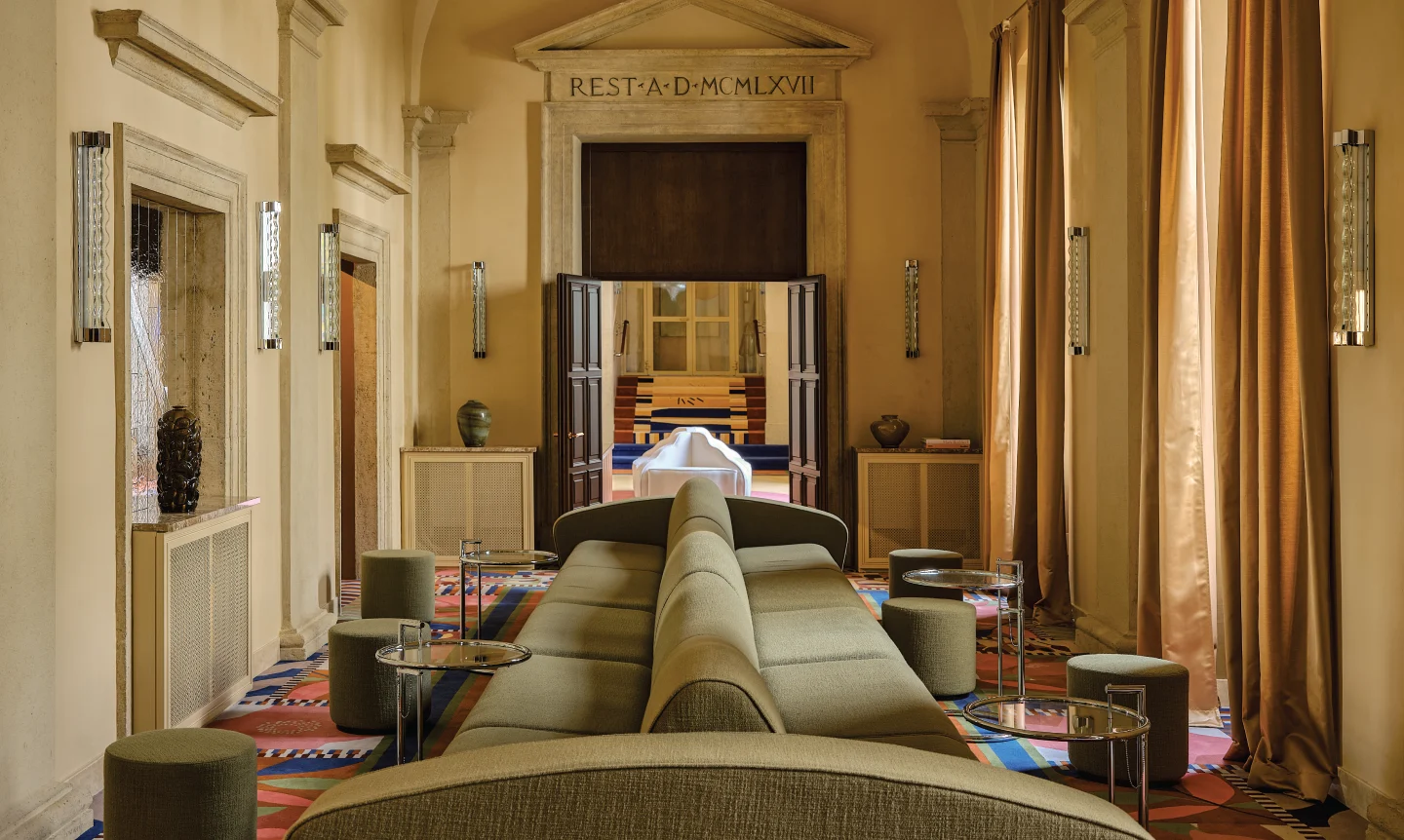
A prestigious boarding school until 1999, the building in which the new 26-room Palazzo Talìa sits is situated in a 16th century palazzo located in the heart of historic Rome. Most notably is its later political affiliations. The last floor of the Collegio del Nazareno (the hotel palazzo) is still the HQ of the Partito Democratico (the social democratic political party in Italy) — a group who occupied much of the these hallowed halls before the renovations began. There’s a cinematic quality to the hotel, likely attributed to its public spaces being thoughtfully restored and designed by Studiolucagudagnino, the interior architecture studio founded by Oscar nominated director Luca Guadagnino. Luca Guadagnino’s first foray into hospitality feels much less like a hotel and more like a private residence inspired by one of his films, yet complete with all of the modern comforts to ensure a discreet and stylish stay in the ancient city.
The Proprietors
The property was acquired by the Federici family, a prominent family in Rome, who has an expanding portfolio in hospitality under Fresia Hotels. The family specializes in restorations that fuse historical authenticity with modern luxury, and Palazzo Talìa marks a continuation of their commitment to high-end hospitality with a unique focus on Rome’s cultural legacy. The decision to transform this historic 16th-century building, once the residence of Angelo Maria Colocci and later the Collegio Nazareno, was fueled by the family’s passion for Rome’s layered history. "It doesn’t have the constraints of anonymous hotel chains, nor does it exhibit standardized luxury,” explains engineer Elia Federici, the driving force behind the project whose daughter Angelica is responsible for hotel management. “[It is] a palace infused with the syncretism of three centuries of history, yet also exuding contemporary flair.” This heritage-rich project allowed the Federicis to create a hotel which would allow guests to experience Rome’s rich cultural layers in a personal, immersive way.
The Design
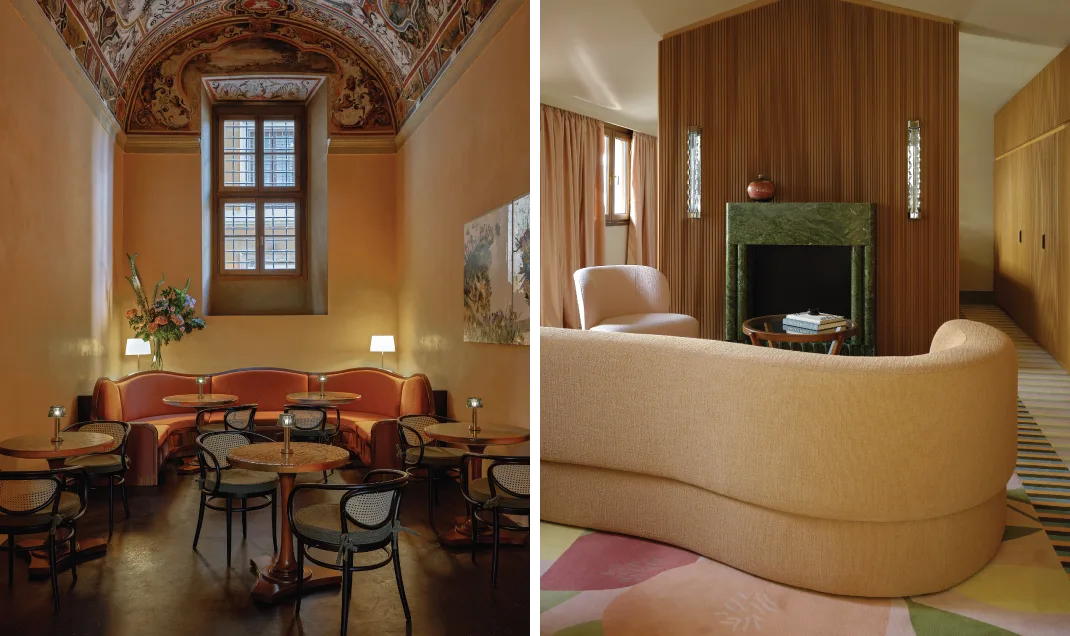
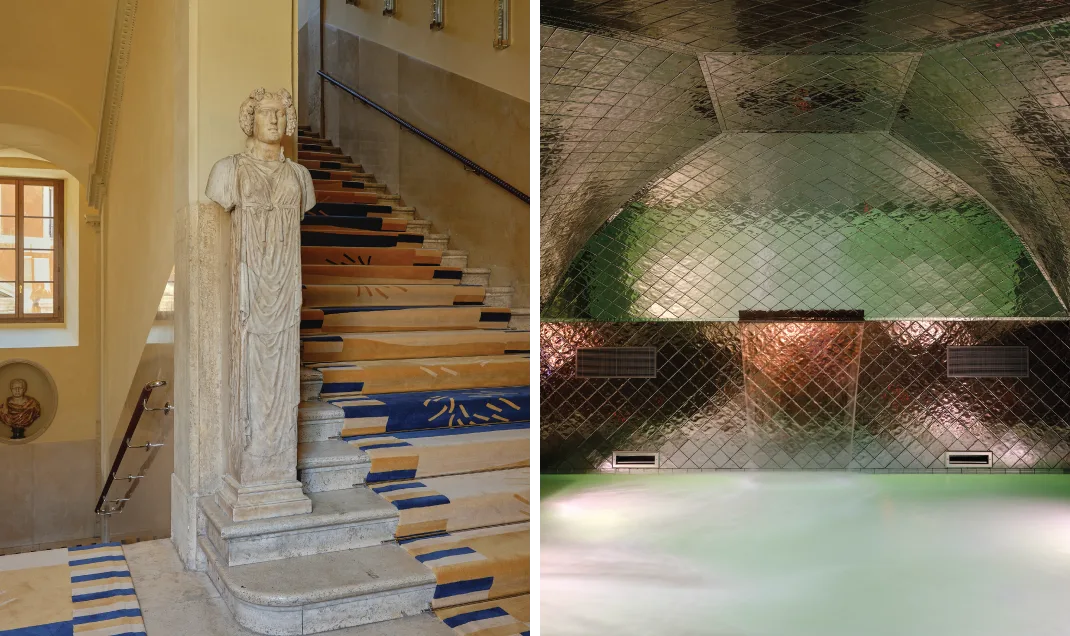
As it was important for the family to preserve the building’s architectural heritage within the bounds of a modern hotel, they enlisted Studiolucagudagnino to set the creative tone for the interiors, where the studio was tasked to design the reception, all public spaces, the terrace suite, as well as the hotel’s restaurant, bar, and spa. "The aim is to provide a home away from home for the guest: many Roman residences are majestic, adorned with architectural details of great opulence, yet lived in with simplicity,” explains Elia, who adds that the idea of working with a film director on a space like this, to create something theatrical and unbridled, appealed to him. “I admire Guadagnino's keen aesthetic sensibility, evident not only in his films but also in his absolute modernity, attention to detail, and the quintessential Sicilian tenacity in crafting bespoke experiences — a quality that's invaluable for Palazzo Talìa, where craftsmanship reigns supreme.” This is articulated through the seamless synthesis of the original, centuries-old frescoes adorning the bar, grand noble floor with its 36-foot-high ceilings, and the Aula Magna, or great hall, where the building’s original Roman busts punctuate the corridor and artwork by contemporary painter Delfina Scarpa, representing the new generation of Roman artists linking the past with the present, line the walls.
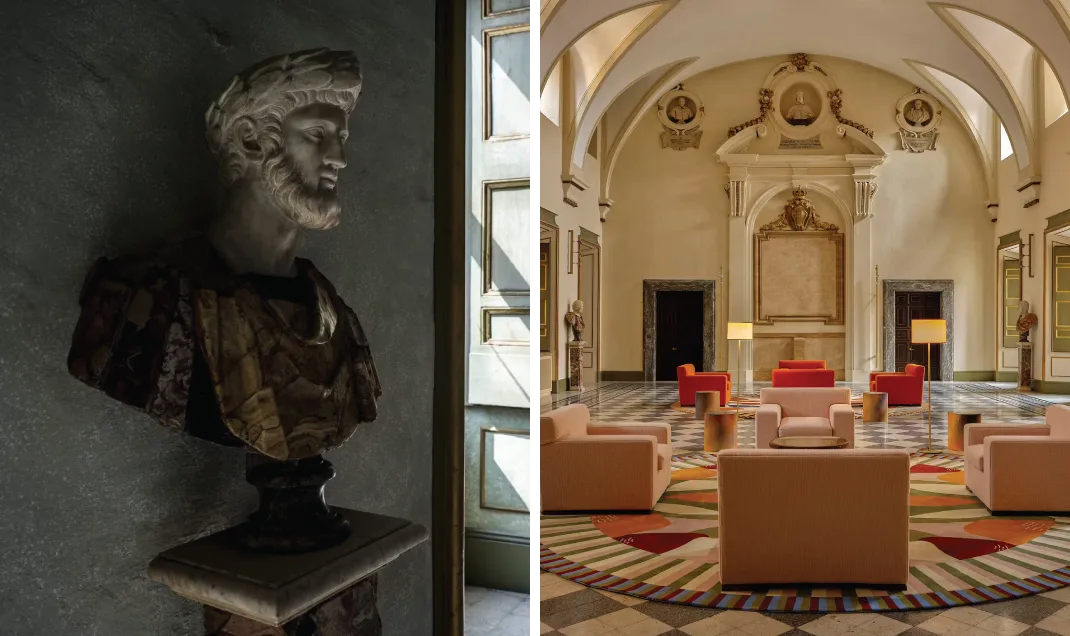
The most memorable was the carpet designed by Nigel Peake for Studiolucaguadagnino which flows through the building in soft chromatic hues of pink, red, and burgundy. These tones reflect the hotel’s feminine branding, inspired by its namesake Talìa, daughter of Zeus and Mnemosyne, and the muse of hospitality, arts and entertainment. Other feminine touches can be seen throughout the property, from the scalloped sconces, to the murano glass chandelier in the lobby; even the elevator (built externally so as to not destroy the interior of the ancient building) has a delightful whimsiness to it.
The Scene
The higher prices, which are nearer in price to the larger luxury brands than to the mid-level boutique hotels, warrant a more mature age range, eliminating younger types and making the crowd a mix of stylish, well-traveled couples and families with older kids. It also attracts history buffs and travelers who crave an untraditional hotel stay with more intimacy and soul, but with easy access to Rome’s major points of interest. During the day and into the evenings, you may notice a flow of locals arriving for business meals and aperitivo in the courtyard.
The Rooms
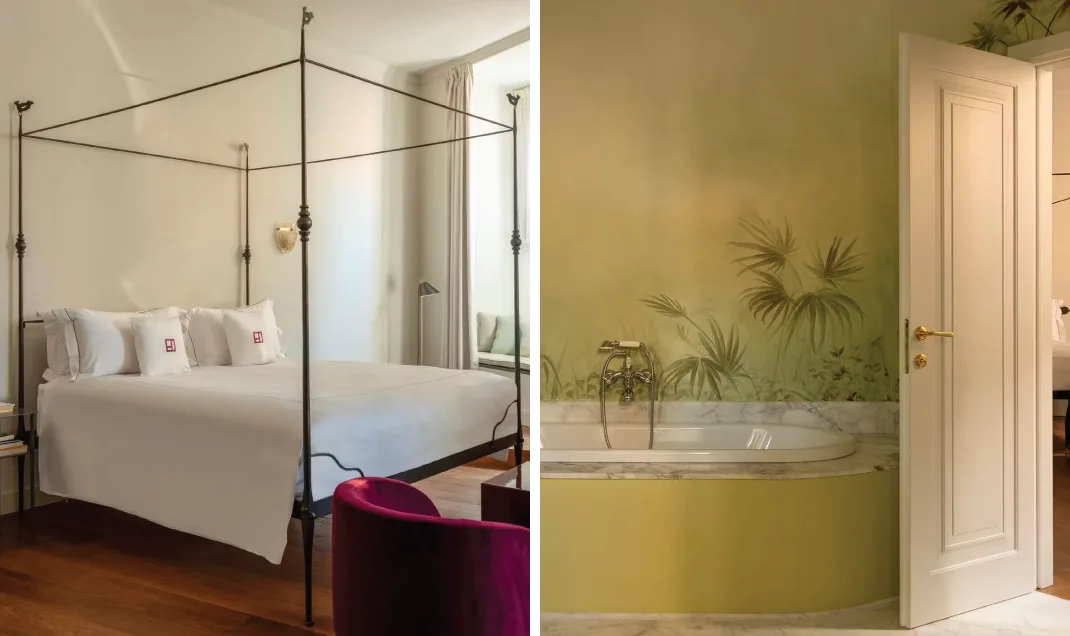
With the exception of the Terrace Suite, which is the only guest room designed by Studiolucagudagnino, featuring retro peach wood paneling, muted shades of pink, and a marble fireplace with a 66-square-meter terrace that overlooks the courtyard, the other 25 rooms and suites were designed by Marianna Lubrano Lavadera from Mia Home Design Gallery and Laura Feroldi, the founder of Laura Feroldi Studio in Milan. The duo’s deep respect for Studiolucaguadagnino and the importance of preserving elements of this historic building informed the aesthetic harmony that flows into the rooms, especially in the Talìa suite, consisting of a junior and grand junior suite adjoined by the magnificent Aula Magna room. “[Inside the rooms] every element was important in building out the concept: the geometry, the frescoes, the old floors, the statues,” they explain, all elements that were carefully preserved in each of the bespoke rooms. In what immediately appeared to be a sharp contrast to the hotel’s more elaborate and antiquity-inspired public spaces, rooms are primarily anchored in functionality and thus feel more like traditional hotel rooms at first glance.
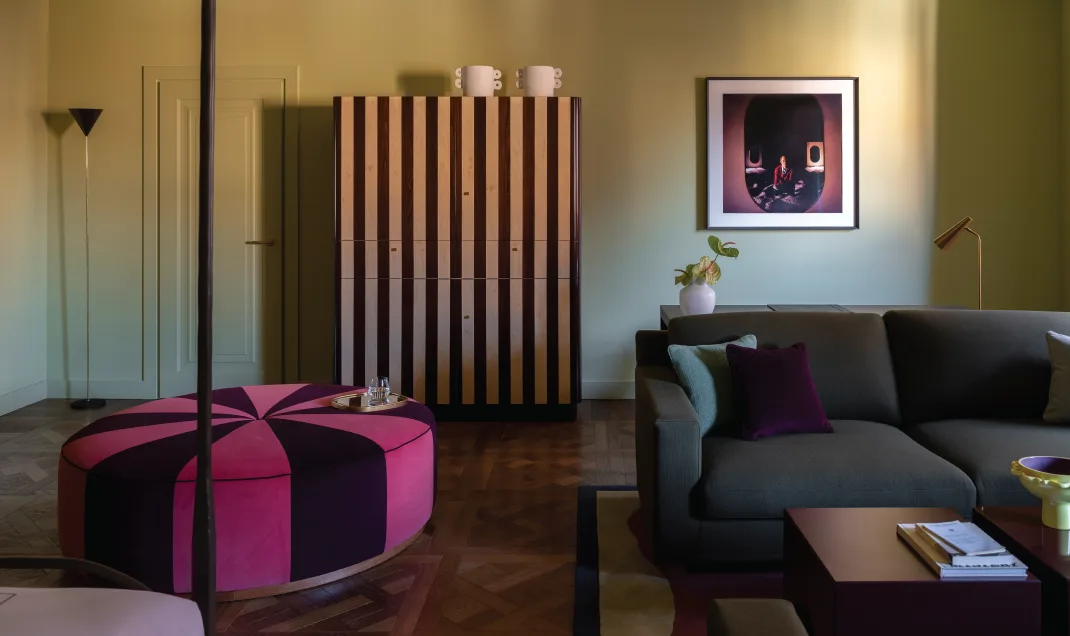
These subtle odes to the past, however — from the ceiling frescoes to the old floors — give them a cohesive edge that ultimately feels fresh. Though the classic hotel room set up here isn’t unwelcome, as the predictability, simplicity, and modern functionality provide all the reliable mod cons you crave in a luxury hotel. Credit to the design duo’s admirable restraint, no room feels overdone, but they did seek to reinterpret the traditional design with a contemporary flair reflected through room furnishings they designed exclusively for the hotel, like the collection of multicolored tiles for the bathrooms, the wrought-iron canopy beds and the round sofas in pink and burgundy hues. “The goal was to preserve and enhance these differences by creating timeless environments that combine classic and contemporary elements in a harmonious balance, evoking the natural overlap that occurs in a historical family residence,” they add.
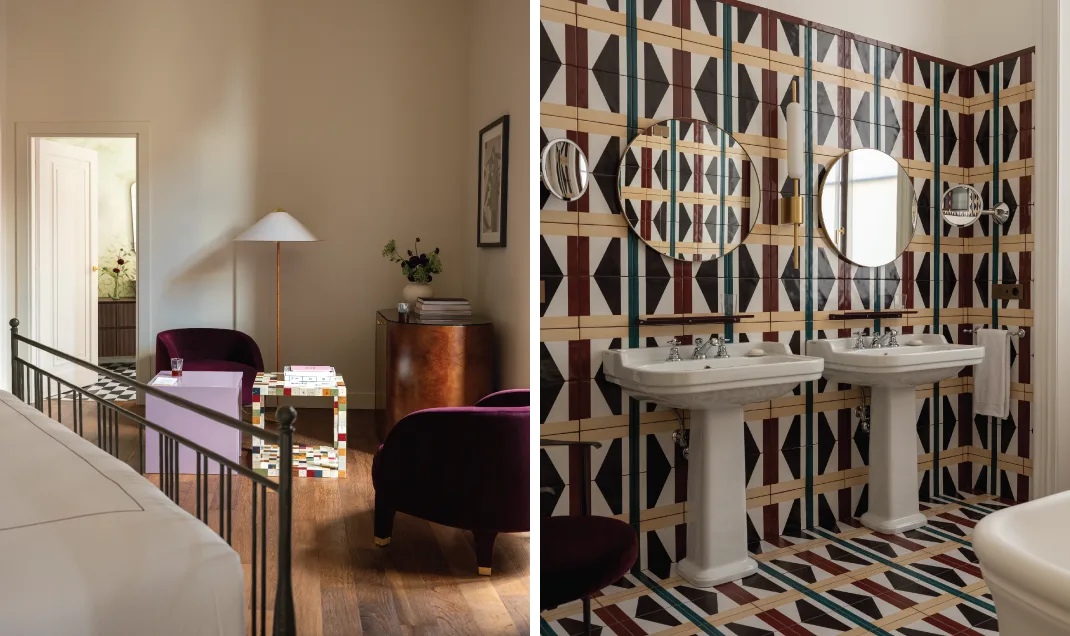
As you ascend room categories, making your way to the higher-end suites, the guest rooms begin to feel slightly more distinctive, likely by virtue of the added space for decorative items like bookshelves lending more opportunities to express individuality through decor, books, and art. Though it should be noted that 50% of the rooms are facing a building, trapping the light and creating more cocoon-type rooms. If natural light is important to you, you’ll want to request a room facing the courtyard. Families can also request one of the five connecting rooms available on the property.
The Service
Staff is clad in traditional uniforms designed by British stylist Claire Crowley, adding to the transportive quality of the place. Everyone from the concierge to the F&B team is affable and professional, but only approach when summoned to allow guests their space as they move about the palazzo. Most memorable is Musa, the Senegalese bellboy who always greets you with a friendly smile and eagerness to help.
Food & Drink
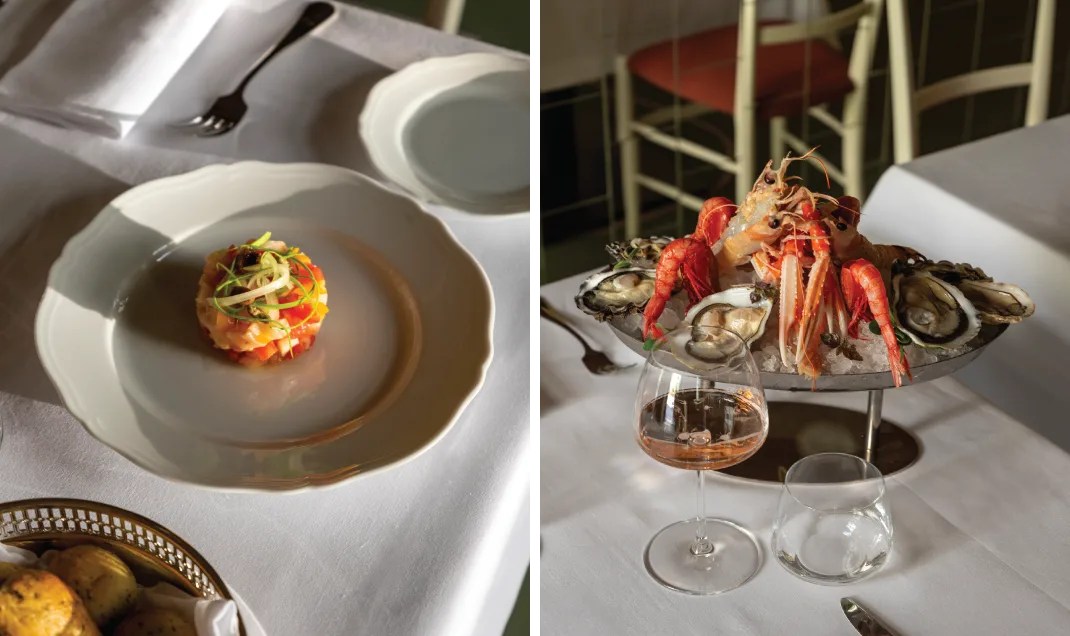
The hotel’s restaurant Tramae is open for both lunch and dinner, offering a melange of flavors: “We envisioned Tramae as a culinary grand tour of Italy, where guests can savor regional flavors with fresh local seasonal ingredients,” shares Angelica Federici. The menu is abundant with traditional and inventive cuisine inspired mostly by Chef Marco Coppola’s native Sorrento, along with other influences throughout Italy. Traditionalists will enjoy Milanese classics like the milanese con osso and the vitello tonnato, while Sorrentine flavors find their way to your plate with a rich spaghetti alla nerano. Guests can also enjoy one of Talìa’s signature drinks, like the refreshing champagne-based Euterpe cocktail in the courtyard for aperitivo. Inside, the bar is located just off the lobby where two dimly lit alcoves with ceilings adorned with original frescoes flank the central bar swathed in reflective mirrored tiles and café tables made of volcanic stone upon which guests are invited to linger or work remotely throughout the day.
Wellness
Discreetly tucked behind an unmarked door off the lobby, humid air guides you down a marble staircase to the spa. If you’ve come for a truly tranquil and transportive spa experience, there is much to be desired here. While massage treatments with Marina are excellent, the physical spa lacks some of the basic trappings to feel truly at ease. For one, there are no lockers or wardrobes to leave your change of clothes so guests are expected to traipse through the lobby in their robes; the lighting in the wet area, which includes a sauna, steam room and shower is starkly bright making it difficult to descend into full relaxation; and as there is no one attending to the spa throughout the day (unless you’ve booked a treatment), towels, tea and water are not regularly replenished in the relaxation area. Though to be sure, the 33 sqm heated pool’s vaulted ceilings and reflective tiles emit a natural light that does effectively amplify the serenity of the space — undoubtedly, the spa’s highlight. Along with its two treatment rooms for guests to choose from a myriad of massage offerings, there’s also a small, but well-equipped fitness room.
The Impact
Palazzo Talìa reflects the Federici family's dedication to sustainability and community. The hotel emphasizes eco-friendly practices, featuring a robust waste management system and decor sourced sustainably from local artisans using reclaimed wood and natural materials. Their commitment extends to hiring local talent and artisans, alongside an ongoing cultural education program for staff to enrich their understanding of Rome’s heritage. Moreover, the hotel’s menu incorporates ingredients from Azienda Agricola Boccea, the family’s organic farm, which utilizes biodynamic farming methods to minimize environmental impact.
Beyond
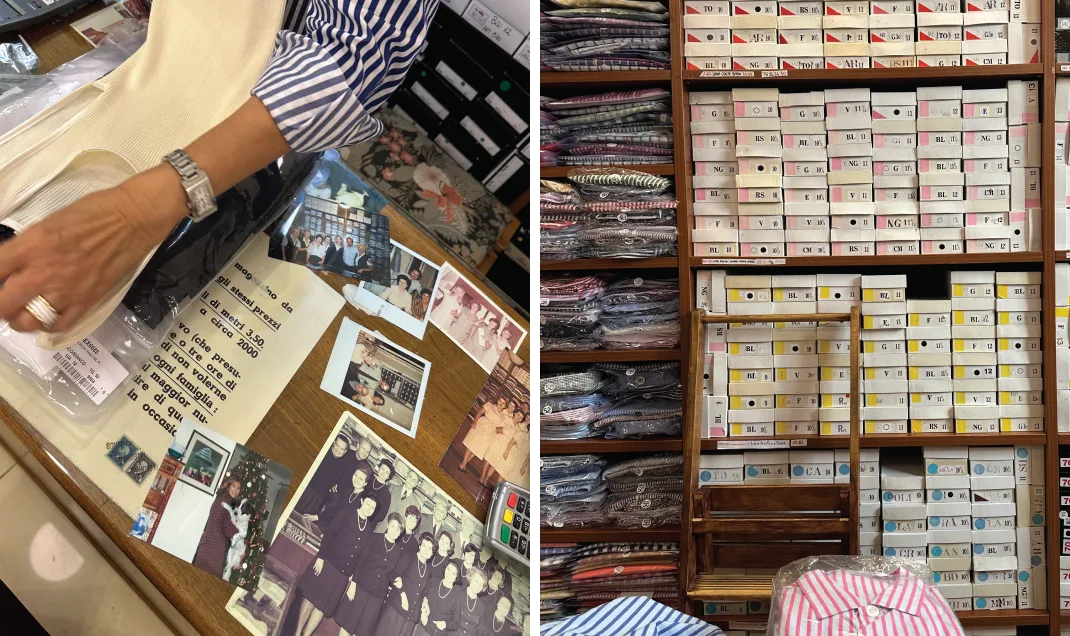
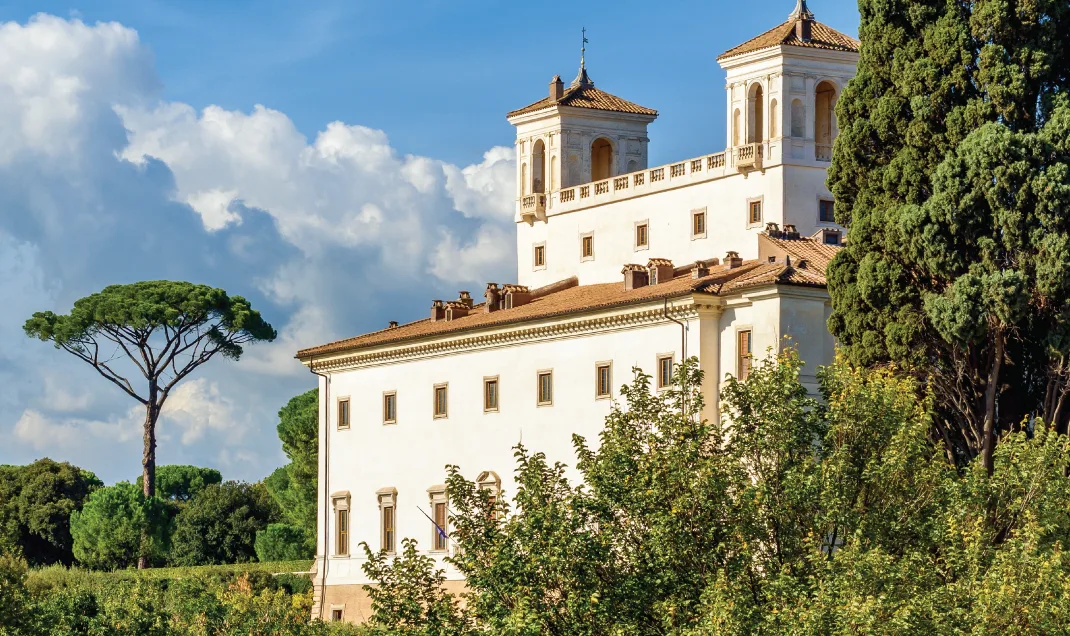
Located a short distance from Piazza di Spagna, Palazzo Talìa is located in the heart of Baroque Rome, making it the ideal launchpad for exploring the ancient city’s most esteemed cultural landmarks, such as the Villa Medici and Villa Borghese. Lesser-known haunts like Galleria Doria Pamphilj, Chiesa di Sant’Ignazio di Loyola, Galleria Colonna Museo e Pinacoteca are also located within walking distance from the hotel. The cobbled streets of Rome’s historic center are also lined with some of Rome’s best local shops, like Schostal Originals, a beloved pajama and basics brand whose cult status has reached celebrities from Gwyneth Paltrow to Harry Styles. For those who prefer a guided tour, Palazzo Talìa crafted immersive bespoke experiences to discover the city, from the Unveiled Rome Running Tour with Archeorunning, to the Artist Studio and Gallery Tour, where the hotel’s own owner and creative director guides guests through a curated selection of artist studios and galleries around the city, to the Doria Pamphilj Gallery Tour and Dinner, where a guided evening tour of the gallery ends with an elegant dinner in a historic Roman residence.
When To Go
We typically like to avoid the high season’s summer months, as the sizzling temps and crowded streets make exploring the city particularly grueling. Fall and Spring are great seasons to visit and even low season, which falls around mid November through mid December just before the holidays if you want to swerve the crowds.