Hotel Overview
Within the Yucatán Peninsula, where the Lagoon of Seven Colors shimmers in tones of lapis and jade, guests arrive by way of an unmarked road that slips into the rainforest, revealing a constellation of treehouses suspended above the forest floor like lanterns, their latticed woodwork dappled with filtered light. In Bacalar, mangroves fringe freshwater cenotes, and the lagoon’s crystalline hues reflect off limestone soil, earning it the moniker “the Maldives of Mexico.” It also borders Belize, bringing with it a vivid intermingling of flora, fauna, and culinary traditions.
Frida Escobedo’s treehouses echo a Japanese restraint layered with a modern Mexican sensibility, all elevated on stilts to leave the jungle floor untouched. Here, sustainability is not simply practiced but composed: rainwater is repurposed, local hardwoods are responsibly sourced, and not a single plant was removed in the making of the property’s floating walkways — a place where respect for endemic wildlife, local design, and tropical preservation remains at the forefront.
Mornings spent swimming or kayaking the crystalline lagoon give way to quiet afternoons, aguachiles with recado negro served beside the water’s edge, and — for those who venture further afield — visits to nearby Mayan ruins tucked into the surrounding jungle.

When
With its tropical climate, book a stay at Boca de Agua from late October through April (the rainy season typically runs from May to October).
Where
Fly into Chetumal, the closest airport to Boca de Agua, and roll down the windows during the breezy 30-minute drive to the property. While many flights connect directly to Chetumal from Mexico City, guests can alternatively fly into Tulum (a 2.5-hour drive), Cancún, or even Mérida (a 4.5-hour drive). Whichever you choose, it’s best to secure a private transfer through the hotel in advance for a seamless arrival.
The main highway brings you to a long, unpaved, and unmarked road surrounded by dense jungle. The bumpy entrance and chirping of local birds offer a promising sign that a stay at Boca de Agua will offer full immersion into the region’s natural habitat. Wildlife roam freely throughout — during our visit, a black and red-striped poisonous snake languidly crossed the path on the way into the property, and spider monkeys joined us in the trees above over morning coffee and freshly-squeezed juice.

The Proprietors
Boca de Agua is owned by Monterrey-born Rodrigo Juárez, a first-time hotelier and developer with a background in architecture and economics. A few years ago, he left his desk job to embark on a backpacking journey through Mexico with an aim to mentally reset and ground himself in the country’s varied natural environments. His longstanding professional pursuit of implementing sustainable design and preservation-driven principles in large-scale developments began to take shape during his visit to Bacalar, where a series of events led him to the land Boca de Agua now calls home. The owner shared Rodrigo’s values surrounding conservation, sustainability, and minimal impact, and together with Mexican architect Frida Escobedo, he created an impressive model for sustainable architecture and environmental stewardship.
The Scene & Design
Designed by renowned Mexican architect Frida Escobedo with an eye towards regeneration and sustainability, the property — a series of raised treehouses immersed in tropical vegetation — was built by employing artisanal construction techniques and using up-cycled and salvaged materials. From local wooden beams, warmly textured furniture, paneling, and latticework (a signature of Escobedo’s work, which allows natural light to flow in while providing shade), the neutral-toned, soft palette ranges from off-white to beige to dark brown. The design is comfortable and organic, leaning towards a minimalism that is Japanese in character, layered with a modernist Mexican edge.
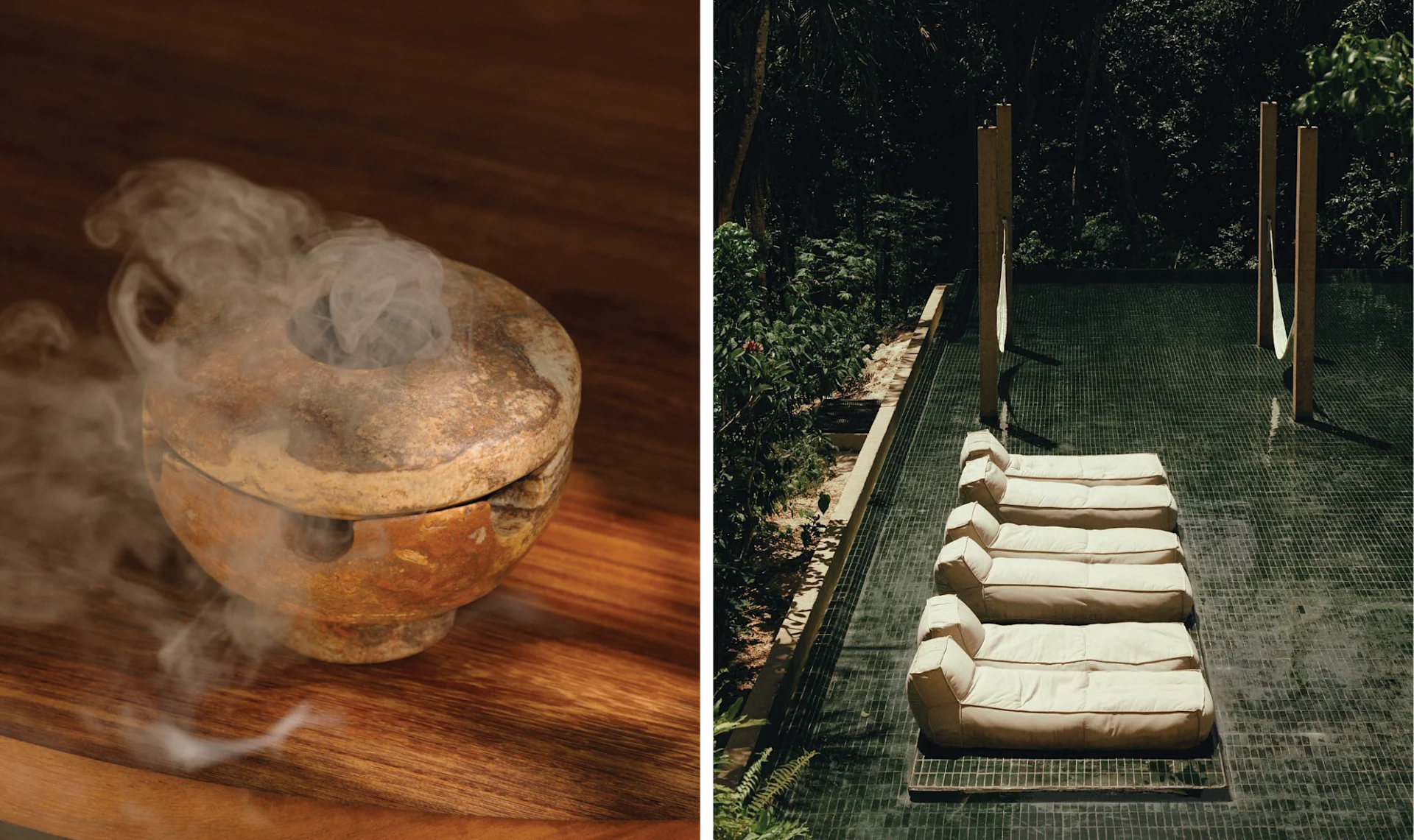
Take a walk throughout the property’s treehouses and communal spaces and expect to find custom pieces by local artisans and Mexico-based brands like HACHA CERÁMICA, Casa Caliza, CACAO, as well as collaborative artworks with Mexico City-based artist Marina Silva. A long, elevated, wooden walkway leads guests through the deep tropical jungle from the main pool to the Xul Ha Lagoon. The lagoon, an impressive landscape of tangled mangroves surrounding fresh water, displays crystalline shades and depths of blues that reflect on the white limestone soil. It is quite the dramatic sight — this lagoon of “seven colors” has earned the region a reputation of being “The Maldives of Mexico.”
The Crowd
The main clientele base at Boca de Agua is European, closely followed by Americans and Mexicans (mostly from Mexico City), seeking to recharge and reconnect with nature. The property’s design and integration into the jungle setting makes it an ideal choice for couples seeking privacy in a relaxed atmosphere or for those seeking full immersion in the rhythms of nature. The property is serene, especially by the lagoon where guests read, swim, and enjoy the quiet beauty of the surroundings. While it is a distinctly adult-leaning property without many dedicated activities for kids, children five and older are welcome at Boca de Agua.
Given the layout, with its many stairs, pebbled paths, and necessary walks between the main property, treehouse rooms, and suites, as well as the long pathway to the lagoon, Boca de Agua is not recommended for anyone with mobility issues.
The Rooms
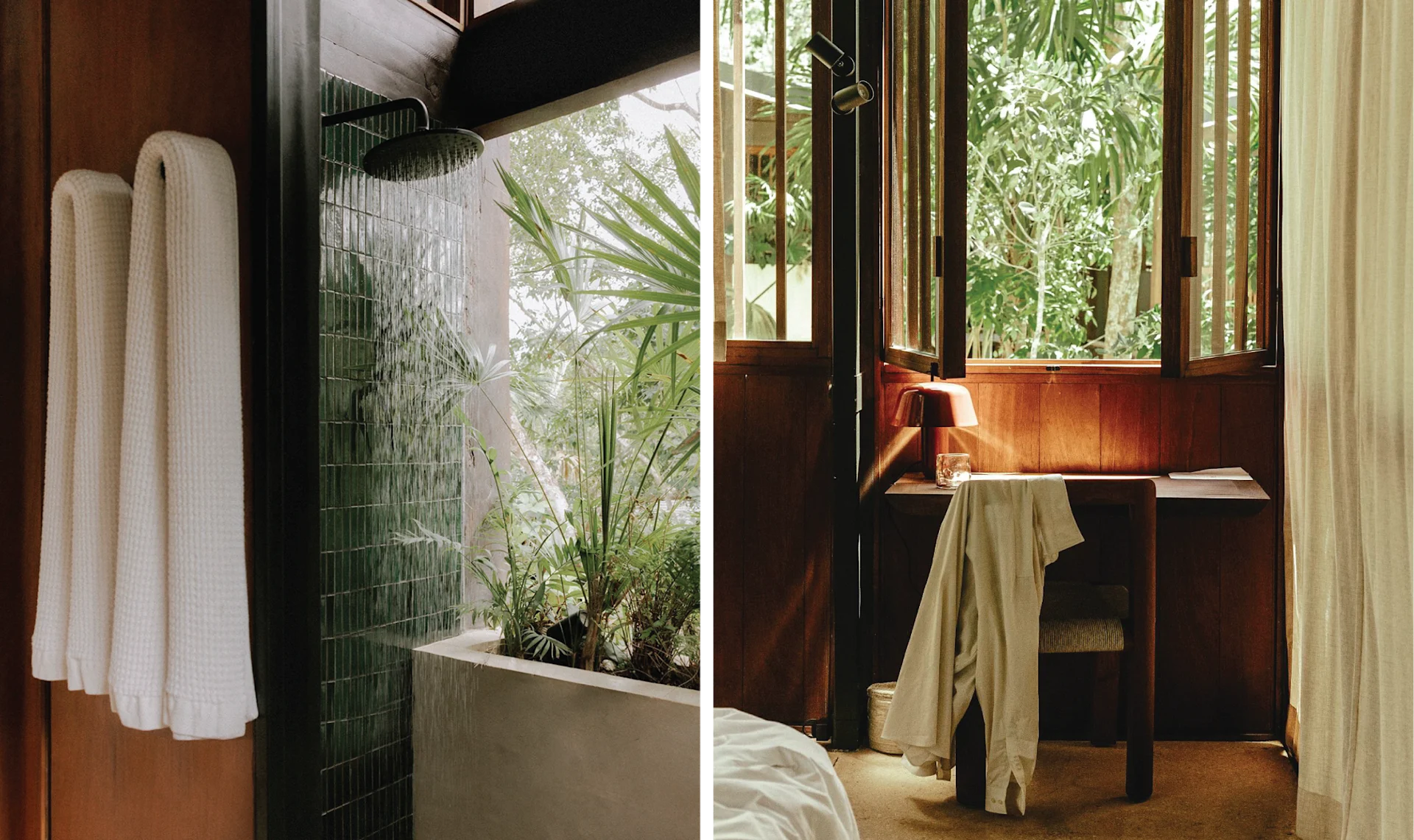
For minimal environmental impact on the local terrain, all the property’s structures are elevated, built from locally sourced, tropical hardwoods, and are referred to as ’treehouses’, each with a seamless indoor/outdoor living space. All 26 treehouses feature the same décor and general layout and come in three main categories: from Jungle Treehouse to Master Pool Treehouse to a Two-Bedroom Pool Treehouse ideal for families. Bedrooms in all the treehouses are entirely closed off by glass (and thus avoiding insects and other creatures from entering) while the living area — including a hammock, small table with a chair, couch, and (pending the room category), a plunge pool — is set entirely outdoors.
There are no bathtubs at the property, and all showers are outdoors with strategically-placed foliage and sight-lines ensuring privacy. Products from Laguna Cyprien, a natural Mexican-Swedish brand, are used throughout the property, including natural and biodegradable sunscreen, which is a non-negotiable requirement to use when swimming in the lagoon in order to avoid negatively impacting the ecosystem.
The Service
The service, in true Mexican hospitality fashion, was great throughout – everyone on the team was incredibly kind, friendly, and always at your disposal and ready to help.
The Food & Drink
Guests are received with a cool seasonal drink. In our case: a refreshingly cold glass of lemonade layered with brilliant pink hibiscus juice. The property has one main restaurant, Flora, which features an open kitchen from which guests can watch chef Carlos Bordonave and his team prep and grill throughout the day — from baking freshly-made conchas and making green chilaquiles for breakfast to grilling the catch of the day for the evening meal. There is also a stargazing deck on top of the restaurant where, on select nights, guests can opt to enjoy an elevated five-course dinner under the stars while overlooking the lagoon in the distance.
While breakfast, lunch, and dinner are served at the main restaurant, lunch can also be served at the lagoon deck (for an additional expense). The lunch menu stays true to place and features fish ceviches with recado negro (a traditional Yucatecan ash-like paste made from charred garlic and chiles, burnt tortillas, herbs, and spices), shrimp aguachile, freshly-prepared guacamole, and tempura-fried fish tacos — all of which are exactly what you’ll want to eat while immersed in this setting.
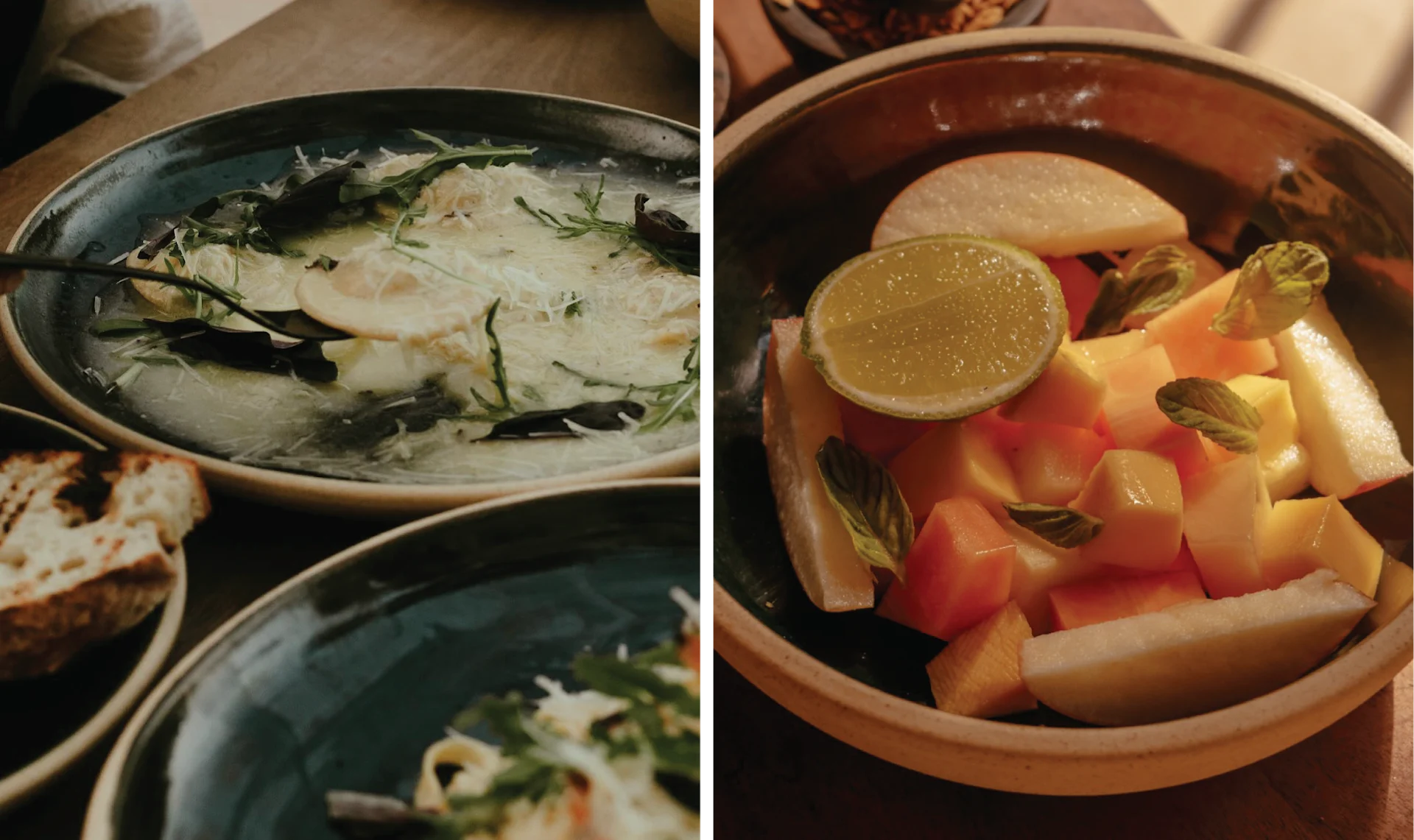
During dinner, the menu is more international-leaning, featuring influences from Argentina, Italy, and Japan. If you’re a purist, opt for dishes that stay true to the regional culinary identity, such as the Pescado Tikin Xic — a local fish that receives the same treatment as cochinita pibil by being marinated in achiote paste and sour oranges, then wrapped in banana leaves and cooked underground — or Camarones Zarandeados, a classic dish of grilled shrimp served with fresh salsa.
At Flora Bar, which is set next to the restaurant in an open plan space, expect cocktails implementing spirits such as sake, gin, mezcal, tobalá, and tequila, along with Mexican craft beers. Of course, more classic off-menu cocktails, like mezcal margaritas, palomas, or micheladas, can be made upon request (and we suggest you do just that).
Wellness
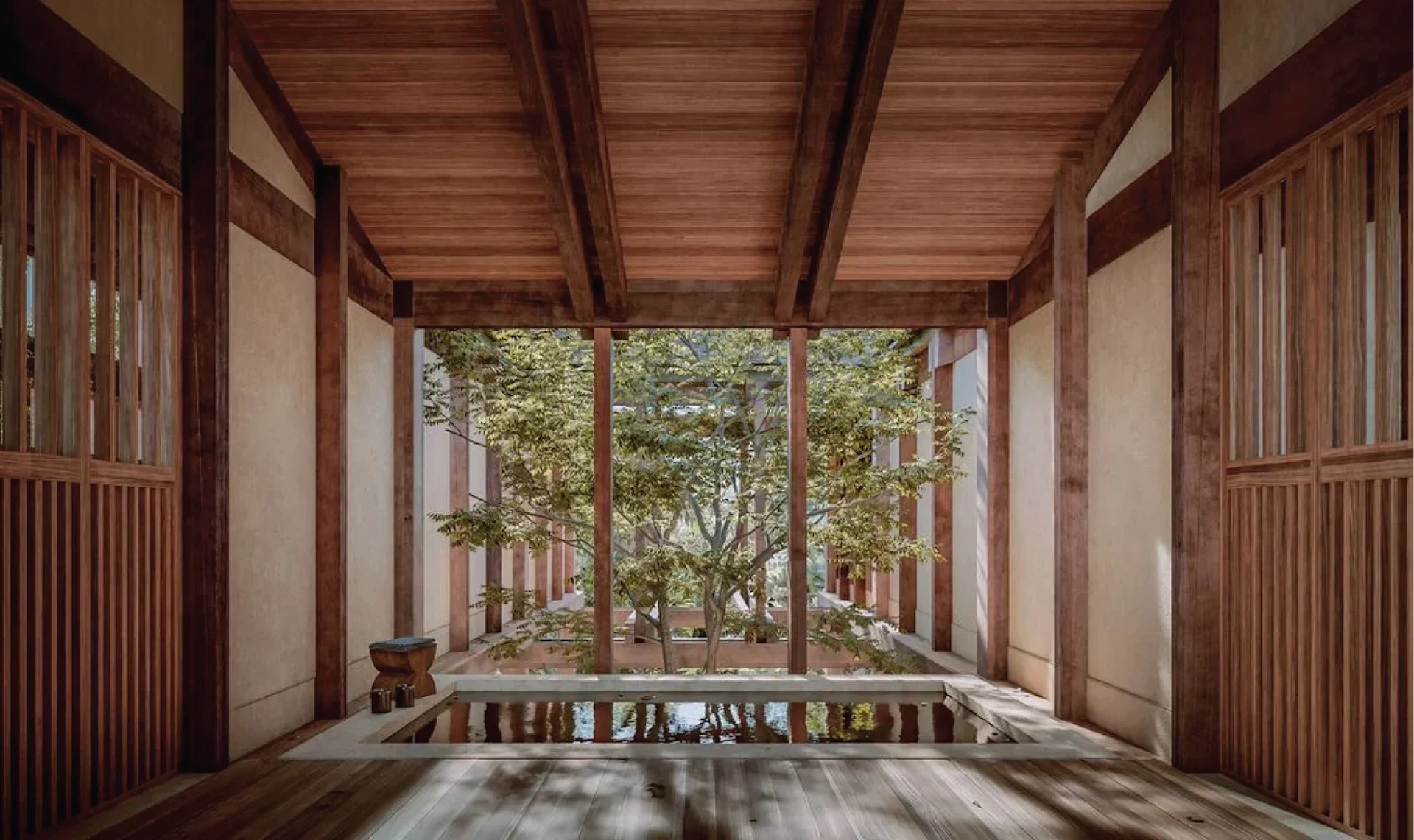
The property has a spa and wellness center nestled inside a treehouse offering solo or couples treatments — all using Laguna Cyprien natural products. In-room treatments are also available, should that be of interest. There are also holistic therapies, including meditation, sound baths, and ice dips on offer. Next to the wellness center, there’s a man-made cenote surrounded by four chaká red trees, which are deeply rooted in Mayan culture and considered sacred.
The Impact
As a project born to prove that sustainability and large-scale developments can co-exist, Boca de Agua has implemented a series of intentional actions that place it at the forefront of the regenerative hospitality movement. More than 90% of Boca de Agua’s land has been strategically left intact through the use of sustainable architecture and a meticulous infrastructure that consciously embraces its natural environment. This includes elevating the treehouse structures for minimal environmental impact, using locally sourced tropical Chicozapote hardwoods from nearby tree farms, and building raised wooden walkways to protect the endemic mangrove’s flora (no plants were damaged or removed in the process). The property features furniture and amenities made from upcycled materials by local craftsmen, as well as natural and biodegradable toiletries by Laguna Cyprien. They work with a Mexico-based renewable energy supplier, treat water on-site and repurpose it for use in bathrooms and irrigation to avoid any waste in the lagoon, and work with local NGO Con Mono Araña to protect and enhance the ecosystem of the native spider monkey population. From a staffing perspective, Boca de Agua has ignited programs that prioritize social inclusion, empower the local community, and bolster the area’s economic development.
Beyond
Many experiences surrounding Boca de Agua center around the 30-mile long lagoon, from free-of-charge kayaks available at the property’s lagoon dock for self-exploration, to guided paddleboard and sailboat rides, to the local black and emerald cenotes at sunrise for a tangible feel of Bacalar’s rich flora and fauna. Further inland, guests will find sites such as Chacchoben and Ichkabal, a rich archaeological zone of Mayan pyramids and prehispanic structures surrounded by jungle. If you want to head into the main town, a 15-20 minute drive takes you to Bacalar, which has earned its title as a pueblo mágico (a designation to celebrate charming villages within Mexico that preserve original architecture, folkloric tradition, and local craftsmanship) due to its 18th-century cathedrals and vibrant murals. While in town, stop in at Damajuana Mezcalería Bacalar for a mezcal-based drink.
The Drawbacks
The service at the lagoon deck is quite hands-off, so should you be lounging there for the day (which many people are), it can be a challenge to order drinks and snacks in a timely manner. Given the walk required to/from the lagoon, it can sometimes take a while to receive your order as well. We attempted to thwart the issue by ordering our drinks and lunch at the bar on our way down to the lagoon, but it would be helpful to have a dedicated cooler stocked with waters and local beers in situ so guests can have easier and quicker access to a cold beverage. There are also a limited number of lounge chairs, so be sure to arrive and reserve yours early, especially during high season.