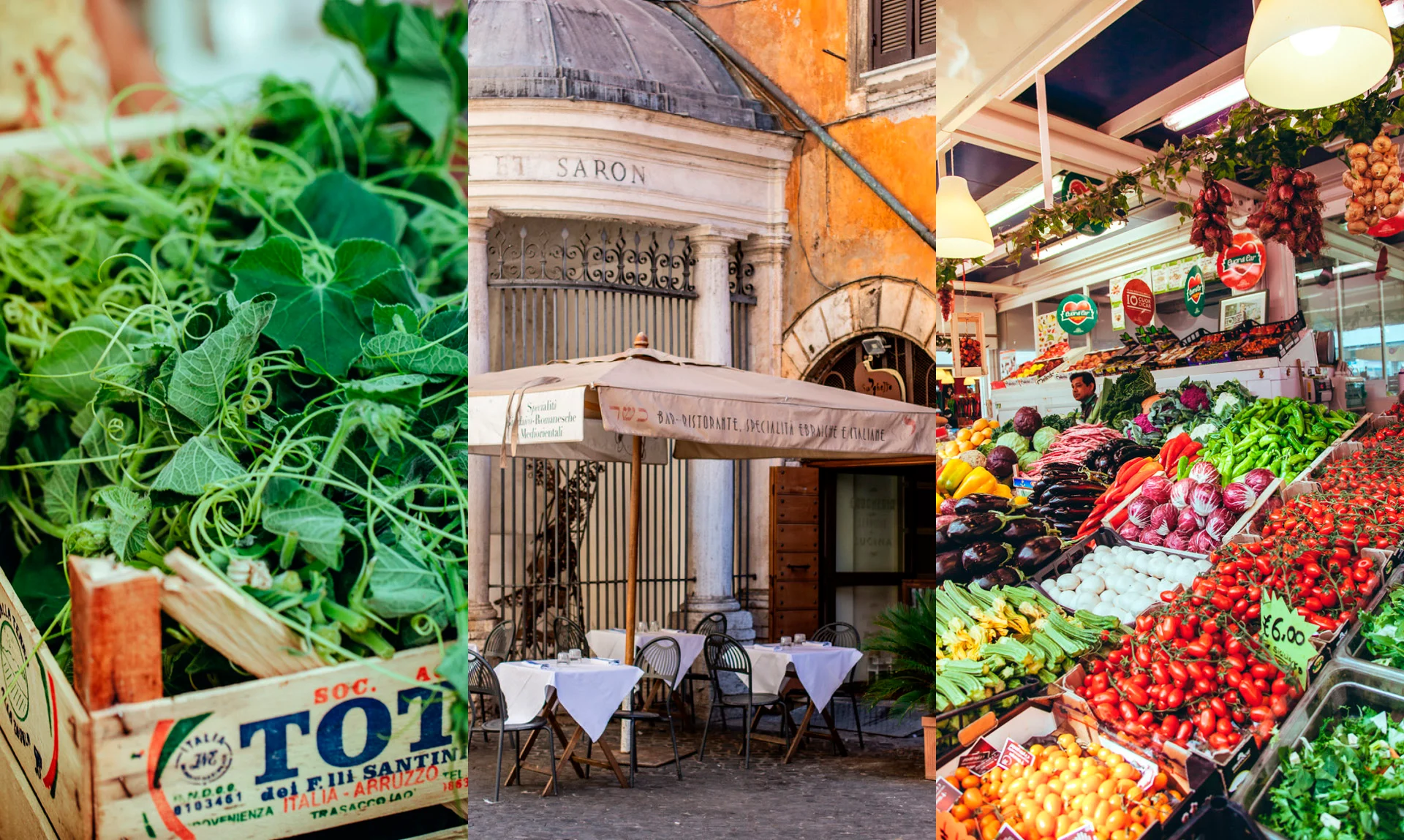
Vegetables play a central role in Roman cuisine, as well as daily life. While the once-traditional weekly food calendar—gnocchi on Thursdays, fish on Fridays, and trippa on Saturdays, set by religious precepts and family budgets—has been largely left behind, many Romans still mentally set their annual calendars by the sequence of simple ingredients appearing at the city’s markets.
It is at their makeshift stalls where different varieties of tender-stemmed broccoli, spindly puntarelle heads in their icy water baths, globular purple artichokes being peeled by hand on site, fiercely peppery greens, and tiny zucchini with golden flowers still attached are sold by the basketful. In any of the neighborhood markets scattered around the capital—long rows of time-worn street tables, or inside charmingly decadent period buildings such as in Piazza Alessandria near Termini Station or on Via Cola di Rienzo in the Prati district—vendors offer heaps of fleeting treasures often grown and picked themselves, or cook recipes containing them.
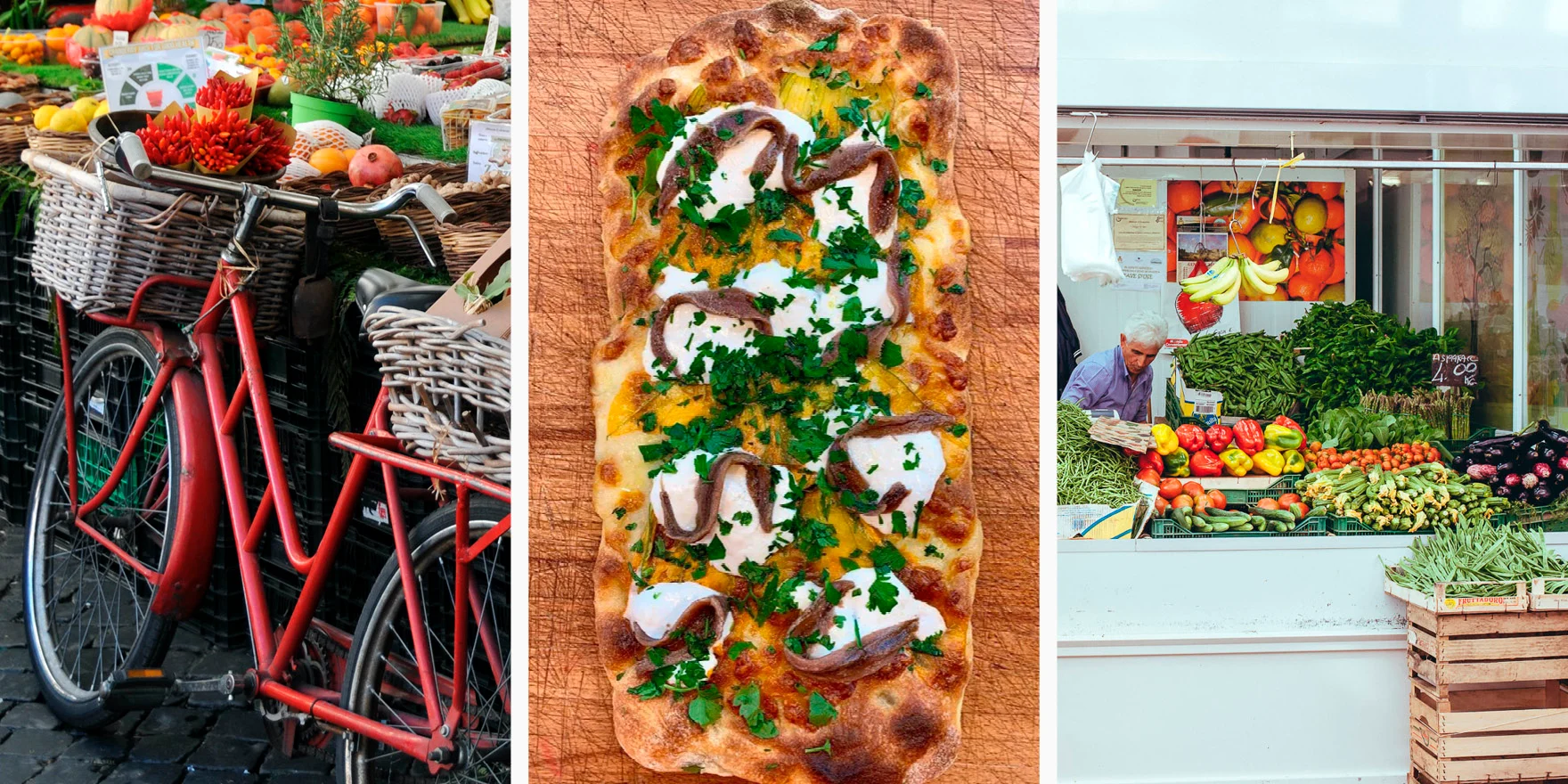
At the recently renovated Mercato di Testaccio [www.mercatoditestaccio.it], the pizza al taglio (rectangular slices cooked on baking sheets) may have tiny confit tomatoes on top, or bresaola with ricotta and the season’s first strawberries. Or the alimentari shelves will be stacked with glass jars of sottoli—a classic preparation of vegetables like pepperoncini or eggplant preserved under glugs of extra-virgin olive oil. On the menus of the rustic trattorie and elegant ristorante around the city, the dishes and flavors also follow an identical adherence to what’s coming from the farms and gardens at any given moment.
To truly know Rome is to know it by its vegetables’ fruits, flowers, and greens. Here’s what produce to eat, when and where.
Puntarelle: December to March
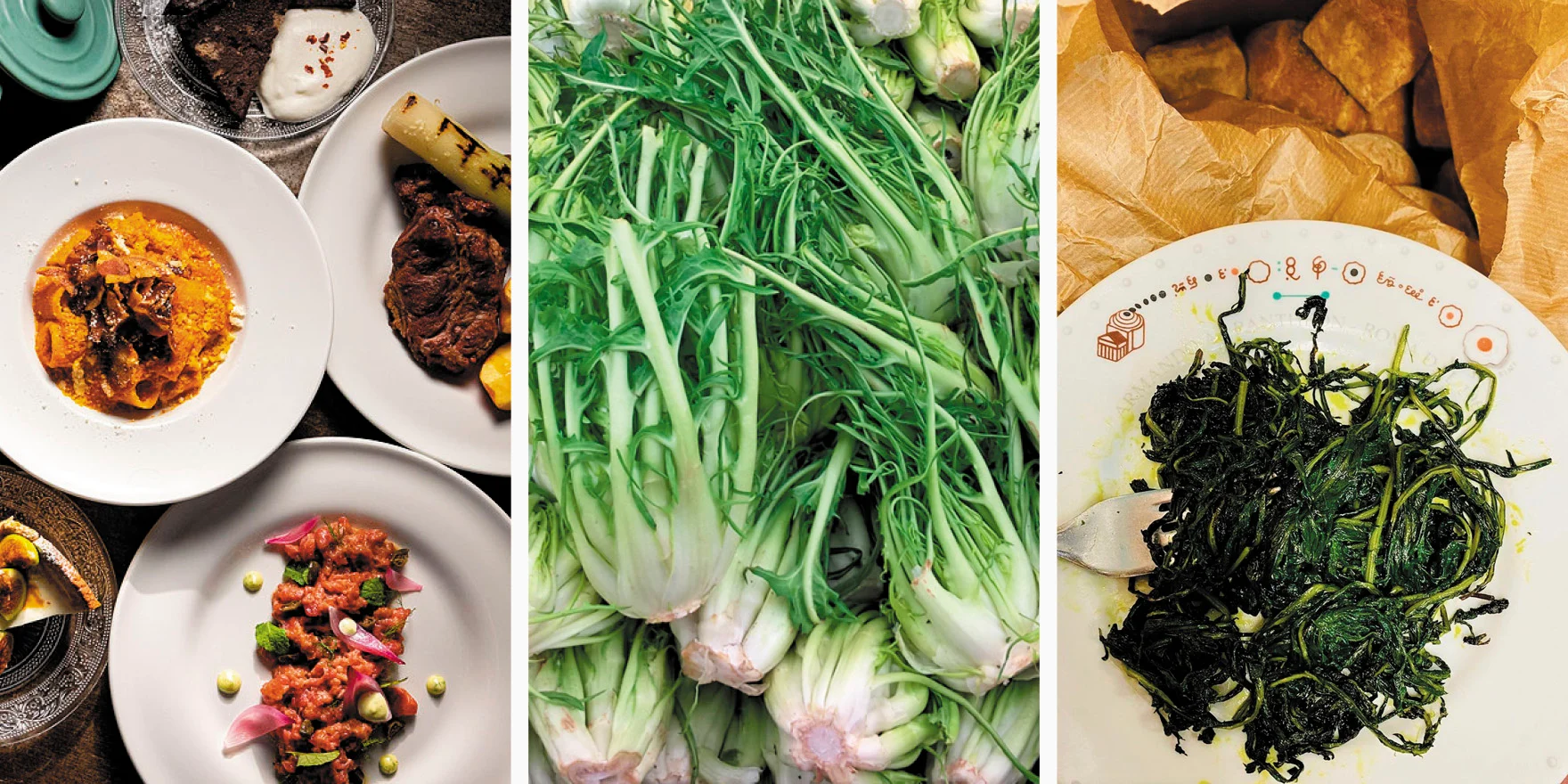
Romans wait for early spring with the same anticipation many cultures reserve for summer: this is the season for puntarelle, the iconic Roman green with a short growing season. Actually the leaves and stalks of a variety of chicory (cicoria catalogna or cicoria asparago) picked young, the crisp and erratic shoots are typically cut into strips with a tagliapuntarelle tool, then soaked in ice water to keep them perky and curly. In Rome, a classic dressing for a salad called puntarelle alla romana uses extra-virgin olive oil, garlic, lots of anchovy, vinegar, and salt for a fierce and refreshing effect. In early spring, it is everywhere at local restaurants; at Proloco Trastevere, the cooks use the anchovy filets from the Anzio seashore, mixed with extra virgin olive oil, salt, pepper and vinegar, and served the dressed puntarelle to accompany beef tartare.
Cicoria: Spring, Fall, and Winter
While there are innumerable chicory varieties in and around Rome—the bitter, crisp vegetables are a perennial feature in local gardens and farms, and in the wild—the grassy, green leaf known simply as “cicoria” is ubiquitous in stalls and on menus. An essential part of the Roman diet, it’s a companion to meat and fish, and usually served in the same way, cicoria strascinata: sautéed with generous lashings of olive oil and garlic, and sometimes a pinch of chiles. (The accompaniments serve to tame some of its bracing bitterness.) Find an archetypal version at Cesare al Casaletto, or see it in the old-school preparation of coratella (a mix of braised lamb heart, liver, and lungs) at Armando al Pantheon.
Carciofo Romanesco (Artichokes): Late Winter and Spring
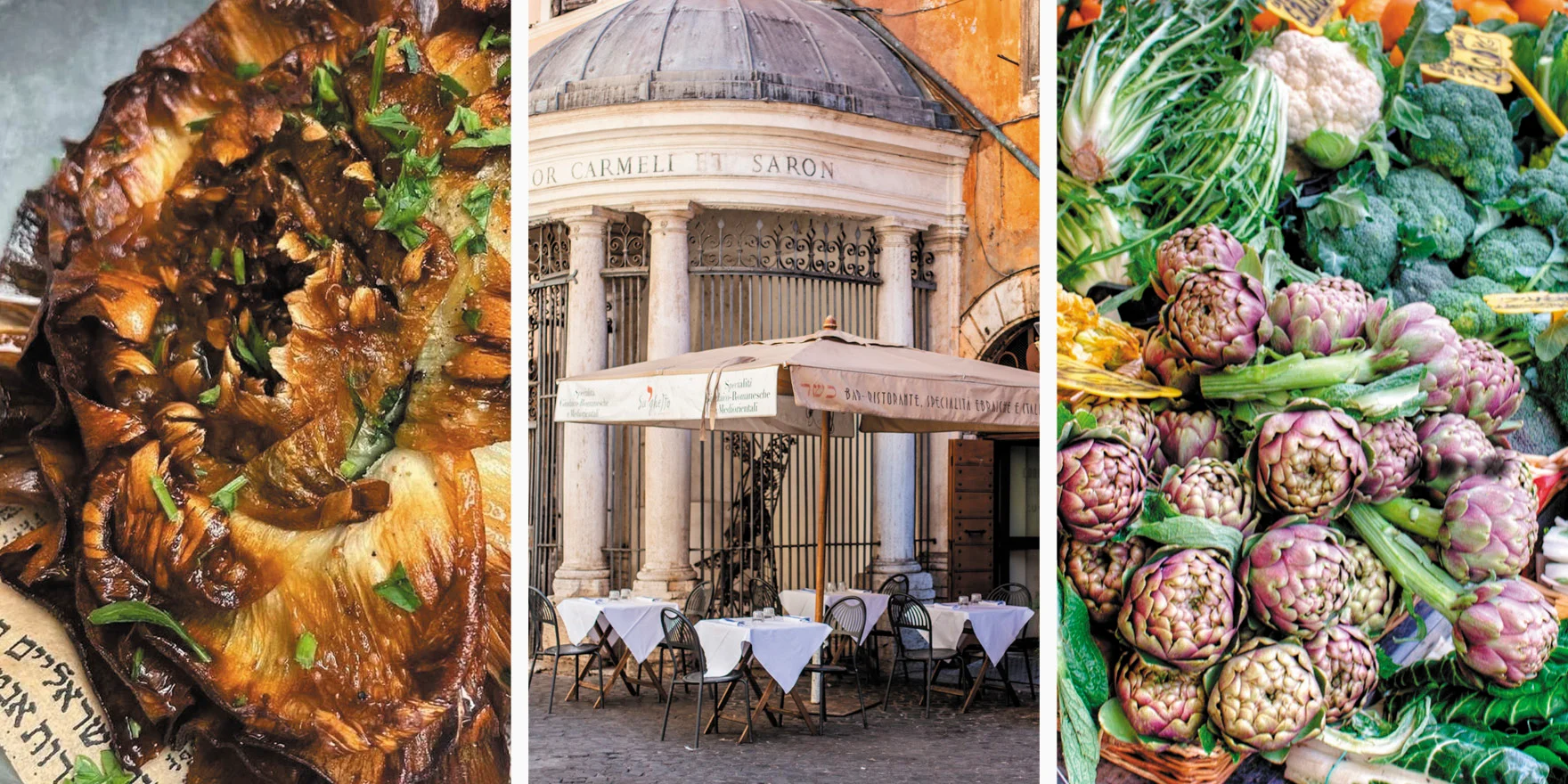
Artichokes have been essential to Roman cuisine since ancient times, both for its culinary and medical uses—the Latin writer and agronomy expert Columella often mentioned them in his essays. Italy yields all sorts of varieties: spiny and violet from Sardinia, small and round from Campania, and oblong from Apulia to name a few. The ones authentically local to Rome are picked and sold each year around Easter, largely from the countryside near the Latium seashore. These huge and spherical carciofi romaneschi (Carciofo Romanesco del Lazio PGI), also dubbed “cimaroli” (top, as they grow from the central stalk of the plant and are free of thorns) or “mammole” (violet), they may be braised with extra virgin olive oil, garlic, parsley and mentuccia (lesser calamint), which is exactly how they serve them at Sora Lella. Deep fried, also called “alla giudia,” they are a deeply crunchy and flaky symbol of the traditional Roman-Jewish cuisine observing the Kashrut, and perfectly performed at Ba’Ghetto. They can be grilled or baked, maybe stuffed with eggs and Pecorino cheese, as at Proloco Trastevere.
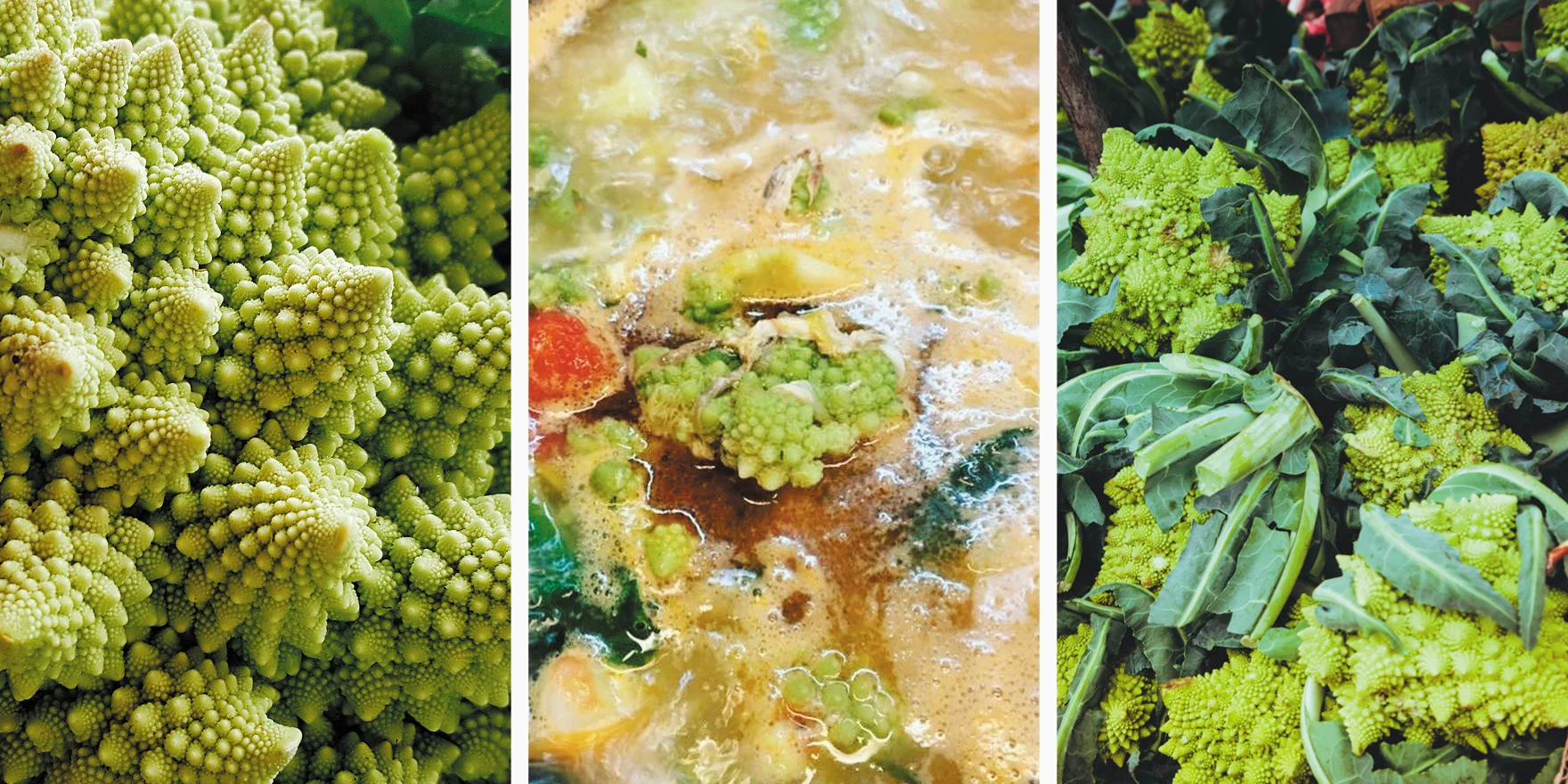
Broccolo Romanesco: October to March
Mesmerizing with its fractal shape (whose inflorescences replicate the Fibonacci sequence) and dragon-like vivid green color, this brassica, which originated in the area, is tender-stemmed and has a fruity brightness. It is cooked with ray fish in the winter soup minestra di broccoli e arzilla, which is finished with handful of broken spaghetti or the tiny fresh egg pasta called quadrucci. Once a recipe of the Christmas season, it is now served winter-round in traditional restaurants such as Al Moro, Taverna Cestia, Lo Scopettaro and Da Felice [[http://feliceatestaccio.it/en/rome/]]. Much harder to find (outside of home kitchens) are the versions of the heads dipped in a thick batter and fried. At the glorious Sora Maria e Arcangelo trattoria in Olevano Romano (a one-hour drive south of Rome) Giovanni Milana offers them at the start of a meal. Osteria di Monteverde does a modern version, mixing broccolo romanesco, potatoes, and Pecorino cheese to create a lovely croquette.