The Check-In
Located in Tokyo’s Toranomon business district, take a taxi up the incline that leads into hotel grounds and you’ll immediately notice a sweeping fountain, lush gardens, and a massive two-story Chinese-style building that houses The Okura’s art museum. Consisting of two towers linked by a passageway, the hotel is split into The Heritage and Prestige Towers, each with its own fully-staffed lobby. The former is minimal and designed to resemble a tokonoma, a traditional Japanese alcove where artistic items are displayed. The latter is a near-perfect recreation of the hotel’s original lobby, down to the midcentury furniture and lighting. Regardless of which tower you’ve booked, the staff will promptly whisk you to your room, where hot green tea, warm towels, and rice crackers await.
The Look
When it was announced that Hotel Okura Tokyo would be torn down and rebuilt in 2015 in anticipation of the 2020 Tokyo Olympics, design enthusiasts like former Bottega Veneta designer Tomas Maier and Monocle Magazine founder Tyler Brûlé lobbied to preserve its original postwar-Japanese architecture. The campaign worked; Yoshio Taniguchi— son of the hotel’s original architect, Yoshiro Taniguchi, and best known internationally as the designer behind the revamp of New York’s Museum of Modern Art— was tapped to spearhead the project and ensure historical accuracy.
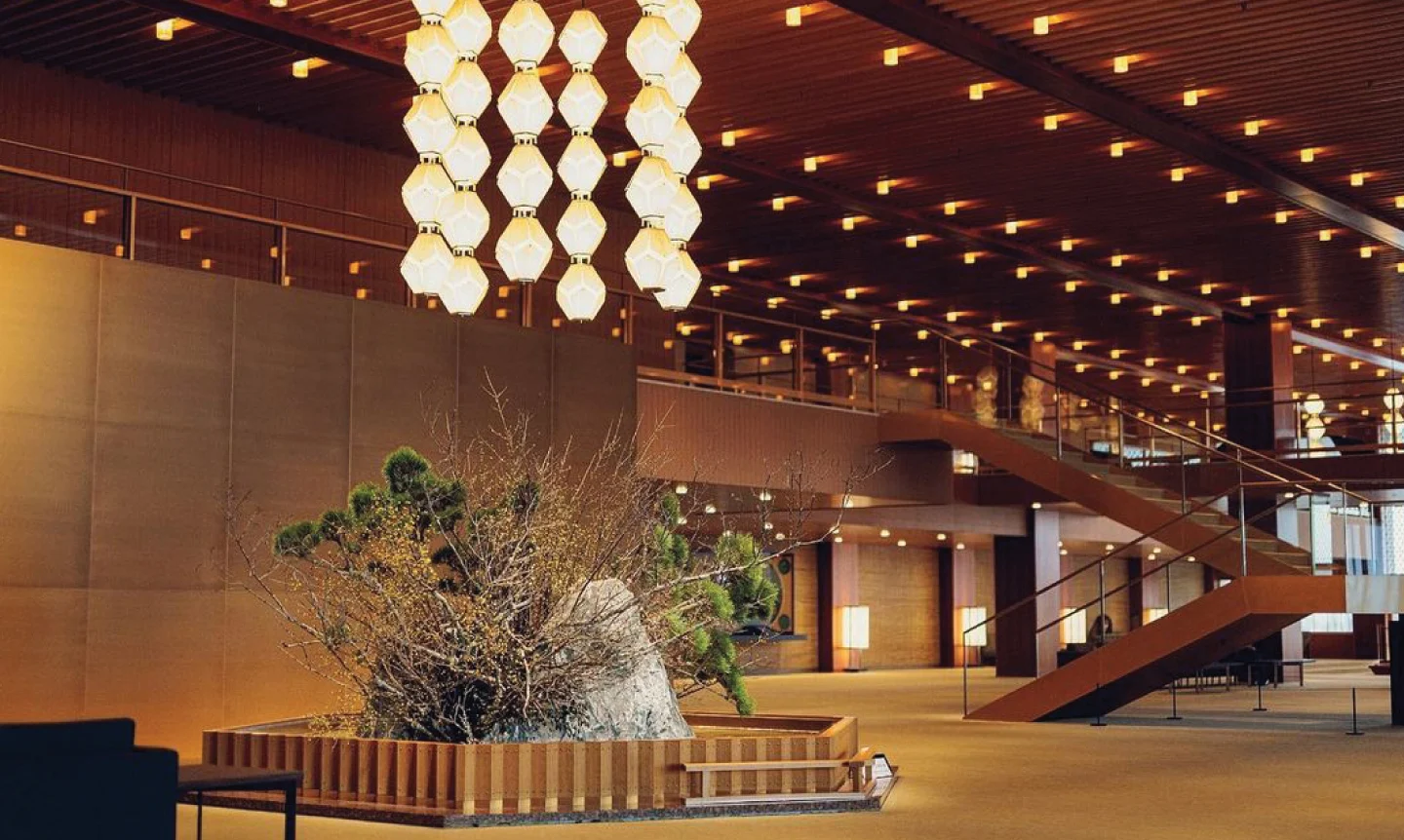
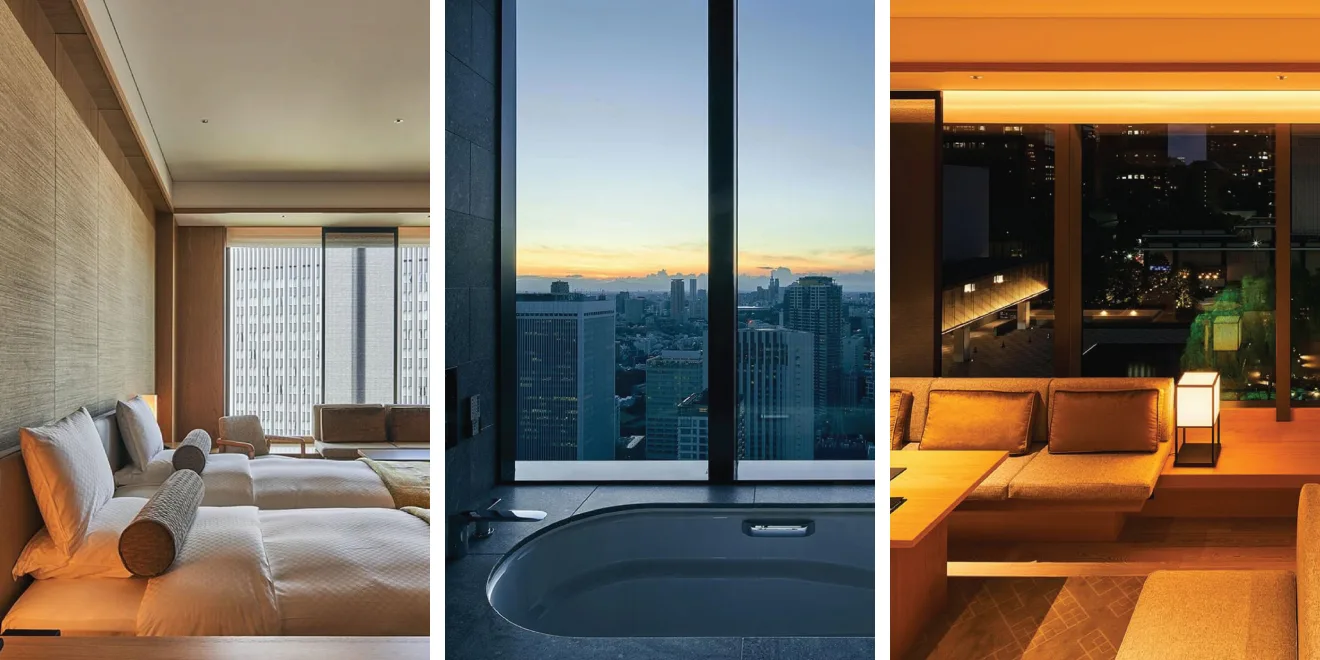
The Heritage Tower is an exercise in minimalism rooted in traditional Japanese details. Against pale woods and neutral tones, lanterns line the hallways, and kirigami, the art of folding and cutting paper into delicate patterns, lives behind backlit glass. In the lobby, the focal point is a a giant gold and blue paper mural by Jiro Agata called The Thirty Six Immortals of Poetry, inherited from the original hotel. The lobby also features seasonal floral arrangements by Sekiso School of Ikebana, the same service that worked with the hotel when it first opened.
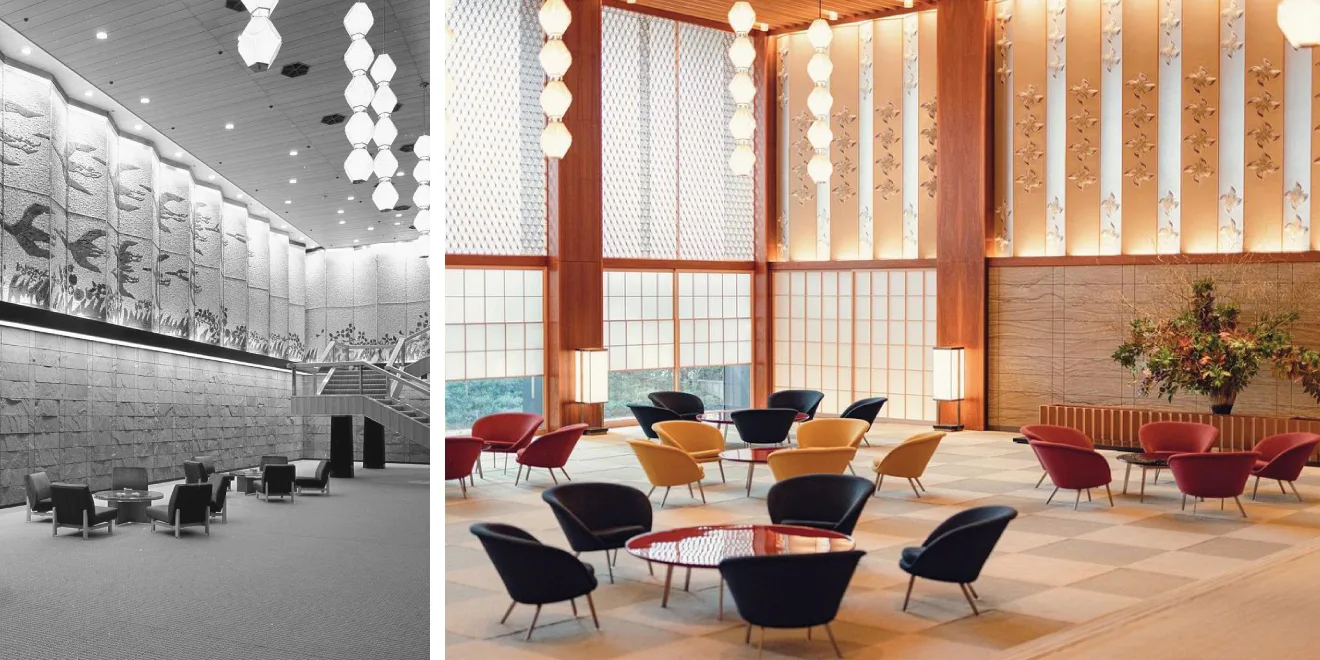
A glass-lined hallway takes guests to the Prestige Tower, which is a detailed reconstruction of the historic lobby. The highlight is a hexagonal vase filled with an enormous ikebana arrangement that changes every few weeks. Low-slung lacquer tables and colorful chairs, lifted from the original space, are arranged in circular configurations designed to resemble plum blossoms; long strings of lanterns above feature panels from the original fixtures. The wall includes a floral pattern designed by the late Kenkichi Tomimoto, a ceramicist who was a known authority on porcelain. Details that are easy to miss but no less special include a vintage-inspired World Clock and shoji screen doors, which create an illusion of swaying bamboo branches.
The Rooms
Book a stay in the 11-floor Heritage Wing tower if you’re seeking a quiet, more calming experience with Japanese-inspired decor and lantern-lit spaces. Rooms start on the second floor and offer views of the United States Ambassador’s residence, a white-washed Spanish-style villa fused with Japanese architectural elements. Each room is sizable, complete with a sitting area, large bed, walk-in closet, deep marble tub, and heated floors. The Prestige Tower is a bit more swanky; rooms start at the 33rd floor and soar above the cityscape with views of Tokyo Tower and the neon-lit skyline. The decor is decidedly Western-influenced, with velvets, silks, and plush carpets.
Food & Drink
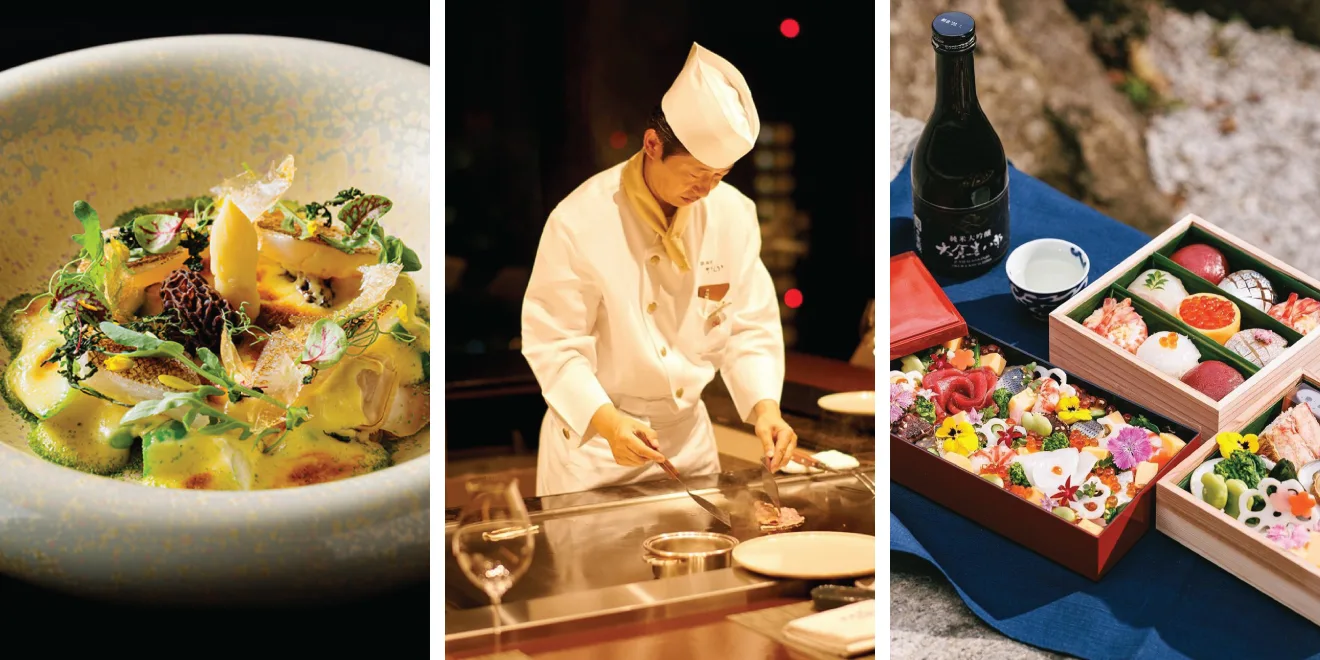
You’ll find both Western and Japanese options here, including a traditional breakfast with grilled fish, miso soup, pickles, and onsen eggs, or soft-boiled eggs with perfectly jammy centers. Insider tip: pay the extra fee for Club Lounge access, Located on the 37th floor in the Prestige Tower; it’s the perfect place to unwind after a day of walking through Tokyo’s busy streets. Try wines from across Japan or ask the bartender to mix a drink with their array of locally-produced whiskies and gins. For a non-alcoholic option, go for the freshly-squeezed orange juice, which is artfully presented in a whole orange with a bright green straw. To cushion the stomach, there are plenty of hearty snacks, from tea sandwiches to foie gras served with wagyu beef. Save room for dessert, as both the caramel cream puff and citrus tart are buttery and just the right amount of sweet, while the freshly-cut melon and strawberries taste like candy.
There are six restaurants in the hotel including Nouvelle Epoque, a French fine dining restaurant and Chef’s Garden, a casual delicatessen serving pastries and sandwiches. For a formal meal with a view, Sazanka on the 41st floor serves teppanyaki, a style of Japanese food that’s cooked in front of you by a chef on a large iron griddle. For Cantonese-style banquet food by way of Japan, dishes like roast duck and shark’s fin soup are on the menu at Toh-Ka-Lin. And if you want traditional Japanese fare, Yamazato, with its kimono-dressed wait staff, includes a sushi bar and tea ceremony room.
In addition to the cocktails at the Club Lounge, find extensive drink menus and expert bartenders at both the Orchid Bar, on the main floor, or Starlight Lounge, on the 41st. But Baron’s, the secret bar reserved for hotel guests, is not to be missed. Look closely for a nondescript door by Nouvelle Époque and swipe your room card for entry. Get the martini; it’ll be the best one you’ve ever tasted.
The Check-Out
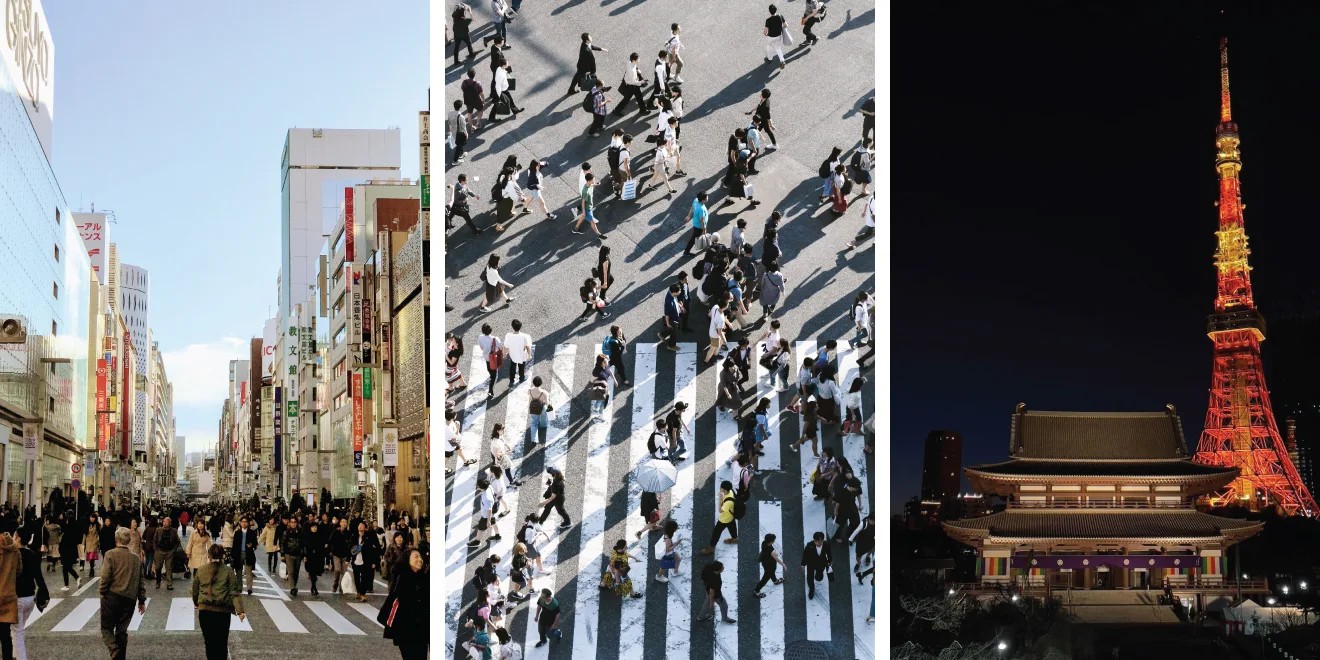
Toranomon Hills is home to Prince Shiba Park, a large public park a 15-minute walk from Okura. Within the green space you’ll find Zōjō-ji, a large Buddhist temple, as well as Tokyo Tower, the city’s tallest structure, which has two observation decks with sweeping skyline views. Otherwise, the neighborhood is mainly composed of embassies and private residences, so at night the area is quiet. For a livelier time, take a short taxi ride to Azabu-juban, which is full of restaurants and karaoke bars. The nearest subway stops, Toranomon Hills or Tameike-sannō are a ten-minute walk from the hotel but can take you to all the major areas like Shibuya, Ginza, and others in a half-hour or less.