The Check-In
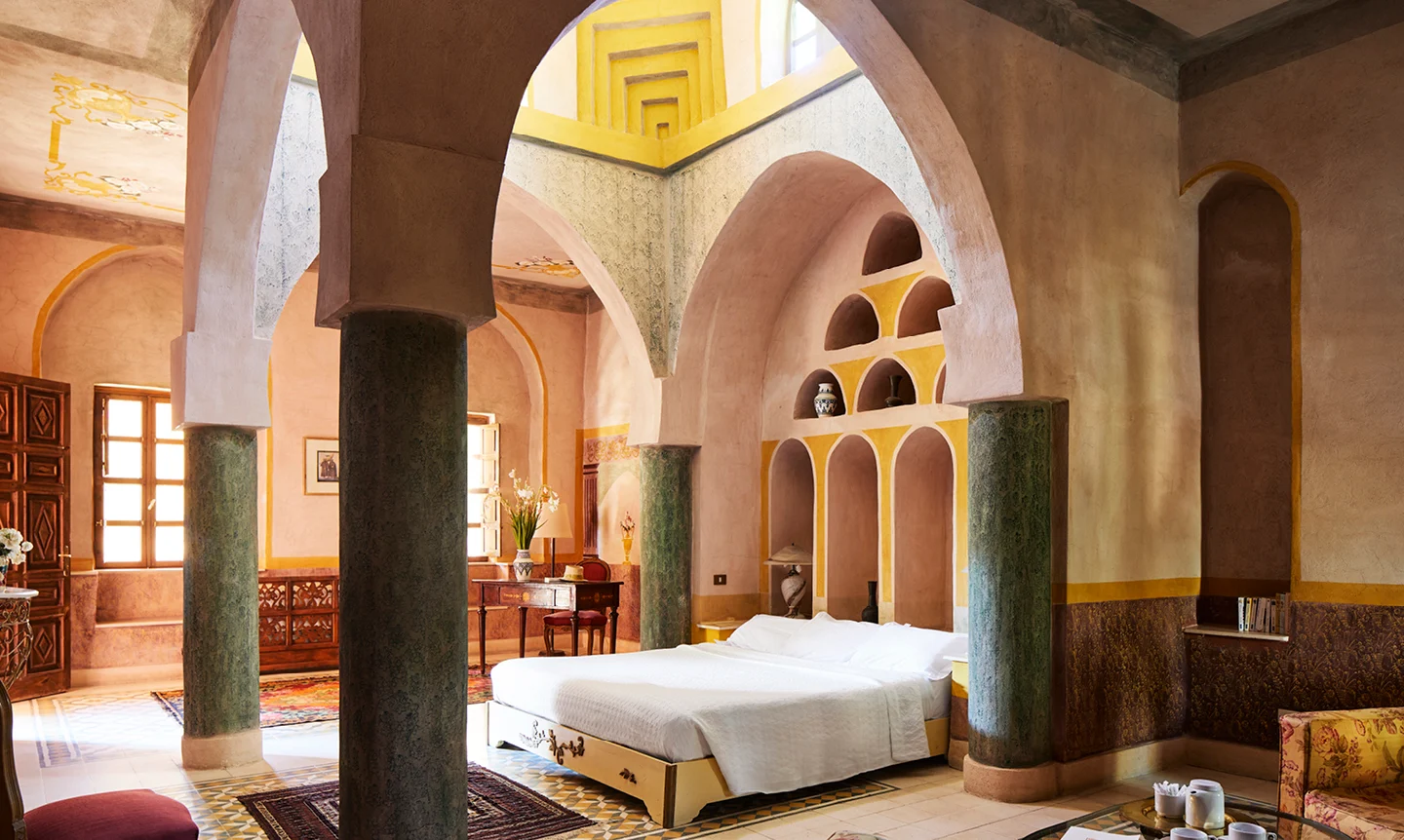
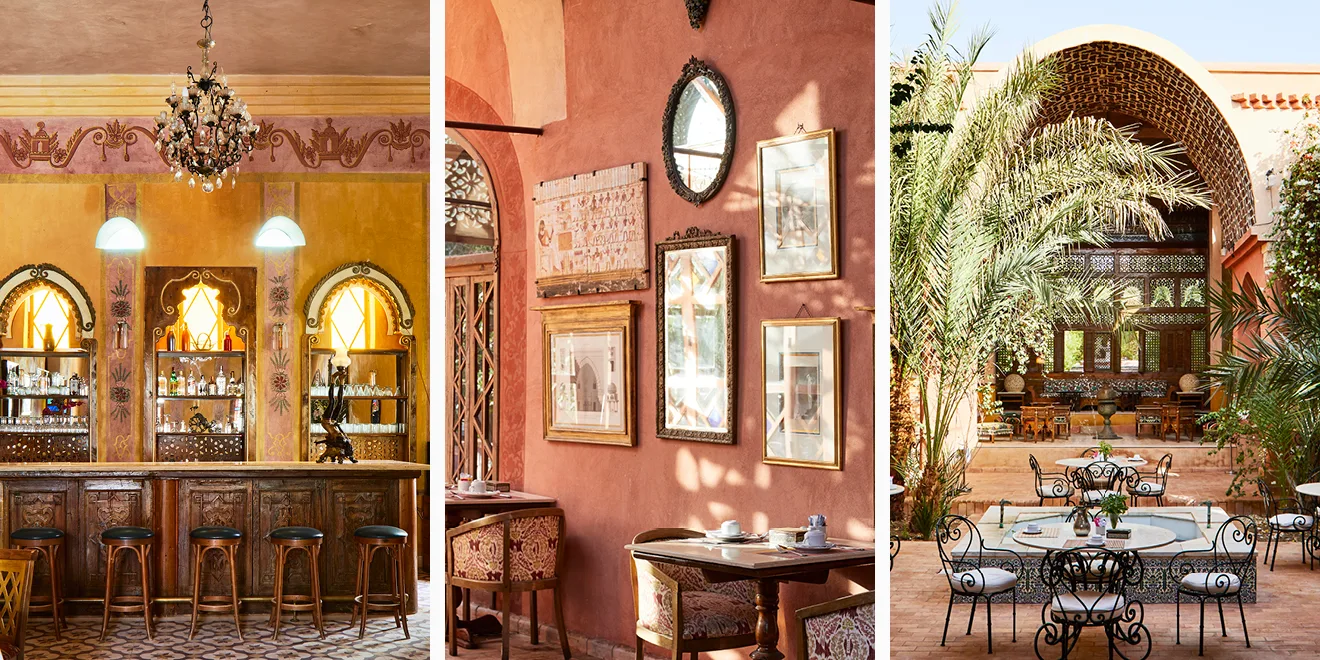
Tucked off a dirt road, on the West Bank of the Nile about thirty minutes from downtown Luxor, Al Moudira is a pink and terracotta-hued oasis that feels more like a home than a hotel—albeit a sprawling one owned by a bohemian traveler with impeccable taste. Approaching Al Moudira, guests are greeted with towering palms lining mosaic walkways and framing the entry arches, surrounded by bursts of pink and white bougainvillea. With high ceilings, sweeping arches, and a design that fuses Moorish, Arabic, and Egyptian elements, the hotel is set across twenty-acre of garden courtyards, with various fountains and vintage iron furniture dotting the property. The extensive antique collection is the result of years of travel by the owner, Zeina Aboukheir, an Italian-Lebanese photographer and jewelry designer who moved to Luxor in 2000 to open the hotel, giving it the Arabic name for her own moniker: “The Boss.”
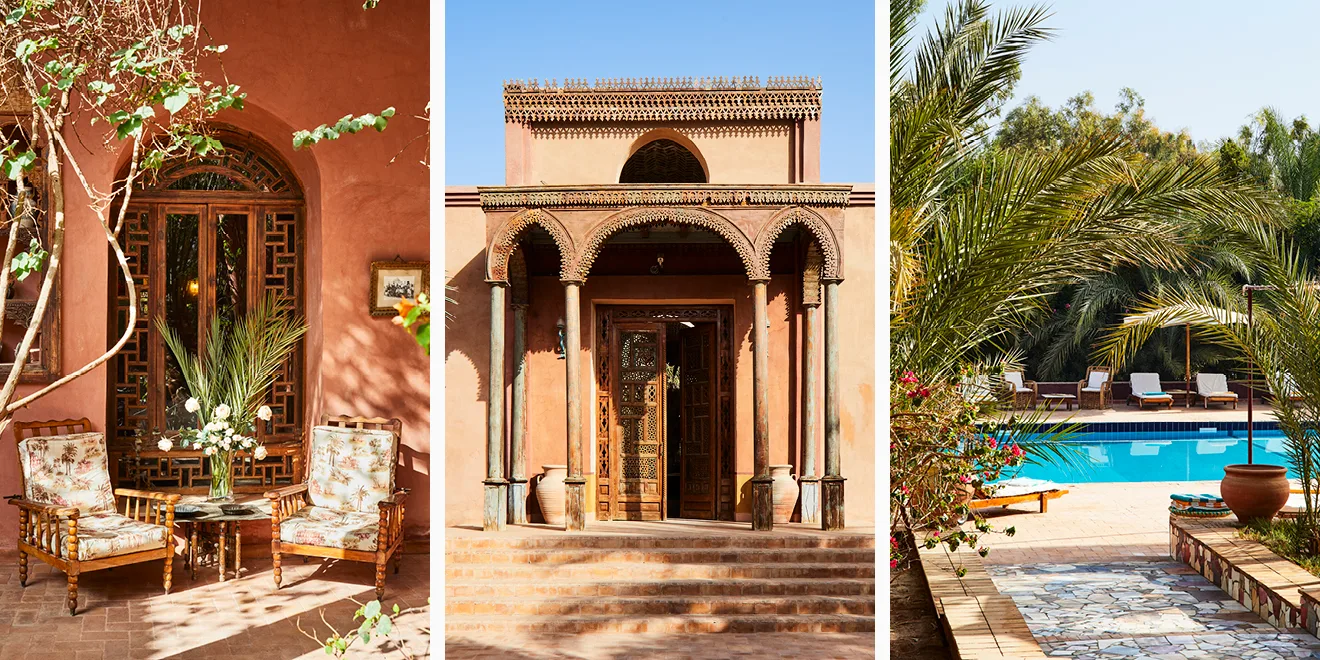
Upon arrival at the reception desk, guests are served a customary glass of karkadeh, a traditional sweet chilled hibiscus tea. The pool area, where guests recline after busy mornings touring the sights, recalls grander times, with columns, umbrellas, and lounge chairs draped in yellow-striped towels. All around, you’ll hear light birdsong and the Muslim call to prayer. Like the hotel itself, the crowd is stylish but relaxed: a mix of young families, honeymooning couples, and the occasional celebrity.
The Neighborhood
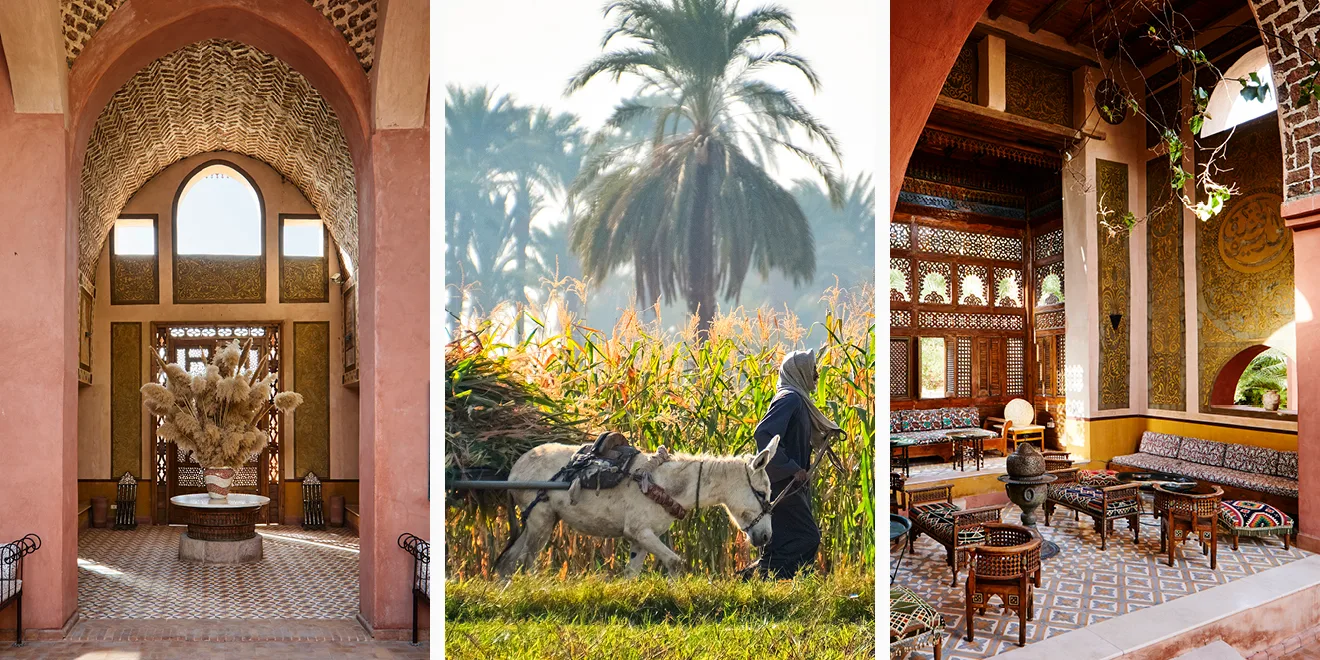
Al Moudira is set amidst a rural village surrounded by farmland, and close to the historical sites of the ancient Valley of the Queens and Kings. Miles of sugarcane fields stretch outside the property, and just beyond you’ll see the edges of desert and jagged mountaintops. Children riding donkeys cross dirt roads, their carts piled with sugar cane and garlic. Wherever you go, especially near water, bug spray is a must.
The Look
Old-world romance is the prevailing ethos of Al Moudira’s design, though a warm palette and open layout makes the property as inviting as it is elegant. The hotel’s palatial setting took three years to build, with a team of local workers and craftsmen incorporating traditional regional materials and styles. Under the guidance of Lebanese painter Mario Dahab, earth tones like terracotta, yellows, and some white—to represent the heat—feature prominently in the hotel’s main areas, while the rooms tend to incorporate darker hues like blues and burgundys. The furnishings are largely drawn from Zeina’s extensive collection of vintage finds from Egypt and elsewhere, including Kilim rugs, glass lanterns, salvaged wooden doors, pearl-inlaid chairs, and, at the bar, an antique piano sourced from a flea market in Alexandria.
The Rooms
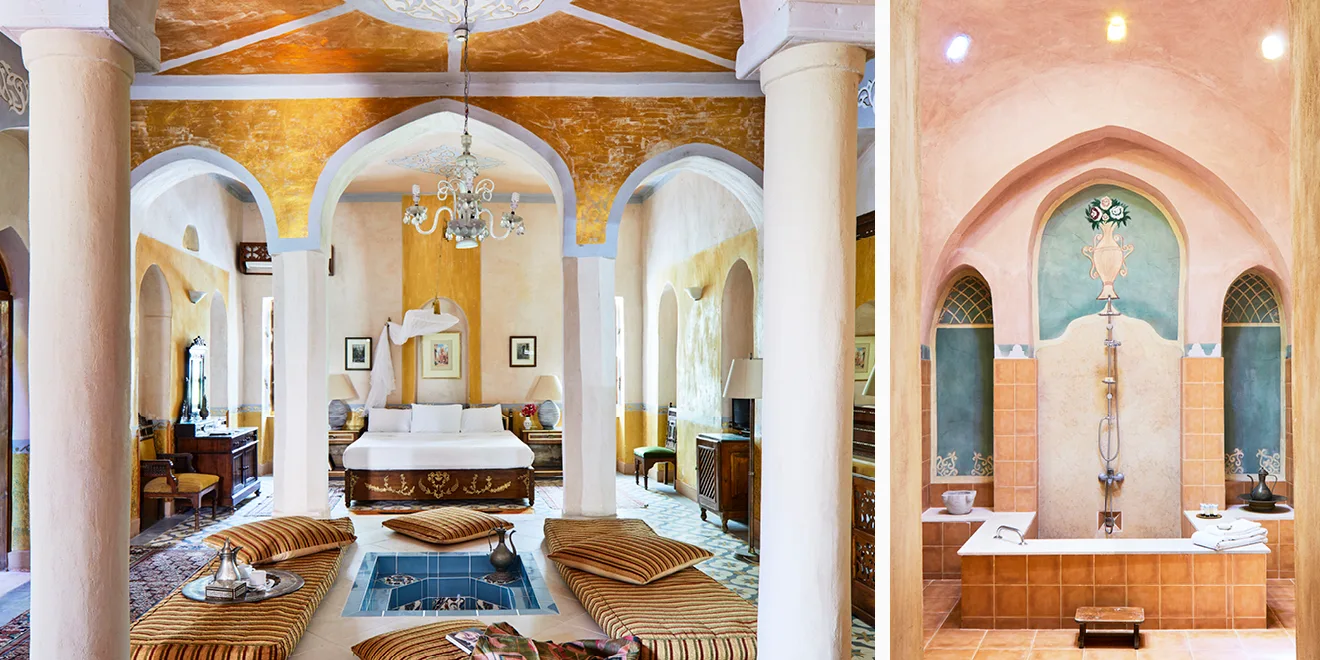
Rooms are airy and spacious, with high vaulted ceilings and columns framing canopy beds. Each room features its own indoor seating area, a small minibar, and the requisite air conditioning. Select rooms have a private outdoor patio. Each room has a unique color palette and paint design; ours was hand-painted in pale yellow and white stripes, with burgundy drapes. Each room also contains unique window features, from stained glass to wood-shuttered varieties, allowing an abundance of natural light. Bathrooms feature tubs under domed, stained glass ceilings. The WiFi in the room is spotty, which leaves more time to unplug and just take in the vintage charm of your surroundings; for reliable WiFi, you need to head to the communal courtyard.
The Food & Drink
Breakfast in the central courtyard is a highlight, with a spread of fresh breads, fruits, water buffalo cheese, crepes, eggs and American or Turkish coffee or tea. The lunch and dinner menu, which is made up of Middle Eastern fare with local ingredients, rotates daily. For an area not known for its great dining options, dinner at the restaurant is a solid option.
The Check-Out
Not far from the hotel along the Nile’s West bank, you can experience Egypt’s storied past at the Valley of the Kings and the Valley of the Queens, the royal burial grounds for the most distinguished pharaohs and nobles. It’s here, part of the ancient city of Thebes and now a UNESCO World Heritage Site, where you’ll encounter some of the world’s most glorious tombs, which sit in an isolated valley amidst the pyramid-shaped mountain peak of Al Qurn (The Horn). Expect a steep climb to take you right into enclosed tombs, lined with intricate carvings and painted scenes depicting deceased kings in the afterlife. All seems to glow in the dim lighting, only adding to the mystique of Egyptian mythology.
While the tombs are the main draw on this side of the Nile, it’s the workers’ village of Deir el-Medina, or Valley of the Artisans, that offers a closer look at ancient Egyptian craftsmanship. For crafts by contemporary makers, don’t miss a stop at one of the eighty-plus alabaster workshops that sit along the West bank—a peek into the country’s vibrant artisanal community.