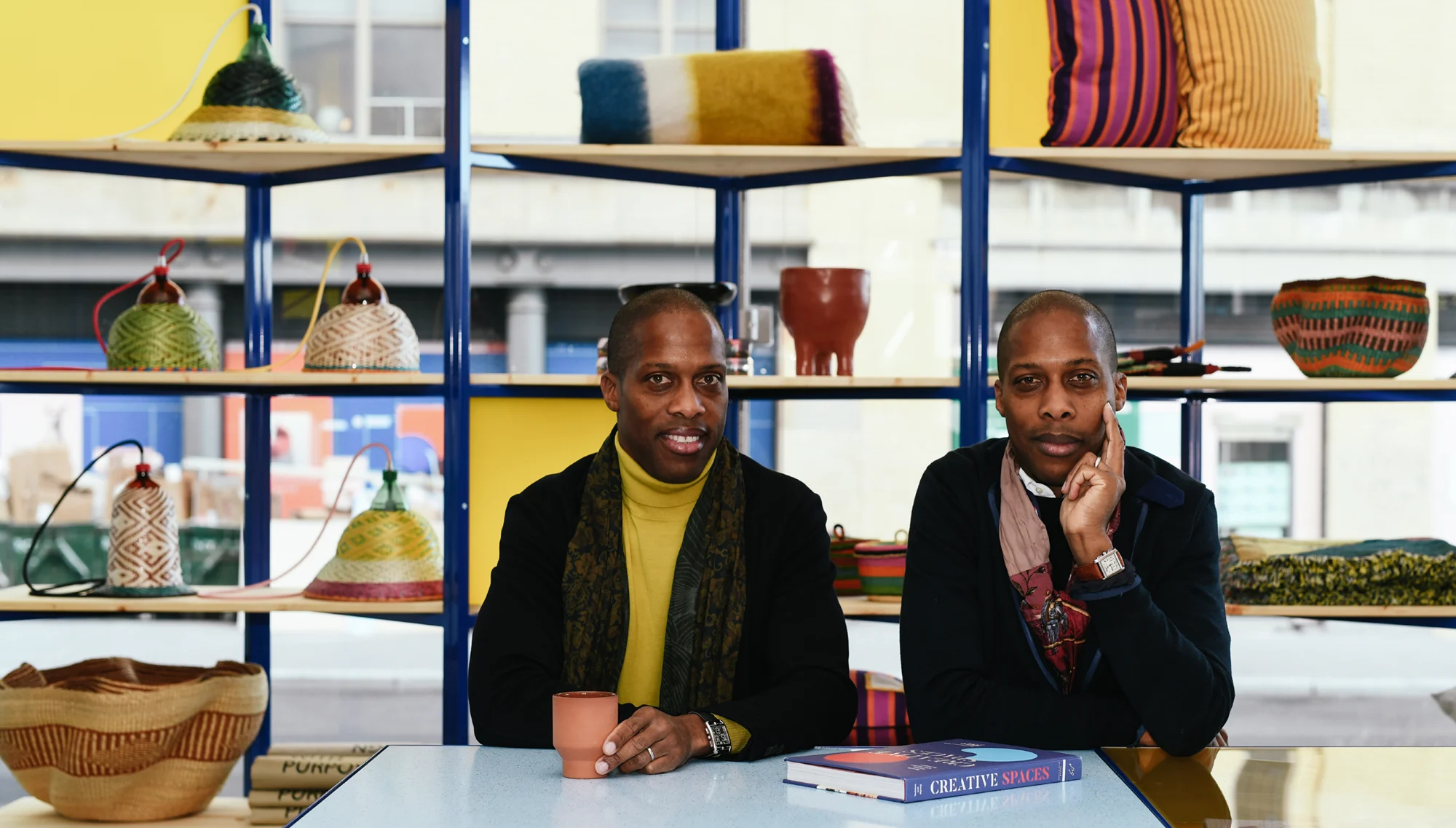
Over the course of almost 20 years, twins Byron and Dexter Peart helped shift North American fashion away from logos toward a stealth definition of luxury and cool. Today, they’re focused on bringing sustainable design from around the world to the forefront. If their past successes are any indication, their new venture, the online marketplace Goodee, will make us rethink how we fill our homes, too.
Starting in 2000, their Montreal-based Want Agency brought then-unknown labels like Acne, Nudie Jeans and Maison Kitsuné to North America. By 2007, the brothers realized that the technology that was essential to their increasingly nomadic work lives didn’t have a very attractive place to hide, thereby giving rise to the organic accessories company Want Les Essentiels, which they sold, along with Want Agency, to their partners in 2017. They’ve spent the past three years not only building a global network of artisans dedicated to sustainability and making a social and environmental impact, but also certifying Goodee as one of the world’s 3,500 certified B-corps, which are committed to using business as a force for good.
Until recently, notes Byron from his Montreal office, what was shown in magazines and sold in stores was subject to a handful of gatekeepers who imposed their vision on what got seen or sold. With the advent of technology allowing consumers to buy directly from the producer, he says, “everyone has an opportunity to make their own voice and business.” Still, he notes, there’s become “a really strong need for who’s doing some level of curation and edit inside all these voices to build trust and break through the noise.”
Before they launched Goodee last spring, the Pearts spent years traveling the globe to meet the makers whose work caught their tasteful eye and to see the conditions in which the products — be they Colombian pots and placemats, Australian notebooks made from recycled calcium carbonate, or Scandinavian furniture crafted from responsibly sourced wood — were made. They also wanted to ensure that these were objects made to be handed down, not just Instagrammed and replaced by the next thing of the moment.
Byron is aware that this company, too, seems to be meeting the moment — however difficult this moment may be. “Since the pandemic, I think it’s really glaring in our faces: The things that are around us, do they matter? Do we need them? Do they really serve a purpose, and do they need to exist?” he wonders. “I think our timing is there, and I think the link from what we did [with Want] to here is straight: Don’t bring things into your life that don’t have value, or make sure they have some kind of impact in the world as well.”
Dexter continues the thought seamlessly when he adds that all of the companies on Goodee are thinking about sustainability as much as they're thinking about the people and community that it serves, concluding: “I think that the future of design really has to speak into both of those social and environmental impacts.”
PRIOR initially asked the Pearts to select five of their favorite items and tell the story behind each. But considering that they’re twins, that would have been unfair! So here, please find six great Goodee goods.
Baba Tree Baskets
“This basketry company in Ghana, created by a Canadian man and his Ghanaian wife, is an amazing organization that is mostly female-run. They’re making the most beautiful woven baskets that are, in our estimation, art forms onto themselves. They’ve come up with some modern takes on traditional techniques, and use bright colors. Each one is made individually and signed by the maker. Last summer, we sold a lot of Baba Tree bike baskets. Throughout the pandemic, there has been just an incredible connection between people’s interest and desire in mobility at the same time of being at home, and I think that product just kind of captured it.” — Byron Peart