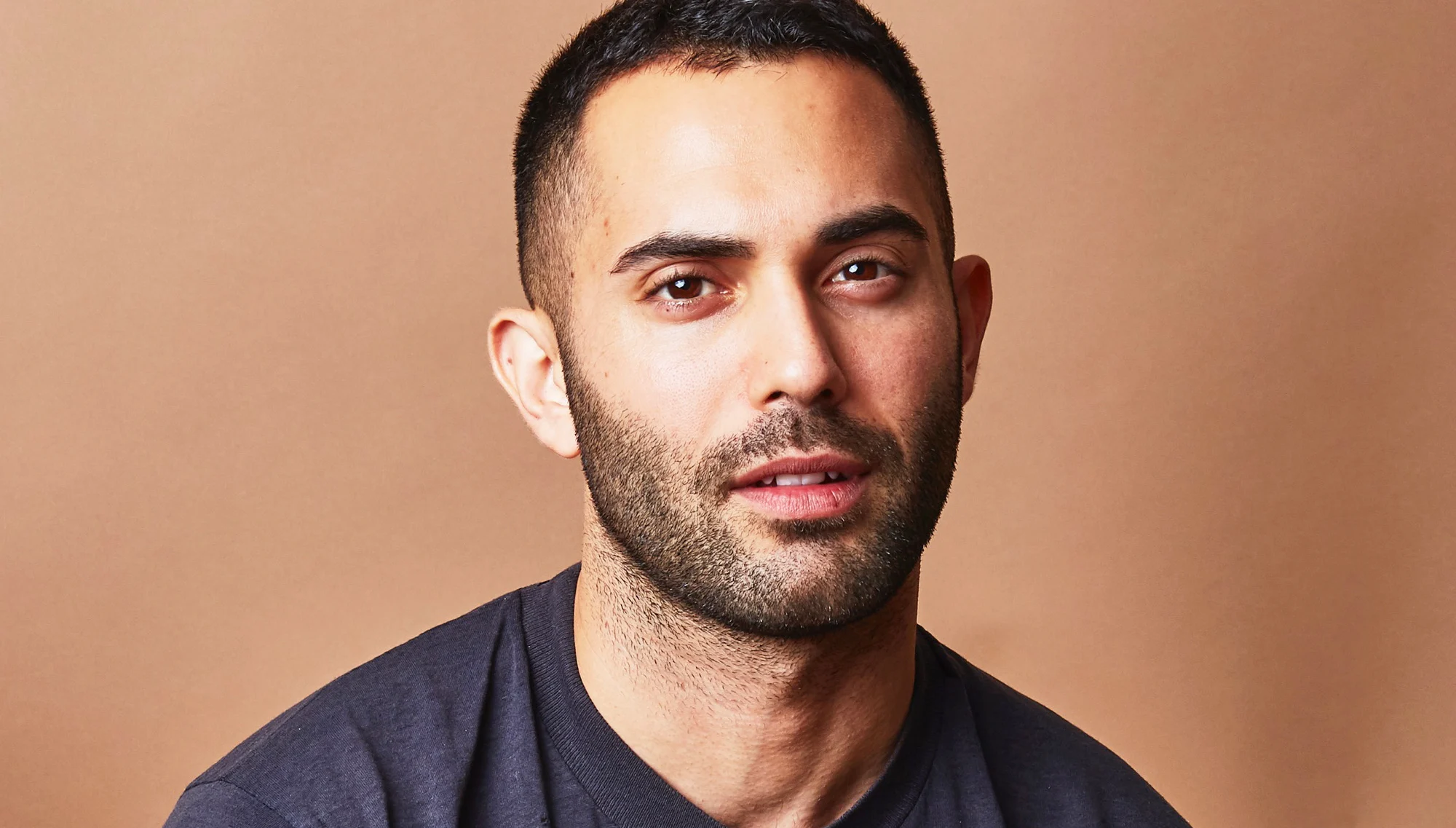
At some point in the last few years, the Bon Appétit Test Kitchen became a cultural touchstone, not only for a new generation of cooks but also for wider millennial and gen Z culture. But no sooner did it reach peak saturation in the age of quarantine home cooking than it become a lightening rod. A deeply flawed approach to diversity and representation quickly boiled to the surface in the most dramatic of ways and made headline news countrywide. When I first heard the news, I thought of my friend Andy Baraghani, who is one of the biggest stars in the BA firmament (witness articles with titles such as ‘How Andy Baraghani Became the Internet Boyfriend of Our Dreams’) and a few discussions we’d had over the years about travel, and his devotion, bordering on fervor, to the cause of bringing new cultures and ingredients into America’s most famous kitchen.
As a gay Iranian in a place many of us writers used to refer to as ‘Bro Appetit’, it was often an uphill battle. But I was also aware that that there were battles he had won (see his beautiful Beirut piece, or tutorial on evocative Iranian dishes—once unthinkable in a magazine dedicated to holiday cookies, BBQ in July, turkey in November and laundry lists of hot new restaurants with the most tatted up of chefs). For those like Andy in the BA Test Kitchen, it has been a painful few weeks—a moment that from an outsider's point of view will likely turbo charge a correction in global food representation and its fascinating context. It’s something that I know always has been and will continue to be one of his chief motivations (that and making sure his biceps look good and his face remains sun-damage free: see his travel answer in the Questionnaire). In light of this moment and rethinking definitions of American cuisine and food culture, I spoke to Andy about our mutual coming of age at Chez Panisse, the importance of the cultural context of recipes, the food destinations he’s keen to explore in the US, and viewing his Iranian childhood through rosewater filled glasses.
DP: Tell me about your background, and your Iran connection.
I’m first-generation American. Both my parents are from Iran; they came to the States a few years before the revolution, to the Bay Area where my Dad went to grad school. They settled in Berkeley, which I think they still think is the greatest place here.
The food love of Iran started for me at a very early age. I grew up in a household where we cooked the majority of our meals. My parents both had full time jobs, but we always had family coming in and out so there was always someone additional to feed. My mother’s side really have a deep understanding of the backbone, you could say, of Iranian cuisine. It would sometimes get quite regional, because they come from the north—they’ve got recipes that go well beyond the sort of go-to’s of Perisan cuisine. My dad’s side know a lot about Iranian preserves. Torshi, which are the pickled dishes, and murabba, which are the jams and preserves. I remember there was often that lingering smell of hot vinegar in the kitchen growing up, from the eggplant and onion pickles. They’re not sweet pickles like you find in the US; they’re puckery and tangy, and made with dried herbs; tarragon, or mint. What makes the preserves different—though this isn’t unique to Iran, it happens all over the Middle East—it's the breadth: sour cherries to rose petals to pumpkin. And to finish it off, they’d add a bit of orange blossom water or other flower water to amplify the aroma. And my Dad would typically eat them with flat bread and a fresh sheep’s milk cheese.
So basically that’s a long, long way of saying that I grew up in a very food-centric family…!
DP: And so you ended up at the second-most famous landmark in Berkeley, Chez Panisse. And that’s where our paths just about barely crossed. I recall you once said that Chez Panisse was one of the most inclusive work environments you’ve ever been in.
I knew all about CP really because of my family. They would talk about this place a lot; it was, ‘Oh, Chez Panisse, it’s a really famous restaurant.’ And the woman behind it—the famous Alice Waters. And as I teenager I became actually a little bit obsessed with the fact that this place was right over there, maybe a 10-minute drive from where I live. I remember checking the website, and what their old homepage looked like. And then my aunt bought me the book. And I realized that my love of food went beyond the acts of eating and experimenting in my mother’s kitchen; it was about going for the next step, and seeing myself in a professional setting. I just really wanted to cook in a restaurant.
I love connecting with people—I have so many good people in my life from all over the world—but the truth is I’m a bit of a forced extrovert who’s actually a lot more comfortable being on his own. And I was quite shy back then. But at the same time I think that gutsy, curious boy still very much exists in me. In any case, I somehow got up the courage to go to the restaurant. I said, ‘Hi, I’m Andy, I was looking to see if you guys would take on an intern.’ I sat down with Beth Wells; and I remember her face—very gentle, very caring, but a bit confused, like, You’re in high school…? ‘When would you come?’ she asked. And I said after school on Fridays and Saturdays. I was so eager, you know: I’m available! Use me! And so they brought me on as a 16-year-old intern. And I worked my way up from there.