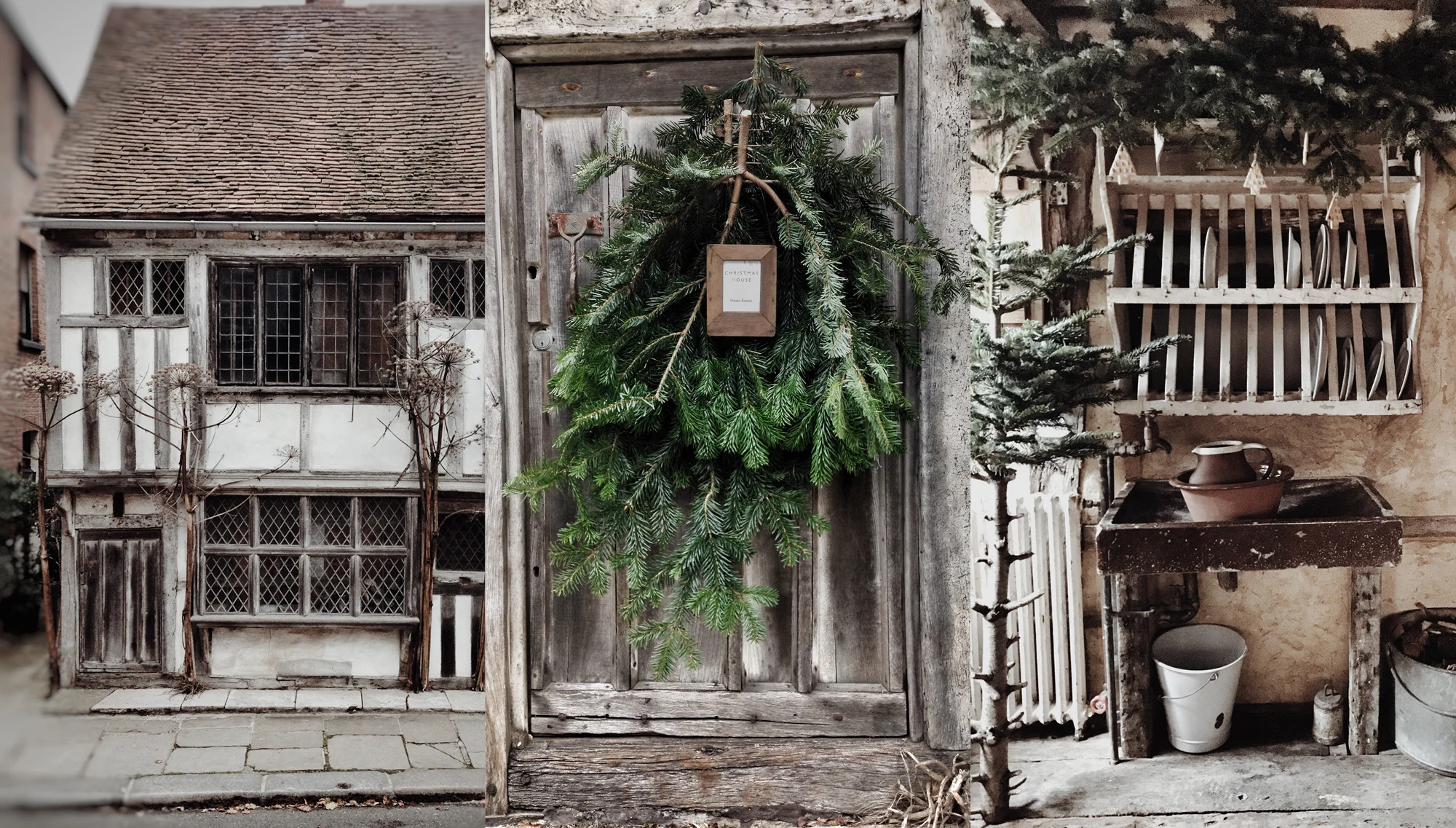
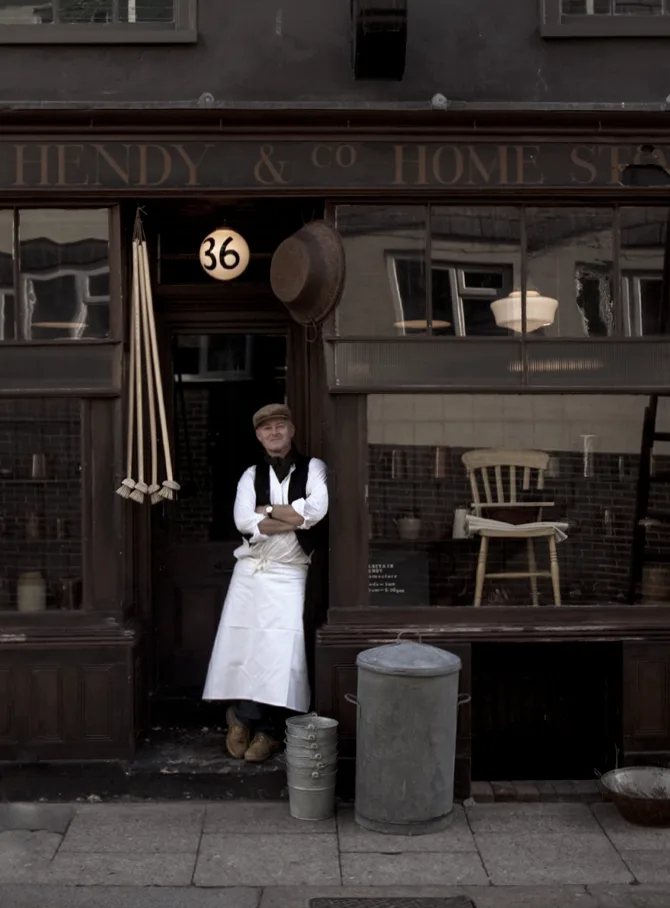
Alastair Hendy is chasing something—his childhood, his curiosity, his kaleidoscopic imagination. The difference between him and the rest of us is that he keeps catching up to it. After studying theater and costume design at Central Saint Martins, he took up cooking, landing on the BBC’s MasterChef, which in turn led him to food journalism and photography. He became a star contributor—cooking, styling and shooting entire stories—to some of the world’s most stylish and transportive magazines in their golden eras, like the seminal Australian Vogue Entertaining + Travel. More recently he and his partner, lawyer John Clinch, who share a loft in Shoreditch, bought and painstakingly restored a 16th-century Tudor home in the unassuming town of Hastings, on England’s southeast coast. Here he opened AG Hendy & Co, a nostalgic, Victorian-inflected hardware store selling everything from vintage pharmacy bottles to handmade feather dusters—a beachhead of exquisite yet humble taste that has contributed to an influx of creatives who are gradually revitalizing the town.
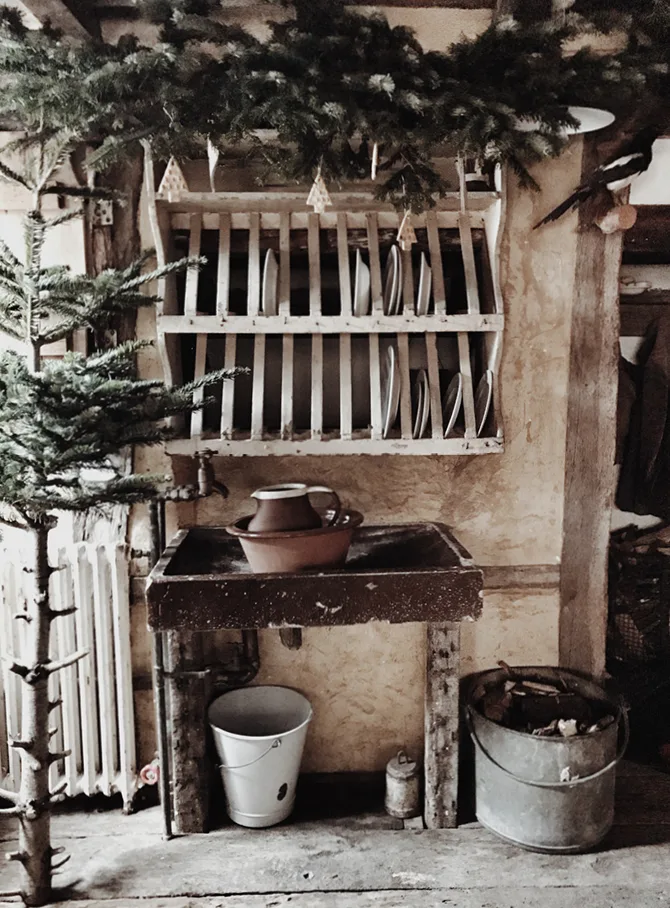
Every December, Hendy transforms their home into the “Christmas House,” decking it with mince pies, holly branches and crackling fires to receive visitors who can sip mulled wine or sit in a vintage wing chair and read stories aloud. Although the house was only open only a few days in December before Covid restrictions shut it down again, everything within is available to purchase online. He shared his thoughts with us on a cold winter’s night before the holiday.
You are a true polymath. What is the through line that connects all of your vocations?
Back in the day, when Neale Whittaker was editor at Vogue Living, he described me as “a human magazine.” He summed me up in three words. I didn’t have the store then, yet it’s all part of the same narrative, the same story. My store is the window on my world, and a place where others can come and shop my story, what I do. I guess I am a storyteller—that’s the thread.
Have you always been a collector? What are some of your proudest conquests?
Have I. Too much so. I can’t stop collecting. I’d be called a hoarder if I didn’t have a shop. I have collections of just about everything, from Victorian anatomy-school plaster composition models, Ladybird books, suitcases, shop scales, pharmacy bottles, old handwritten ledgers and bills and1920s butterfly-wing pictures, to Edwardian ironstone jugs and dairy bowls, Victorian copper jelly molds, 1940s Fulham Studio pottery vases, outsized breadboards, bone-handle flatware, sinks (yes, sinks) and antique brushes—gazillions of them! I have a plan to produce a book on brushes. It is the less esoteric I get the most reward from. Buying a bag of utility buttons or an old length of chain at a boot fair [yard sale] is always my go-to for the happiest of conquests. I like used things, and things that had use—and still have.
What draws you to these objects?
There’s a poetry in the everyday. The unashamed elegance of the domestic is always pleasing and has been my go-to all my life: from the scrubbed tables and creamware of the below-stairs in country houses—not forgetting their drab painted cupboards, shelved pantries, exposed pipework and batteries of scullery sinks—to the municipal paintwork and solid hallways of old schools, the boarded walls of work rooms, the window casements and cast-iron work of old factories, and the mathematical tiling and brickwork found in Victorian swimming pools, asylums and prisons. As a child I’d visit St. Francis asylum in Haywards Heath, UK, to talk to the patients, and took in the Victorian institutional vernacular. My boarding school was Victorian, with rows of sinks, baths and iron beds, and I spent much time in its large kitchen (cooking the staff supper, age of 10). I’m below-stairs born and bred. Give me an old tap and a massive sink and I’m in heaven.