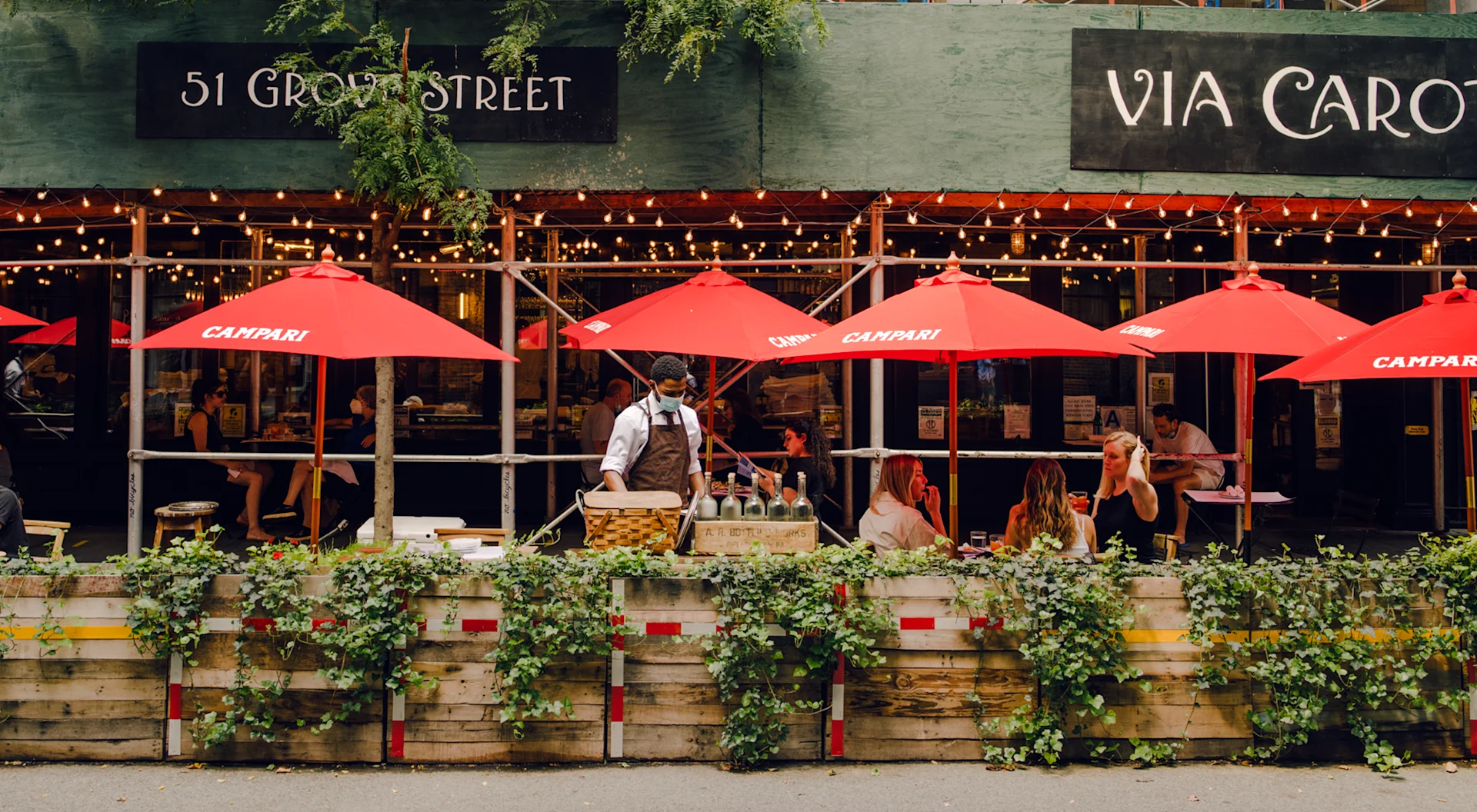
It allows us to pretend. New Yorkers are masters at tuning out the rougher bits, at viewing the once-overcrowded, still-overpriced concrete sprawl as the most beautiful city in the world. And so lunching with a friend at an outdoor table at Via Carota is such a welcome pleasure, we barely hear the grumble of construction going on above the scaffolding next door. We ignore how close that Sprinter just came to the planter boxes separating us from Grove Street. And we definitely do not notice those dark clouds hovering above. Because we need this bright spot.
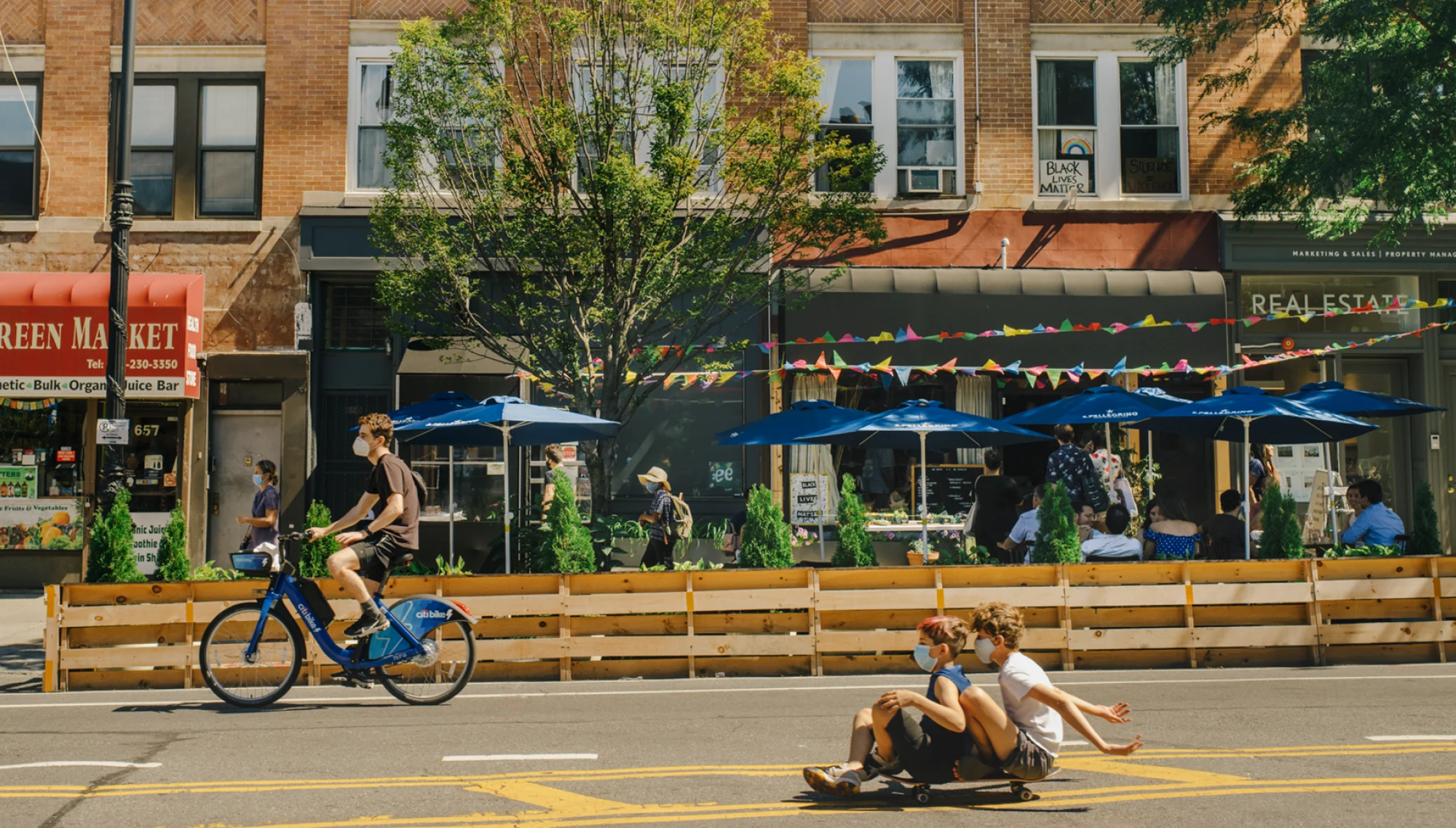
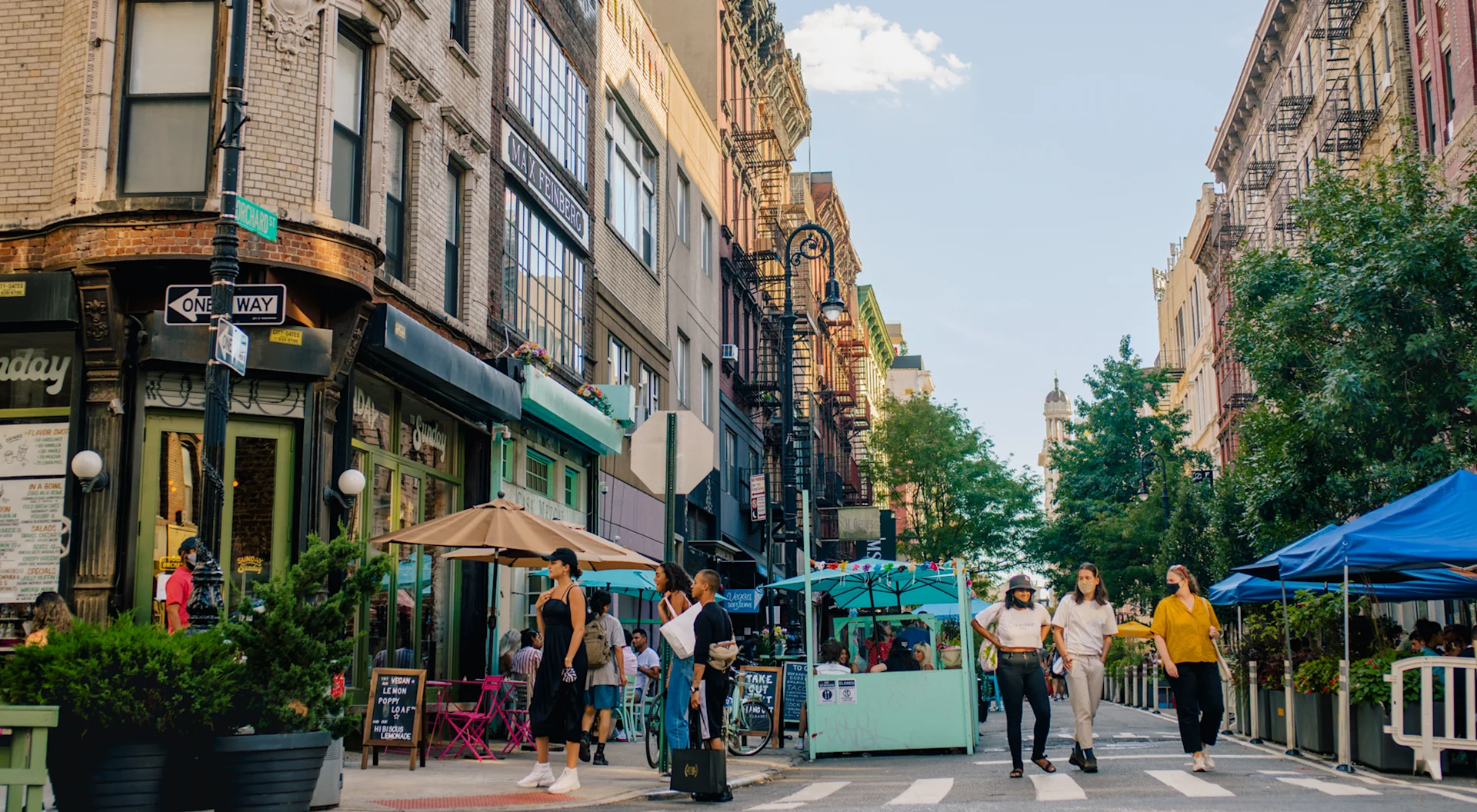
So do the restaurateurs. The sudden relaxation around the city’s strict sidewalk dining rules has brought a much-needed infusion of vitality to the restaurants, not to mention a more human sense of scale to the streets. You can feel it in Chinatown, from the David Rockwell-designed seating plaza on Mott Street to the newly dubbed “Dimes Square” around Division Street, and in Brooklyn, which feels practically European under the warm string lights in Dumbo and along buzzing Vanderbilt Avenue. We’ve reclaimed our sidewalks, and perhaps even more.
But, like many summer affairs, it’s bound to end.
The city’s outdoor dining permits expire October 31, unless there are legislative changes. And even if extended, there are only so many logoed fleece blankets a restaurant can hand out as the chill settles in for the winter. Something more substantial than allowing for a few bike lane cabanas is crucial to sustaining New York’s rapidly contracting restaurant industry.
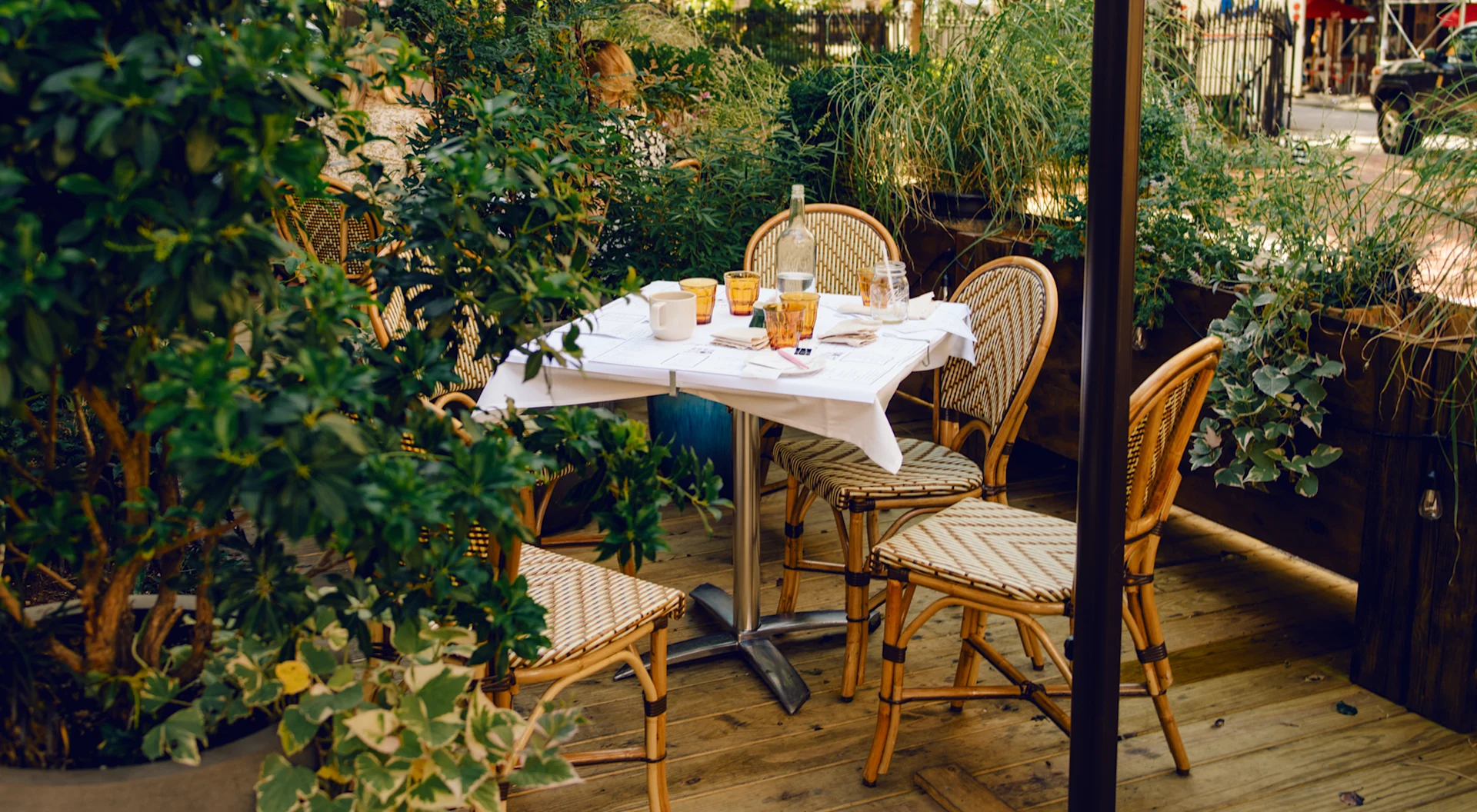
Sidewalk dining has allowed some restaurants, like Brooklyn’s Olmsted, even more seating than they had inside. But many others lack the sidewalk space, or the primo backyard oases. To spruce up what street space they do have, some owners have invested thousands in swank umbrellas, weather-proof seating and planter boxes to add a buffer between guests and their honking dinner mates. (We love the Scandi setup at Brooklyn’s Four Horsemen.) The wait is still so long at Lilia, you’d swear these were still Normal Times. For diners who’ve soaked entirely too many beans these past months, a tray of buttery-hot escargots and a side of salty fries at Pastis on cobbled Gansevoort Street are worth weeping tears of joy over.
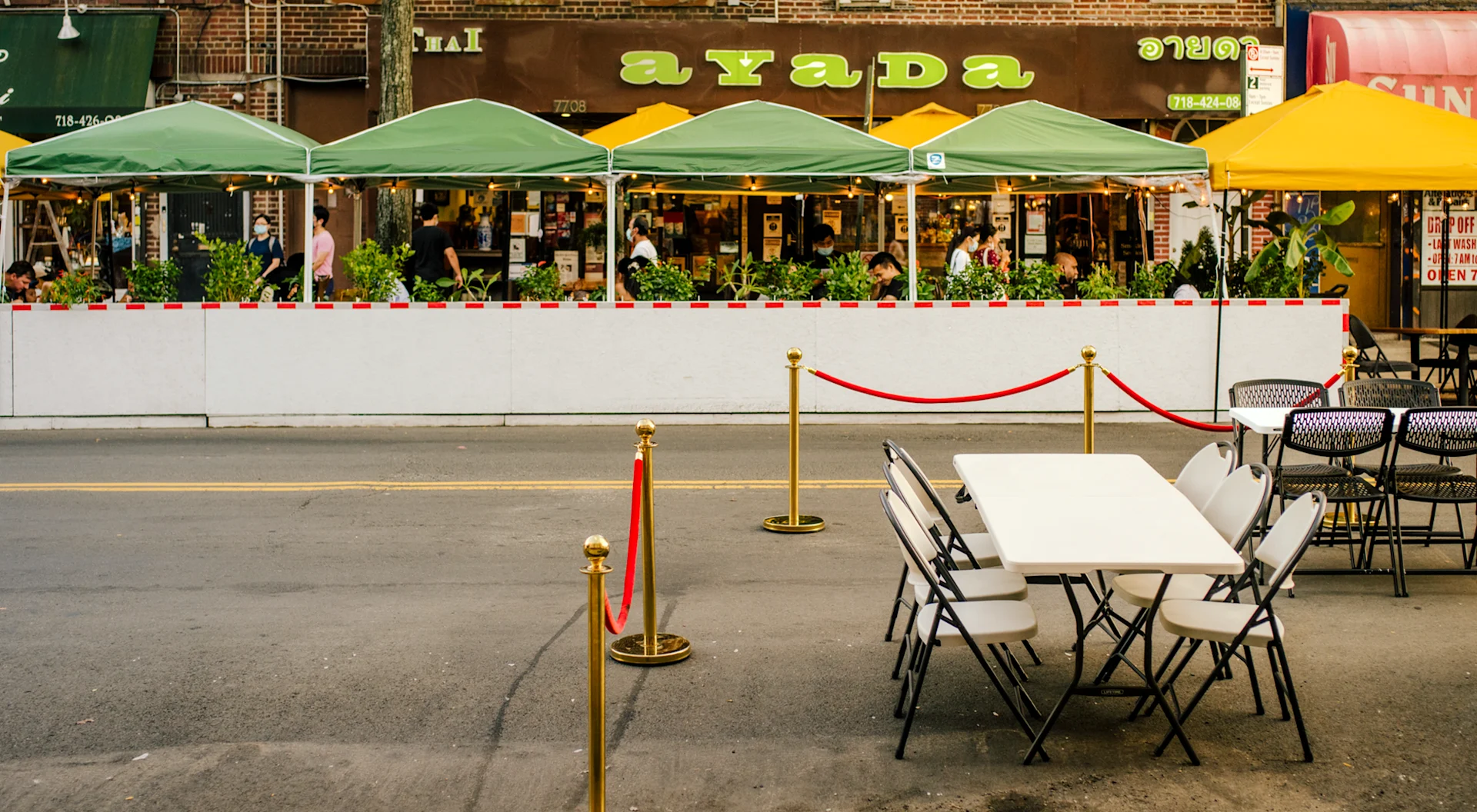
But the sad reality is that, despite support by New Yorkers determined to graciously see the city through yet another crisis, restaurants are still closing by the hundreds. And while some neighborhoods feel suddenly buzzing with new, let’s-get-back-to-it energy, less than half of New York’s restaurants have opted to participate in outdoor dining. “Most restaurants are primarily doing [sidewalk dining] to rehire their teams and to show a sense of civic pride,” tweeted restaurateur Danny Meyer. It’s offered a Band-Aid when restaurants need a tourniquet.
The refrain from the owners of restaurants that are closing is that they couldn’t come to an agreement with their landlords, as was the case with SoHo’s beloved Uncle Boons, which shuttered in August. It’s easy to direct ire at unnamed landlords, who so far haven’t been incentivized to give their tenants a break. They’re definitely a large factor. (A new bill has been proposed that offers tax breaks for landlords who give their tenants rent relief, which could help.) Knowing that a few have offered leniency for the restaurants under their roofs, like the landlord-investors of Crown Shy, is a glimmer of hope.
The New York State Restaurant Association reported that nearly 90 percent of restaurants say they won’t be profitable in the next six months without government aid. To forge ahead, restaurant owners, among others, need a resurgence in PPP loans—the first round of which has run out for most recipients by now—to help to pay their rent, employees and purveyors. Mayor de Blasio has said that restaurants may not reopen indoors until there’s a vaccine, declaring indoor dining an “optional” activity for “upper income New Yorkers” that can wait. It would be nice to know, in the meantime, what his plan is for the salvation of the industry that gives the city its literal flavor.