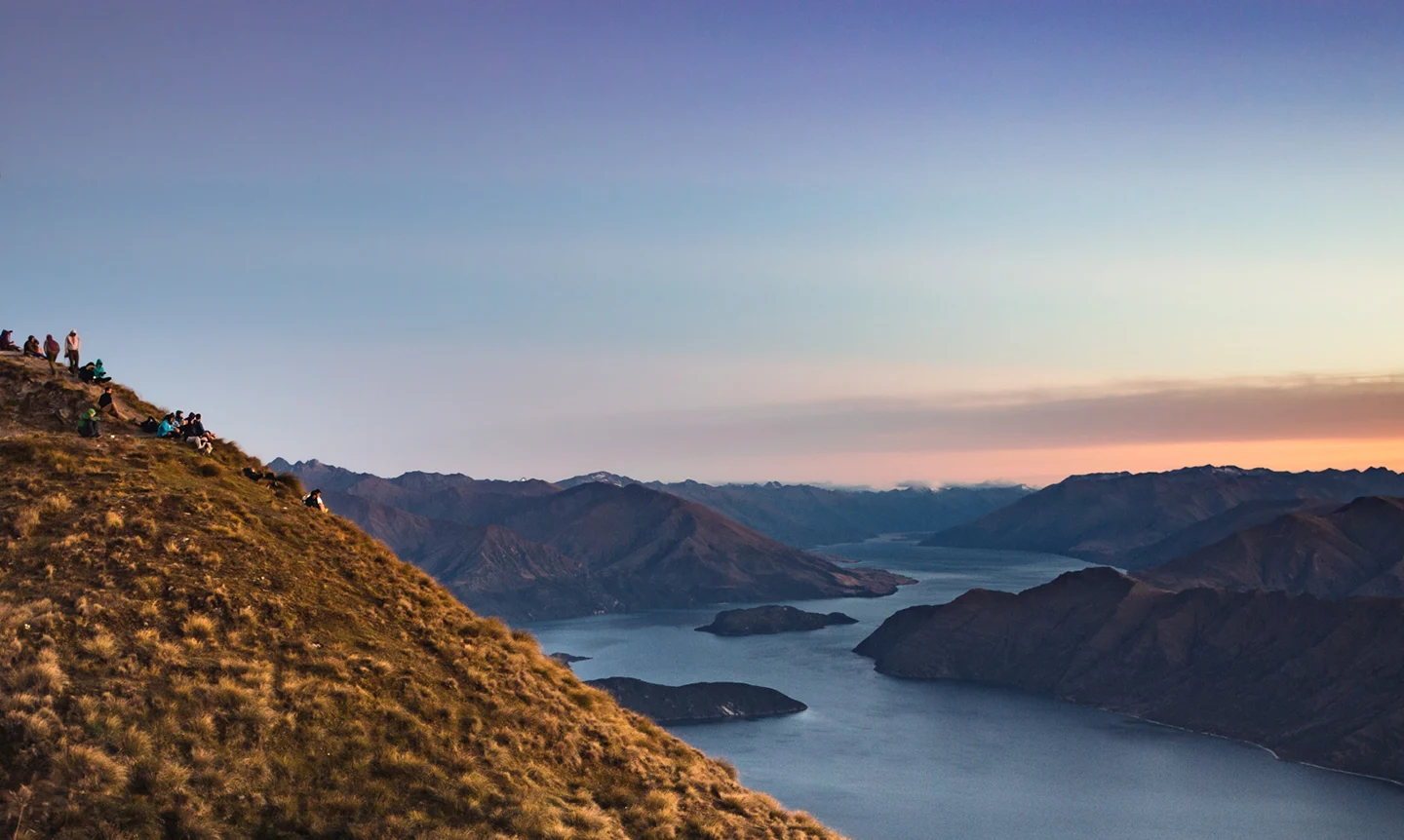
“The Long Path,” the Maori description for the Te Araroa Trail, is over 3000 km (1,800 miles) and spans almost the entire country of New Zealand. The trail runs the gamut from open swaths of mountainous terrain to small urban enclaves—there’s even a river that requires paddling along the way. The North Island allows for dramatic vistas of farmland, coastal cliffs, and volcanoes, whereas the South Island portion combines wooded National Parks and mountain passes flanked by high country stations.
What makes this trail remarkable, aside from its spectacular ecodiversity, is the opportunity to engage respectfully with indigenous Maori culture. Along the trail, walkers will be granted access to Maori marae, a complex of communal sacred spaces for the Native community.
To do the entire trail, which consists of 87 distinct paths, could take a traveler four to six months. But if you’re shorter on time, we’ve mapped out three unique segments—of varying terrains, lengths, difficulties—to give you just the right taste of Te Araroa, and of the majesty of New Zealand.
A WEEKEND
For a weekend getaway, set out for the Tama Lakes area, between Ruapehu and Ngauruhoe, for awe-inspiring views of two lakes that formed in 10,000-year-old craters on the North Island.
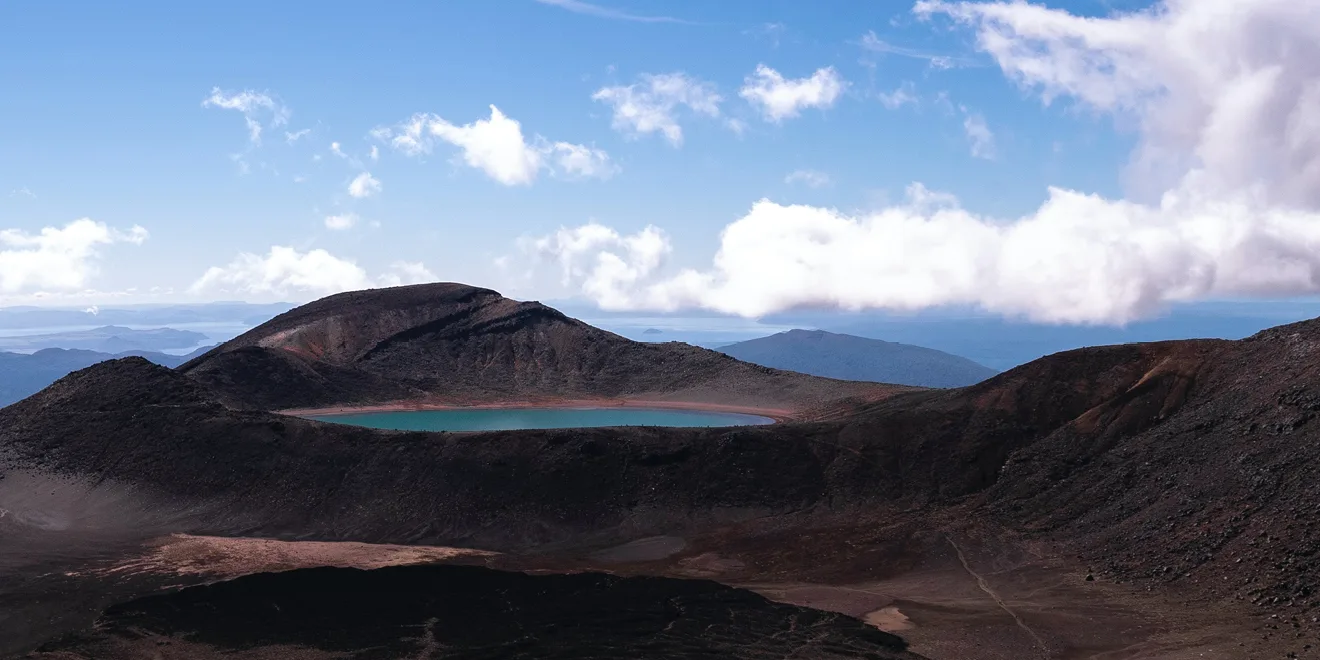
The Tama Lakes Trek takes in volcanic steam vents, emerald lakes, alpine herb fields, and panoramas that seem to stretch to the end of the earth. Milder, less strenuous alternatives include the Rotopounamu Track and Taranaki Falls walk, short on distance but not on beauty. More adventurous travelers, on the other hand, should seek out New Zealand’s highest stand up paddle and world-class wilderness fishing. But some of the region's best attractions are man-made: Don't miss the Horopito car graveyard, a museum of wrecked cars dating back to the 1940s, or the scenic train ride along the Stratford-Okahukura railway line and Whanganui River.
When you work up an appetite, Station Cafe—inside a historic railway—is where trekkers like to meet for breakfast or an afternoon bite. For a more elevated dining experience, there’s Knoll Ridge Chalet, perched on the edge of Mount Ruapehu at an altitude of 2,020 meters. (Take the Sky Waka gondola to get there.) High tea with a view is always memorable at Chateau Tongariro in Tongariro National Park, where you can gaze at the sacred peaks of the Ruapehu, Ngauruhoe, and Tongariro mountains.
FIVE DAYS
If more time permits, the spectacular Queen Charlotte trek, at the Northeastern tip of New Zealand’s South Island, takes roughly five days. Perfect for walking or biking, the 70-km trek is set against the Marlborough Sounds, a collection of ancient sunken river valleys that overflow with water from the Pacific. Starting from historic Meretoto (Ship Cove), it weaves through the coastal village of Anakiwa in the Grove Arm of Queen Charlotte Sound, with the option to take a water taxi back to the small town of Picton. The trek is a thrill, with steep forested hills hovering over the sea, whose coastline traces sheltered inlets and sandy bays. Maori people have inhabited this area for more than one thousand years, and it was also the base for European navigator and explorer Captain James Cook during his explorations of the South Pacific in the late 1700s.
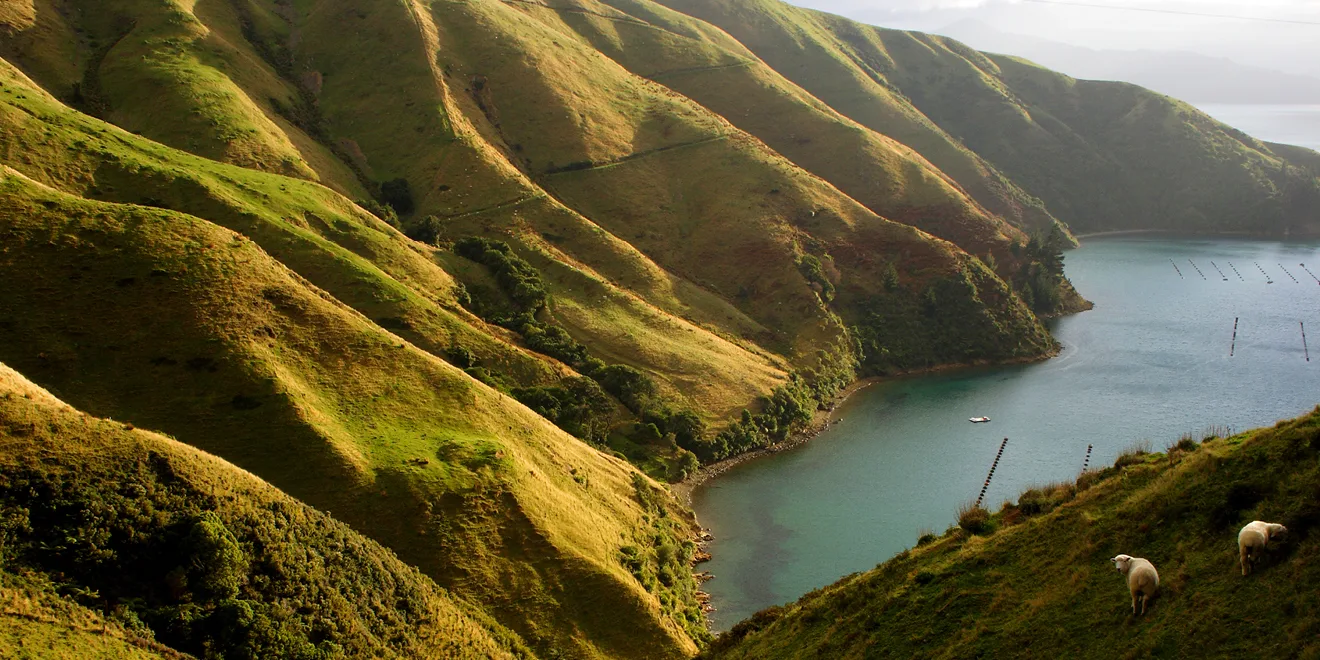
The diversity of animals is another key draw, particularly native birds like the fantail and weka and an abundance of marine life. When you tire of dry land, take a swimming tour with five different types of dolphins, or go sea kayaking through the sparkling waterways of the Marlborough Sounds. And to tap into the local culture, book a visit to a Maori Marae, where an iwi (tribe) will hold funerals, meetings, and celebrations. Havelock is another worthwhile stop—an old colonial town at the mouth of the Pelorus and Kaituna Rivers that's home to cafes and galleries whose proceeds preserve local communities.