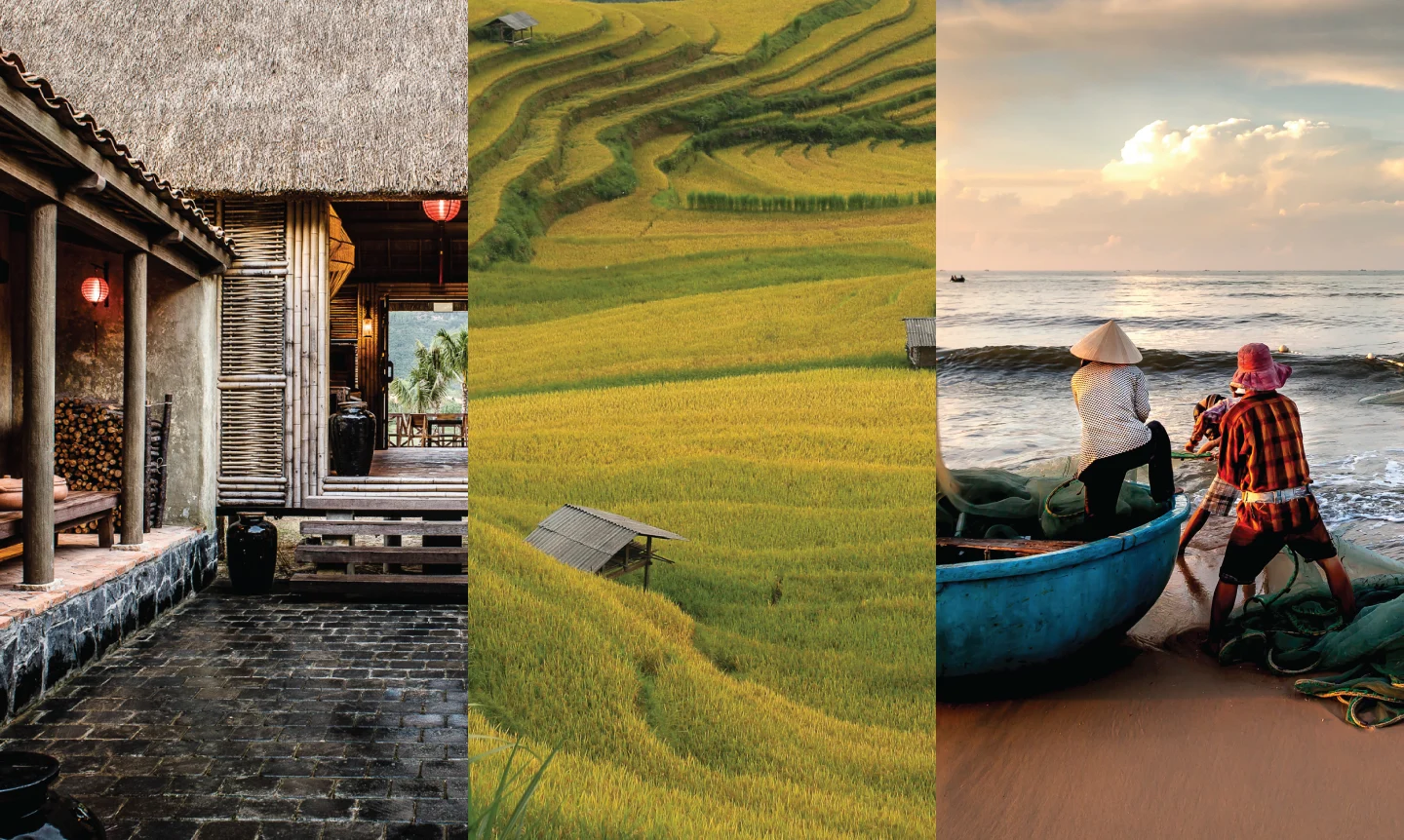
You're forgiven if you can't pinpoint Phú Yên on a map of Vietnam. Even to travelers familiar with the country’s domestic terrain, this small rural province on the country's south-central shoreline remains largely unexplored. Wedged between the foothills of the Annamite Range and over 100 miles of rugged coast, it's a territory of rice farmers and fisherfolk, one mostly out of sight for tourists flocking to the increasingly-busy resort towns of Quy Nhon and Nha Trang.
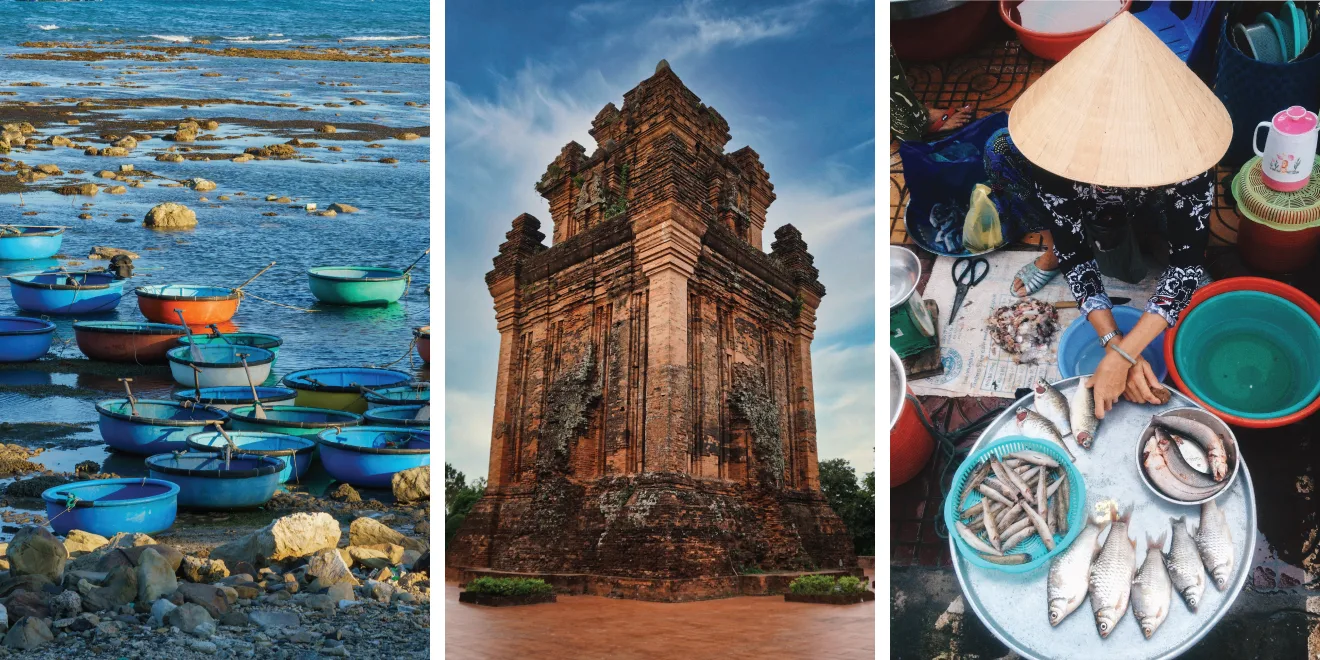
Those who do visit its wild coconut ranges and raw natural coves find glimpses of simpler times. Here, chickens roam free in dusty one-street towns and medicine sages offer cure-alls made from ingredients like rau răm, an indigenous Vietnamese coriander. From roadside open kitchens, female chefs don conical hats to dole out sesame-speckled bánh tráng (steamed rice-paper wrappers) and char-grilled corn smothered in sweet fish sauce.
First and foremost a rustic fishing village, Phú Yên's lagoons are patchworks of floating oyster and lobster farms — the same fishing traps that local workshops have woven out of bamboo for centuries. Thung chai, basket boats shaped like round salad bowls, come in Crayola-like primary hues of purple and red. Hauls of pomfret and mackerel are sold at the cacophonous morning markets, where rosy slabs of tuna, fist-sized sea snails, pomelos and bunches of native crepe ginger are displayed neatly in piles on fraying tarpaulins.
Here, the air is damp and smells of the sea, sweetened with wafts of pineapple, bougainvillea and history. In Tuy Hòa, Phú Yên's low-slung provincial capital, the crumbling Nhan Tower is an architectural relic from the Champa Kingdom, which reigned for centuries in this region along Vietnam’s central and southern coasts. Today, the Chams still inhabit the rice paddies and villages dotted along the fertile Mekong Delta.
"Vietnamese in their 50s and 60s come to Phú Yên to rediscover an old-time version of the country," says David Castillo, who manages Zannier Hotels Bãi San Hô, a resort that became the first — and so far, the only — hotel in the area when it opened in northern Phú Yên town of Song Cao in 2020. "It gives them the opportunity to relive memories of their childhood. It's a portal to the past of sorts – something they can no longer find in more commodified places such as Hoi An."
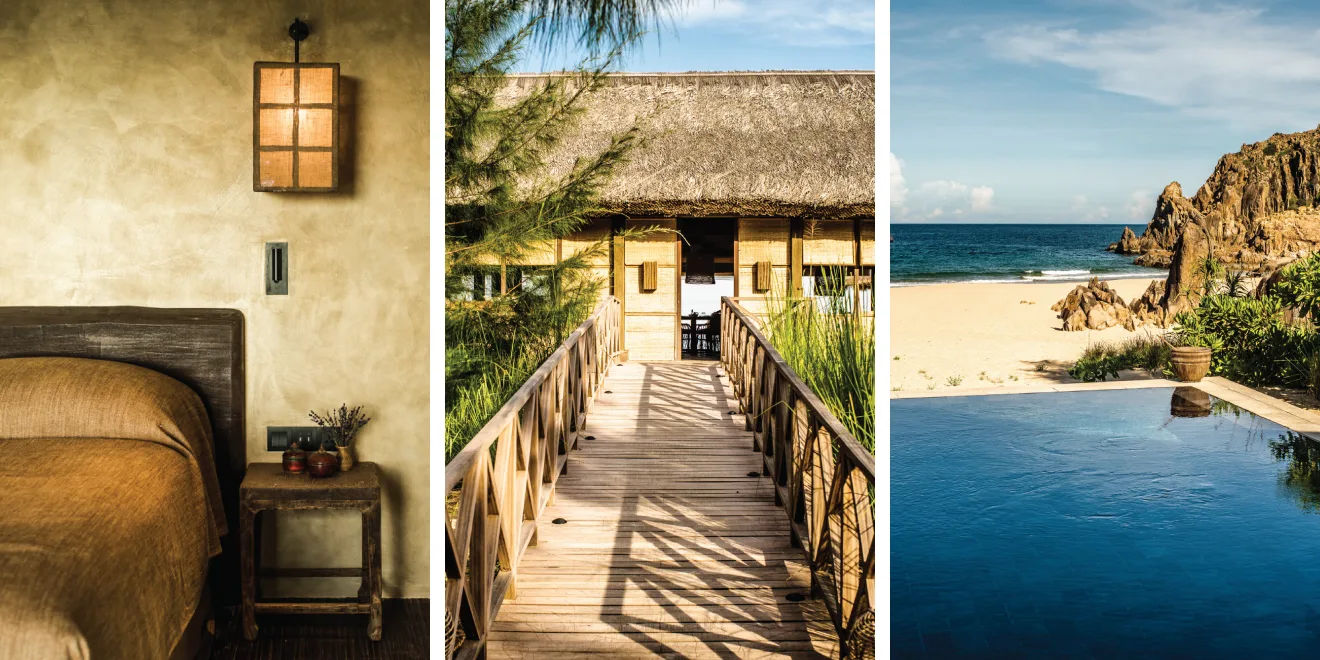
Sprawled over a rocky peninsula, Zannier Hotels Bãi San Hô is a distillation of the province's singular cultural and rural charms. A mix of hilltop retreats with private pools and oceanfront beach huts hiding in the jungle fringe, the property’s 73 villas have thatched roofs, bamboo floors, cob walls (made of clay, sand and straw) and Southeast Asian wickerwork — styles that echo both the Cham fisherman architecture and the traditional longhouses of the region.
Days here easily slip into a go-slow pace. Mornings start with towering palm trees casting striped shadows over the white sands and steaming bowls of bún riêucrab noodles or bánh cuốn rice rolls. Under the shade of the custom palm-frond parasols, resort guests can be spotted at local markets and ceremonial Champa temple blessings. By the shore, a kaleidoscope of coral along the reefs hosts snorkelers and other forms of aquatic life darting between the volcanic basalt rocks.
It’s an idyllic scene, one untouched by the hectic pace of modern life. Change, however, looms on the horizon. On the bay north of Zannier, ground has been broken on the Mandarin Oriental Bai Nom, a sprawling beachfront complex set to open in 2026. Meanwhile, rumors of developers snapping up the region’s still-virgin coves and scenic mountain rice paddies are more and more common. "Soon, Phú Yên will be firmly on the map," Castillo said. Still, any dramatic shifts in the province are likely to happen at the same pace as everything else in Phú Yên: very, very slowly.