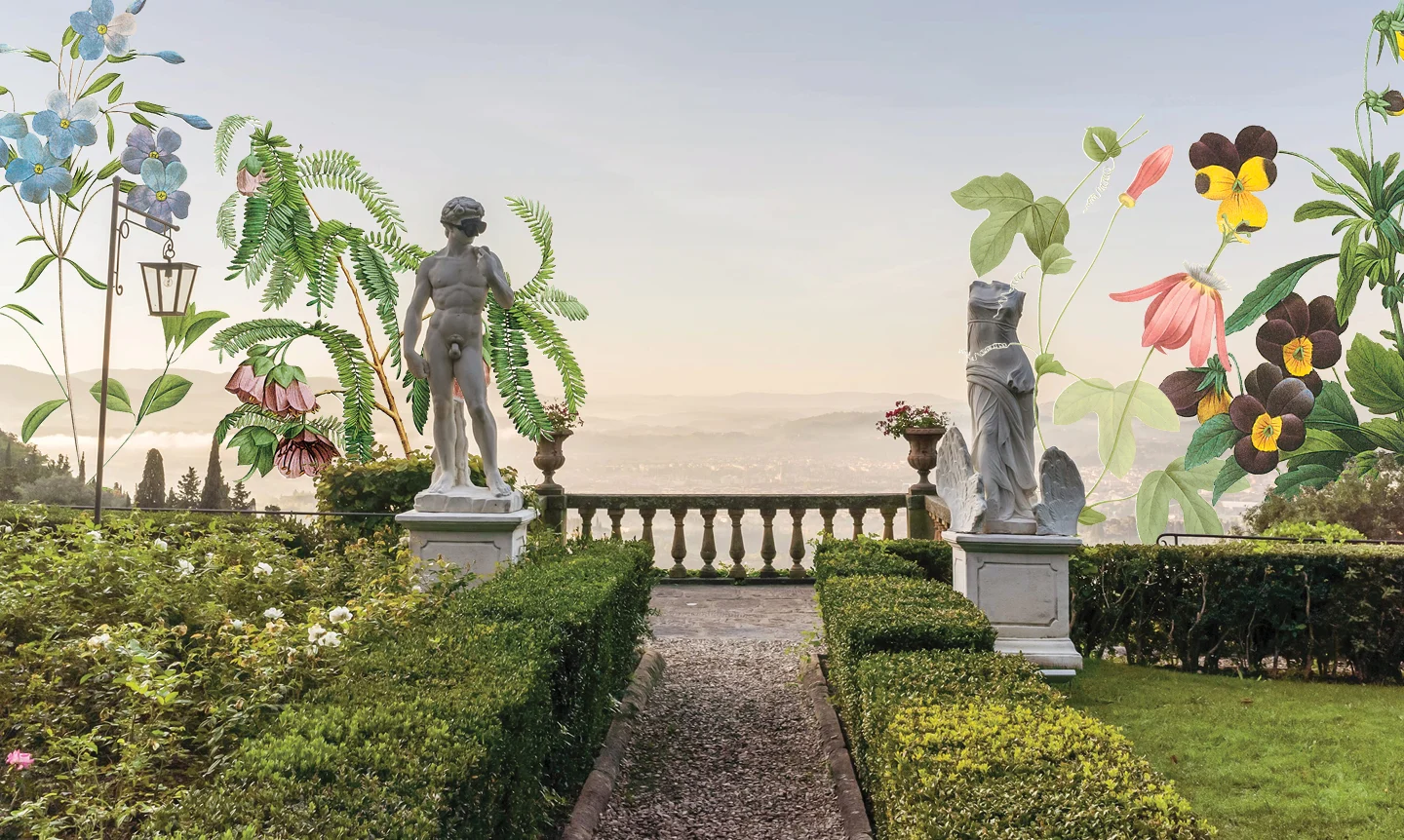
Recent events may have amplified the allure of the open air, but there’s always been a certain thrill in discovering a city-center hotel with its own secret garden or covert courtyard. It seems so unlikely, such an indulgence, to uncover an oasis in the middle of a metropolis, or to recover from the pleasurable excesses of urbanity in a shaded hubbub-hideaway the next day. Locals have always understood this too: in every concrete jungle, green space is gold dust, so these properties also reliably lure in citizens wanting their own respite in Eden—or just a leafy spot in which to enjoy an after-work cocktail. Here’s our pick of hotels that offer an unexpected shot of bucolic beauty in some of the world’s greatest cities.
La Mamounia, Marrakech
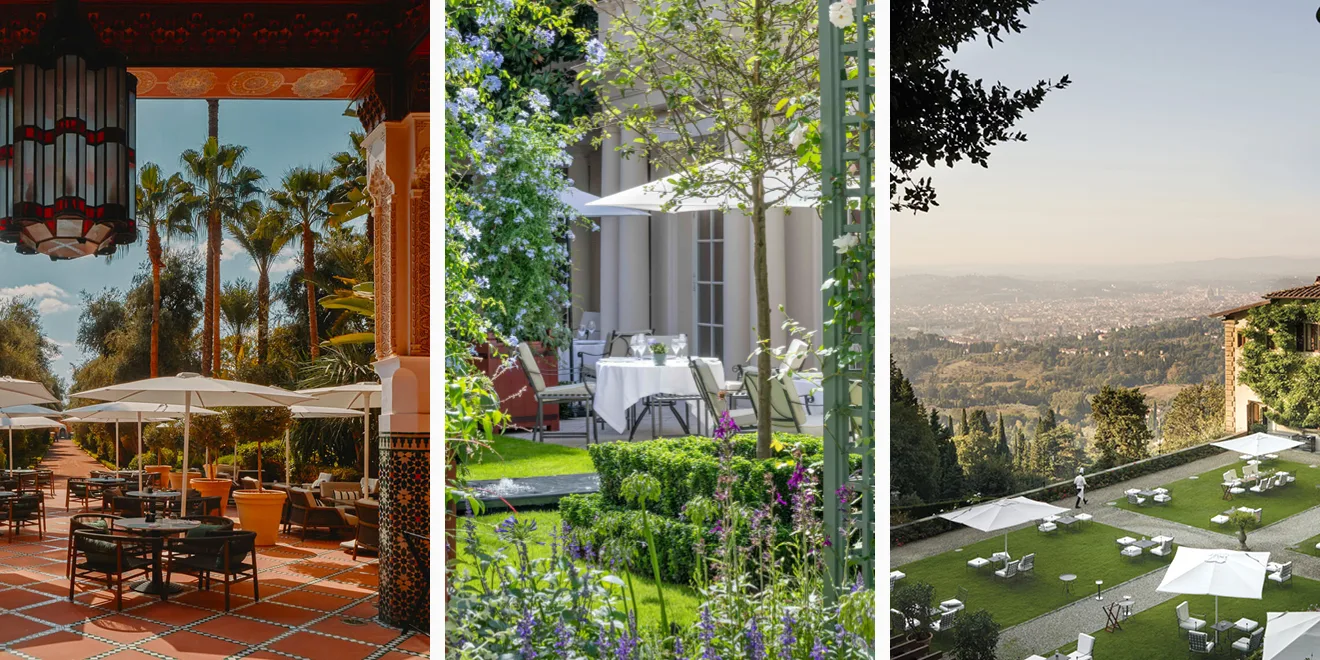
On those sweltering, sultry days when heat saturates the city, the lush, sprawling gardens of La Mamounia seem even more unlikely, but there’s no doubting this oasis really is embedded in the Red City. Outside the 12th-century ramparts that define this palace hotel garden’s borders lie glimpses of the Medina, Koutoubia Mosque and the Atlas Mountains. Inside, it’s the fragrances that stand out. Embedded between soaring palms and hundreds of olive trees (some over 700 years old), lemon, peach, lime and orange trees spill their scents before providing fresh produce for the hotel’s restaurants, frequented by locals as well as visitors.
Le Bristol Paris
Secreted at the back of this Paris palace hotel, Le Bristol's lawns were recently spruced up by Lady Arabella Lennox-Boyd, a UK-based landscape architect who for over 45 years has created more than 600 gardens. In the nicest possible way, this project makes it feel as though she has nothing left to prove. Her simple Jardin Français incorporates only flora native to the Paris region, all chosen to support the biodiversity of the city. In spring, local and international guests dining at Epicure—a bastion of the most delicate French gastronomy—overlook a flush of narcissi and tulips; white bougainvillea and dewy pink roses flourish in summer; coppery beech leaves emerge in fall; and a canopy of evergreens takes center stage each winter.
Villa San Michele, A Belmond Hotel, Florence
A former medieval monastery divinely embedded in the wind-cooled Fiesole hills that overlook the terracotta rooftops of the city, Florence’s Villa San Michele still feels like a sanctuary. That atmosphere is one that was tenderly cultivated by the first Franciscan monks to nurture the hotel’s Italian gardens some 600 years ago, and while the view of Il Duomo is just as impressive as it was back then, present-day guests will find there have been some subtle alterations. The wooded park that surrounds the hotel’s terraced lawns have matured beautifully; artworks new and old are spread across the gardens; and the fragrant bushels of wisteria that bloom here twice a year are “only” four centuries old.
Bulgari Hotel Milano
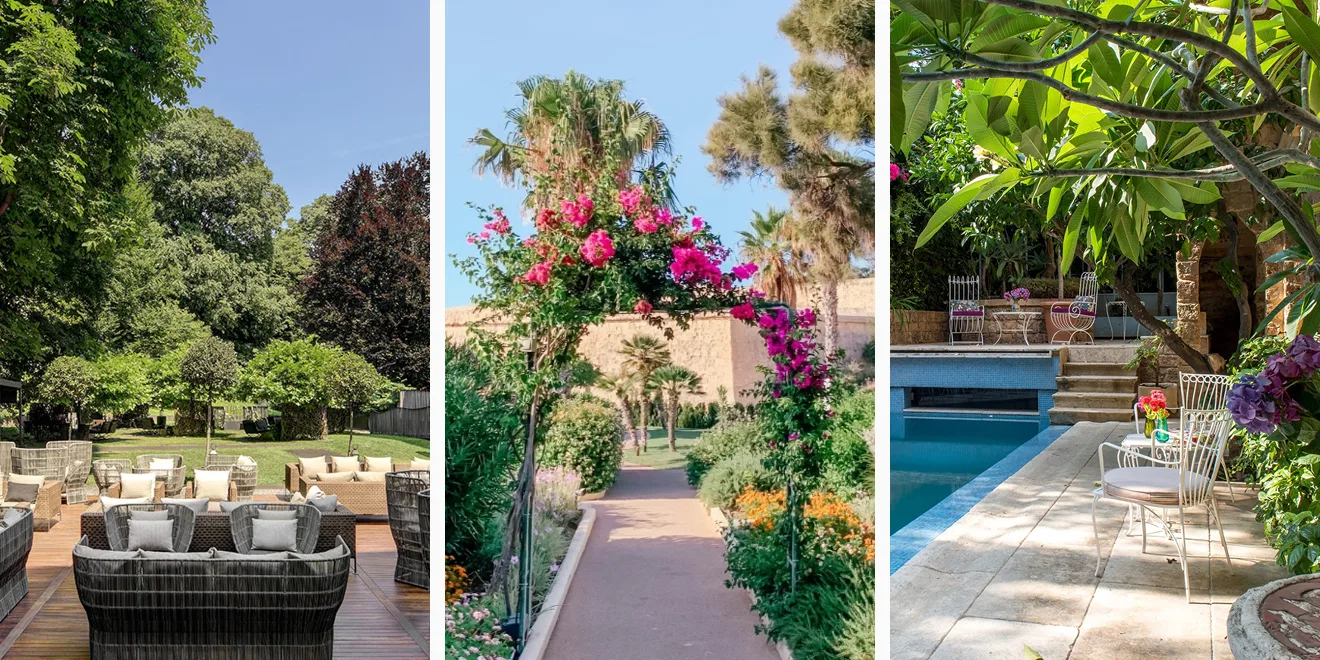
The Bulgari’s extensive but unshowy gardens have something of a split personality: at times they’re a verdant refuge, peaceful as can be; visit during Milan Fashion Week or Salone del Mobile and the people-watching is pure theater. Still, irrespective of the season, the grounds’ drinking and dining areas effortlessly facilitate standout socializing. They include suntrap Vimini, bordered by a stretch of trimmed laurel trees, and Le Isole de Ghiaia, where folds of white wisteria are draped around plane trees. After a shopping trip to nearby Via Montenapoleone, reposing here with an aperitivo feels almost obligatory.
The Phoenicia, Malta
Home to only 6,000 people, the ancient walled city of Valletta may be among the world’s smallest capitals, but Malta itself is one of Europe’s most congested countries. Wedged between that pretty mini-city and the urban sprawl that surrounds it, The Phoenicia’s recently completed gardens make for a far more pleasant amenity than the underused minigolf course that once stood in their place and are a particularly welcome sight in a sun-soaked river-and-lake-free country that is generally devoid of lush greenery. Planted with colorful flora that can withstand Malta’s arid climate—think oleander, callistemon and lantana—lawns here are shaded by jacaranda, orange, palm and olive trees.
Arthaus Beirut
Spread across four architecturally distinguished, Ottoman-era buildings and with the remnants of an ancient Roman villa still visible in its garden, Arthaus Beirut is perhaps Lebanon’s most distinctive boutique hotel. Shaded by a spread of mature trees and with a swimming pool at its core, the property’s golden courtyard is cool and calm by day, but becomes notably more lively on hot summer evenings when patrons (for now, mostly culturally engaged locals while Beirut awaits the return of international tourism) gravitate here for al fresco cocktails. Or perhaps they are gathering to admire whatever artworks the property’s discerning owners, both passionate, eclectic collectors of pieces ranging from Byzantine relics to modern street art, have newly installed.
The Goring, London
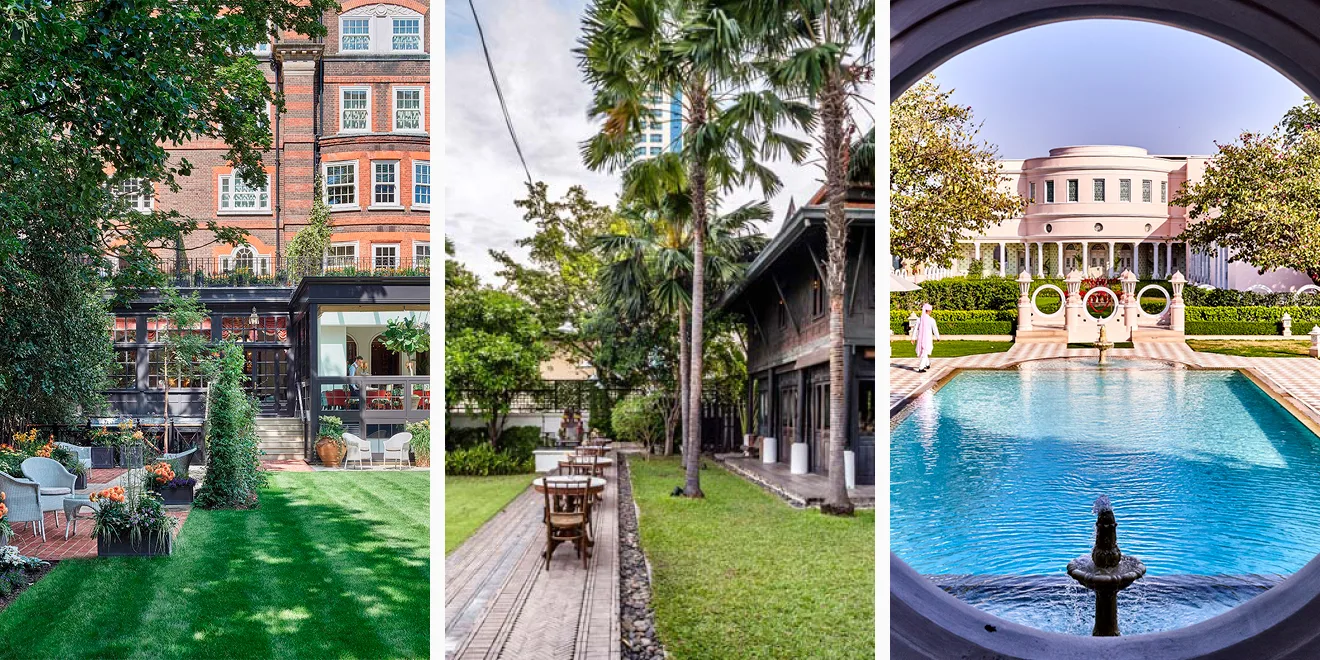
Located just a corgi toss from Buckingham Palace, London’s last remaining family-run luxury hotel The Goring has long drawn old-school English aristocracy—its pedigree was cemented when Catherine Middleton stayed over the night before her wedding to Prince William. In hot weather, guests sip Pimms and perhaps play croquet on its immaculately manicured garden; staff proudly share that it’s bigger than Centre Court at Wimbledon. Though simply landscaped with floral beds lining its borders, it is large and adaptable enough to allow for some English eccentricity. The Goring family has been known to plonk a Swiss chalet in this setting in winter, or to allow a dinky Shetland pony to graze here come summer.