
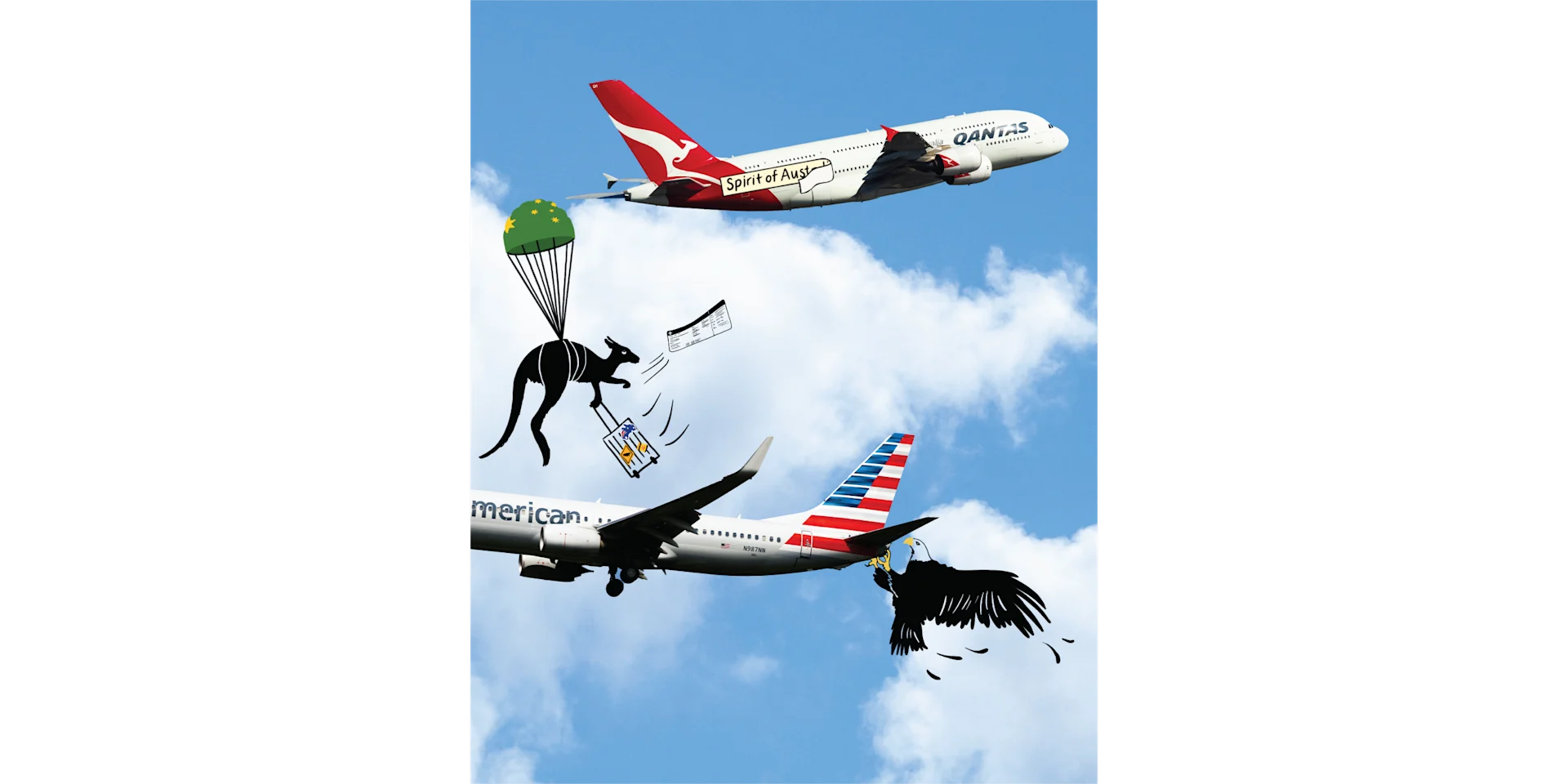
The World Cup ended in a breathtaking penalty-shootout victory for Argentina on Sunday. But the world’s top airlines had their own goal for this year’s tournament: regain their status as symbols of national pride on par with their home country's matchday uniforms.
Argentina's national flag carrier, Aerolíneas Argentinas, had the phrase "un equipo, un país, un sueño" (“one team, one country, one dream”) plastered on the side of an Airbus A330-200. Other sponsored planes featured photos of Lionel Messi.
Royal Air Maroc of Morocco painted a lion's head on its Boeing 787 to represent the Kingdom’s team, the Atlas Lions. Asiana Airlines emblazoned two airbuses with "Fly! Korea." And an aircraft operated by GOL Linhas Aéreas featured a string of jersey numbers from Brazil’s previous World Cup wins.
The play felt like a wink to the bygone days of 20th-century travel, when carriers acted as brand ambassadors in the clouds for a nation’s global standing. But with the headaches of holiday travel now upon us and the difficulties (and prices) of flying in 2022 very much front of mind, do national carriers really instill much, if any, national pride in travelers these days?
MORE MESSY THAN LIONEL MESSI
As pandemic restrictions lifted, national carriers seemed poised to regain some of their standing. When Qantas trumpeted this year's reopening of Down Under resurrected “I Still Call Australia Home,” a song originally written by Peter Allen in 1980, to, flyers were initially happy to hum along.
But travelers soon sang a different tune when their return home was marred by flight delays, ticket cancellations, limited routes, lost luggage and airplane seat cushions emitting plumes of dust-like particles. One of TikTok's biggest trends of 2022 was documenting the crunchy, litter-filled aisles encountered in the air.
Then there was this summer, when airports across Europe resembled a scene straight out of Hunger Games, thanks to thousands of canceled flights and travelers forced to queue for hours at passport control.