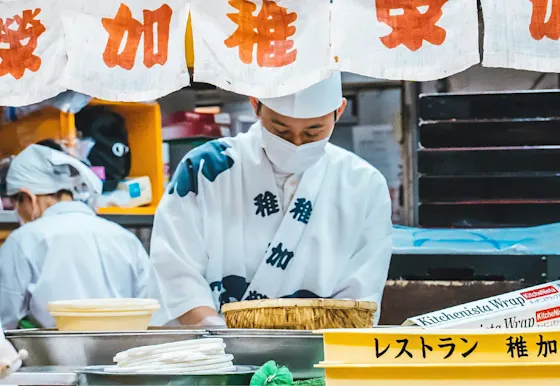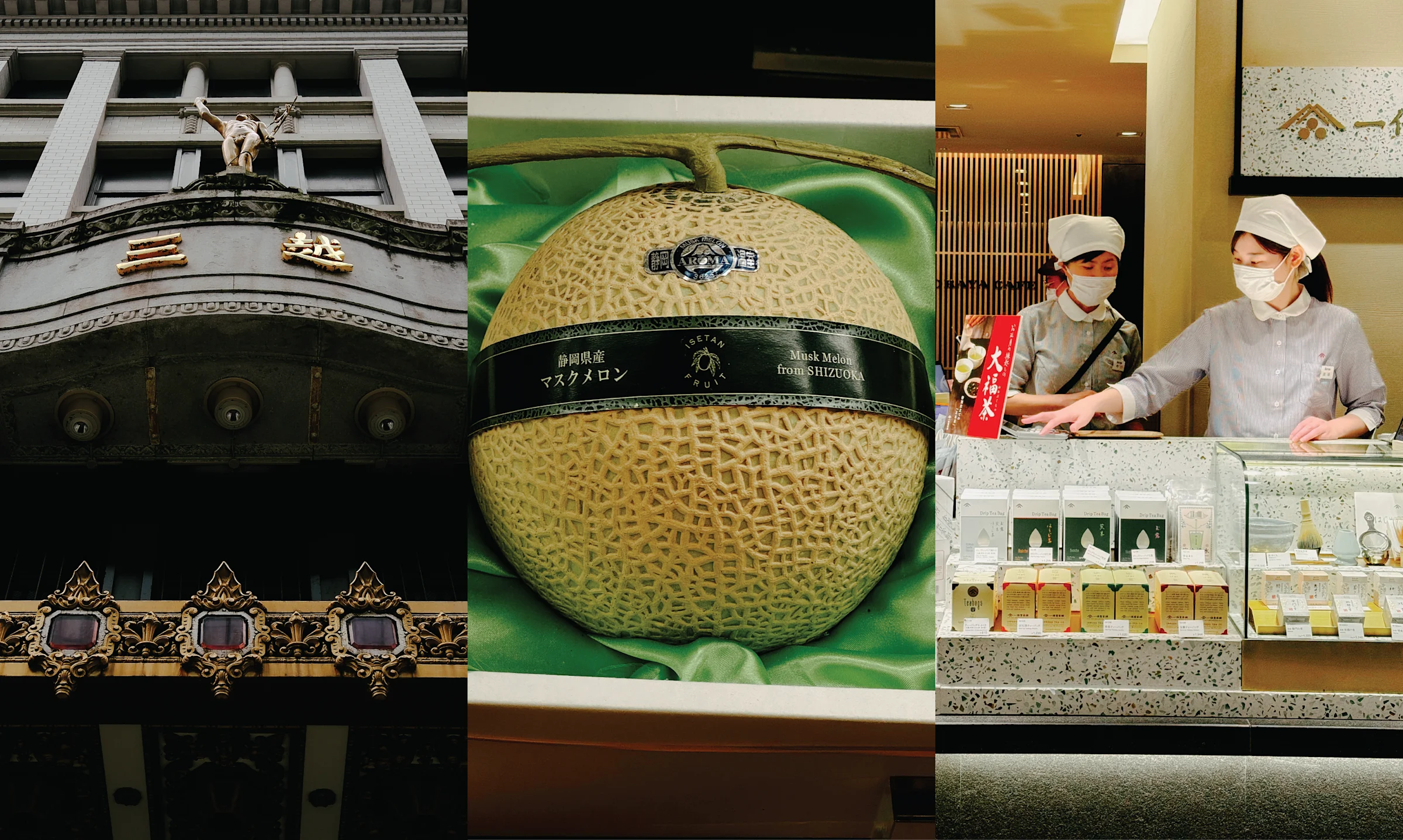
In Tokyo, hidden beneath the thrum of the city’s grand department stores, there’s an entire food scene that exists—quite literally—underground: the depachika. These lower-level halls (“depa” meaning department store; “chika” meaning basement) draw crowds for delicate sandos, impeccable French pastries, jewel-like fruit packaged in covetable boxes, and other edible marvels bound for a grab-and-go lunch, a gift, or whatever seasonal craving strikes that week. And to access this world of packaged delights, all you have to do is ride the escalator one floor down.
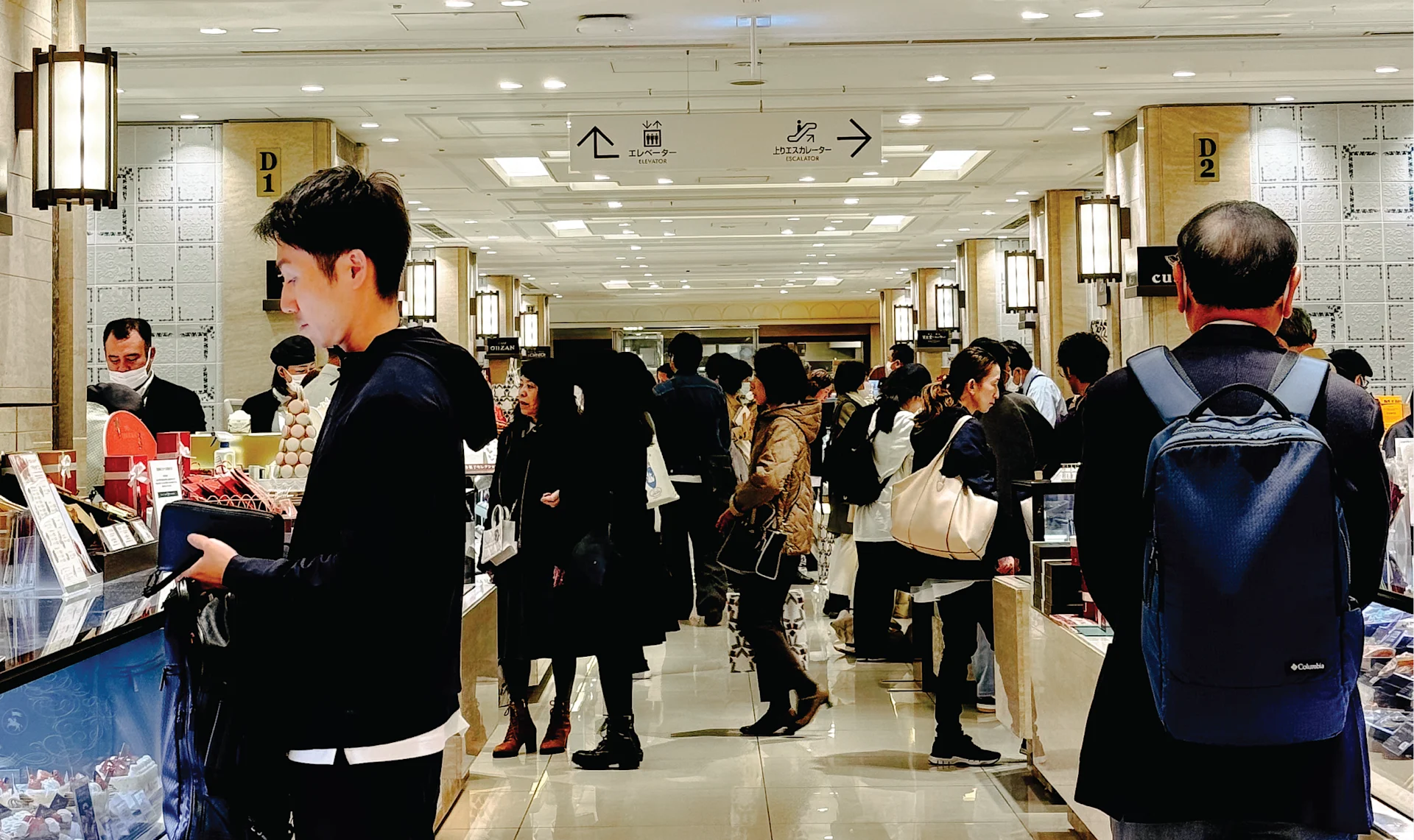
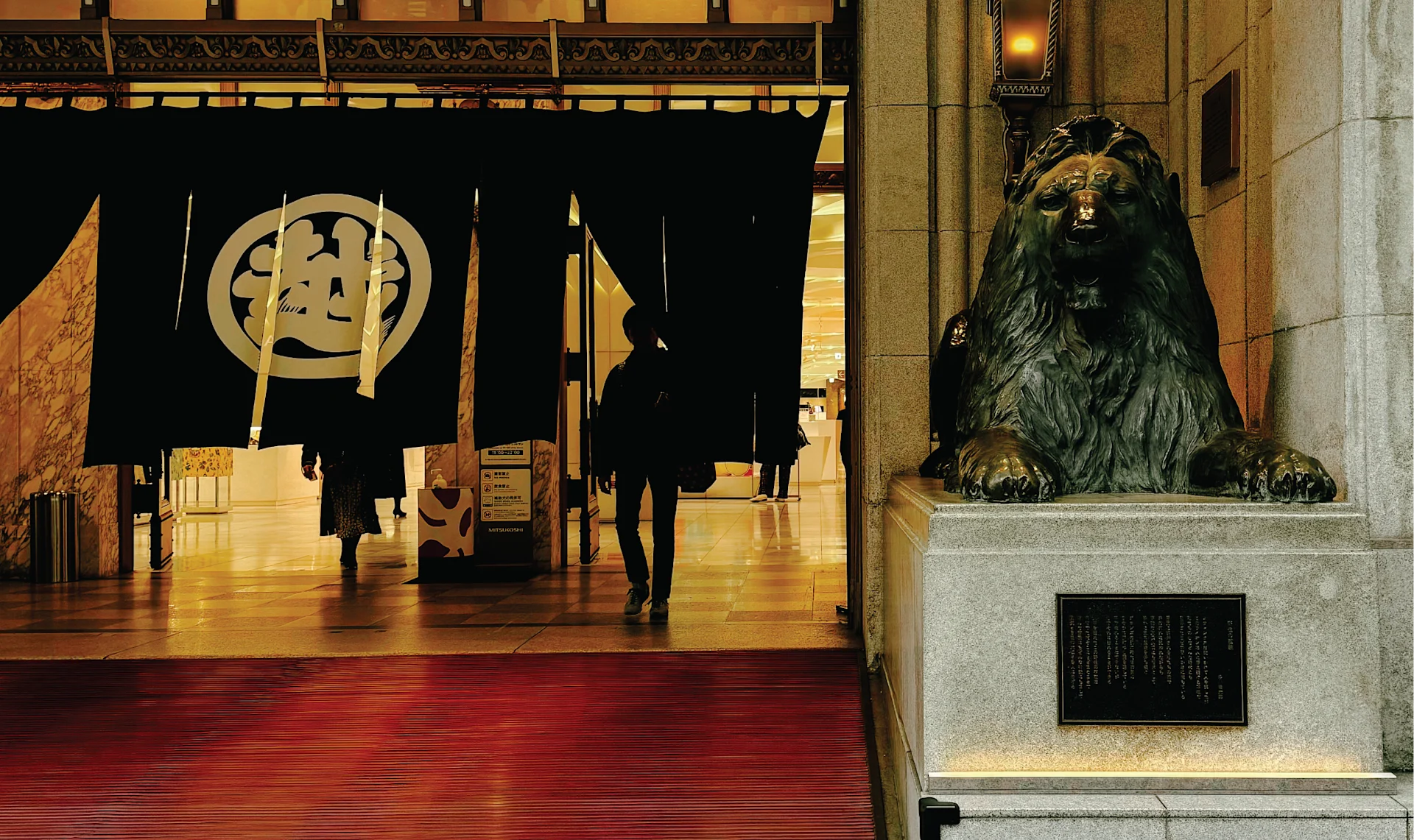
Japan’s first department store, Nihonbashi Mitsukoshi, opened in 1904, inspired by Harrods in London. In the century since, its basement has blossomed into a labyrinth of flavors both foreign and Japanese, traditional and novel. Some offerings may surprise first-timers: chirimen jako (boiled and dried baby sardines), an entire wall of soy sauces, or juice stands blending peak-season persimmons with ice.
Depachikas bristle with activity. While scanning the sandos filled with fluffy egg salad or grapes and whipped cream, you might hear fishmongers hawking the day’s catch—rich yellowtail for sashimi, perhaps, or sweet Hokkaido scallops for searing.
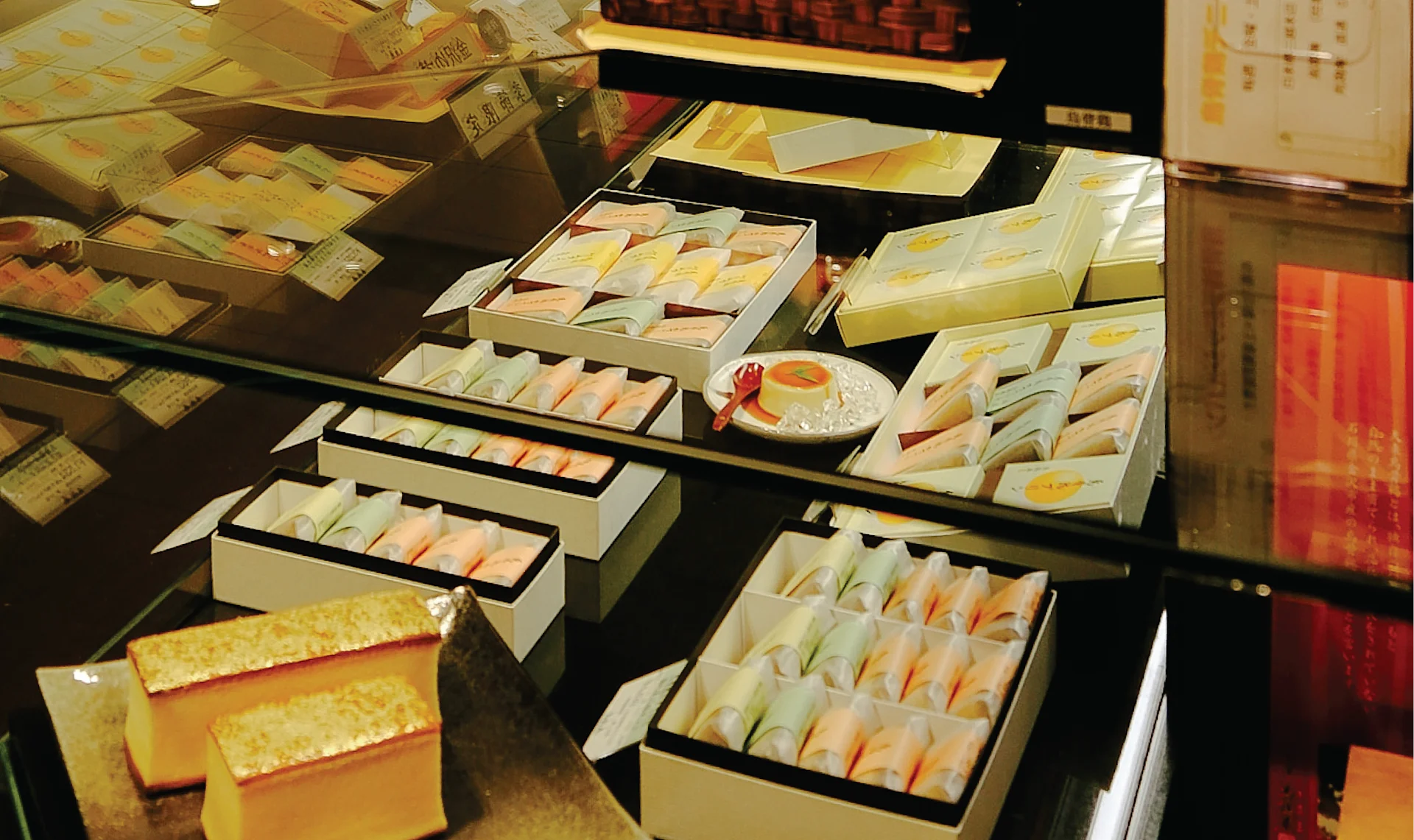
Take a whiff by the pastry counter, and the warm, buttery aroma of all-day baking—pain au chocolat, German ryes, pillow-soft shokupan—pulls you in by the nose. Signs announce the next batch, and as you wait for your irresistibly hot, flaky croissant, the scent wafting from the oven can feel like sheer torture if you’re hungry.
I used to work in Takashimaya’s flagship store in Nihonbashi Muromachi, a daunting job that entailed learning meticulous wrapping techniques, specific gift-giving etiquette, and the formal Japanese speech expected in luxury retail. I grew to love the hospitality of it all—that chorus of “Irrasshaimase!” when the doors slid open, and the sense that the shopper was truly king.
Every day, I learned what seafood was in season, which fruits had slipped into their brief window of perfection, and which wagashi would rotate in for the next fortnight. International brands kept outposts at Takashimaya, too: Demel’s dense Viennese sachertorte sold in wooden boxes, Pierre Hermé’s rose-and-lychee Ispahan, Peck’s airy ciabatta. Seasonality is depachika dogma, with sweets studded with chestnuts in autumn or redolent with cherry blossoms in spring.
In Japan, many department stores feature casual eat-in counters on the basement levels and full restaurants on their upper floors. Several even offer rooftop picnic areas, ideal for enjoying a bento between sightseeing stops. When I’m crunched for time, I like to grab an onigiri filled with pickled mustard greens and eat it on the run.
To the average newcomer, a windowless basement may not sound like a prime food destination, but these spaces are beloved across Japanese society. Affordability is part of the appeal: Yes, you’ll encounter three-figure muskmelons, but you’ll just as easily find $7 bento boxes—perhaps an assortment of sticky rice, karaage, potato salad, sautéed carrots, hijiki, and spinach in sesame dressing.
So if you’re passing a large department store, duck into the basement. Go early for the widest selection, or late for discounts on sushi. And if you’re exhausted after a long day of sightseeing, nothing beats bringing a bento and a small bottle of sake back to your hotel room. What follows are three outstanding department stores whose depachikas I return to again and again.