For decades, if you mentioned San Miguel de Allende to an acquaintance, it likely got the same response as mentioning a town in Southwest Florida: “Oh, my grandparents have a house there.” And it’s easy to see what the allure is all about. The town has that delightful mix of culture, surrealism, and those downright euphoric desert sunsets that make it an ideal place to relax. But, thanks partly to the pandemic shake-up, San Miguel de Allende has broken free from its reputation as a retreat for retirees and is now staking its claim as one of Mexico’s burgeoning creative capitals in Mexico.
Reinvigorated by influential, next-generation designers and creatives from Mexico and abroad, the town is luring a new crop of hoteliers, craftsmen, chefs and even natural winemakers, who are giving their northern neighbor, Valle de Guadalupe in Baja California Norte, a run for its money. Below, we’ve rounded up the best of what San Miguel de Allende has to offer, from a 300-year-old mansion that’s one of the region’s top hotels to a 17th-century horse stable that’s now a popular tasting room.
Where to Stay
Hotel Amparo
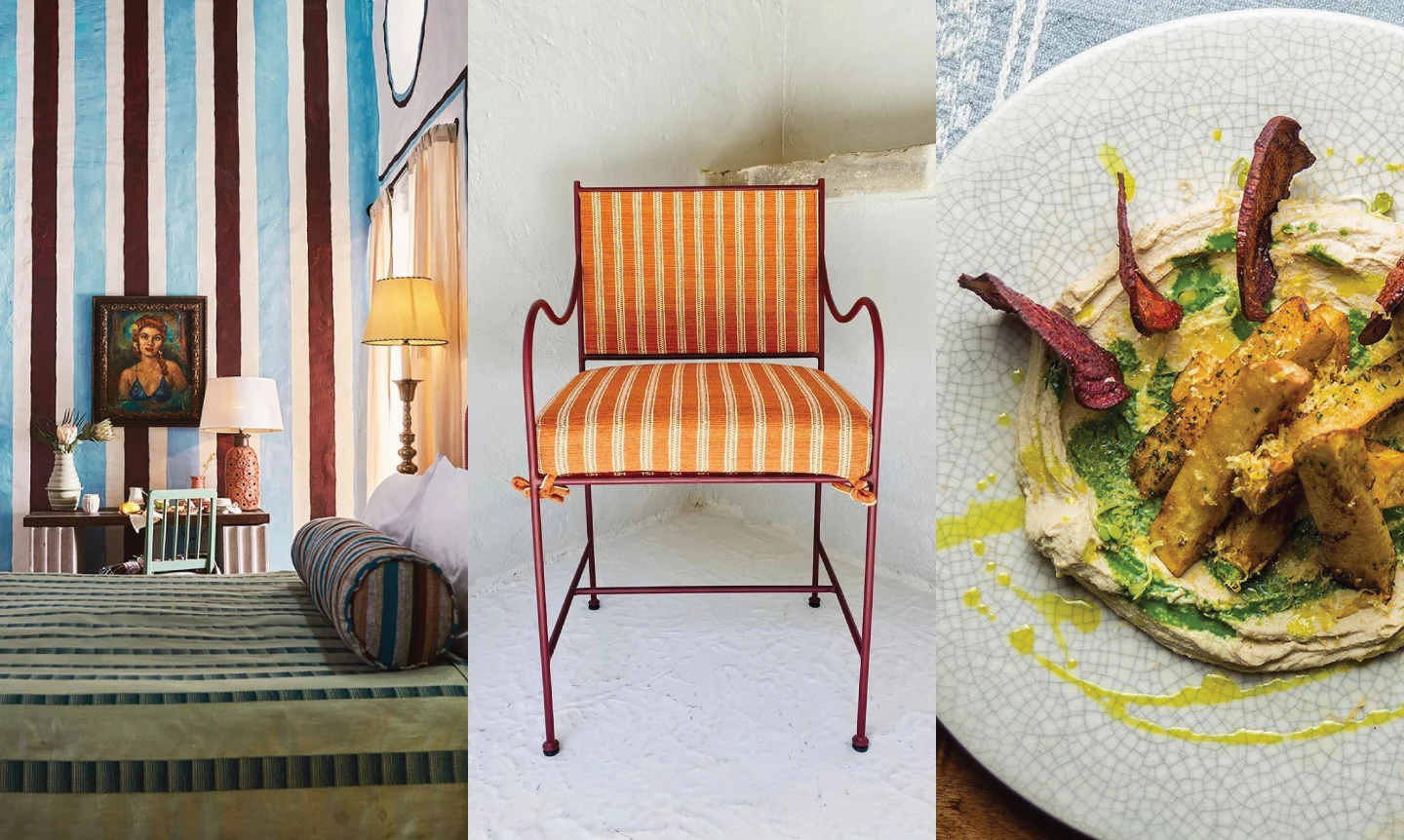
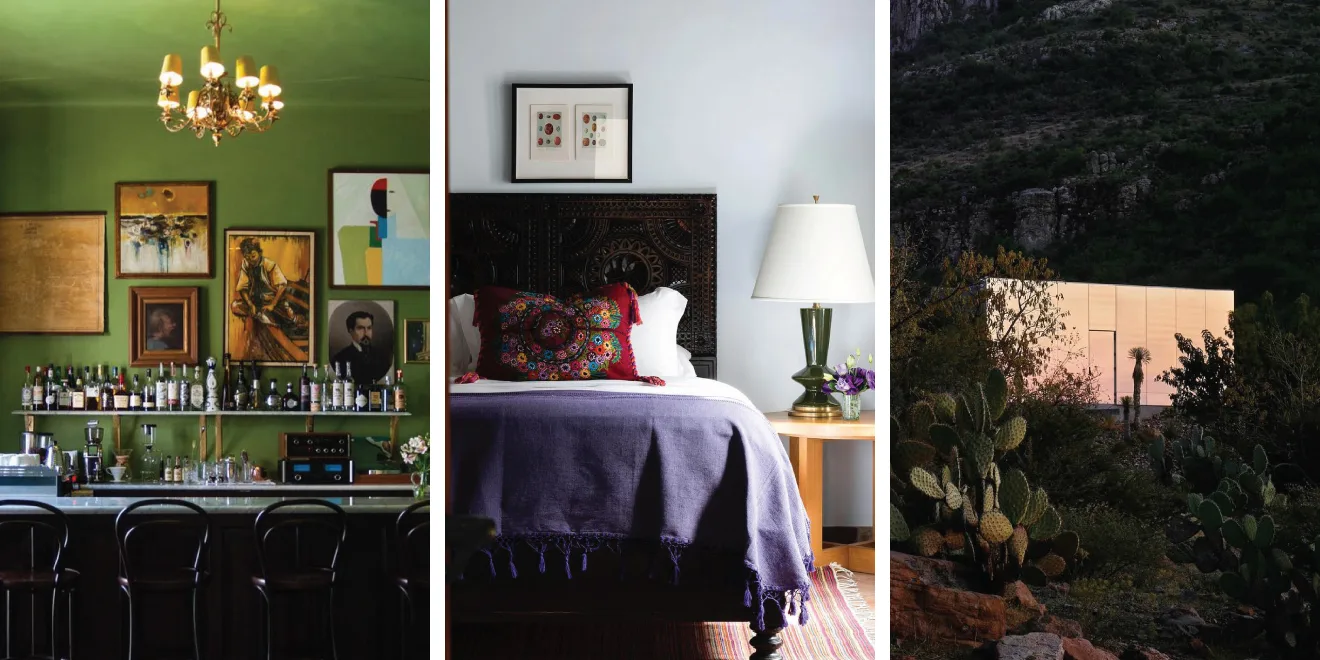
Of all the colonial-manors-turned-hotels in downtown San Miguel de Allende, this one may be the most charming. Beyond a wrought iron gate awaits a courtyard shaded by a towering palm and with two bubbling fountains and a fireplace creating an ethereal, understated backdrop to a stay. With just five guest suites, the 300-year-old property feels more like entering the home of your most stylish, well-traveled friend who doesn’t skimp on details, right down to the colorful cotton blankets made in Chiapas that adorn the postered beds. The American owners, Taylor Goodall and Mariana Barran, tapped the Texas-based designer Aaron Rambo to create the property’s ambiance. To complement the Spanish-colonial architecture of the home, Rambo sourced mid-century furnishings from around the world, including France, India, and Denmark. The suites, which are spread throughout two floors, open to the courtyard. It’s in this space where guests usually congregate or within one of three convivial rooms surrounding it, including a cocktail lounge, coffee bar, and library replete with a billiards table.
Casa Hoyos
Once the town’s currency exchange center, this reimagined 17th-century Spanish mansion has stayed part of its namesake, the Hoyos family, for four generations. The family tapped the Mexico City-based architecture firm A-G Studio to oversee the home’s latest transformation into a hotel, which debuted in 2020. When entering the lobby, guests get the first glimpse of the midcentury modern design within the building’s interior courtyard, an open space dotted by dining tables and framed by exposed concrete walls and a series of arches lined with dusty pink tiles (the pink symbolizes the belly of a snake, the main animal on the Hoyos family crest). The centerpiece of the room, undoubtedly, is a mosaic depiction of the Virgen Dolorosa de Loreto, handmade by artisans from Dolores Hidalgo. Each archway opens to a guest suite, all decorated with geometric tapestries designed by the Mexico City-based artist Melissa Avila. On the hotel’s top floor rooftop is Bekeb, a cocktail bar helmed by mixologist Fabiola Padilla, an alumna of Enrique Olvera’s Cosme in New York.
Habitas San Miguel
Just as in their sister property in Tulum, guests are greeted at this expansive, cactus-studded retreat with a copal cleansing ritual to set an intention for their stay. A world away from the bustle of the town’s colonial center, Habitas San Miguel, which debuted at the beginning of this year as the brand’s third property in Mexico, is situated amidst over eight acres and features a series of 60 freestanding, terracotta-toned bungalows. The rooms are connected to the heartbeat of the property and its farm-to-table restaurant, Comunidad, by a series of pebbled walkways. Here, guests dine on vegetable-forward dishes amidst a shaded area lined with Moroccan rugs and plush, low-set couches. Beyond an outdoor garden where the restaurant grows organic produce like purple kale, chard, and cherry tomatoes, is a pathway leading to La Troje, an open-air, hacienda-style setting for live music, as well as the property’s rotating schedule of yoga classes, macrame workshops, and sound healing meditations.
Casa Etérea
Located on the outskirts of town in the Alcocer community, this mirrored respite is the ultimate stay for couples who desire seclusion and high design. When guests first enter the open-concept hideaway, the view steals the show: Beyond an outdoor dipping pool lined by fragrant lavender and rosemary bushes is an unobstructed view of the verdant peaks of the Los Picachos range. Inspired to build his glass house during his initial trip to Mexico in 2017, designer and owner Prashant Ashoka drew inspiration from 20th-century Mexican architects and artists Luis Barragán and Mathias Goéritz to realize his vision, especially their use of light and shadow to create intimate spaces. The home’s two living spaces converge at a 120-degree angle, a natural division between the kitchen and dining area and the bedroom, and the standout design feature of the space: a handmade bathtub produced by master coppersmiths in Santa Clara de Cobre in the state of Michoacán.
Quinta Amores
For travelers looking to stay outside of town but still within easy access, Quinta Amores in the residential Los Frailes neighborhood is a nice alternative. Designed and owned by the Mexican architect Ian Pablo Amores, the home (located about a 10-minute drive from the center of town) feels like staying at the country estate of a modernist architect of years past. The all-pink respite is the type of place you go to unwind; it faces the Ignacio Allende Reservoir, so witnessing bird flocks fly overhead is a common sight. Perfect for a complete buyout with family or friends, each of the four guest bungalows open to a central outdoor courtyard made for entertaining, with its contemplative patios, a dipping pool, and fire pit.
Where to Eat & Drink
San Miguel de Allende’s cocktail scene can be traced back to one widely-beloved label: Casa Dragones, a tequila brand by maestra tequilera Bertha González Nieves. The brand, now in its 14th year of development, recently unveiled a tasting room and boutique property for its VIP clients, both set in a restored 17th-century horse stable with a legendary history of which the brand gets its name (it was believed to be the stable of the Dragones Calvary, who were instrumental in the Mexican Revolution). More recently, Casa Dragones ambassador Fabiola Padilla opened Bekeb, a rooftop cocktail bar atop Casa Hoyos. Though she spent a decade making cocktails in New York at Enrique Olvera’s Cosme, she’s now made a name for herself here by combining local herbs such as hoja santa and lemony cedrón with lesser-known Mexican distillates like regionally-produced gin and the earthy, agave-based sotol.