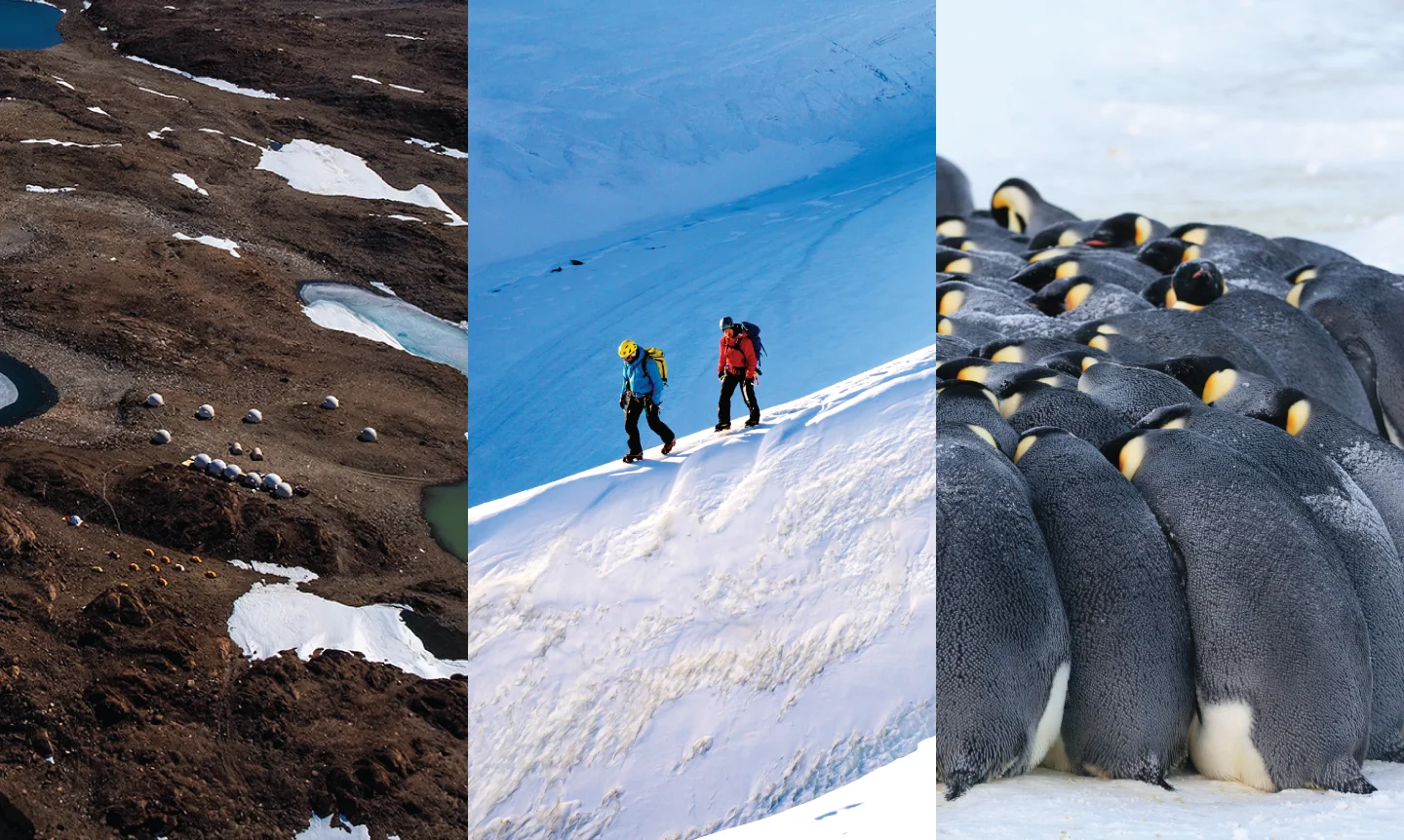
Seventy-five days of white nothingness: no mountains on the horizon, no trees, no animals, no patches of moss to break up the icy monotony of the Antarctic interior.
For British polar explorer Patrick Woodhead, traversing Antarctica, coast to coast, was a mental challenge as much as it was a physical one.
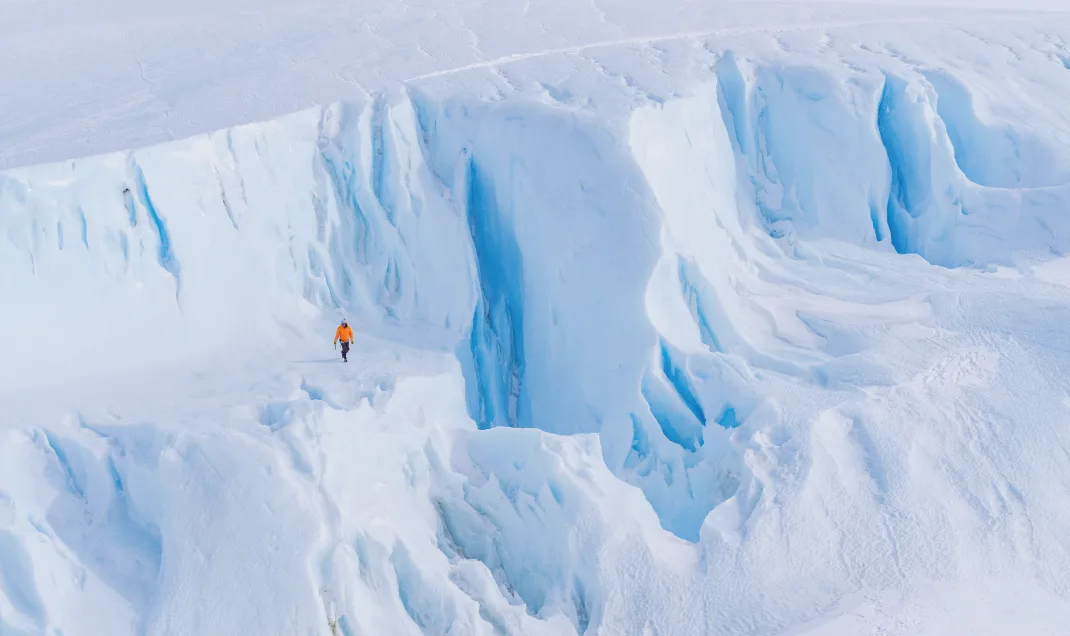
"You have your hood up, your goggles on, and it's minus 30 degrees – it's impossible to talk to anyone," Woodhead told me on a recent flight from Cape Town to a “blue ice” runway known as Wolf's Fang in Antarctica's eastern coastal territory of Queen Maud Land. "There is nothing in the landscape to trigger a thought," he explained matter-of-factly. "You're forced to go very far into your own mental process, day after day after day."
Often thought of as one of the last great Antarctic adventurers, Ernest Shackleton described the effect that Earth's southernmost and least-populated continent has on the human psyche as about as close as one can get to “reaching the naked soul of man” — a sentiment shared by Woodhead. "The continent forces you to strip away a lot of your outer layers," Woodhead said. "While sitting with yourself in silence, you get rid of the civilized pretense of society.” He paused, before adding: “It's very confidence-building."
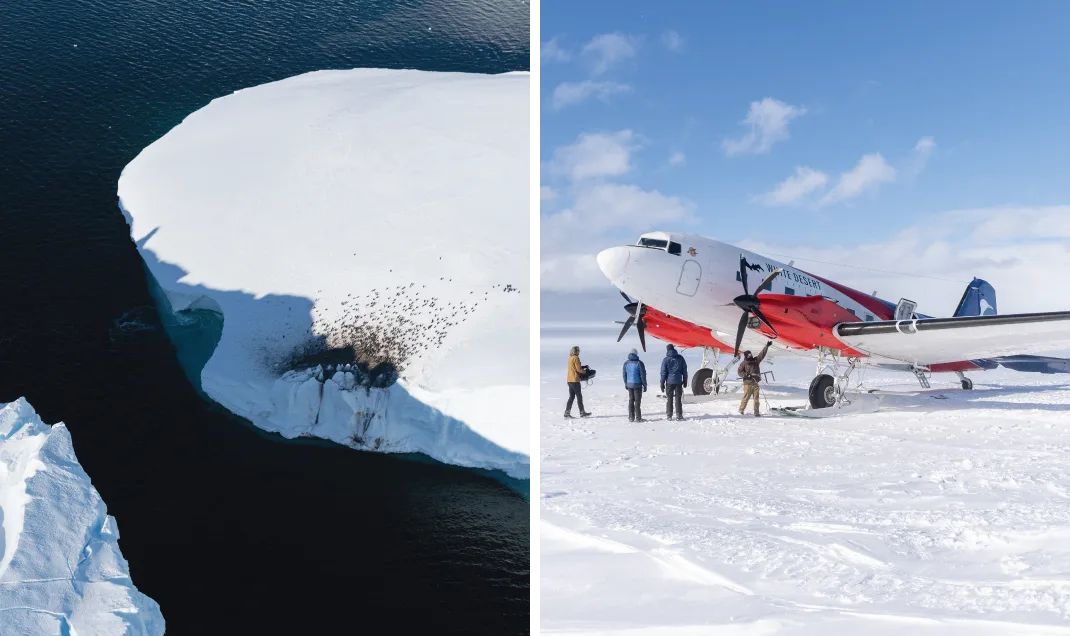
Those motivating words seemed to materialize in real time sometime around the final stretch of our five-hour flight to The Ice, when the first glimpse of the Antarctic shore appeared through the clouds. From the window, the continent below me cracked and crumbled like eggshells into countless floes, slowly floating away into the near-black expanse of the South Atlantic. Beyond that unfurled a seemingly infinite sprawl of snow and ice sculpted by centuries of gales and glacial movements. The vista resembled a swirl of white and blue watercolor hues.
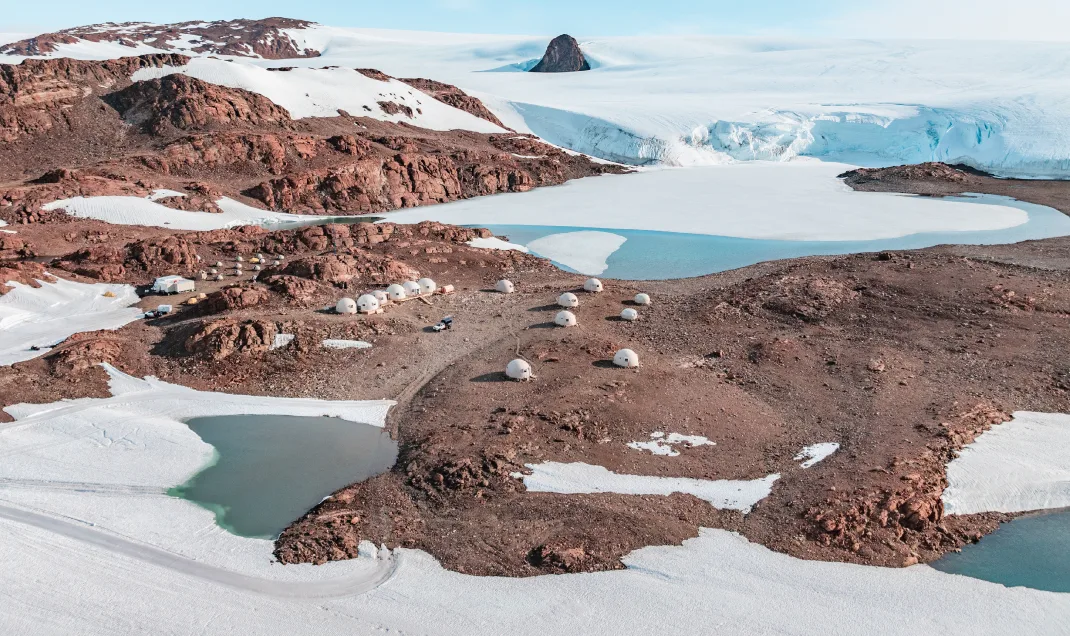
This little-visited interior of Antarctica is what inspired Woodhead to launch the tour company White Desert in 2005. With three off-grid camps (and a flight connection in a private Airbus A340), the company allows travelers to experience Antarctica in a raw, rugged way once historically only available to sea-ice scientists and polar pioneers.
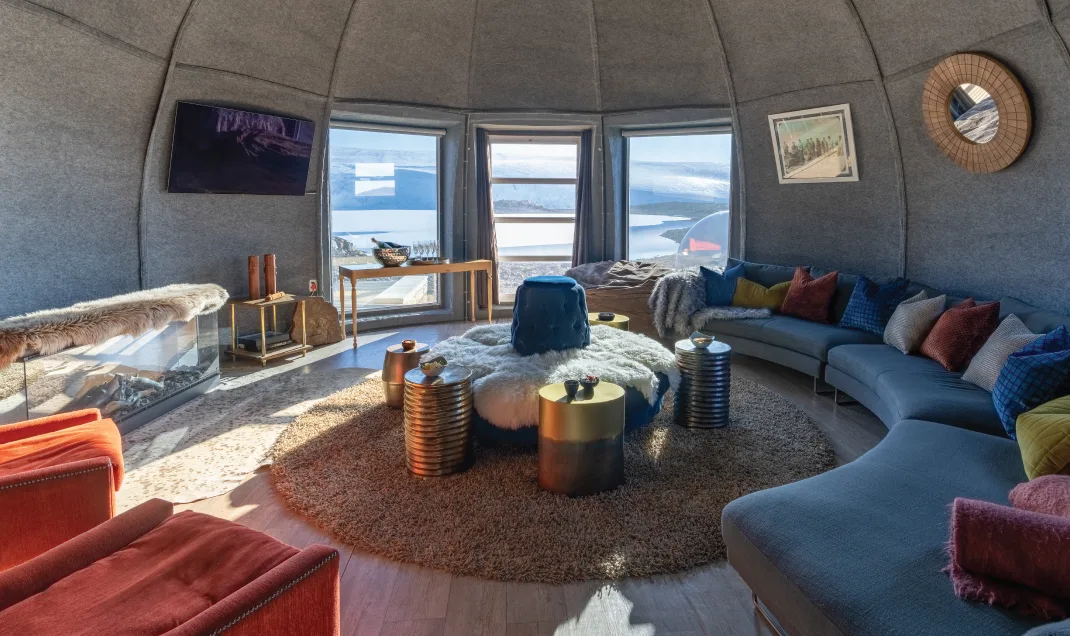
Unlike Woodhead during his initial expedition, however, curious travelers such as myself don’t have to rough it anymore. Though White Desert's Whichaway Camp required another 30-minute transfer from Wolf's Fang in a postbox-red Basler BT-67 plane (complete with ski-equipped landing gear), it's ultra-luxe by icy Antarctic standards. The camp’s six “polar pods” and communal lounges are pitched on the stone-littered shore of a rare freshwater lake in the Schirmacher Oasis, a plateau on the northern fringe of the Antarctic ice sheet where temperatures reach a relatively balmy negative 10 degrees.
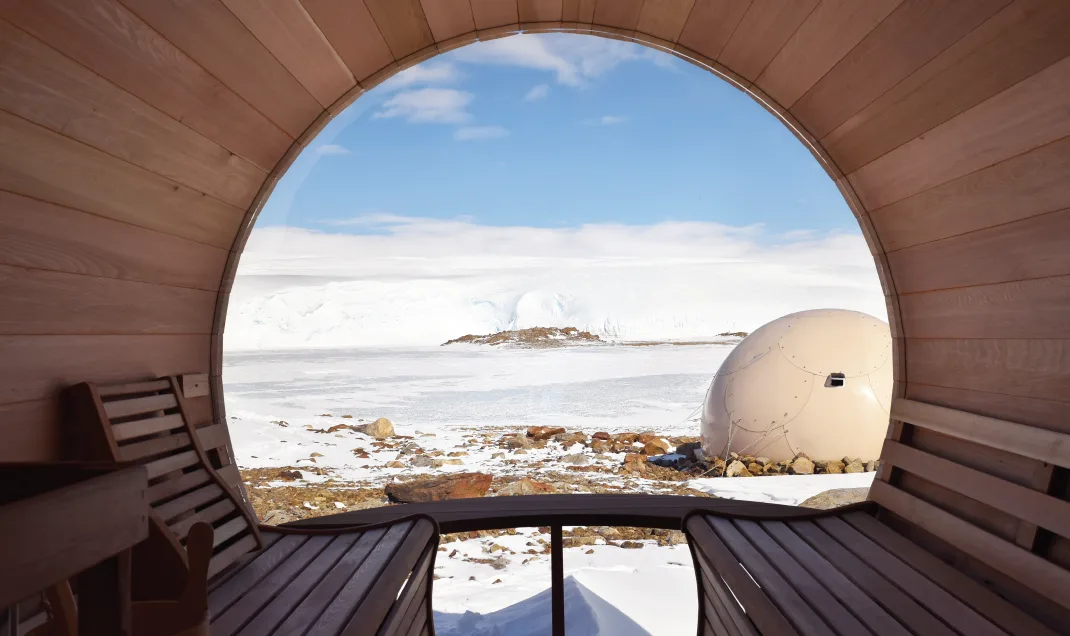
Each pod is heated, thankfully, and furnished with sheepskin throws, felted walls and leather trimmings nodding to the Golden Age of ice expeditions. There's a sauna, too, and nightly dinners featuring dishes like Indian thali sets and zingy citrus salads. In truth, the multi-course tasting menus seemed to defy the kitchen’s remote, below-the-equator location.