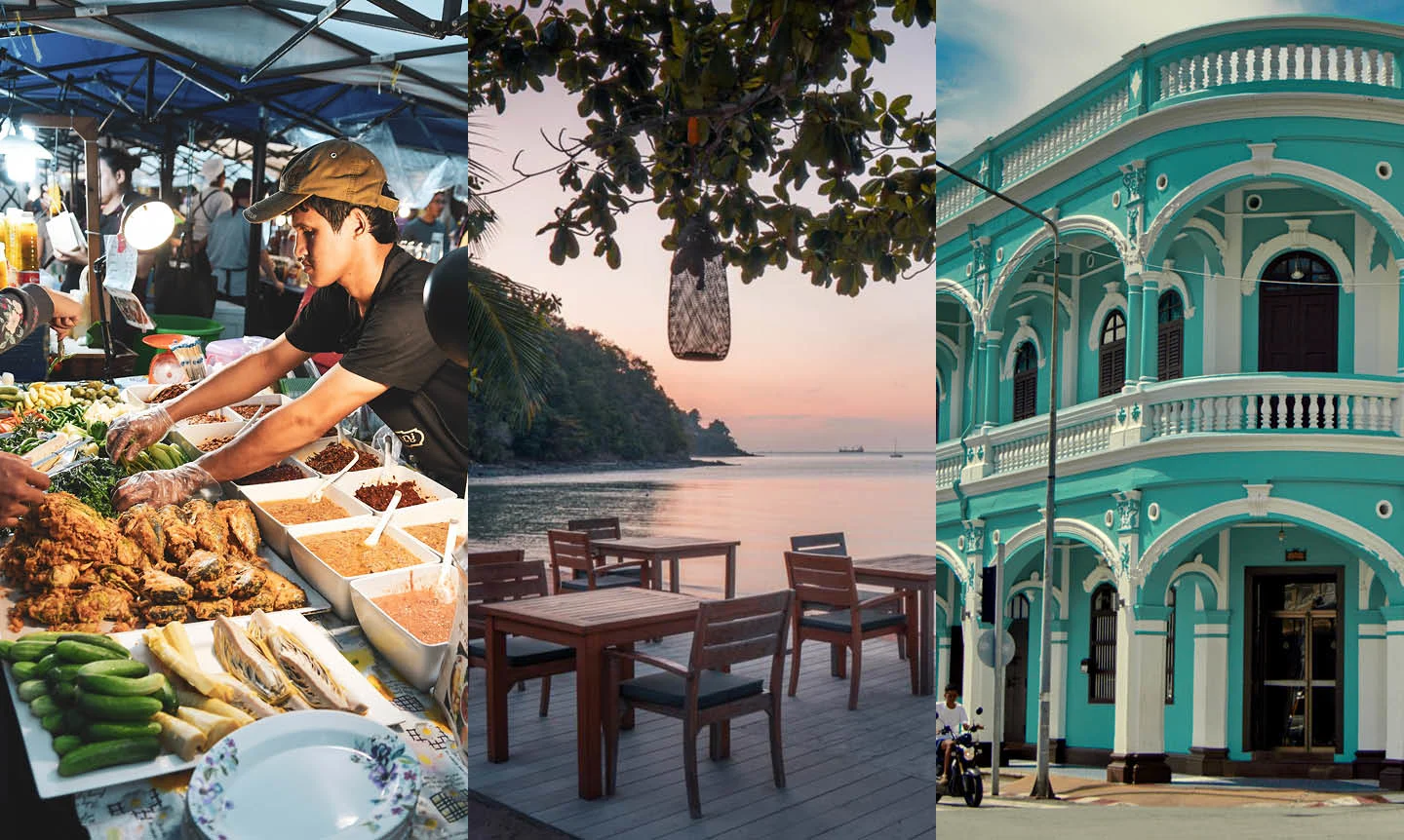
For many decades, Phuket, the mountainous main island plus the 32 smaller islands dangling off Thailand’s south, was more known for its huge hotels, oligarch-pleasing infrastructure, and superyachts than for pretty much anything else. Thailand’s largest island in particular has earned the reputation of a luxury adventure playground, from where helicopters depart to remote islets, or private yachts cruise to secluded beaches for gourmet picnics or nighttime diving. It is also the island nightlife capital of Thailand, competing with Bangkok as a place where global DJ acts play, Michelin starred chefs cater private parties, and catamarans put on dramatic evening fireshows.
But the touristed strips of high-octane hedonism or the bargain day trips to busy islands made famous in ‘90’s Hollywood movies are not the only Phuket, nor what makes Phuket truly great. The essence of this mountain island province is in the spaces between the images that the world at large is all familiar with, and the culture of the island has been misunderstood, and misrepresented, for decades.
Flying over Phuket today thankfully still reveals a lot of green, mountainous forest as it always has, and what you can’t see from the air is the several communities, like Bang Rong in the northeast, for example, who work and advocate for emphasizing and preserving them. Mangrove reforestation, forest sustainability, and outright banning of cutting trees for charcoal (which was an environmental hazard up until the late 1990’s) are just some of the recent movements taking hold across Phuket.
The city was built by seafaring traders in the 16th and 17th centuries from China, Portugal, England, India, and Java due to its abundant natural resources including ivory, pearls, precious hardwood, and gems. Shortly after, the 18th century tin boom shaped Phuket’s destiny when more Dutch, French, Portuguese, and English came to the island along with miners from China to attempt to build their fortunes on the island’s tin dreams. The southern Chinese who settled in Phuket, for example, married into local families, and the resulting marriages gave way to the Peranakan or Baba Nyonya (also written Baba Yaya) descendants.
A Phuketian identity equally singular can be seen in the architecture, murals, and religious shrines in the Old Town. This historic neighborhood is just one facet of the ‘other Phuket’ that fewer travelers come to know, the one where 200-year old villages coexist with bountiful, fertile nature. The side of the island where multicultural communities share Phuket’s storied past is putting out a colorful present, including artsy hives that make the island appeal to creatives, designers, and people of good taste from all over the world. Here’s where to go to transport yourself to scenes of quiet bohemian bliss, private modern luxury, or island heritage.
What to Do
Old Phuket
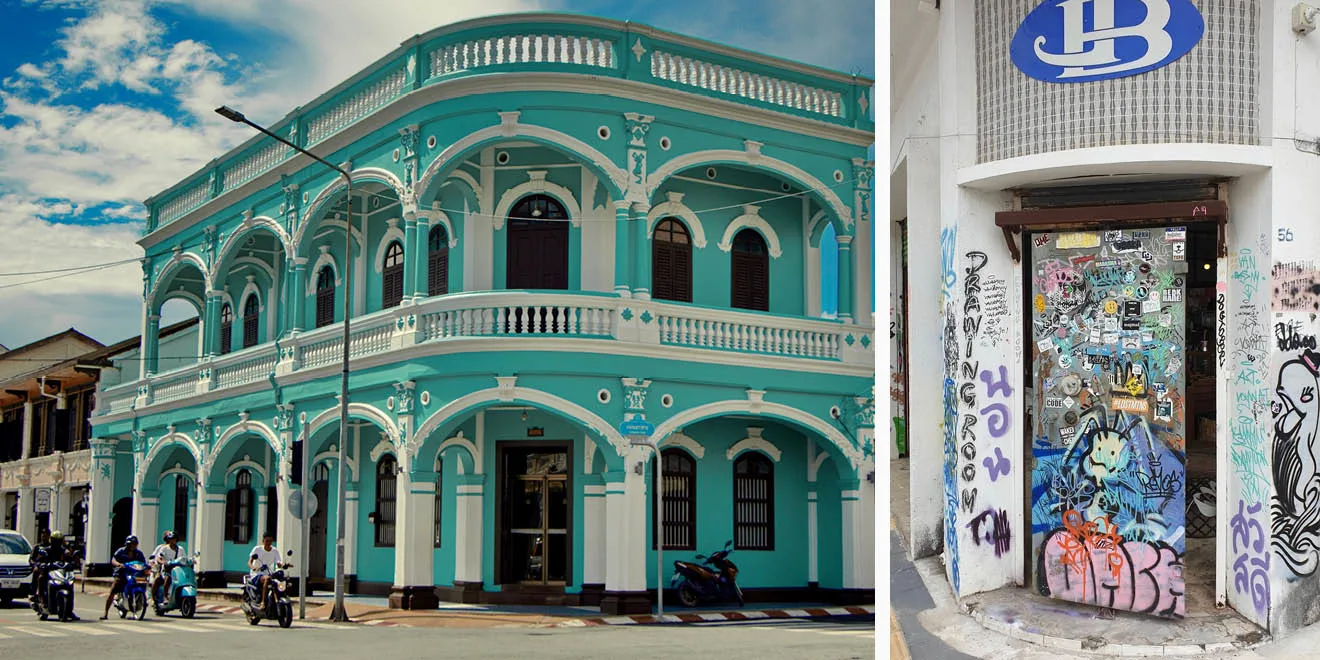
A slow wander through the island’s historic Old Town reveals glimpses of Hanoi, colonial Singapore and Penang, and Europe. This wildly global combination creates something akin to a tropical Chinatown off a Lisbon side-street—an aesthetic and culinary heaven. A thorough exploration of Phuket Old Town is a must, including it’s so-called Sino-Portuguese (but more like Sino-Malay-European) design and architecture. It was always good, but recent improvements like moving power lines underground, encouraging local shops to revert back to the ice cream-coloured shop fronts on the main streets, and a lovely emphasis on art, wall murals, building conservation and home-grown boutiques means that Old Phuket is better than ever.
The Drawing Room
Start with this artsy hub in Phuket’s old town, where Ids8 and his gang of art bandits run a painting studio, workshop, and coffee bar. Their two-story workshop is in a vintage corner building filled with half-finished works on canvas, random sculptures at various stages of completion, eclectic furniture, and lots of bicycles. It is the kind of effortless hip that would not be out of place in Brooklyn or Melbourne, but it is distinctly—and completely—Thai. The Drawing Room has become something of a pilgrimage point in Phuket’s already uber hip old town.
Small Galleries
Phuket’s Old Town has several small galleries, both fledgling and mature. Further out, Rawai Beach has its hive, known as The Phuket Art Village, a bohemian art cooperative with several galleries and artists holding court. A little glitzier, The Royal Museum and Art Gallery located in the Royal Phuket Marina has local and international exhibits with occasional heavyweight support from owner and collector-donated pieces.