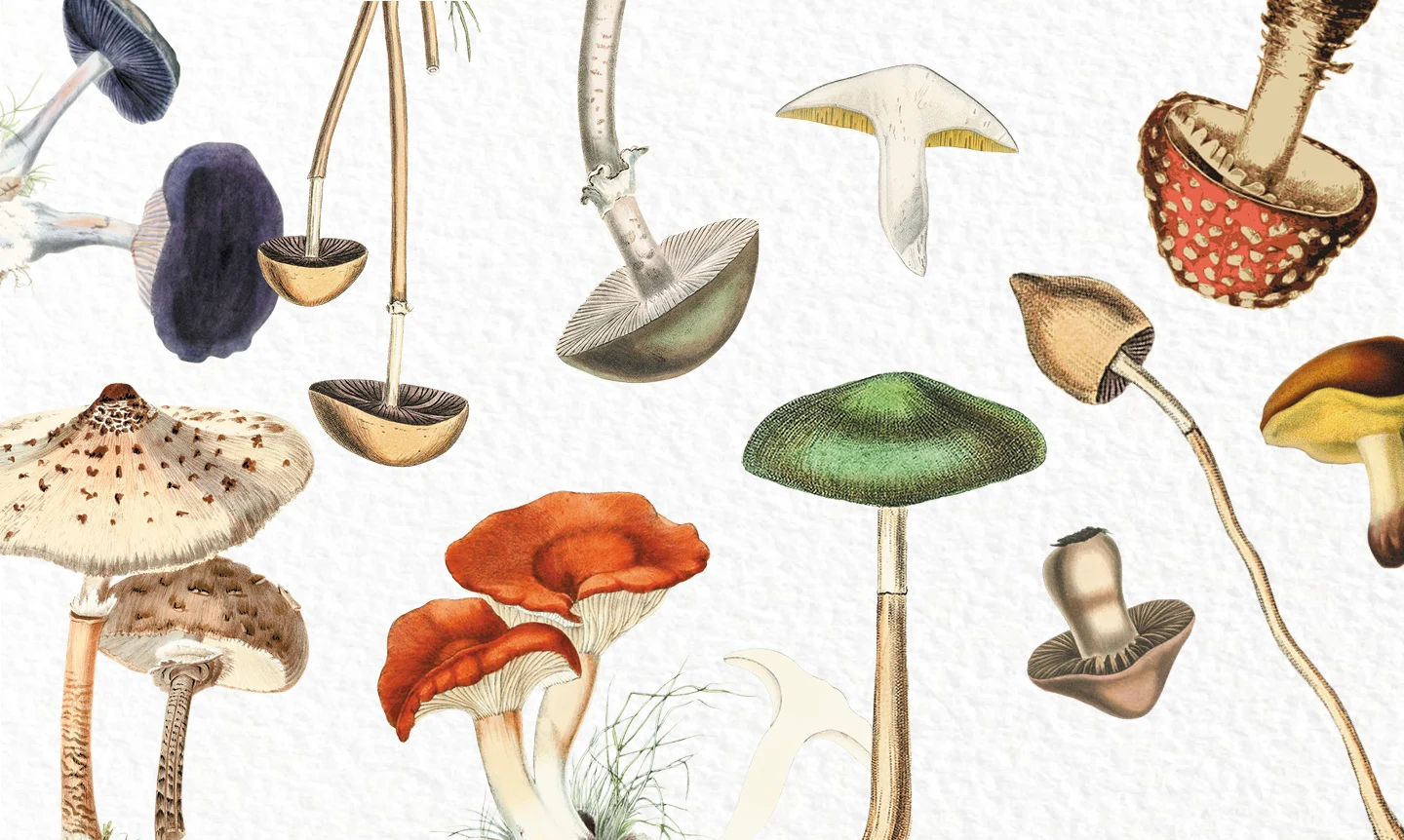
There are two types of people in the world: those who love mushrooms, and those who fear them. That’s according to Wall Street banker and ethnomycologist R. Gordon Wasson, who, in his 1957 book Russia, Mushrooms and History, categorized the world’s cultures as “mycophilic” and “mycophobic”— those who are entranced by the mysteries of fungi, and those who are repelled by them. In the U.S., the association of mushrooms with dirt and decay has led many to eschew them altogether (at least until recently, when chagaccinos and microdosed shroom chocolates have become a rival contender for the standard coffee and cigarette). Most literature out of Britain and the U.S. associated mushrooms with dirt and decay; even the common English names of mushrooms— Bleeding Tooth, Devil’s Fingers, Witches' Butter, and the Death Cap, the notorious killer of Emperor Claudius in the first century— reflect an aversion that borders on disgust.
But mushrooms are notoriously misunderstood. They lie somewhere between plant and animal, medicine and poison, food and drug, male and female, living and dead. Many species smell as bad as they taste good, and some can get you high as easily as they can kill you. Unlike nearly every other species, they possess hundreds of biological sexes, and their spores can even overtake insects, emerging from their carcasses like some H.R. Giger appendage. The mushroom, magical in more ways than one, has long held the fascination of cultures across the world, becoming an object of fear, reverence, intrigue, and worship. Whether in Mexico, Scandinavia, or Ireland, the cultural history of the mushroom has been, quite literally, rooted in folklore.
Japan
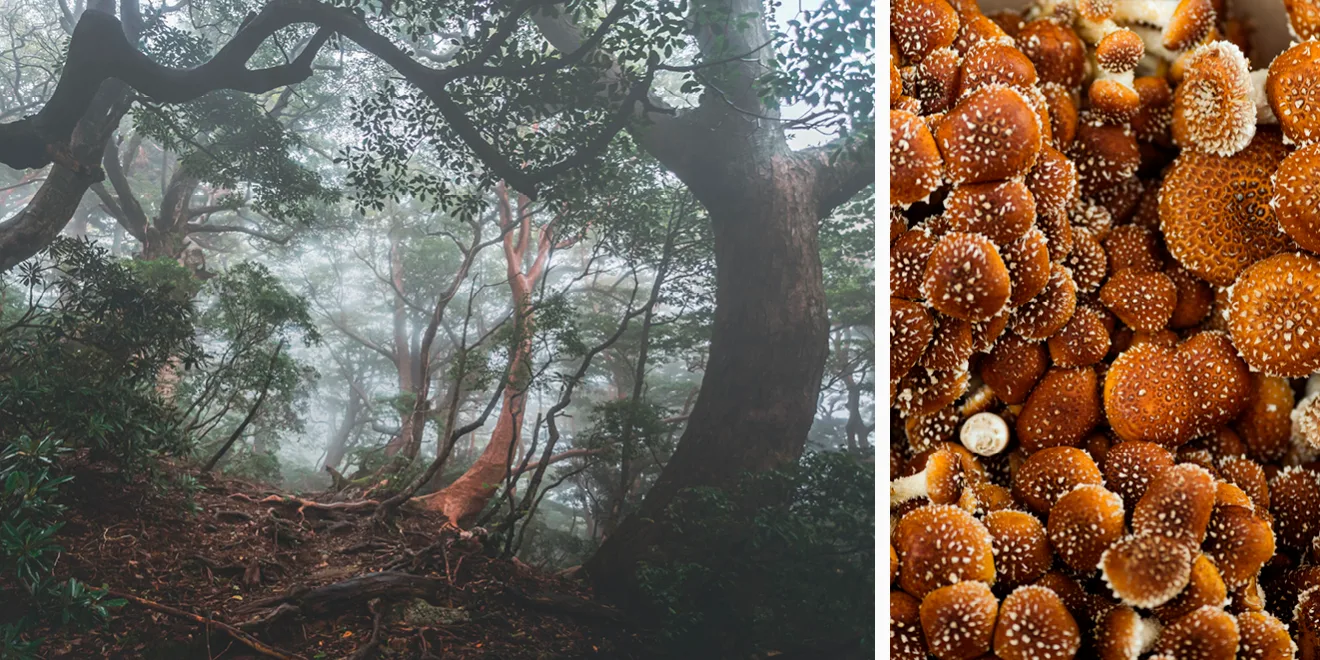
Nowhere in the world do mushrooms hold such power as they do in Japan, home to not only some of the world’s most popular varieties (shiitake, maitake), but also its rarest and most expensive (matsutake). (The Mushroom at the End of the World details the global economy of this singular coveted species, which costs over $250 per pound.) With its roots in animism, Japanese culture is highly reverent of all things, both living and inanimate; even that which is associated with darkness and the grotesque is traditionally believed to be holding a spirit.
In Rittō, a city in Japan’s Shiga Prefecture, a shrine called Kusabira has been dubbed “The Mushroom Shrine.” According to legend, locals prayed to the shrine during a 6th century famine, leading to a massive colony of edible mushrooms sprouting overnight. The name for maitake, or hen-of-the-woods mushrooms, literally means “dancing mushrooms.” It comes from an 11th century folk tale in which a bunch of Buddhist nuns couldn’t stop laughing and dancing— almost to the point of mania— and though the mushroom isn’t hallucinogenic, the name has stuck around, perhaps because of their coordinated group formation with fanned-out heads like billowing fabric.
Mushrooms have been a favored subject of Japanese artists from Edo period painters to Yayoi Kusama. A symbol of longevity, it has been revered as much for its healing properties as for its clean, almost kawaii aesthetic. Take Nintendo’s Mario video game series, one of Japan’s most prized cultural exports, in which an Italian plumber navigates Mushroom Kingdom, where red-and-white Super Mushrooms make you bigger and you’re guided by Toad, a little mushroom man.
Sweden
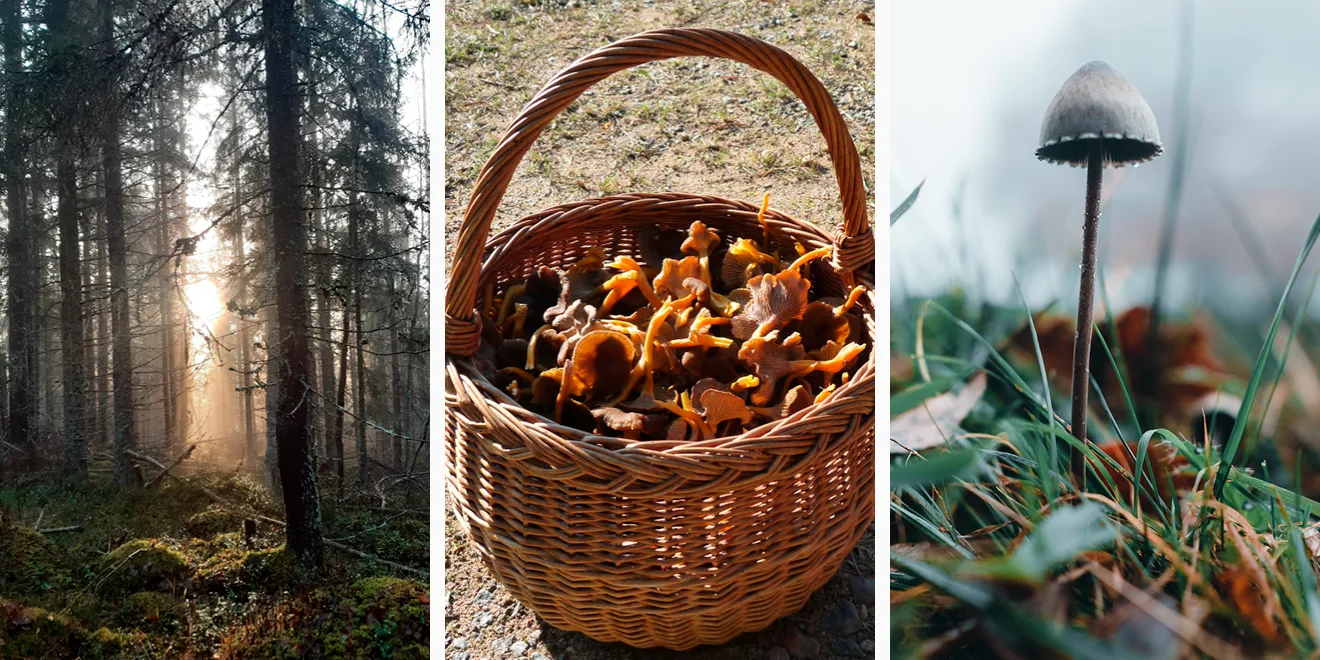
Anyone who has seen Midsommar knows that Sweden is a forager’s culture. Like the Japanese, Swedes have a proclivity for mystery, darkness, and a deep connection with nature. The practice of foraging is practically encoded in Swedish law under allemansrätten, or “the right of public access”— the freedom to roam the land and explore its natural bounty. More than half of Sweden is forested, making berries and mushrooms as much a staple of the Swedish diet as kötbullar and kanelbulle (meatballs and cinnamon buns). Foraging is a late summer and early autumn national pastime for Swedes. Sun-colored chanterelles, dubbed “the gold of the forest,” are the most prized among the mushroom types, a staple of menus both traditional and modern.
Just as in the Grimm fairy tales, the Scandinavian forests— vast, wooded, and, in the winter, very dark— offer the perfect backdrop for the emergence of the supernatural. In Nordic mythology, mushrooms exist within Vaesen, the domain of spirits, trolls, monsters, and mushrooms, meaning ancient Swedes largely avoided what they considered “troll food.” Some, however, maintain that Santa Claus, with his signature red suit, was actually the product of the wider region’s pagan shamans consuming the Fly Agaric, a red and white spotty hallucinogenic mushroom that many come to know from children’s books like Alice in Wonderland. Reindeer, which are found around Scandinavia, love mushrooms, and have been known to display the delirious effects of the legendary hallucinogen: running around, making strange noises, head twitching, and— perhaps in the eyes of some Sámi people, who would reportedly drink a potent brew of the reindeers' urine— taking flight.
Mexico
Many of today’s psilocybin retreats take place in Mexico as the country has deep history with mushrooms, dating back to the Aztecs, who regularly consumed entheogenic plants and animals as part of sacred ritual. Psilocybe, a psychoactive genus of mushrooms, was so important to Aztec culture that it was called "Teonanácatl" in the indigenous language of Nahuatl— literally "god mushroom." Both costly and difficult to find, mushrooms were particularly favored among the Aztec upper classes, who would fast before eating the mushrooms at festivals and gatherings, often with honey and drinking chocolate. In Aztec culture, this was known as monanacahuia, or "to mushroom oneself." Upon conquering the Aztecs, the Spanish banned traditional ceremonial mushroom use and other religious rituals, dismissing them as “pagan idolatry.”