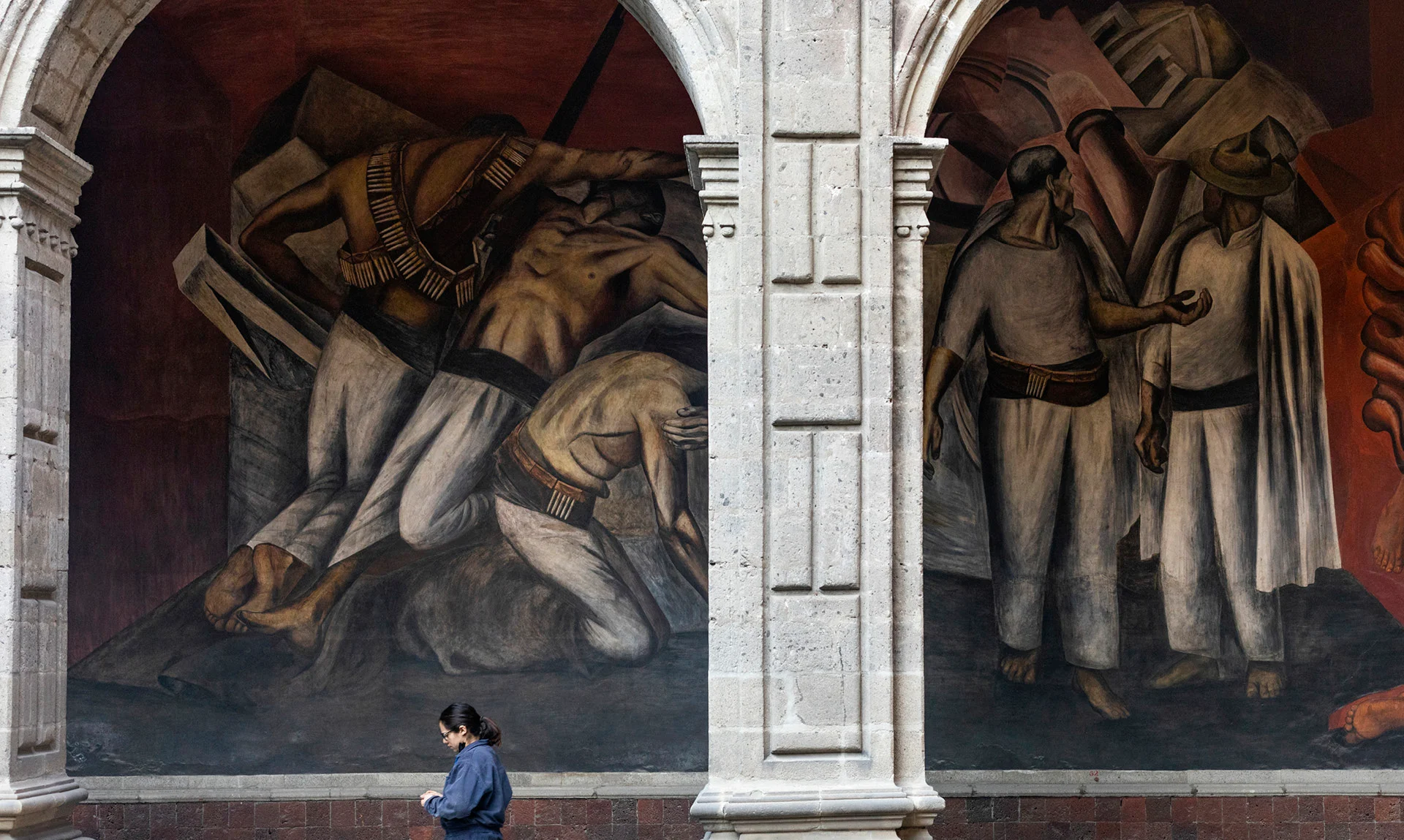
Painting the walls is a very Mexican thing to do. The ancient Mayas applied wondrous pictorial compositions to their jungle temples, and the Aztecs famously frescoed their pyramids in bold colors. Centuries later, the Muralismo Mexicano movement flourished across the country—with particular intensity in Mexico City—and, from the 1920s to the 1960s, made painters like Diego Rivera and David Alfaro Siqueiros international art stars while transforming the capital’s public spaces into art galleries that also doubled as political platforms. These works remain central to the identity of the city.
Their creation began in the 1920s, following a terribly chaotic 10-year revolutionary war across Mexico, and the resulting leaders were keenly interested in establishing a social order based around the ideals of progress, political and economic transformation, a proud indigenous and mestizo identity, and the great heritage of Mexican culture. Thanks to key figures like politician and philosopher José Vasconcelos, great artists were commissioned to envision a canon of national art based on modernist principles and used to express social, aesthetic, and political ideals.
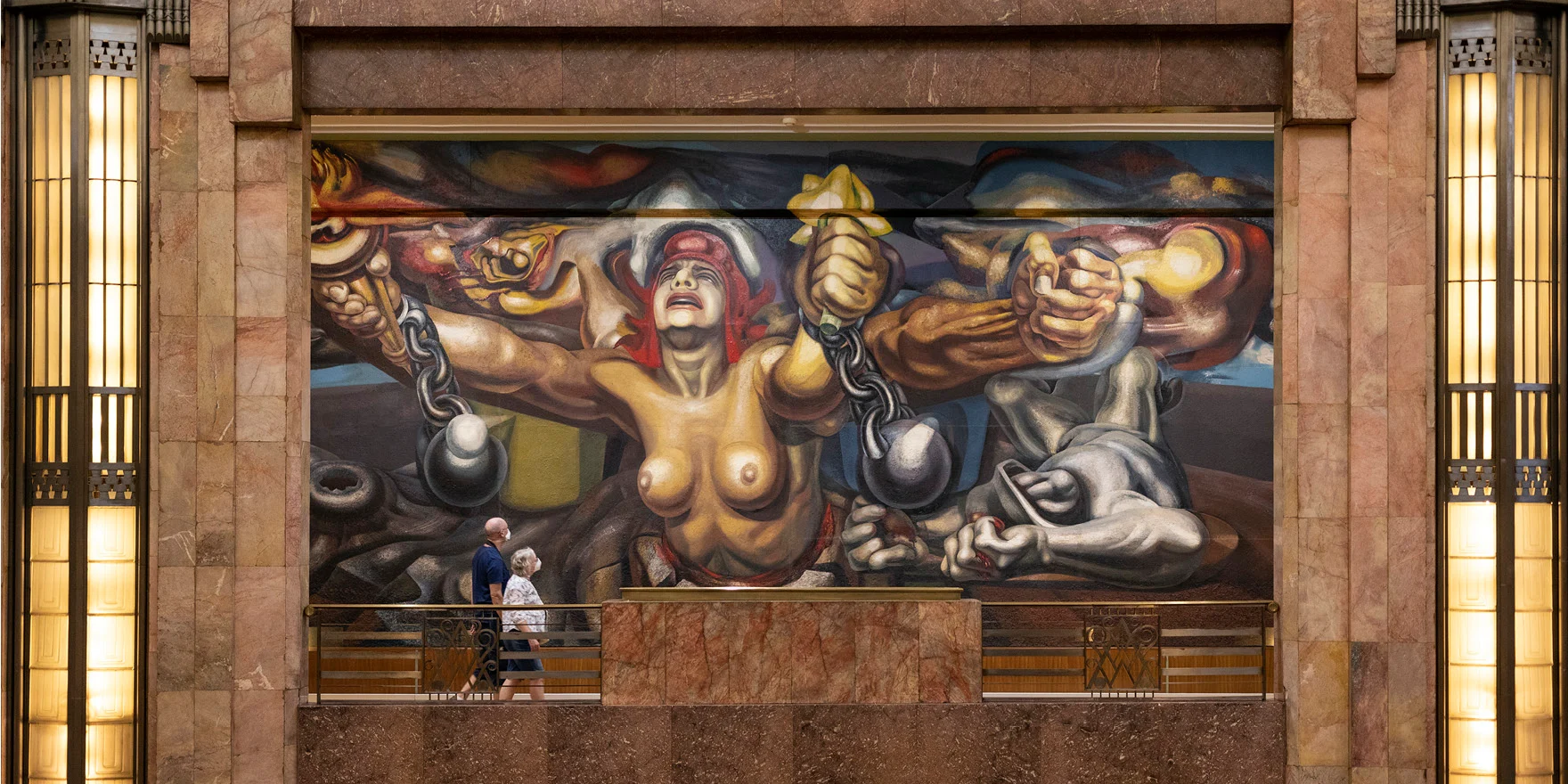
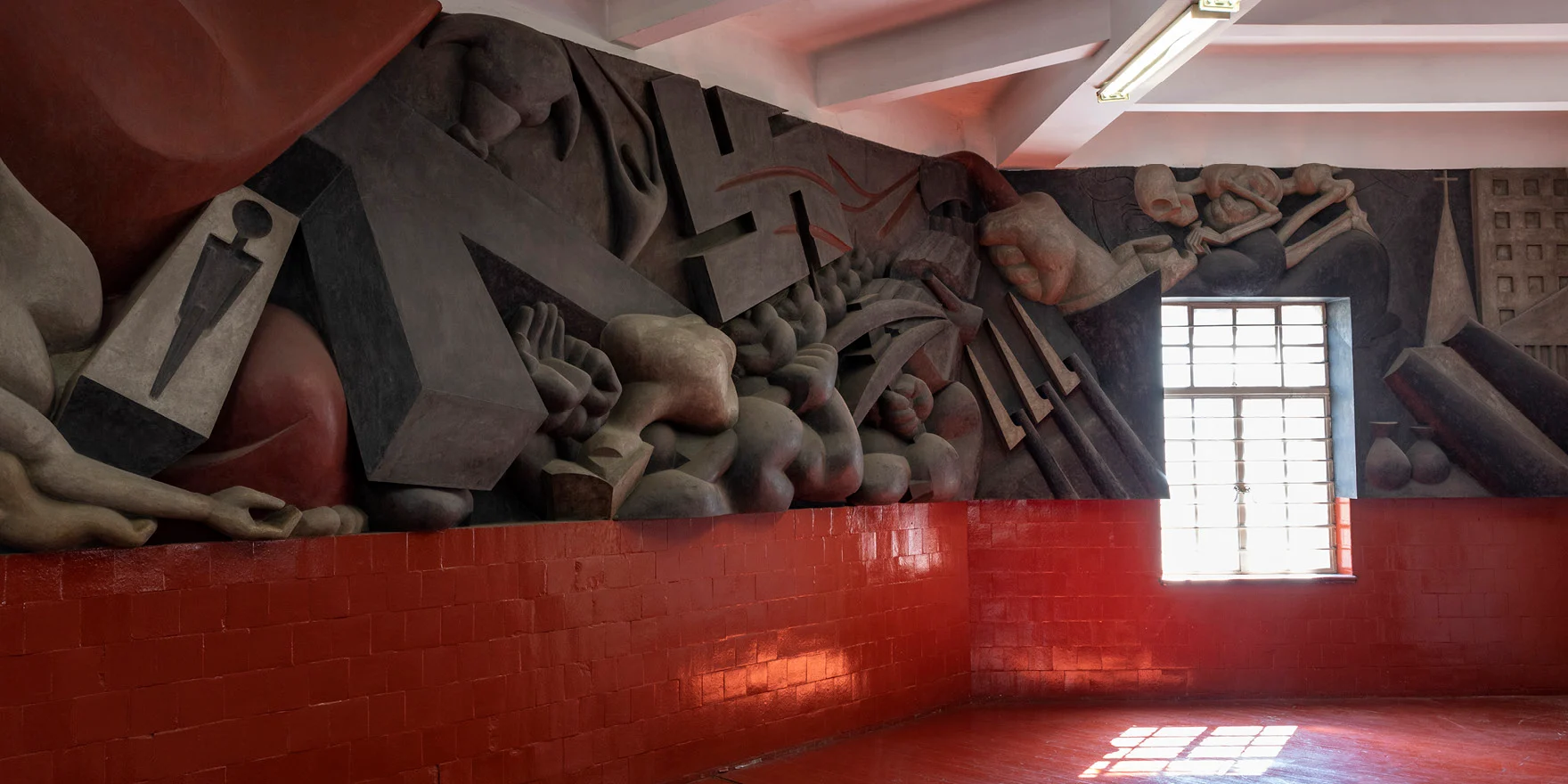
The walls of many grandiose buildings were assigned to accomplished painters, some of them quite experimental, in the hopes of creating accessible works that would educate and inspire the masses. As the tumultuous twentieth century went on, the great pathos and struggles of the times were also depicted, as in Siqueiros’s extraordinary A New Democracy, on display at the Palacio de Bellas Artes, where a bare-breasted woman erupts from the earth, destroying an old totalitarian regime, or Noguchi’s striking 22 meter-long relief housed in the Abelrado Rodríguez public market; it’s on these walls where the forces of fascism, labor and science collide.
These four decades of Mexican history are complex, marked by upheaval and structural changes to all aspects of life. So are the individual stories of the painters who were at times aligned with the official state narrative, and at times at violent odds with it. Siqueiros, for example, maintained an uneasy relationship with the changing governments; he was both sponsored for enormous works and also jailed several times, spending around five years total in prison. In this context, larger than life figures such as Rivera, José Clemente Orozco, and Siqueiros (known as the big three) and lesser-knowns (but still widely praised inside the country) like José Chavez Morado, Jorge González Camarena and Juan O’Gorman created astoundingly prolific and monumental paintings that, decades later, transcend well beyond the context that originated them, as powerfully unique works that are a must-see for travelers looking for a deeper understanding of the city.
Palacio de Bellas Artes
After 30 years of construction, the striking Palacio de Bellas Artes opened in the center of Mexico City in 1934, its architecture an eclectic, yet harmonious mix of tropicalized Art Nouveau and Art Decó styles. The museum houses some gut-wrenching and beautiful masterpieces by Siqueiros who, in Tormento a Cuauhtémoc depicted, with uncanny expressivness, the pain of the last Aztec Emperor, Cuauhtémoc, as he was tortured by the Spanish conquerors in 1521. Another standout piece is the colorful Liberación, an allegory for the liberation of humanity from historical bonds, by Jorge Gonzáles Camarena. It’s hard to choose favorites here, as there are also murals by the great Oaxacan Zapotec painter Rufino Tamayo, and other large scale works by Rivera and Orozco.
Cárcamo de Dolores
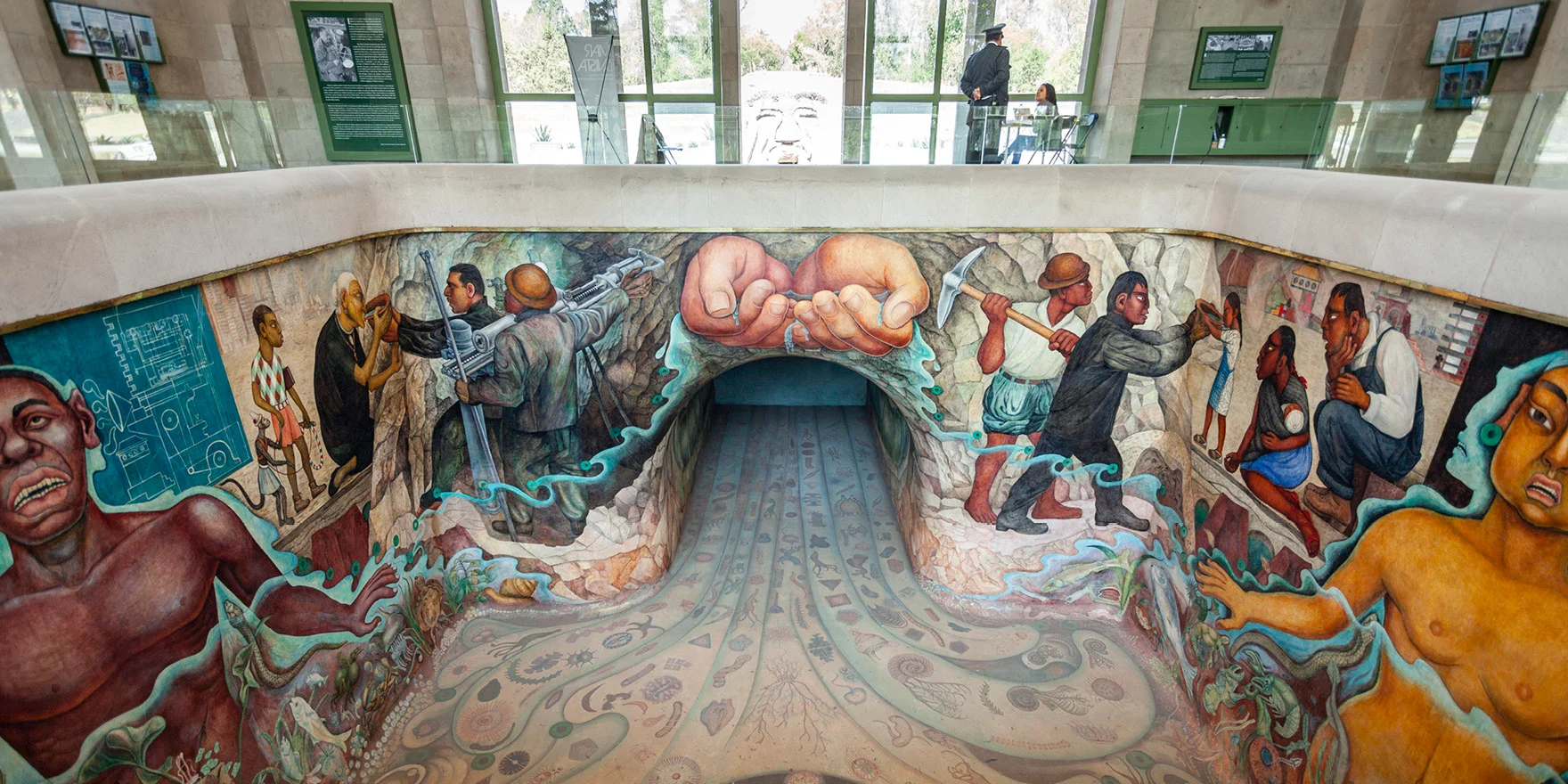
This functioning water reservoir, inside the huge Chapultepec Park, is part of the Lerma System (the main water supply for the city) that was constructed in 1951 and features one of the more unusual and masterfully composed works from Diego Rivera. His Water, The Origin Of Life, which shows humanity’s relationship to the precious element, wraps around the walls and floor of the actual water basin, even the flood-gates are included in the mural. The piece was originally underwater but now the water has been diverted to the sides to better preserve the work. The small site also features an atmospheric sound installation by contemporary artist Ariel Guzik, added a few years ago.
Colegio de San Ildefonso
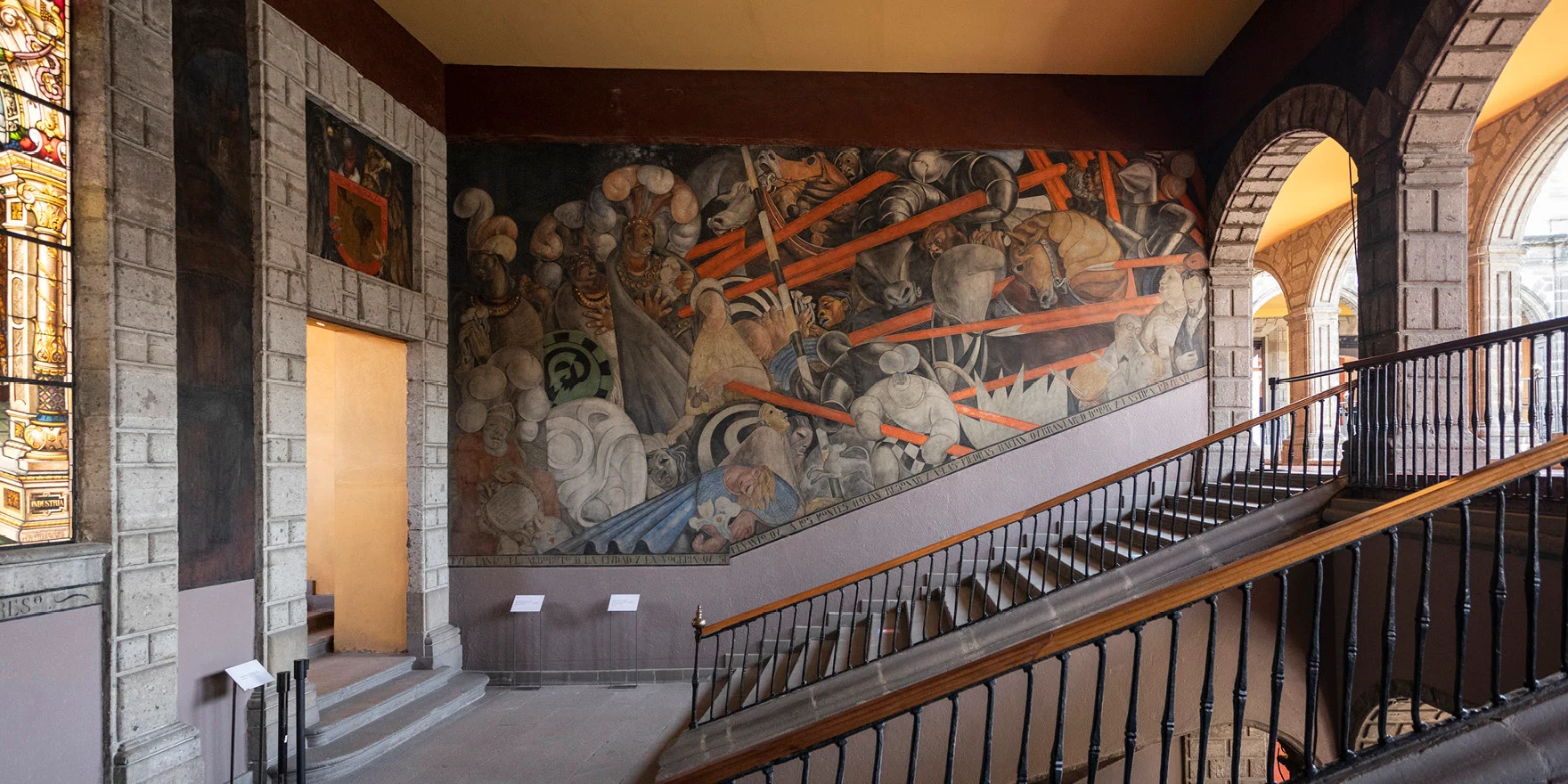
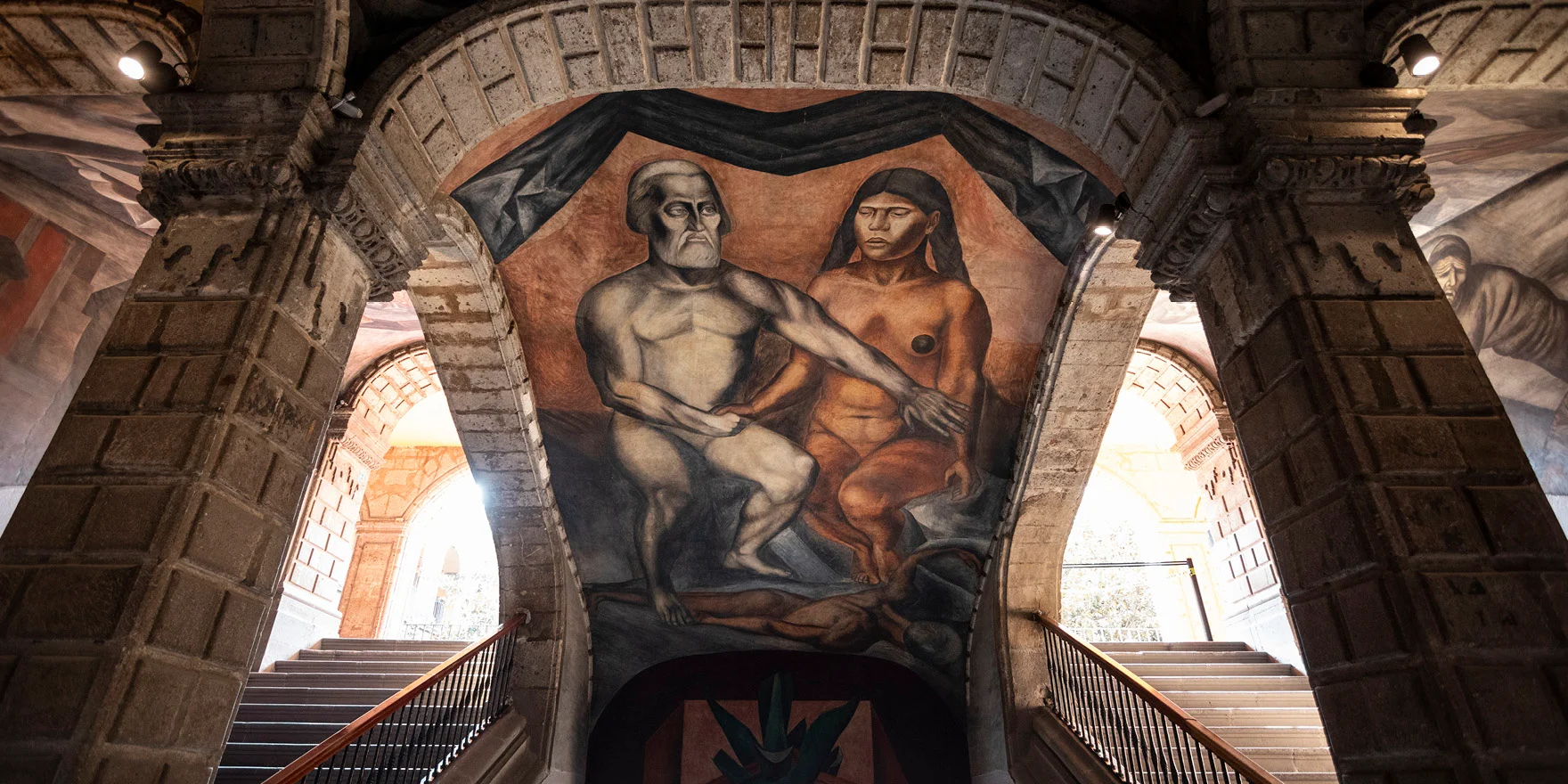
One of the most important colonial buildings in the downtown area, this former college was founded in 1583 and served as a public school during the 1920’s when many of its inner walls were assigned to artists by José Vasconcelos. Here is Rivera’s very first mural, La Creación, which shows his take on the classic creation story, as well as an exceptionally stylized depiction of the fall of Tenochtitlán, the ancient Aztec city that stood where Mexico City now is, by Jean Charlot. The main feature however, is the critical imagery by José Clemente Orozco that scales three stories, portraying class struggles and ridiculing the bourgeoisie, as well as the roof of the main stairwell where he depicts Hernán Cortés and his interpreter, the oft-maligned Malintzin.
Mercado Abelardo Rodríguez
Consistent with the idea of educating the people through art in public spaces, this bustling downtown market was built in 1934, with 1500 square meters of murals commissioned to ten artists. The project was carried out under the direction of Rivera who chose a handful of his students to create their own works, and who also invited international artists Marion Greenwood and Isamu Noguchi to participate. Noguchi created his first large work here, a black and red wall-sculpture where he portrays the historical powers of war, capitalism, fascism and science. For eight months he worked on shaping the relief, all the while having a secret affair with Frida Kahlo that finally ended when Rivera chased him out of their house at gunpoint.