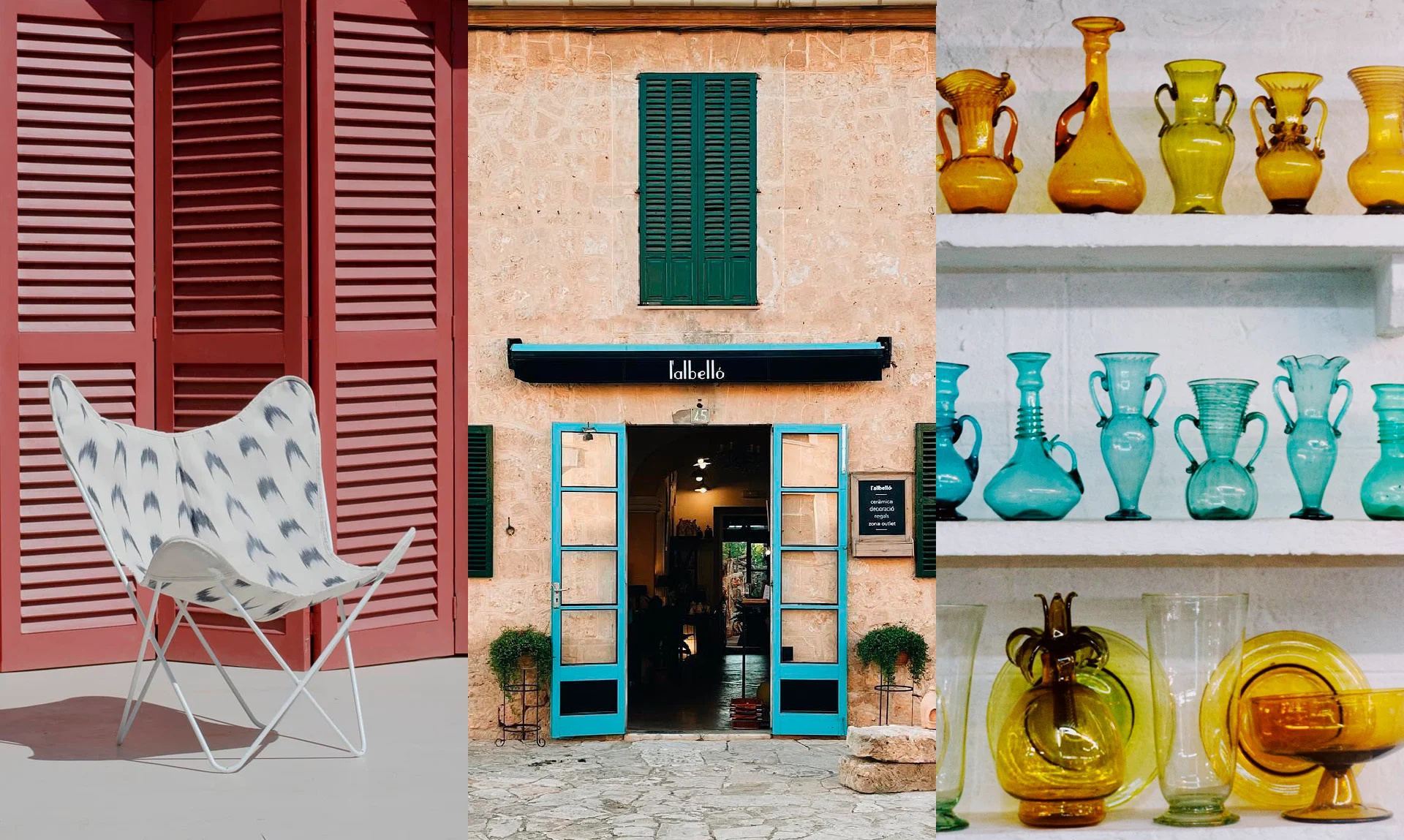
Mallorca is well known for sea and sun, but the island has long been a sanctuary for artists and makers, attracting creatives to its shores for generations. From George Sand, who sought refuge one freezing winter with her lover, Frédéric Chopin, to Joan Miró, who spent the latter part of his life on the island hosting fellow artists like Picasso and architect Josep Lluis Sert, to contemporary artist Miquel Barceló, who returned to his native Mallorca after years of traveling and living abroad, the island resonates with artists as a place of retreat and freedom as well as a source of aesthetic inspiration. The largest of Spain’s four Balearic Islands, Mallorca has a rich heritage of craft, including weaving, ceramics, and glassmaking, going back centuries with master artisans trained in using materials such as wood, clay, straw and marble. Today, the island, from its capital city of Palma to the mountainous northwest to the arid central valley, is dotted with dynamic studios, showrooms and niche boutiques that highlight the artists and craftspeople who are continuing the traditions of the past, while creating pieces that are contemporary and unique.
Open Studio 79
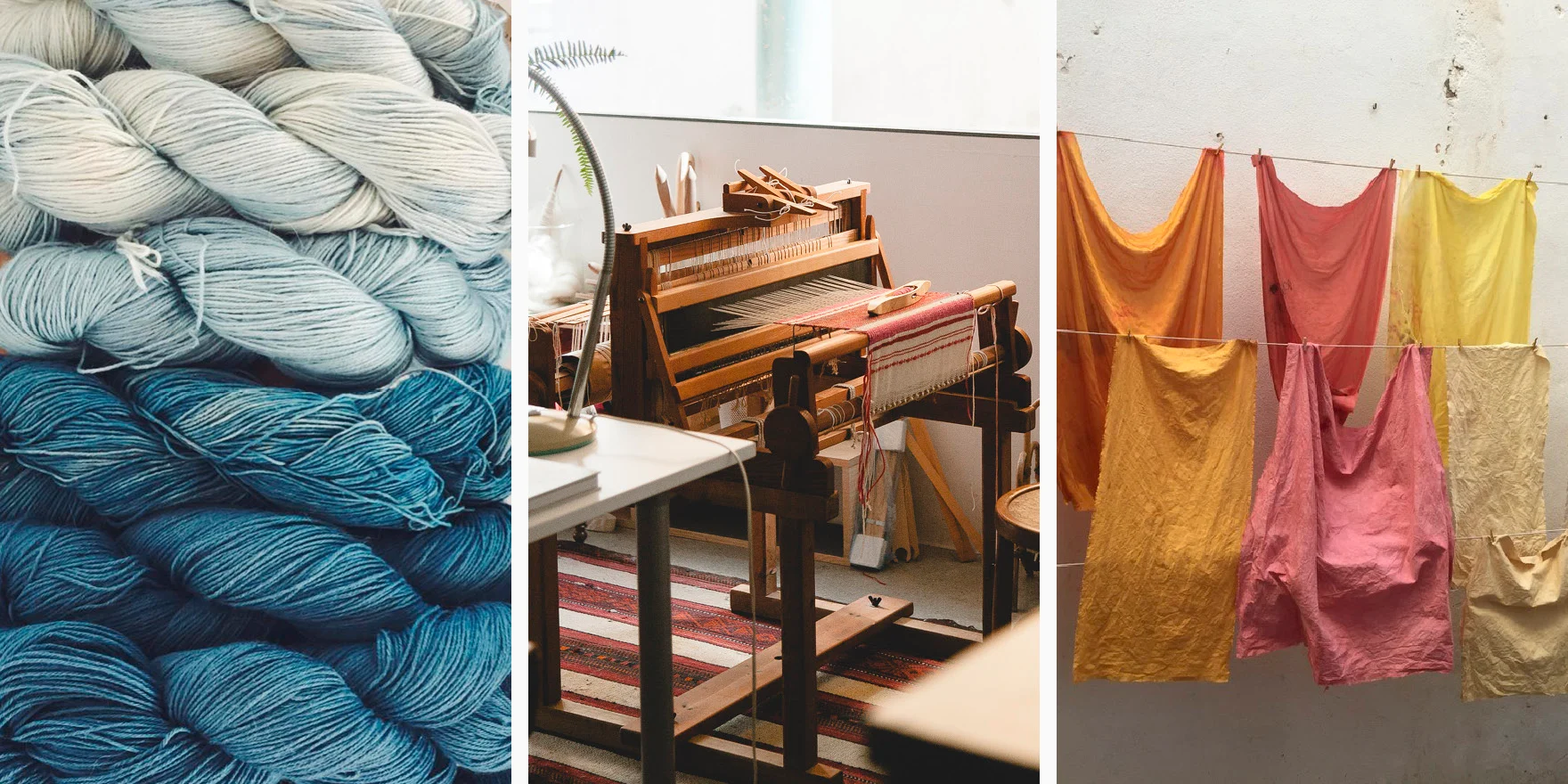
Tatiana Sarasa is a textile artist whose loom weavings, hand-printed fabrics (made by pressing plants and flowers directly onto the silky surfaces), and unique artworks put to use hand-spun yarns and natural dyes she makes using local ingredients. Her precise yet free-flowing process leads to painterly weaving patterns that are applied to pillows, blankets, shawls or wall hangings, and which play as much with color as with form. Her open and airy studio/showroom, Open Studio 79, located in Palma’s vibrant neighborhood of Santa Catalina, is in many ways a gathering place for the island’s up-and-coming creative talents. The space, purchased in 2011, was originally meant to be solely Sarasa’s studio, but in the spirit of community, she’s made it available to other artists, as well. Open to the public a few days a week or by appointment, today one can find alongside Sarasa’s own work, a rotating selection of pieces by local craftspeople, such as weaver, Mariana Muravito, and ceramicist Anna Skantz, who are engaged with the island’s traditional materials and methods.
Arquinesia
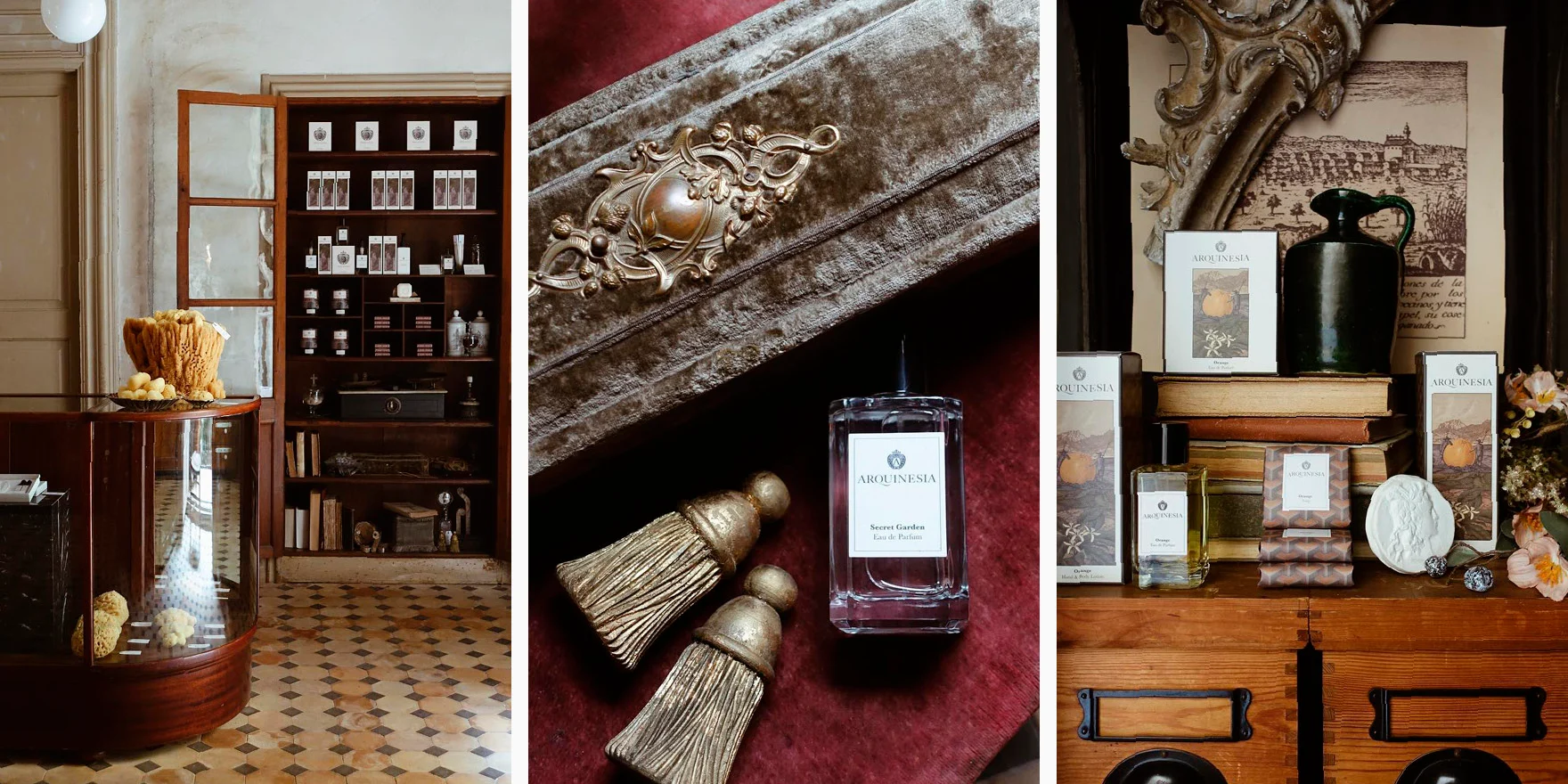
Wandering off the streets of Palma’s old town and into Arquinesia is to enter a world where an apothecary, botany and touch of magic intertwine. Visitors navigate through a series of sparsely decorated rooms punctuated by with antique furniture, Spanish-Colonial paintings, retablos, dried flowers and old ceramic pots, before entering the main shop, where large, wooden cabinets are filled with glass jars and rows of perfumes, soaps, lotions and candles. A sinuous tree sneaks up out of the interior courtyard. Arquinesia’s products (all organic) evoke Mallorca, with scents of orange, fig, sea breeze, secret gardens, and the time-worn traditions of the Balearic Islands. The vintage-inspired packaging, a fantastical mix of Renaissance and Victorian dreamscapes and imagery, is created by one of the owners of the shop.
L’Albelló
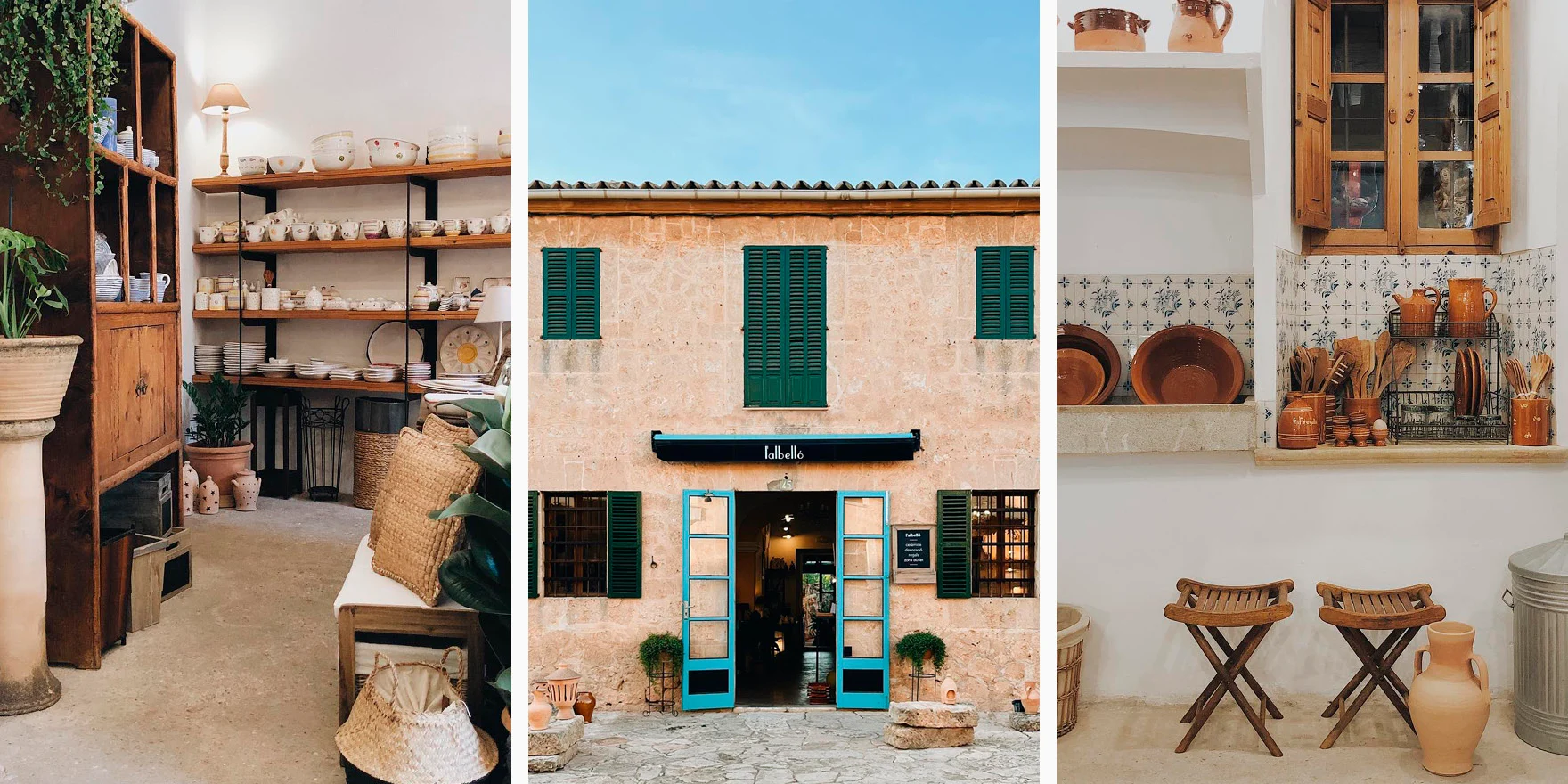
Since the late 17th century, the small town of Pòrtol has been the hub of Mallorca’s burgeoning ceramic industry. L’Albelló, opened in 1998, is a family-run ceramics studio and home décor shop housed in a century-old house, where Mallorcan traditions of wheel throwing and hand-painting are carried forward. Here, bowls, cups, vases, plates, vessels and more, are made and fired in their onsite kiln. Styles range from earthenware pots, colorfully painted dishware to contemporary versions of Siurell, a typical Mallorcan style of white ceramic decorated with stripes, dots or marks of red and green paint.
Joan Roig
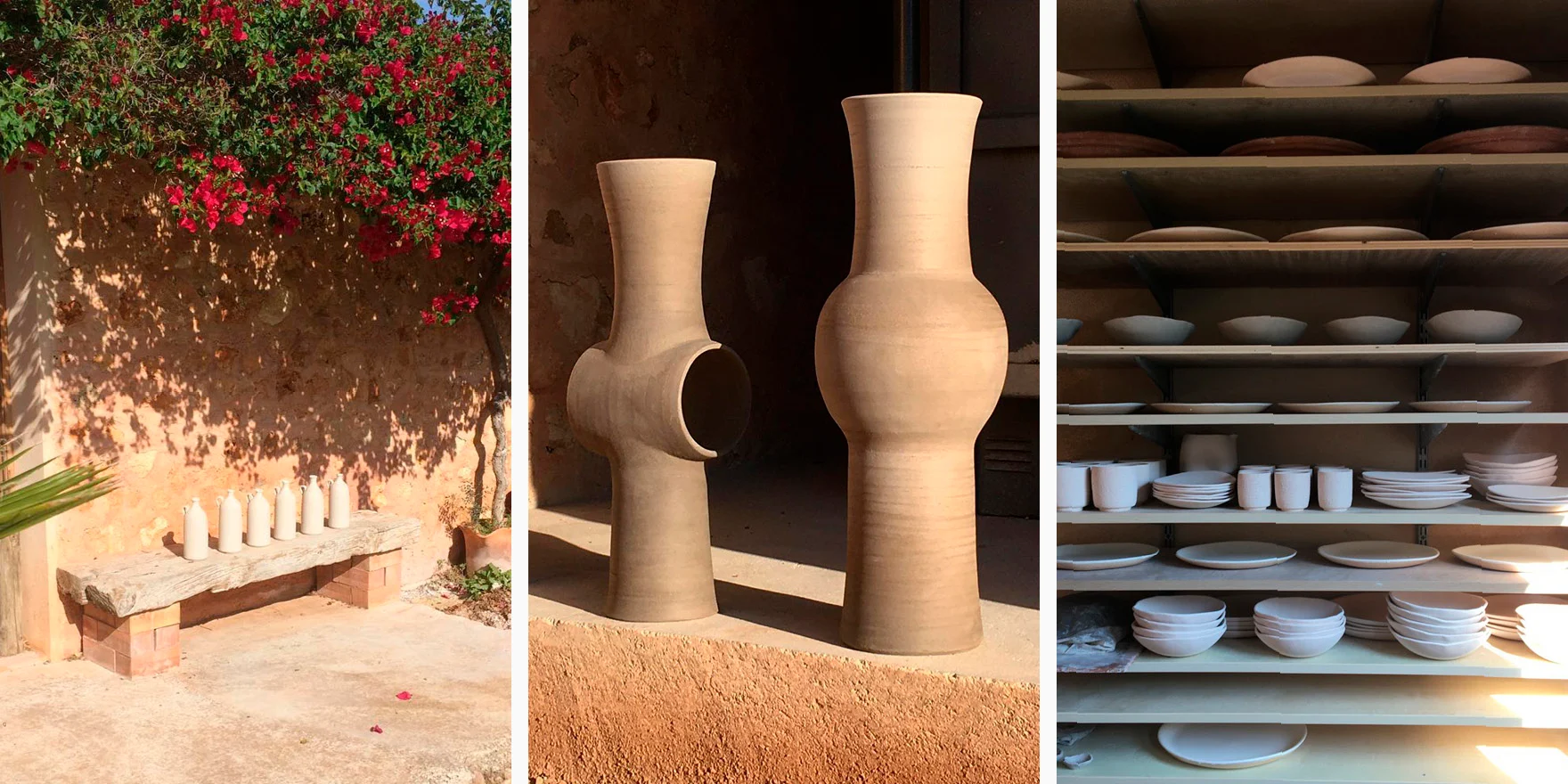
From his tranquil studio on the outskirts of Pòrtol, ceramic artist, Joan Roig, makes utilitarian tabletop pieces, such as plates, cups and bowls, as well as one-of-a-kind vessels. Inspired by Japanese pottery and the idea of wabi sabi, Roig’s work has an earthy, holistic quality that is deeply informed by the Mallorcan landscape. He works mostly on a potter’s wheel, both electric and manual, along with hand-built pieces. With particular interest in the science of glazing and mixing minerals, Roig creates textural surfaces that might be called lunar or that resemble algae blooms expanding under the sea. His homemade kiln, modeled after a traditional Japanese kiln, takes 24-hours to fire, an all-night process.
Huguet
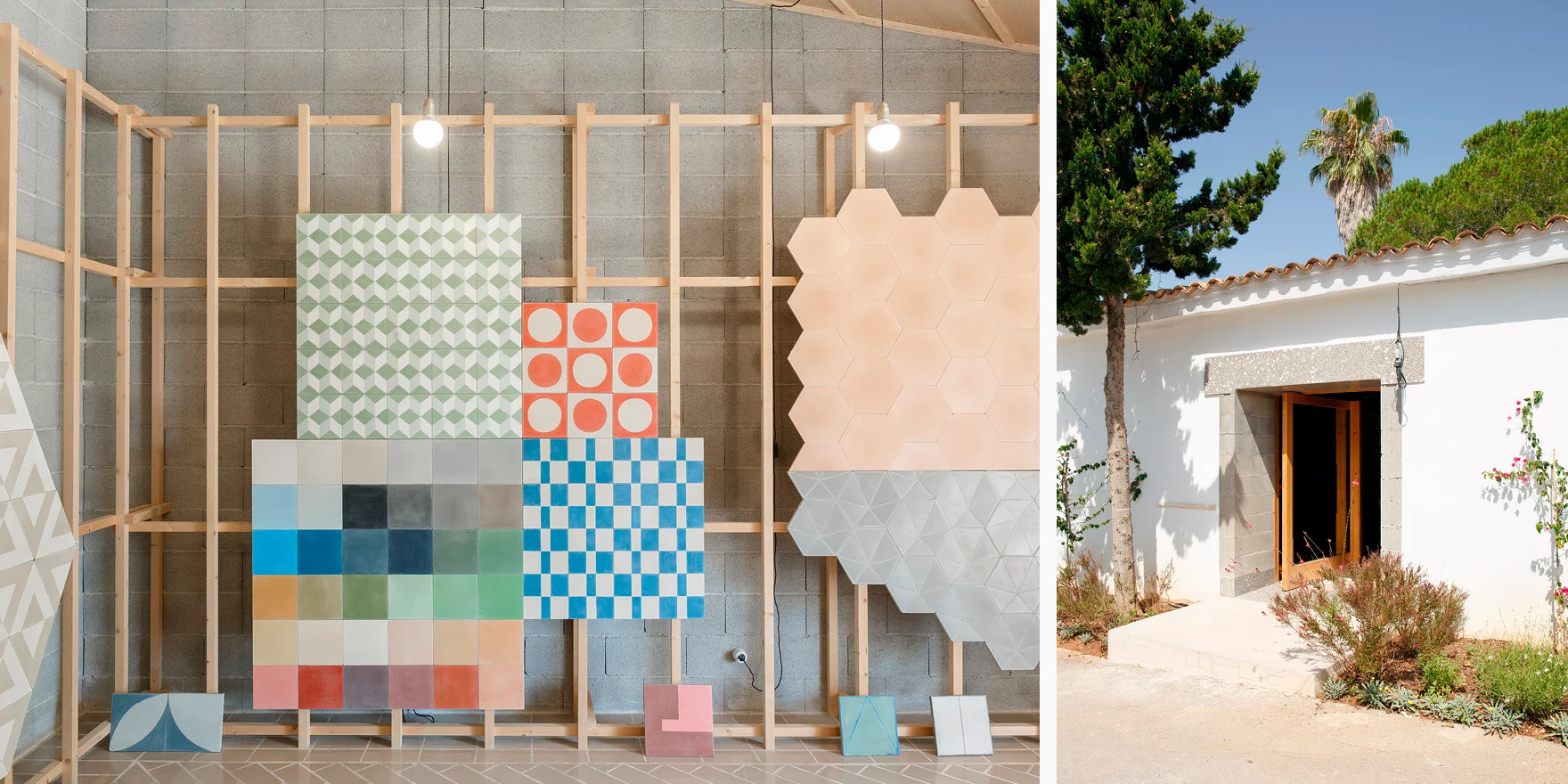
Across the island, traces of original Huguet tiles remain in historic villas and homes, looking as contemporary as ever. A third-generation ceramic tile manufacturer, Huguet, started its line of handmade, naturally pigmented tiles and colorful terrazzo surfaces in the early 20th century, but then shifted into commercial/construction production (concrete and support beams) in the 1960s-70s. In the late 1990s, when Biel Huguet took over, the company resumed making its traditional hydraulic tiles, as well as bespoke pieces for interiors and architectural projects, including kitchen sinks, showers and tabletops. The showroom is located in Campos, towards the southern part of the island, about 25-miles from Palma, and features a range of patterns and styles – from geometrics to nature-inspired imagery to dizzying mosaics.
Teixits Vicens
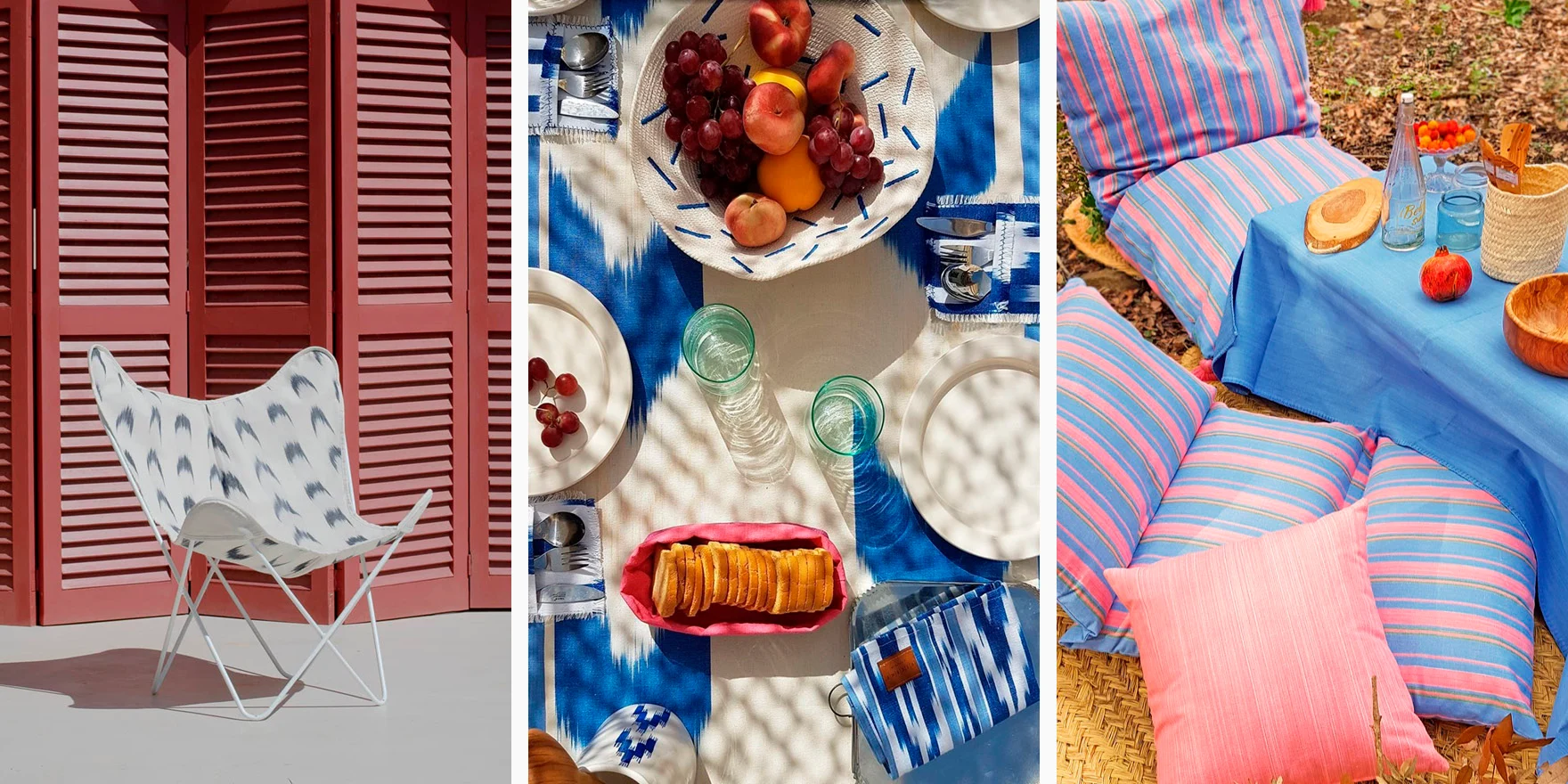
Perhaps one of the most iconic symbols of Mallorca is the telas de lenguas or “cloth of tongues,” a woven fabric that decorates many homes across the island. Its ikat pattern is said to resemble flaming tongues, and it can be found in colors from traditional royal blue to pale yellow. The 160-year old Pollensa-based manufacturer, Teixits Vicens , is one of the earliest producers of the hand-woven “tongue” patterned fabrics, and its showroom highlights the process and tradition behind the company. In recent years, Teixits Vicens worked with other local designers, including a line of jewelry with Antic Mallorca, an impressive brand in its own right that’s reviving the craft of weaving with local palm fibers, designing handbags and jewelry, made by a women’s weaving collective on the island.
Gordiola
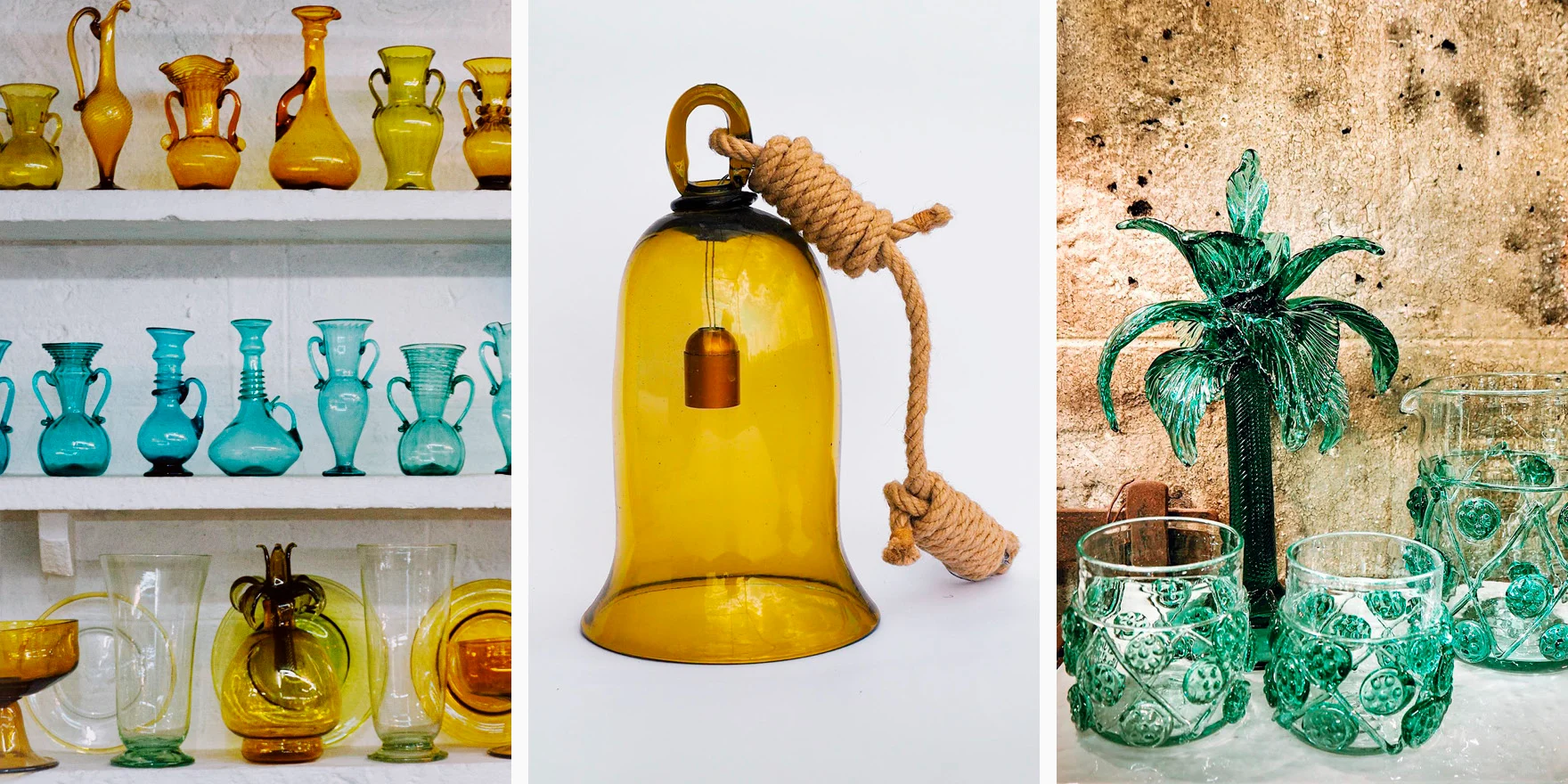
Family-owned Gordiola has been known for the saturated teals, blues and striated surfaces of its hand blown glass objects since 1719. Founded to serve the decorating needs of a newly-arrived upper-class elite on Mallorca, chandeliers, ornate goblets, swirled and colorful pitchers and vases, were inspired by Murano Glass, but in style’s that’s a bit more coarse and rustic, reflective of the island itself. While several local glass manufacturers have closed in recent decades, Gordiola has managed to survive, in no small part thanks to important collaborations with contemporary designers that help bring the company into the 21st century. To stock up, visit the company’s shop in Palma, established in 1879, or the larger one in southeastern Algaida, where there’s also a small and quirky museum that dives into the importance of glassblowing and its influence on cultural life over past centuries.