Part of the joy of navigating Lisbon’s bustling, cobble-stone streets is that you will always hear a cacophony of voices. This is partially because my hometown, Portugal’s ancient and coastal capital, is booming. But there is no denying that it has also changed drastically over the last half decade. Tourists now flood its squares. Expats from all over the world continue to make it their new home (or at least second one). Foreign money has brought plenty of new bars and restaurants to the city’s historical center — and plenty of astronomical rent prices, too. This means that traditional tascas, humble neighborhood eateries, are now brunch spots. Menus that once listed sandes mista, a classic ham and cheese sandwich made with papo-seco bread, now serve avocado toast. It can sometimes feel like the ubiquity of oat-milk macchiatos, available at every “slow coffee” café, is fueling the city’s rapid change at Kafkaesque haste.
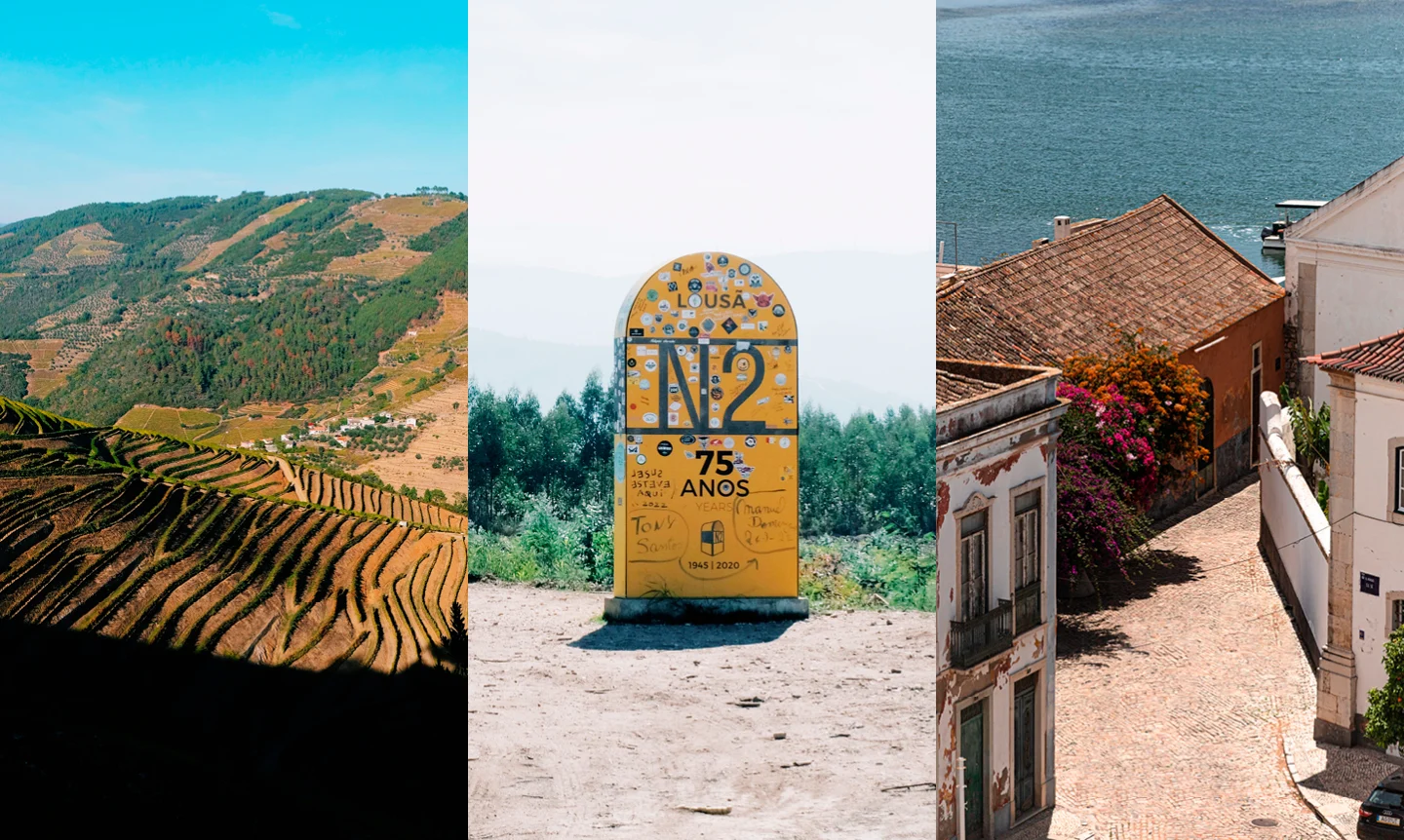
Luckily, there is a 460-mile escape route to the slower, pre-modern Portugal in the form of Estrada Nacional 2, the longest national road in the country. Splitting the coastlines, as well as major cities like Porto and Lisbon, in half, the road officially starts in Chaves, by the Spanish border in the far north of the country, eventually winding all the way south to Faro in the Algarve. Swaying through the narrow, two-way lanes on my humble Renault hatchback recently, I traversed through the country’s interior valleys, steep slopes, farmhouse vineyards in some the oldest wine regions in Europe, and medieval mountain villages haunted by the howls of wolves at night.
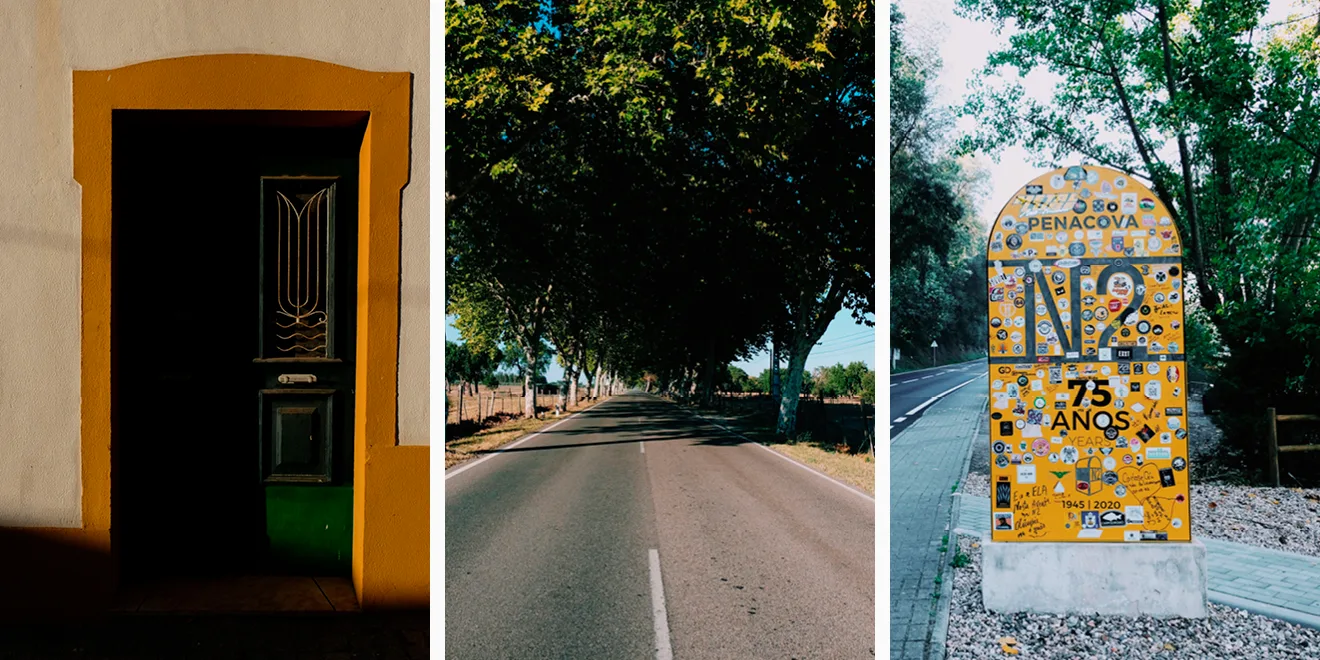
On the surface, the trip was an opportunity to see the real Portugal, or at least the pastoral countryside beyond Lisbon. Pinging between the country’s edges, it turned out, was really a trip back in time to the Old World. Village after village, Portugal’s past lives were on roadside display. The occasional pothole big enough to fit a small family? A gesture, perhaps, to the highway's former existence as a “Royal Road,” a throughway maintained by the Portuguese Crown back when the country was one of the richest empires in the world. Tiny towns, preserved and time-worn like fossils, felt like monuments to the extreme poverty the country experienced throughout the first half of the 20th century under the control of the dictator António de Oliveira Salazar.
The highway’s name roughly translates to “National Road 2” in English, but really foreigners should think of this meandering highway as Portugal's answer to Route 66. And like America’s most celebrated highway, the EN 2, as it’s sometimes abbreviated by locals (or N2 for even shorter), was for decades one of the country’s main arteries for middle-class road trippers and truck drivers shipping goods across the land. (And maybe the occasional lost foreigner from France or Spain.) Today, however, things have changed — a lot. Once the busiest roads in the country, it has now lost much of its status as a national treasure. When Portugal became part of the European Union in 1985, the country, suddenly flush with E.U. funds, built a vast and intertwining highway network that now has more than 1,900 miles of roadways. This, along with the consistent migration of people from Portugal’s rural interior to the coastal cities, means the EN 2 is now a road that traffics in nostalgia more than cars.
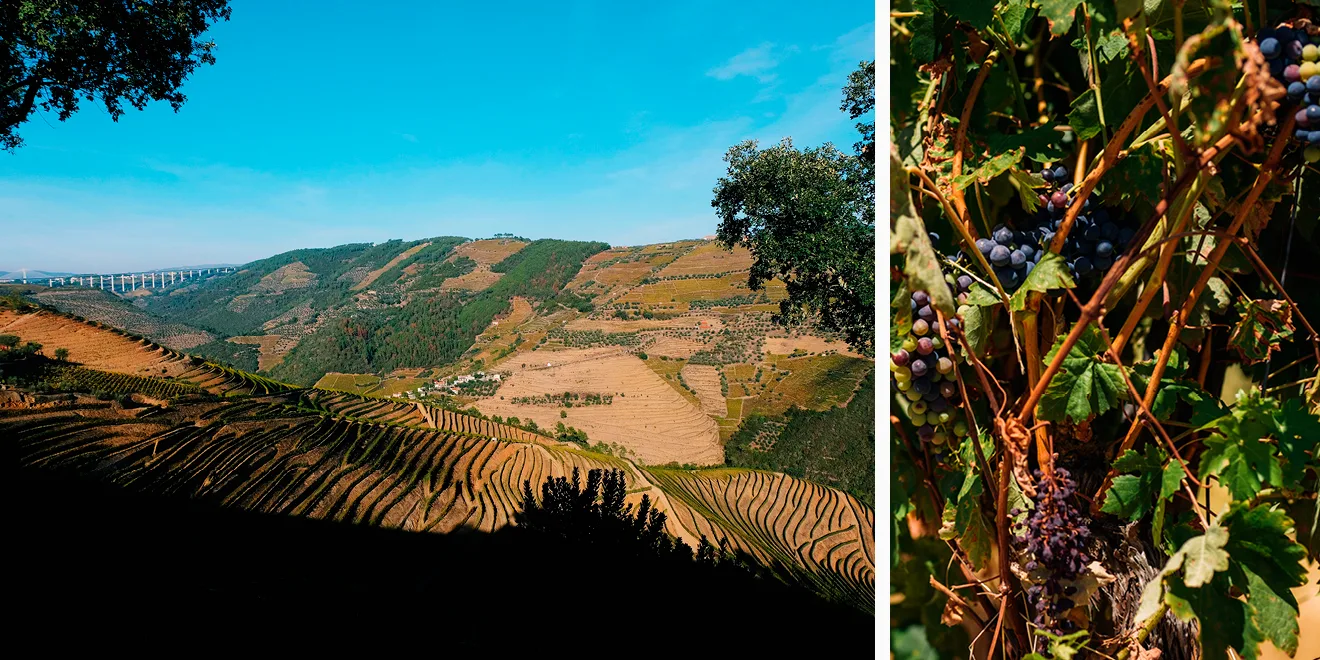
In fact, I saw few other faces during my recent road trip. “What a waste,” I said out loud to myself, as I drove away from Vila Real, a sleepy and peaceful city where the football field is perched next to church, to kick off my trip. One of my first big wow moments arrived just before Peso da Régua, right in the heart of the Douro Valley wine region. On the side of the road, a worn-out metal traffic sign read, “Miradouro de Santa Bárbara,” which roughly translates to “Santa Barbara Viewpoint.” The hobbyist photojournalist in me couldn’t resist a scenic landscape photo-op, and the tiny village of Cumieira, with its breathtaking 360-degree views of the mountains, lured me in. It was as though the edge of the rotund landscape appeared to be tattooed with hundreds of terrace-shape lines. Indeed, those vine labyrinthes are what makes this area the oldest demarcated wine region in the world. (It is said that Port wine has been made here for over 2,000 years.) Unlike the sweeping vistas, however, the town’s architecture felt simple, basic even. The buildings, no bigger than two stories, had terracotta-colored shingled roofs and white or gray exteriors. They were like real-life models of a child’s drawing of a house — just a square or rectangle with a triangle on top. This type of simple architecture hinted at an eye-opening truth: Modernity had skipped here, for better or for worse.
This was the first time I realized something that, later, became more and more clear the further I drove: The En 2 offers a view of a Portugal that is quickly disappearing. It was common to see elderly people spending their entire day seated on a chair outside their house and watching the cars zoom by. It’s a slice of vanishing countryside life, where the main restaurant or coffee shop operates a de facto town square for people to come together to watch the evening news on the television. Most of the villagers were well into their 60s. So, as a Lisbon city boy, this sense of belonging to a community, where everyone knows and greets everyone else, was something I only heard about from my grandparents. The concept of Portuguese pride felt both distant and familiar to me, but the journey ahead seemed to instill a sense of discovery for a national identity. It was a taste of what it would have been like for my grandfather, Augusto, in the early 1970s, as he drove on this very same road and passed through these very same places in his cherished, bright-red Italian sports car.
Cutting through the mountainous interior, the EN 2’s S-shaped roads and endless turns twisted into knots that defied logic. You know when the GPS tells you that you still have 9 miles until you reach your destination, but, somehow it still takes 45 minutes? It was like the road existed in a space-time vacuum, a big asphalt snake wiggling through valleys and villages in search of prey, or at least some signs of life. Heading south, I finally reached Lamego, a town tucked between vineyards and olive trees. Regardless if one is a believer or not, a holy spirit in the air was palpable there. Some of the road’s shoulders were dotted with little altars made by locals, who pray that the Virgin Mary will watch over the drivers, motorbikes and bicyclists whizzing by. The north of Portugal has always been deeply religious, and every little shrine likes to remind you of just that. With their fresh candles and flowers, I suspect they’re tended to daily, perhaps in honor of those neighbors who became casualties of the EN 2’s many sharp turns.
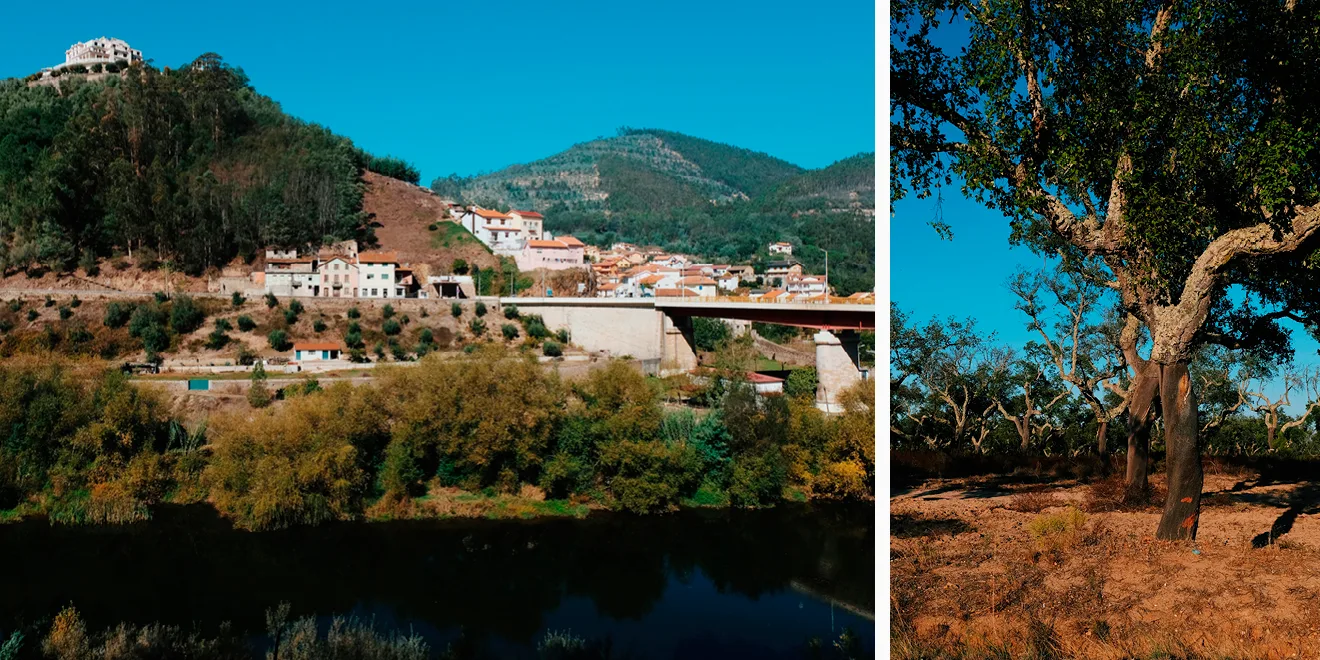
Further south, I approached the softer plains surrounding the city of Viseu. The sun was making its descent into the horizon, which caused the surrounding pine and eucalyptus trees to glow in an orange hue. I soon reached a central strip of mainland Portugal, Beira Interior, which is technically divided in two, Beira Alta and Beira Baixa. One need only to count the number of factories and industrial complexes here to understand that this area is wealthier. Seeing that there are businesses at all that still thrive along the desolate EN 2 was a welcome relief, if not slightly confusing. The textile manufacturers and makeshift wooden huts selling fruits and vegetables appeared like a mirage. And not just because almost all of the local signs that read “Cebolas” (onions) or “Cerejas”(cherries) had at least one or two typos.