Every time an independent bookstore shutters, an angel loses its wings — or at least a fluorescent-lit drugstore chain takes over its lease. In a time when urban neighborhoods are increasingly in the throes of hostile corporate takeovers, old world pharmacies offer an over-the-counter glimpse of a city’s communal life. Some storied shops are the favorite beauty haunts of actresses, politicians and popes. Others function more like modernist laboratories, where visitors can learn about the science behind pain-relievers in powdered form. No matter where you are in the world, a quick and easy way to get to know a place is to take note of what is stocked on the wobbly glass shelves of its local apothecaries. Are the paper-wrapped craft soaps made nearby or are they carefully sourced from the world’s best artisans? Are under-eye creams homeopathic or high-tech? Pharmacies make great pit stops for authentic (and practical) souvenirs, too. A wood-carved kohl eyeliner vessel found in the fragrant wellness souks of Marrakech or a pine-scented foot cream picked up from a German apothecary can seem surprisingly exotic back home. Above all else, surveying the vast international pharmacopeia of tonics, elixirs, unguents, salves and healing oils tells you a lot about how the world’s great cities take care of their own.
Officina Profumo-Farmaceutica di Santa Maria Novella, Italy
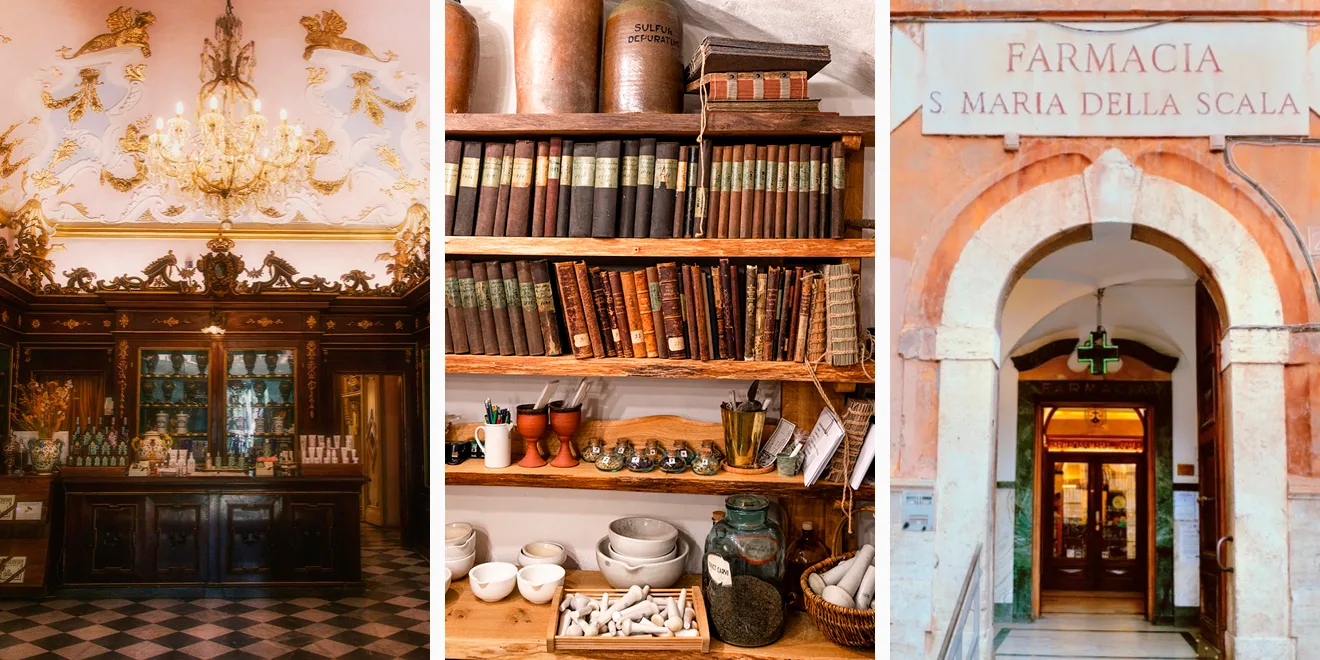
Established in 1222, the original Santa Maria Novella pharmacy and perfumery in Florence is a monument to scents. Lotions, fragrances and other exquisite sundries are spread out through a series of ornate rooms that once served as chapels or sacristies. Against a dramatic backdrop of vaulted ceilings and frescoes on the wall, glass-fronted cabinets display vintage rose water tonics (a centuries-old salve against pestilence), pomegranate-scented perfumes (a favorite of French actress Eva Green) and antique books on the art of alchemy.
The Raeapteek (Town Hall Pharmacy), Estonia
Like many of the medieval buildings in Tallin’s old town, The Raeapteek, an atmospheric, 15th-century pharmacy and small museum in the city’s center, appears to be frozen in time. A long antique glass counter displays mouth-warming tonics made from spiced claret, black currant stomach tinctures, Swedish bitters and other concoctions that the shop has been peddling for centuries. The apothecary’s famous Raeapteek marzipan is billed as a cure for ye olde broken heart.
Antica Farmacia Santa Maria della Scala, Italy
Discalced Carmelites, or "shoeless" monks, started this Roman apothecary in the 16th century after creating elixirs from their own herb gardens in back of their monastery and church that stretched all the way to the Gianicolo. Their potions, such as acqua anti-pestilenziale, or anti-plague water, were so divine that the shop soon became known as the “Pharmacy of Popes.” Today, its fresco-ceilinged, marble-floored rooms house a small museum upstairs and a drugstore staffed by pharmacists still knowledgeable in the healing properties of remedies made from the ancient melting pot of Baroque Rome.
C.O. Bigelow, United States
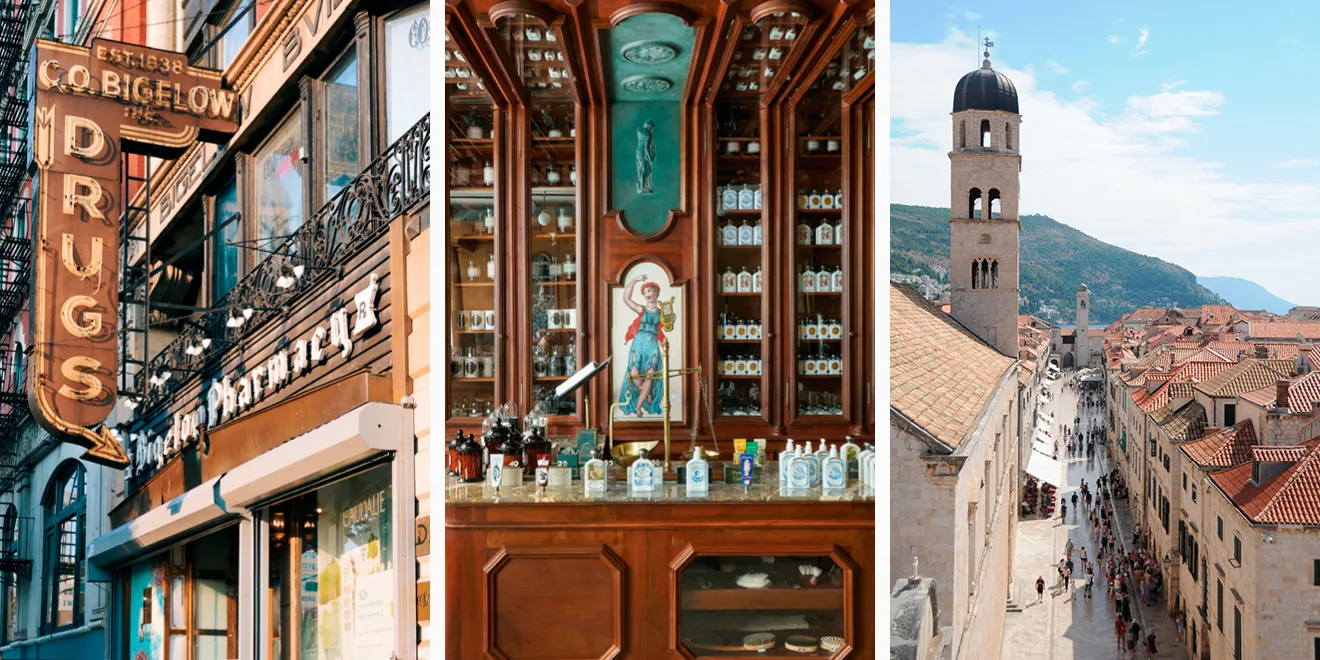
Since 1939, C.O. Bigelow in Manhattan’s Greenwich Village has been a bohemian beauty institution that has counted Mark Twain, Eleanor Roosevelt, members of the New York Dolls and musicians recording at the nearby (and now-closed) Electric Lady Studios as patrons. Today, Bigelow loyalists know that once you set foot in the shop’s tiled-floor interior, you must give in to the spectacle of packed oak shelves overflowing with highbrow pharmaceutical finds, such as Marvis toothpaste, Fornasetti candles and Augustinus Bader’s creams. But the cult favorites are undoubtedly Bigelow’s own house formulations that are whipped up from centuries-old recipes from the stores' archives.
Officine Universelle Buly à Paris, France
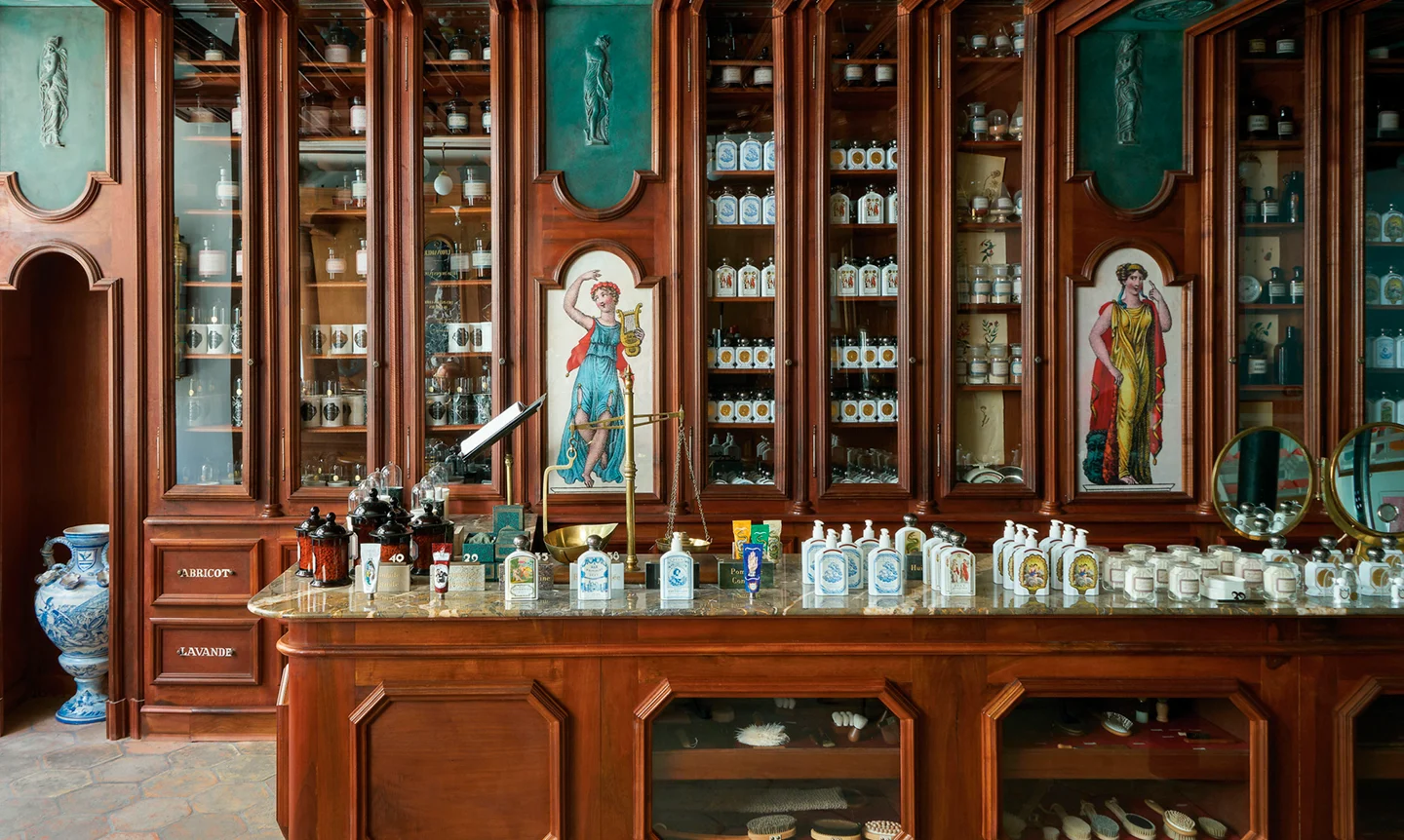
Throughout the 1800s, L’Officine Universelle Buly was a tonic trendsetter that was decorated with awards for its vinegar-based remedies by scientists at world expos in 1867 and 1878 and cherished by Parisian high-society. Today, the three Parisian outposts for L’Officine Universelle Buly share the founder’s old-world aesthetic (walnut cabinetry, marble countertops, antique fixtures) but with a modern sense of luxury thanks to its current owner, the French entrepreneur (and branding mad scientist) Ramdane Touhami. The 2,000-square-foot laboratory in the Marais district, for example, sells the brand’s aromatic elixirs, powders, soaps and handcrafted boxwood hair combs from Niigata Province in Northern Japan. Each shop offers customized monogrammed packaging done by an in-house calligrapher, so lip balm containers or packages filled with floral powders can be embossed with your initials.
Franciscan Pharmacy and Monastery, Croatia
Franciscan monks initially opened this Dubrovnik pharmacy in their monastery complex in the early 1300s to treat their sick brothers. Before long, the ill and wounded flocked to the Franciscans for their healing remedies prepared in mortars and pestles, stored in porcelain vessels and recorded in pharmaceutical books — all of which remains on display today. Wander the cloisters, monastery and plant-filled courtyard before swinging by the pharmacy to pick up its array of skin cream products made from local wild herbs. Franjevački Samostan Male braće, Placa 2, 20000 Dubrovnik, +385 20 321 410
Claus Porto, Portugal
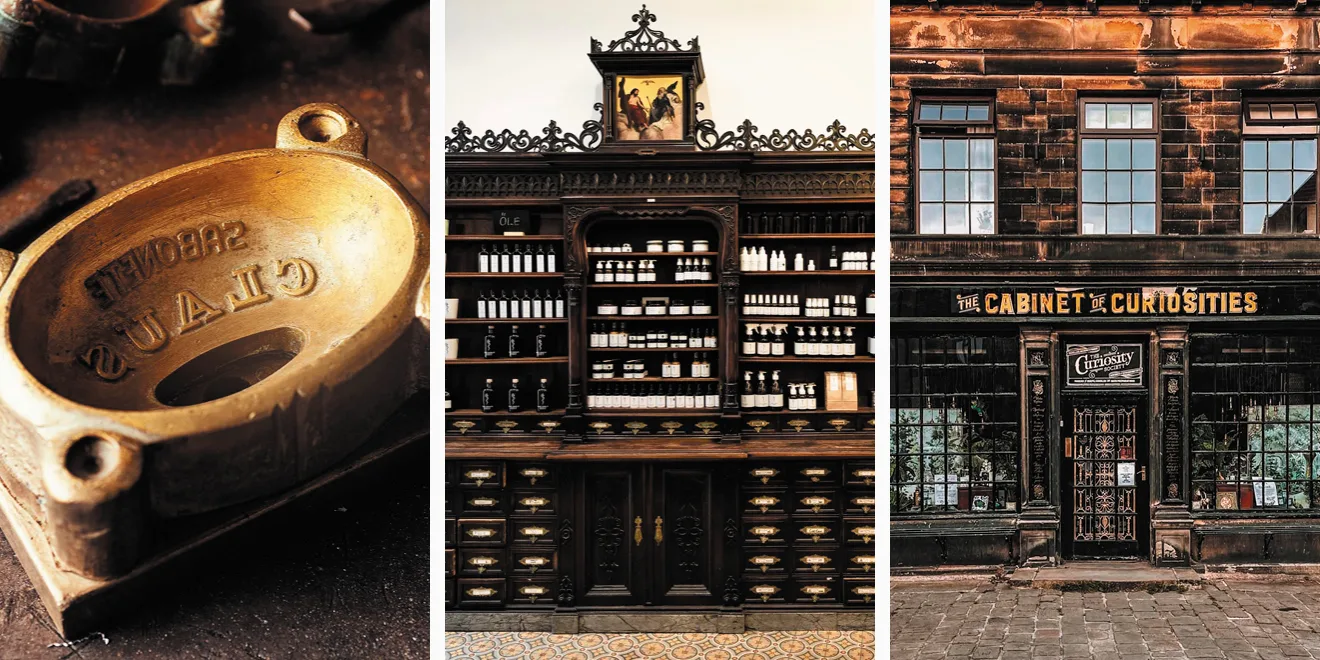
Claus Porto brand of soaps, perfumes and shaving creams was launched in 1887 by a pair of German businessmen who fell in love with the country’s aromatic landscapes. The line’s signature packaging features patterns based on Portugal’s colorful azulejo tilework and is infused with scents such as eucalyptus, cedar and rose. Housed in a three-story townhouse, the flagship boutique in Porto offers a marble washbasin for customers to test out hand washes and a barber chair in front of a mirrored wall can be curtained off for a private shave.