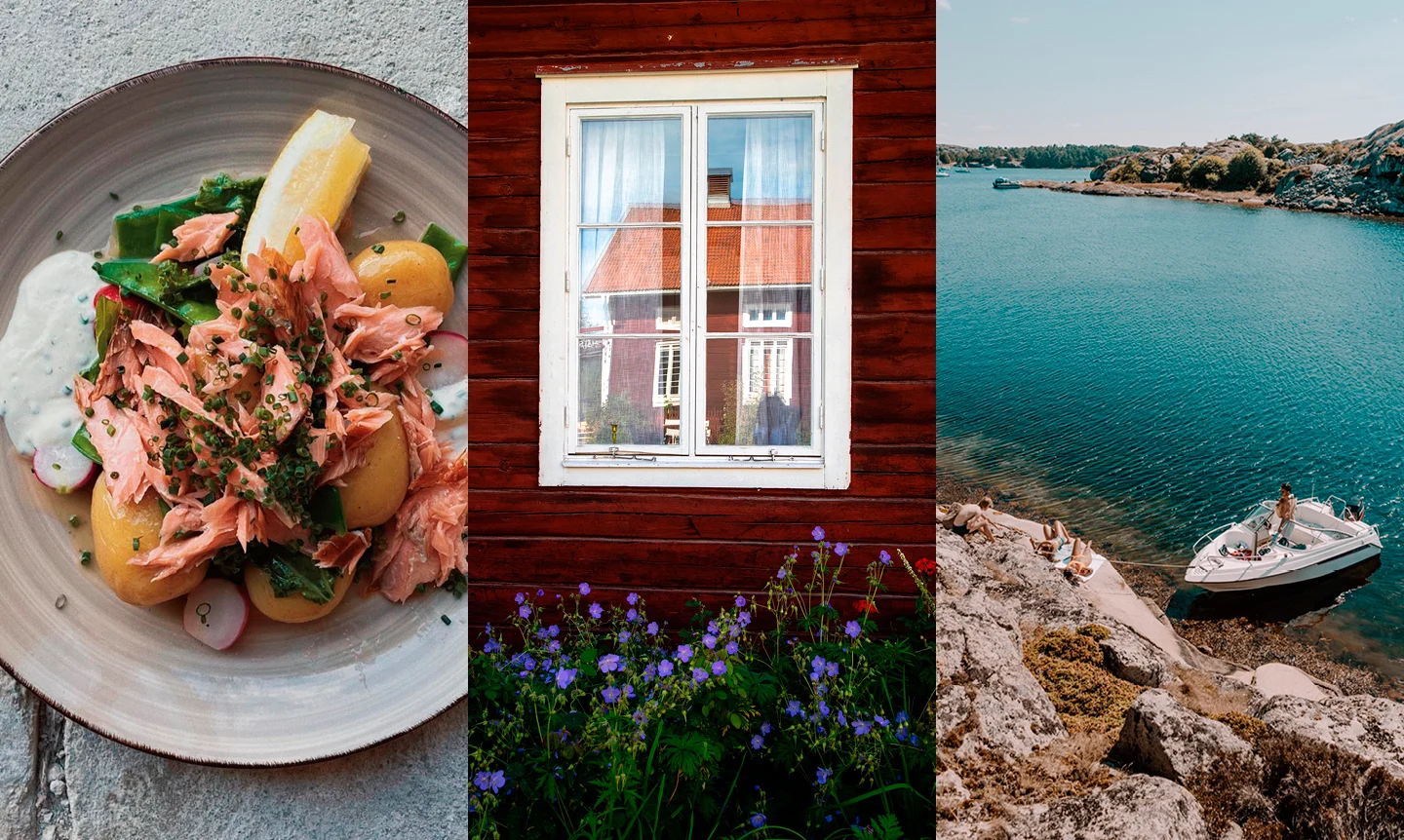
Scandinavia rarely comes to mind when imagining an island vacation with fine sand beaches and clear blue waters. But in-the-know Swedes realized long ago that Gotland, the largest island in the Baltic Sea, offers precisely that during the gloriously long, lazy days of summer.
A quick trip from mainland Sweden— about a forty-five minute flight from Stockholm— Gotland is easily reached by plane or ferry. Either way, everyone arrives in Visby, a beguiling medieval city ringed by ancient stone ramparts. Most visitors are content to stay within those walls, strolling along quaint cobblestone streets lined with pastel cottages, flowering bushes, and Viking-era ruins. But this enchanting island deserves a deeper dive.
From north to south, Gotland’s dusty country roads lead not only to sun-warmed stone farmhouses and meadows of grazing sheep, but also to bucolic garden cafes, curated vintage boutiques, magnificent limestone cliffs, and hidden beaches. Add to that a robust culinary scene, which alone is worth a detour from Stockholm. Summer in these northern reaches is fleeting, and some hotels and restaurants open only from late June to mid-August. Here’s how to make the most of that brief window.
Stay
Sibbjäns
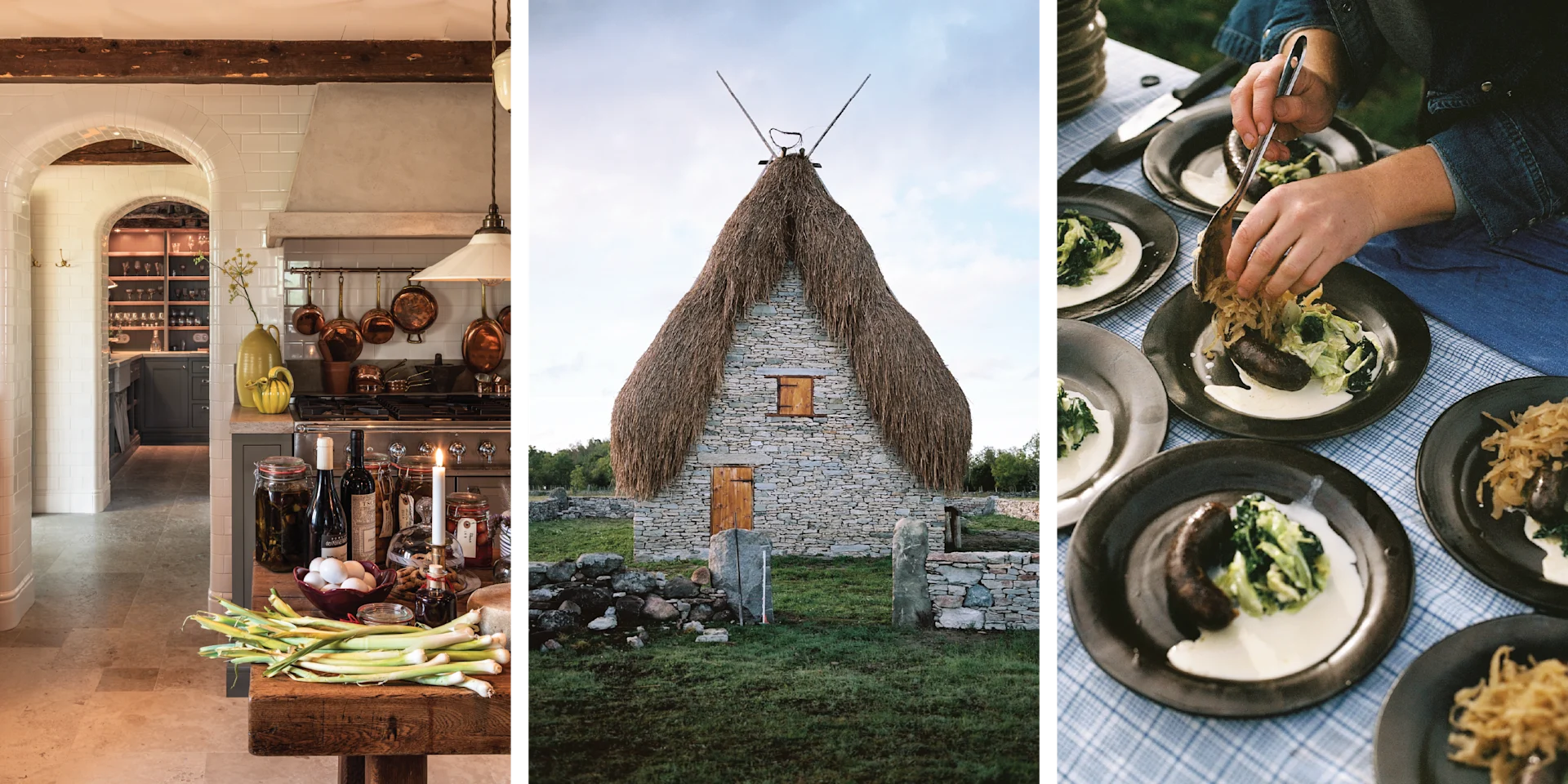
Sweden’s first boutique farmstay opened last year on Sudret, Gotland’s southernmost tip, where a group of friends transformed more than 100 acres of land into a sustainable, regenerative working farm complete with a hotel and restaurant. Horses and curly-haired sheep graze amid wildflowers, kittens nap in the greenhouse, and gardeners gather sun-ripened vegetables, berries, and herbs for every meal. Stone-paved paths wind between renovated 19th-century Gotlandic limestone buildings, where guests can slow down in the wood-fired sauna, the thatched-roof yoga barn, or beside the natural swimming pool dotted with water lilies.
Fabriken Furillen
On a windswept islet off the northeastern coast, a former limestone refinery is now the unlikely home of a distinctive boutique hotel, the brainchild of the Swedish photographer Johan Hellström. Amid a stark landscape of untamed grass and mountains of loose gravel, the Brutalist hotel features minimalist, gray-toned design and an airy restaurant serving casual lunches and seasonal, set-menu dinners. Surrounded by over 1,000 acres of untouched nature, the hotel also offers the more rustic lodging option of hermit huts— tiny, remote cabins with Hästens beds and wood-fired stoves, with no electricity or running water.
Eat
Rute Stenugnsbageri
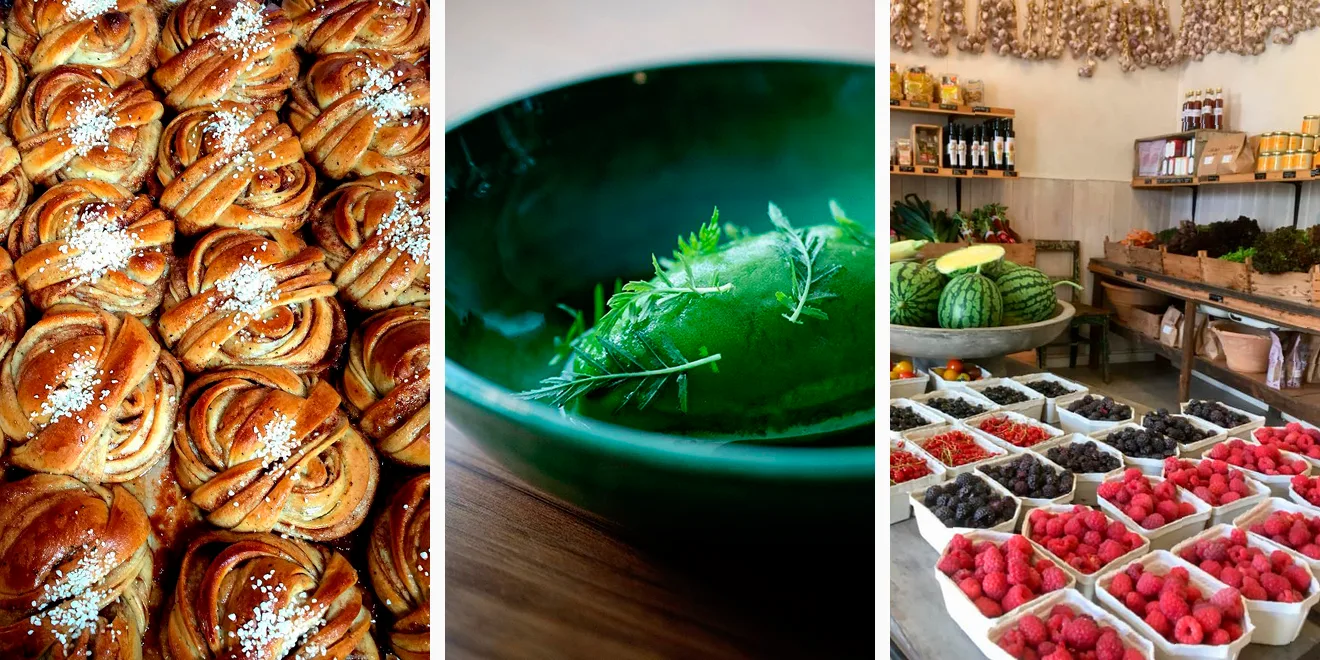
As with most of Gotland’s gems, this beloved bakery is in the middle of nowhere: on a dirt road surrounded by wildflower-blanketed fields. During the summer season, when it’s open, visitors queue for slices of almond cake and buttery cardamom buns for fika, the Swedish pastime of coffee and conversation. In the evenings, sourdough pizzas are thrown into the wood-fired oven, and families gather around picnic tables outside or in the glass-roofed greenhouse.
Lilla Bjers
A few miles south of Visby, this family-run farmstead grows organic, sustainable produce that is also served at an idyllic summertime restaurant, where tables are set in a greenhouse and the areas surrounding beneath fields of cherry trees. Daily lunch and dinner menus follow what has been harvested in the surrounding fields, such as fresh new potatoes, crisp stalks of asparagus, sun-ripened tomatoes and bread made with the farm’s emmer wheat—all of which can also be bought in the red barn next to the restaurant.
Krakas Krog
The reason to visit the tiny village of Kräklingbo is this polished country restaurant run by Ulrika Karlsson, ushering in its 20th summer. In the rustic dining room, a handful of tables sit in flickering candlelight atop worn, wood-plank floors. Nightly tasting menus spotlight Gotland’s natural bounty, from its black truffles and foraged herbs to pickled rowanberries and local lamb, and are thoughtfully paired with wines from small-scale and biodynamic producers.