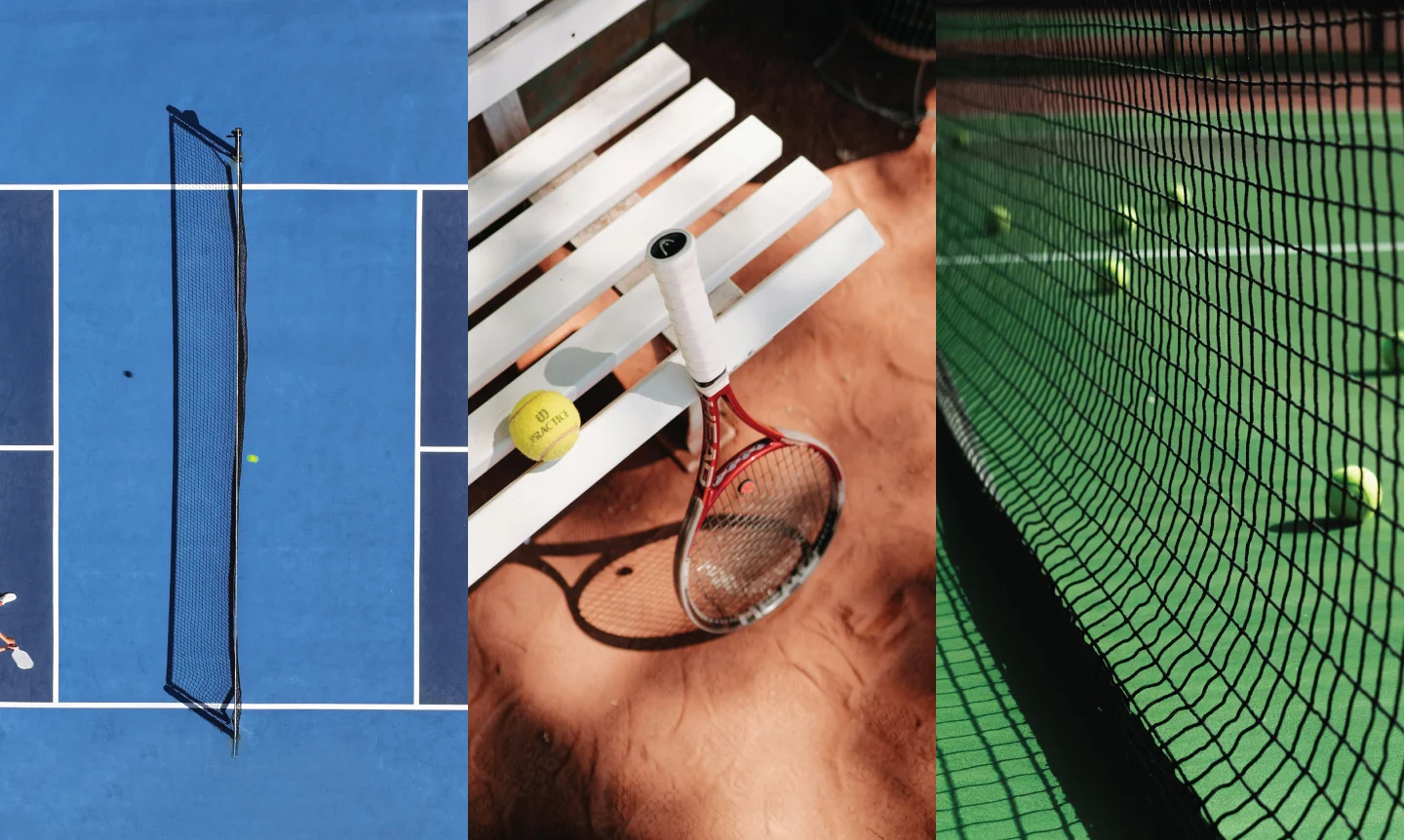
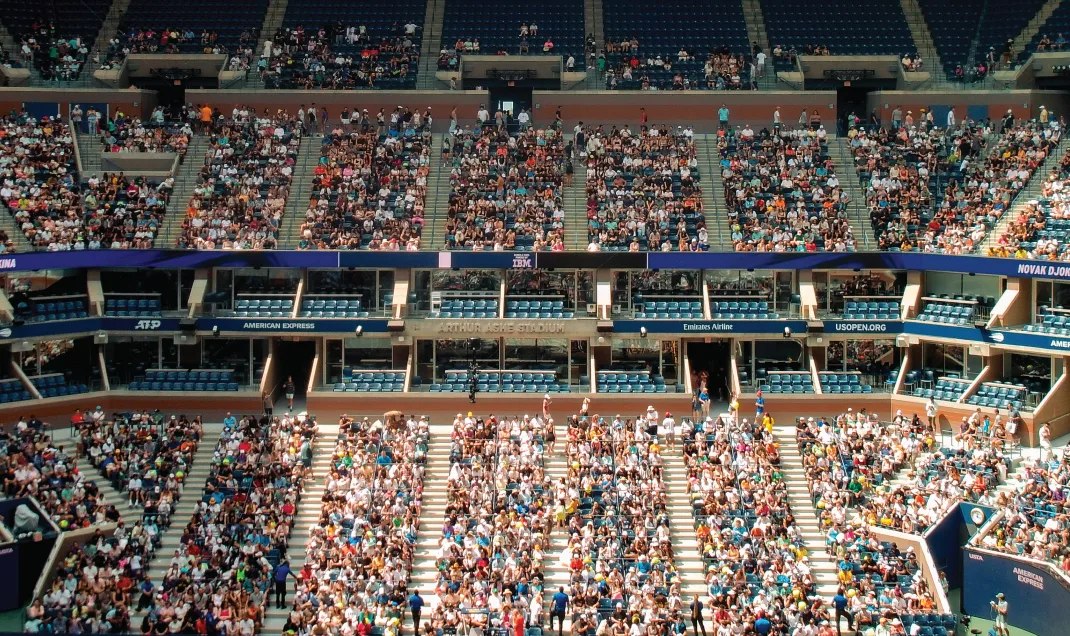
As the US Open rolls into New York at the end of August, tennis feels inescapable this year, spilling beyond the courts into cinema, fashion, and the broader cultural lexicon. Challengers brought a new, sensual allure to tennis, making people, as Pachelli puts it, “super horny for tennis.” The enthusiasm at this year’s US Open, with its crowd of both old-timers and new recruits, is a testament to this shift. “Tenniscore” is trending, with tennis bracelets, pleated skorts, heritage brands, and chunky sneakers, while the sport’s stars dominate the headlines—like Serena Williams making a splash sailing down the Seine at the 2024 Paris Olympics or Naomi Osaka’s bow-forward US Open attire.
Pachelli’s fascination with the sport began with summers spent as a ball boy for his parents and early sports journalism gigs and eventually evolved into a lifelong love affair with the game as a player and spectator. He never meant to write a tome of tennis, but there was a natural connection between the sport and his other “personal, immersive pursuit,” photography, so the idea for the book emerged. Pachelli bounced around to 33 countries for this project, reaching out to contacts in nearly every corner to ask one key question: “Is there an incredibly committed, vibrant community there? Even if it wasn’t necessarily the most aesthetic.”

THE TENNIS COURT invites readers to explore what the game means to them, whether as players, spectators, or casual observers. “Tennis is a funhouse mirror for the rest of the world” - not just a game, but a reflection of broader societal shifts.
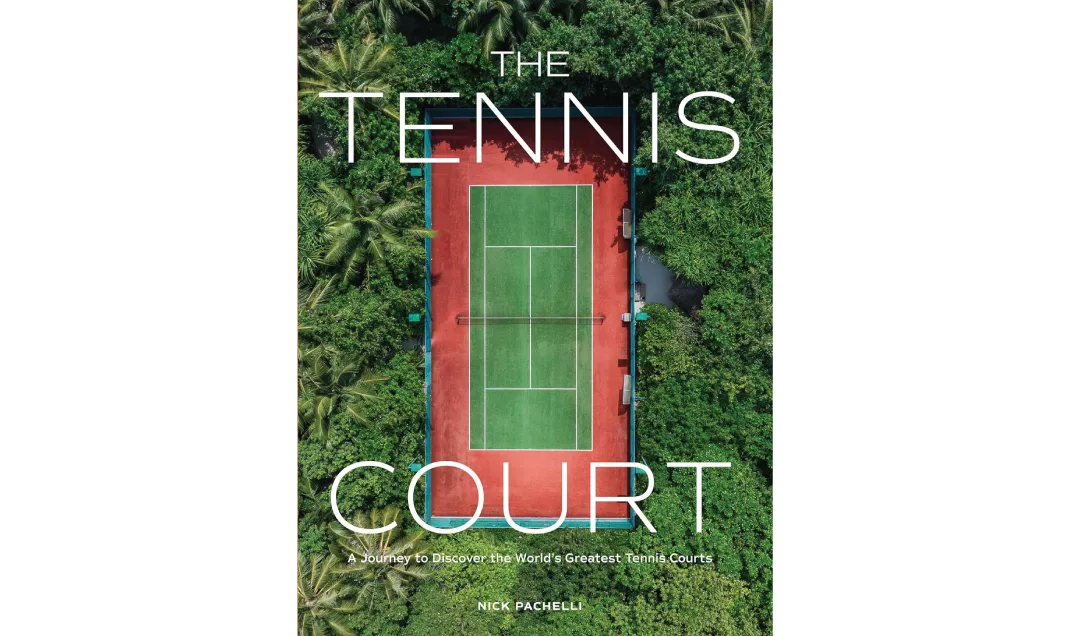
“Tennis is perfect because it’s the only sport we play where the canvas - the foundation - can change and vary so widely from place to place. It is an individual sport, so as we lead these often unreflective lives, tennis is a sport that offers introspection and growth as a manifestation of larger themes in their lives.” For Pachelli, the intersection of tennis and travel is a natural one, each enriching the other in unexpected ways. His book is more than a collection of courts—it’s an atlas of communities, inviting readers to engage with the world through the unifying lens of tennis. Pachelli's favorite tennis courts aren't the ones that serve as the foundations for major tournaments or in the most beautiful environments. Instead, they're storied courts built by or maintained by the people who return to play on them throughout their lives. PRIOR spoke with him about four lesser-known courts he recommends.
—
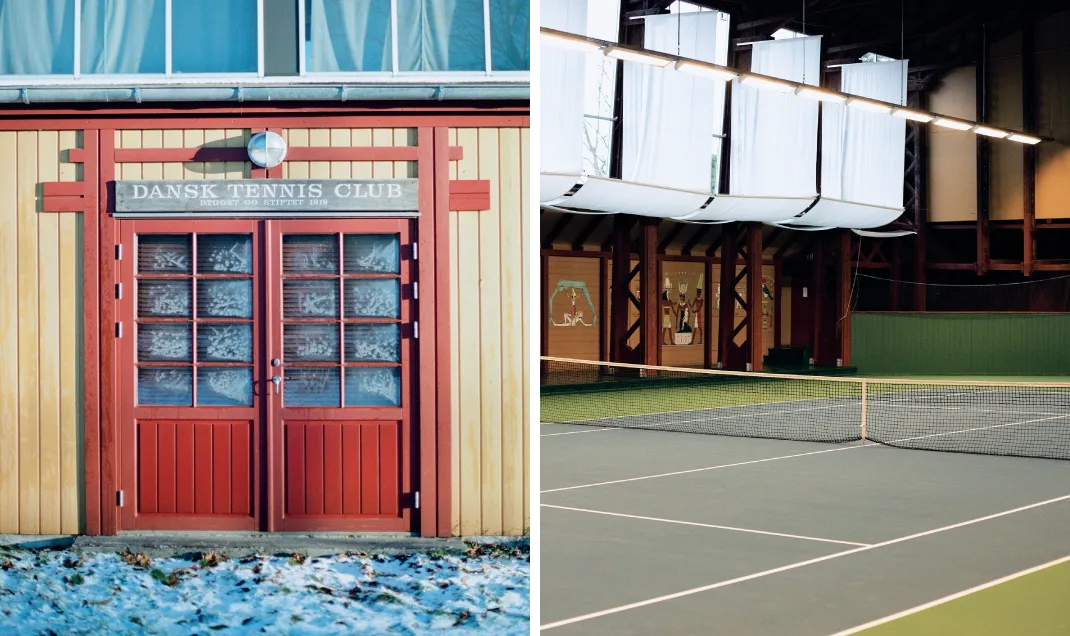
Dansk Tennis Club
Copenhagen, Denmark
This unique little court is adequately featured in the ‘Love’ chapter, focusing on courts that embody the spirit of places built or nurtured by individuals or communities. Established in the 1920s by a man ostracized from the Danish tennis community for being gay, he used his inheritance to finance and design his own tennis haven, drawing inspiration from beloved courts he visited around the globe.
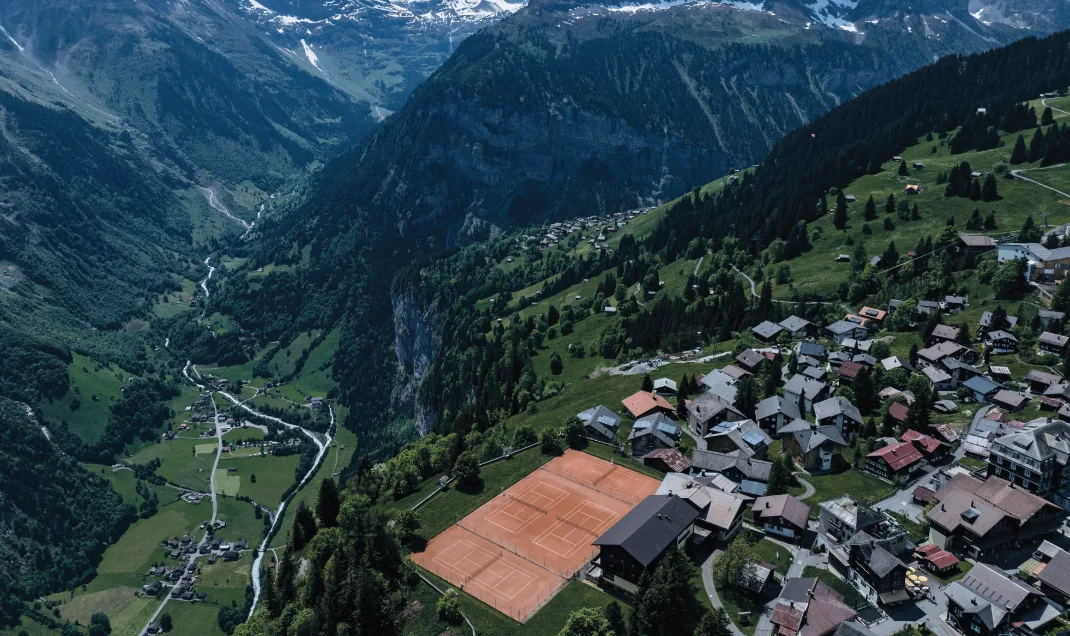
Sportchalet Mürren
Switzerland
“Playing tennis, which is a very lonely sport, in a very remote, inaccessible part of the world is an interesting experience”. This fairytale court sits on the edge of a cliff, reachable only by gondola or high-elevation train, opening briefly each year from late spring to early fall. The town draws players from across the globe to go on long hikes, swim in the mountain streams, and play tennis. There’s a quiet magic in Mürren, Nick tells me; the stark isolation of the courts, set against a backdrop of sweeping mountain views, encourages a shedding of defenses; People make lifelong tennis friends here.
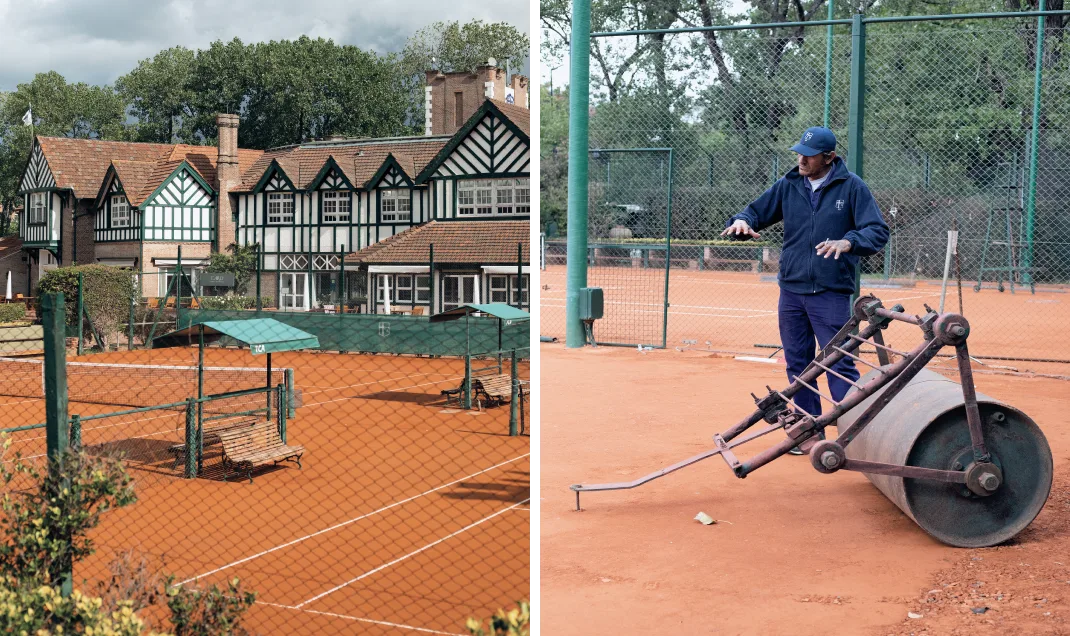
Tenis Club Argentino
Buenos Aires, Argentina
TC Argentino is a favorite because it's a historic epicenter of Argentine tennis, which has some of the richest tennis culture in South America. It’s a place where coaches and players often spend their entire careers, as much a part of the court’s fabric as the players themselves. “Coaches come here and never leave. Gus has been on the same court since the 80s when he was a teenager. He never left,” Pachelli shares.