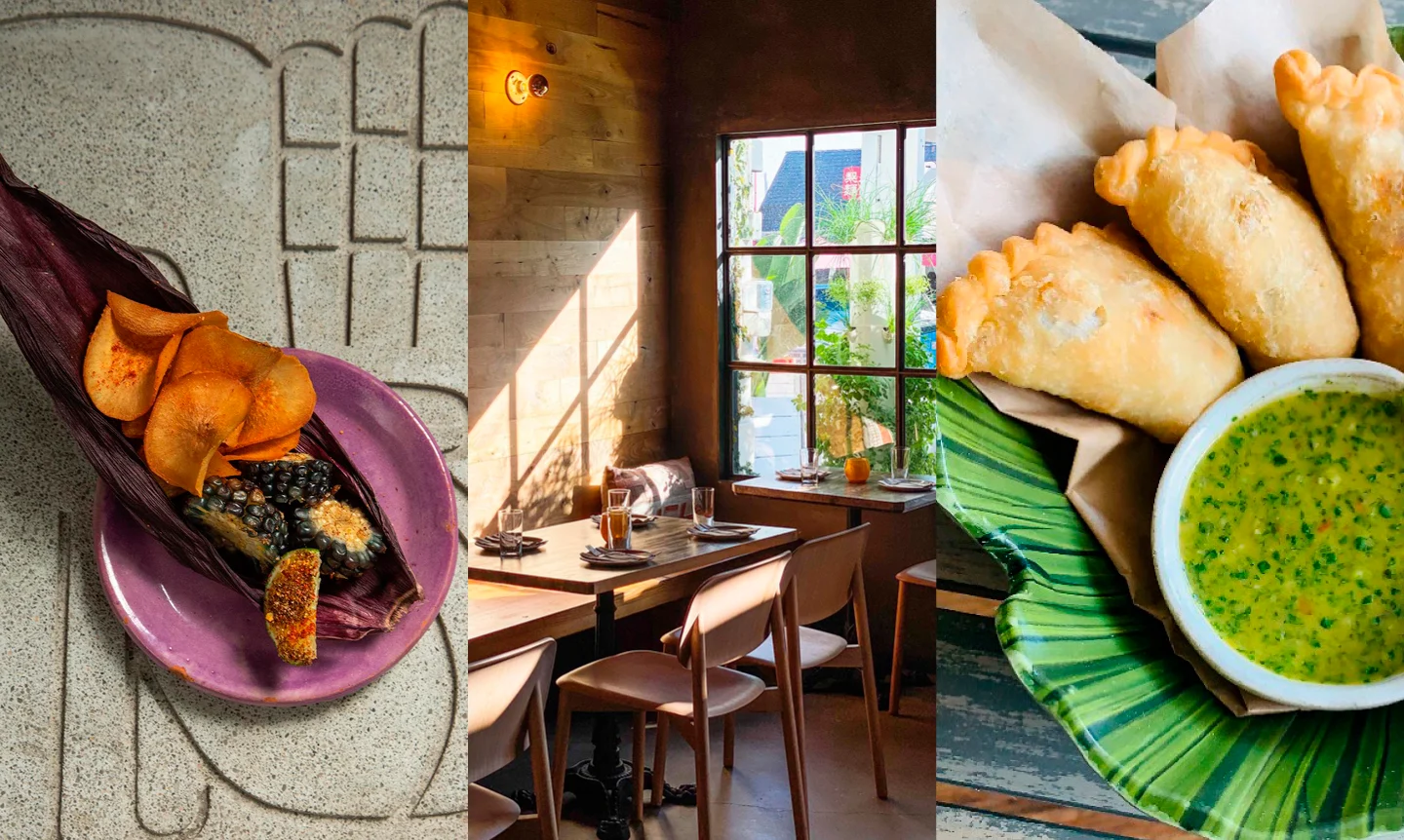
At Houston's Xin Chao, Christine Ha and Tony J. Nguyen season their buttermilk fried chicken with lemongrass and battered with pandan rice flakes. In Seattle, you can eat albacore puttanesca spiked with perilla at Tomo, or you can head down to San Francisco for Senor Ssig's California-style burritos stuffed with Filipino sisig. In Detroit, Warda Bouguettaya crafts manoushe morning bun -- laminated brioche with za'atar and akawi cheese -- and Tunisian tortas. In New York, Kwame Onuwachi is riffing on the bodega staple chopped cheese with bao buns, rib eye, and truffle. Over in Brooklyn, Calvin Eng has given cacio e pepe a Cantonese remake with fermented tofu.
These dishes pull from disparate cuisines, made by chefs sensitive to connections between farflung dishes, and they’re being served at some of the restaurants that are defining this moment in food. It's a style of cooking that’s borderless, which fuses together techniques, ingredients, and flavors from cultures, made by cooks with greater access and intimate understanding of cuisines than ever in the past.
Some have surely seen this coming, and an era of "new-fusion" has been declared. It's been bubbling up over the last decade and a half, starting a decade or so ago with restaurants like the now-closed Fung Tu. But it could be seen before then. The Korean taco, one of the biggest food crazes in the U.S. so far this century, fits neatly into this paradigm, but does anyone call it fusion? The Korean taco was natural. It only could've happened in L.A. Likewise for the Viet-Cajun crawfish boil, a product of Vietnamese immigration to the Gulf Coast including by refugees from the Vietnam War. Same for the aforementioned chopped cheese, a deli sandwich made with Yemeni immigrants. Perhaps the Korean taco should've been seen for what it clearly was: a harbinger of a coming culinary revolution.
Only a few years ago, it seems, faithfulness to regional identity was prized above all. Strict interpretations of dishes from thousands of miles away were prized. That's still much-desired — just not at the cost of other cooks making food faithful to their identity. What was once a more novel expression of culinary identity has proliferated around the country, and writers and chefs alike have tried to come up with names. (Most recently, Jaya Saxena in Eater referred to it as "chaos cooking.") Many others – myself included — have called it "fusion" or "the new fusion," a reference to the '90s culinary style of mixing Asian ingredients into European dishes or cooking, say, Punjabi food with French techniques. This is not a word everyone wants back. On the website of Masala y Maiz, a Mexico City restaurant, the owners explicitly state so, writing "this is not fusion."
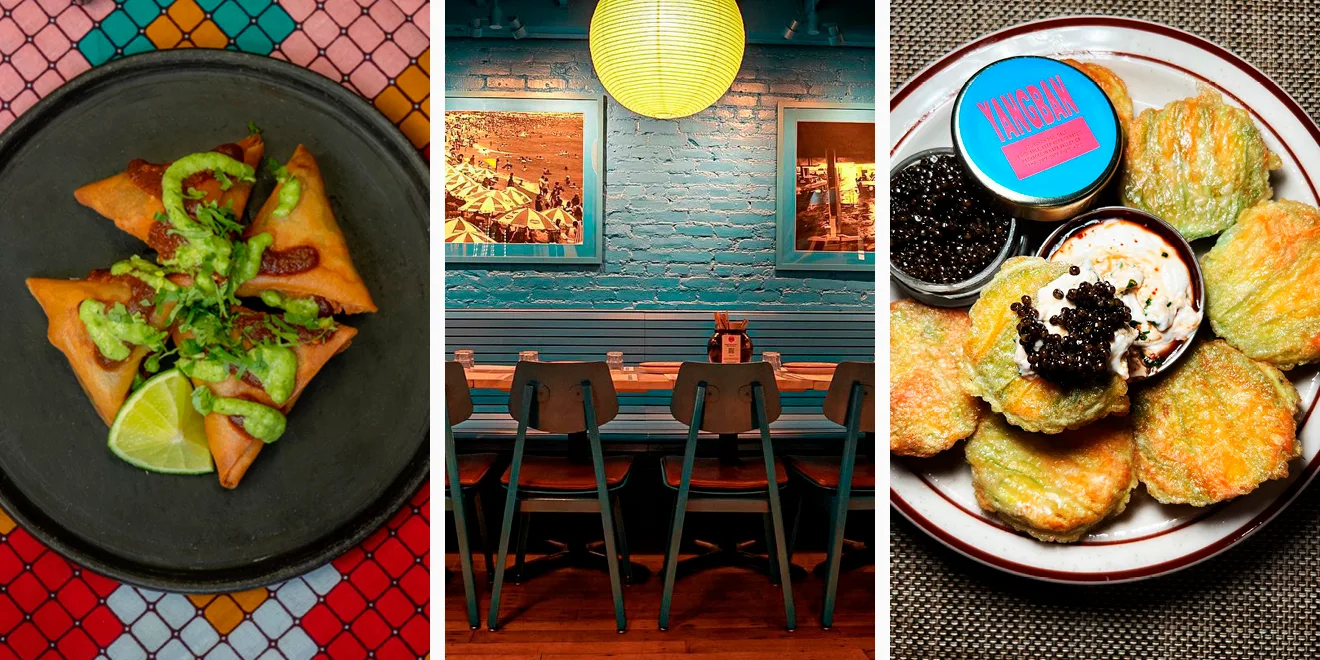
"I think fusion is kind of like an outdated term. Not that there's even anything wrong with the term, but I think it got a negative connotation. Just because I think it was just a word where you just call it anything that you didn't really understand what it was, or it wasn't very clearly something, and then it must be Asian," says Katianna Hong, a co-owner of Los Angeles' popular Yangban Society. For chefs, she goes, the term can denote a style of cooking that's "sloppy" or "unfocused." She and her partner John prefer to describe the food as Korean-American, if that, and she's quick to point out the indefinable variety of experiences this label encompasses. (She, as an adoptee who grew up in New York, has a different relationship to food than John.) "People are like, oh, so it’s Korean American fusion. Yeah, I guess so. Whatever. I don't really care what they call it."
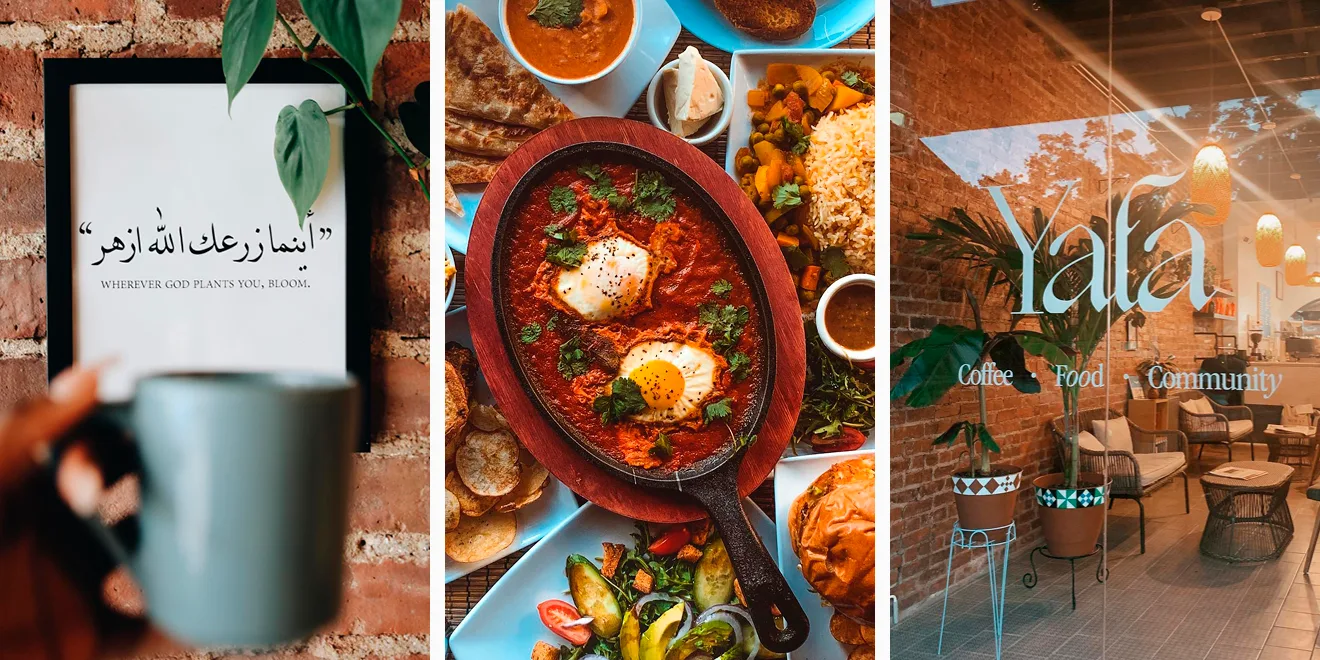
As it described cooking in the '90s, fusion developed into a forced interplay between disparate cuisines. Throw a little chile in the bouillabaisse, call it a day. The melding wasn't always organic; as time went on, dishes were not so much blended as smashed together. It could easily devolve into gimmickry, and still does. Think chefs sprinkling Everything Bagel seasoning on something to communicate that it's New Yahk. Bacon, egg, and cheese became another cliche in the five boroughs, but it speaks to people's lived experiences. "That's kind of where it all started. It was just something that we had our mom to make one Ramadan. Just for fun, just because we were curious. You know, we enjoyed bacon, egg, and cheese all the time," says Hakim Sulaimanin of Sunset Park, Brooklyn's Yafa Cafe. The brothers grew up in Brooklyn, the children of Yemeni immigrants, eating sandwiches at the deli their father still runs.
At Yafa, they serve those sambosas and other dishes like poutine made with haneeth, a roasted lamb preparation that is one of Yemen's most loved dishes, alongside coffee beans imported straight from Yemen. (The country has one of the world's oldest coffee cultures.) It's a natural response to places people occupy, existing between cultures, and in-so-far as it’s fusion this is just what is always happening in culture and cuisine. Things mixing together, people realizing opportunities for tastiness, new foods created. Don’t forget that ciabatta – a classic Italian bread! – was first baked in the early 80s.
In the United States, this explosion of "new fusion," or hyphenated-American cuisine, or modern (Insert cuisine) cooking, or whatever else you want to call it, is the product of demographic changes. You can trace a linear path from the Immigration and Nationality Act of 1965, which ended the old, racist quota system, to the explosion of culinary diversity around the country to what is now happening in kitchens by often second and third-generation cooks. Two or three decades ago, the biggest stories in American cooking were the proliferation of market-driven, locavore restaurants and the spread of regional cuisines, throughout immigrant communities, where you could eat regional foods never before seen in this country were established. It's hard to imagine a place like Bonnie's existing two or three decades ago.