The Daintree, located in far north Queensland— further north than the region’s tourist hotspots— is the world’s oldest living rainforest. Travelers flock to the region primarily because it serves as an entry point to the Great Barrier Reef; with an international airport, the city of Cairns has become known as a gateway to the natural wonder. In the late 80s and 90s, however, the area became, at one end, a slightly gauche destination for blustering Australian media tycoons, and package tours on glass-bottomed party boats at the other. Silky Oaks Lodge was always a bastion of dignity, but over the years it became a more rustic semi-eco lodge and less a tranquil luxury one. What hadn’t changed, however, is its setting in the heart of one of the planet’s great pockets of wild beauty. For whatever reason, the Daintree is a place that remains oddly underrated on today’s travel map, and despite the environmental changes of its neighboring wonder, the Great Barrier Reef, the rainforest remains lush and protected.
But it wasn’t until the beginning of 2022, when the property unveiled a $20 million renovation by Australia’s premier hoteliers, James and Hayley Baillie of the Baillie Lodges— they’re currently rebuilding their seminal Southern Ocean Lodge on Kangaroo, which was forced to close after damage from the 2019-2020 bush fires— that the hotel started gaining global traction among travelers looking for a luxury experience. It’s now the best property of its kind in the Australian rainforest, and a gateway for those looking to experience one of the oldest, wildest regions of the always awe-inspiring continent.
The Check-In
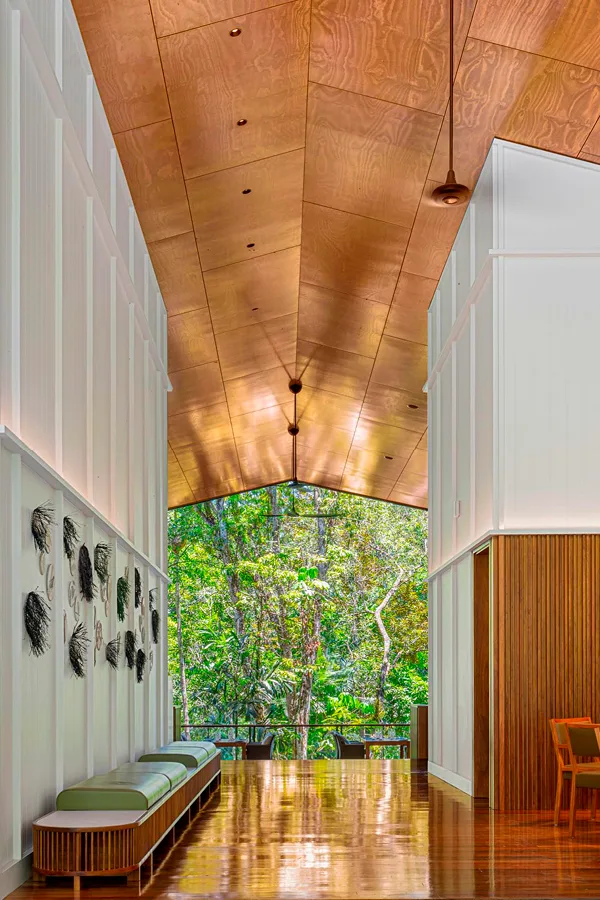
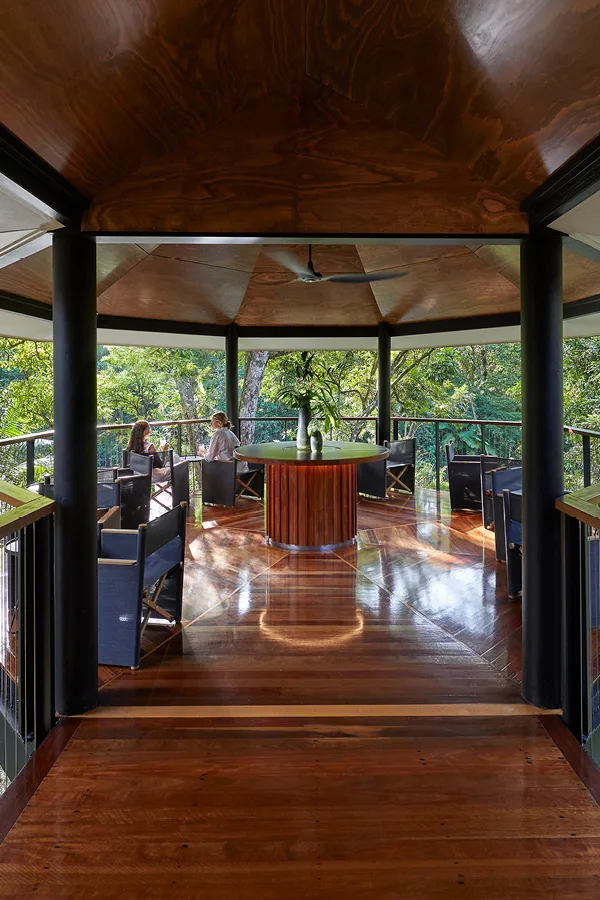
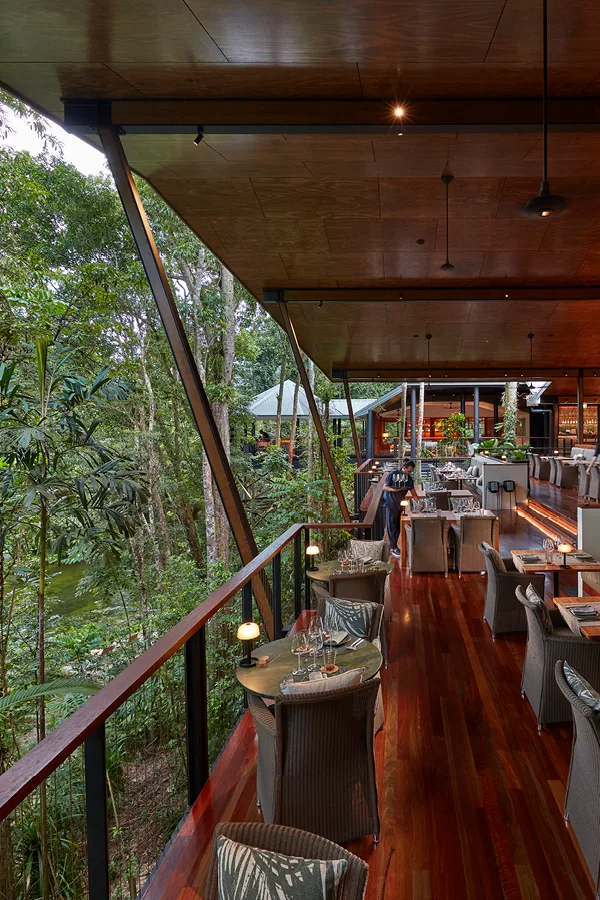
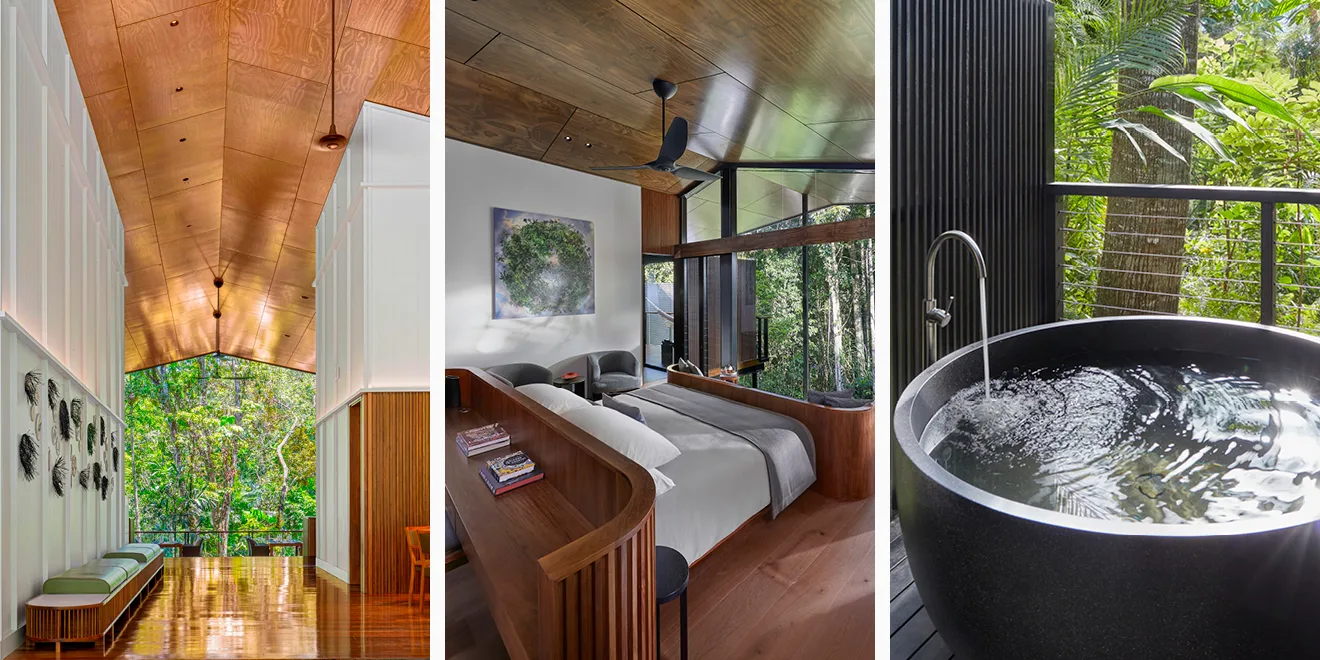
Silky Oaks floats among the trees; an open lobby with a single desk for check-in greets visitors upon arrival, with a cantilevered wooden roof hovering over a wide forest wall that overlooks the Mossman River. The architecture is typical for Queensland: erected on stilts, open and airy with wrap-around verandas, and polished wood floors. As is the Baillie way, the staff are warm, professional, and efficient, though not cloyingly obsequious. Most Australian properties struggle with an international-caliber of service, but Silky Oaks embraces a friendly and relaxed culture in which, even if you’re only here for a few days, by the end of your stay, you’ll know all the staff names. As is typical of Australian lodges, the communal areas are filled with various guests exchanging stories about their adventures with the team members, who are as courteous as they are cheeky, never sparing an odd joke or a warm wink.
The Neighborhood
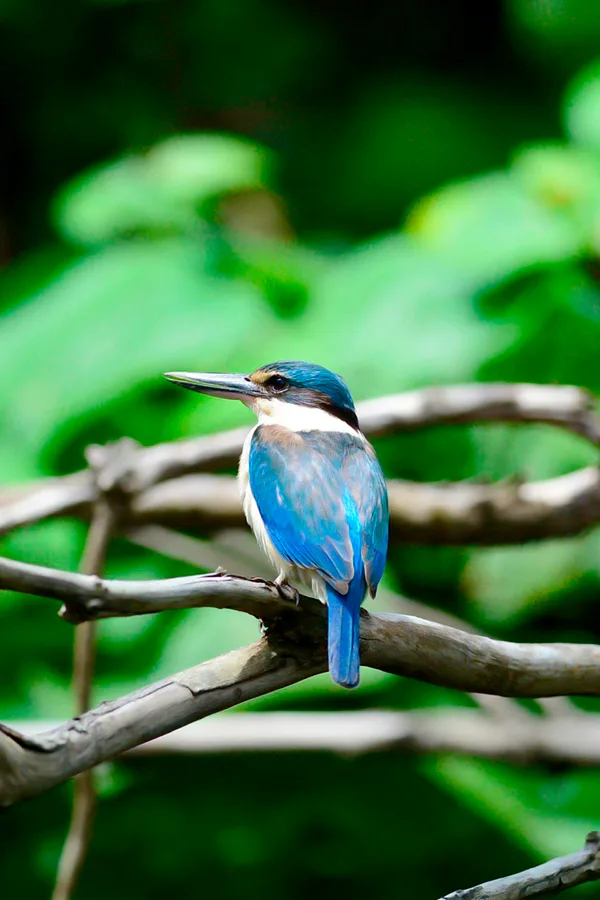
At 180 million years old— tens of millions of years older than the Amazon— the Daintree is teeming with wildlife, home to over half the country’s bat and butterfly species and about a third of Australia’s frogs, reptiles, and marsupials. There’s plenty of geographic diversity too: deep gorges, mountain ranges, rushing rivers and waterfalls, and miles of dense rainforest.
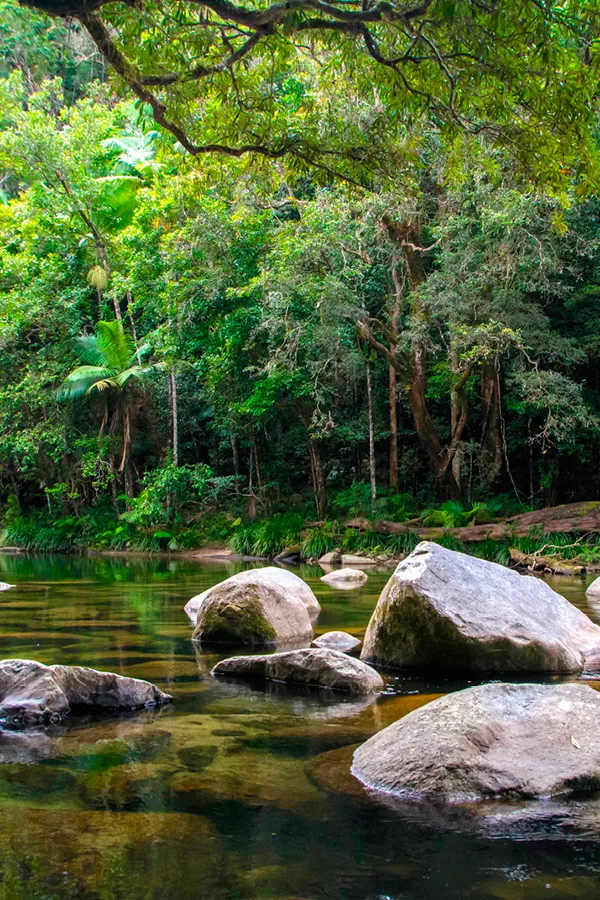
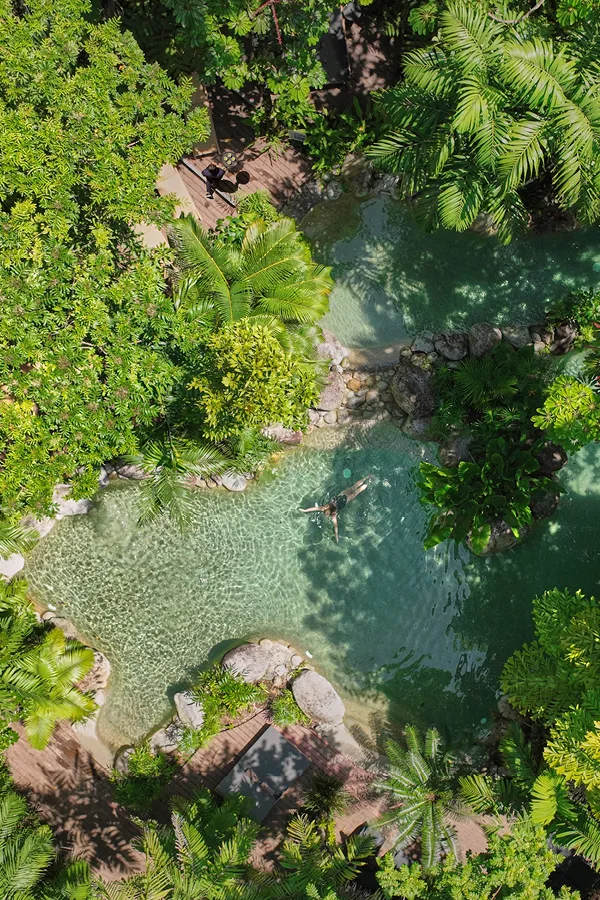
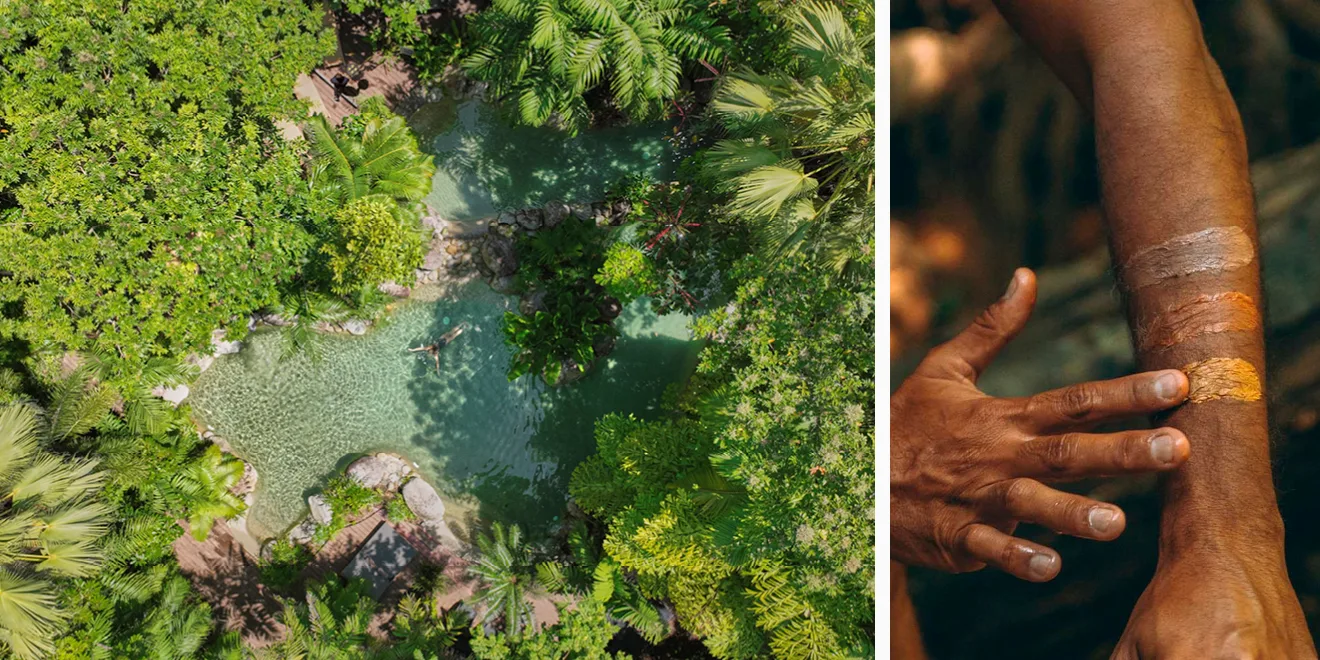
Silky Oaks is about an hour and a half’s drive north of Cairns; while you don’t need a car per se, it’s a good way to explore the area and take advantage of its outdoor activities. (You can choose to rent one or ask the hotel to arrange a driver for you.) Outside the hotel, you’ll find large stretches of sugarcane fields. The region is Kuku Yalanji country, home to a strong Aboriginal community which extends throughout the wider region of far north Queensland. The Kuku Yalanji are one of 18 rainforest Aboriginal groups located in the Wet Tropics World Heritage area. The hotel is surrounded by some of the world’s most healing natural pools, and because of the intense heat (maybe try to avoid the Australian summer months), the water never gets too cold. A billabong— the Australian term for a backwater pool— sits at the end of a path right by the hotel.
The Look:
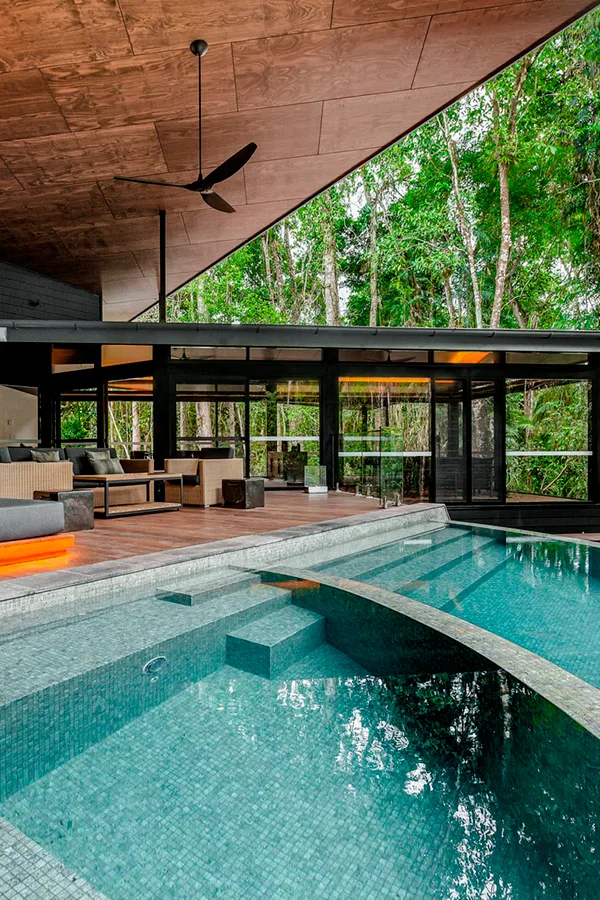
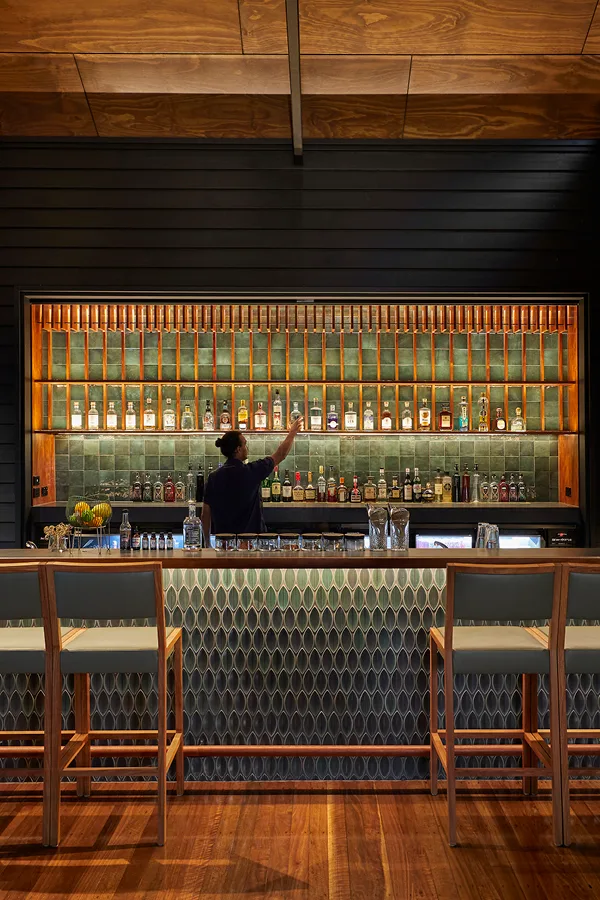
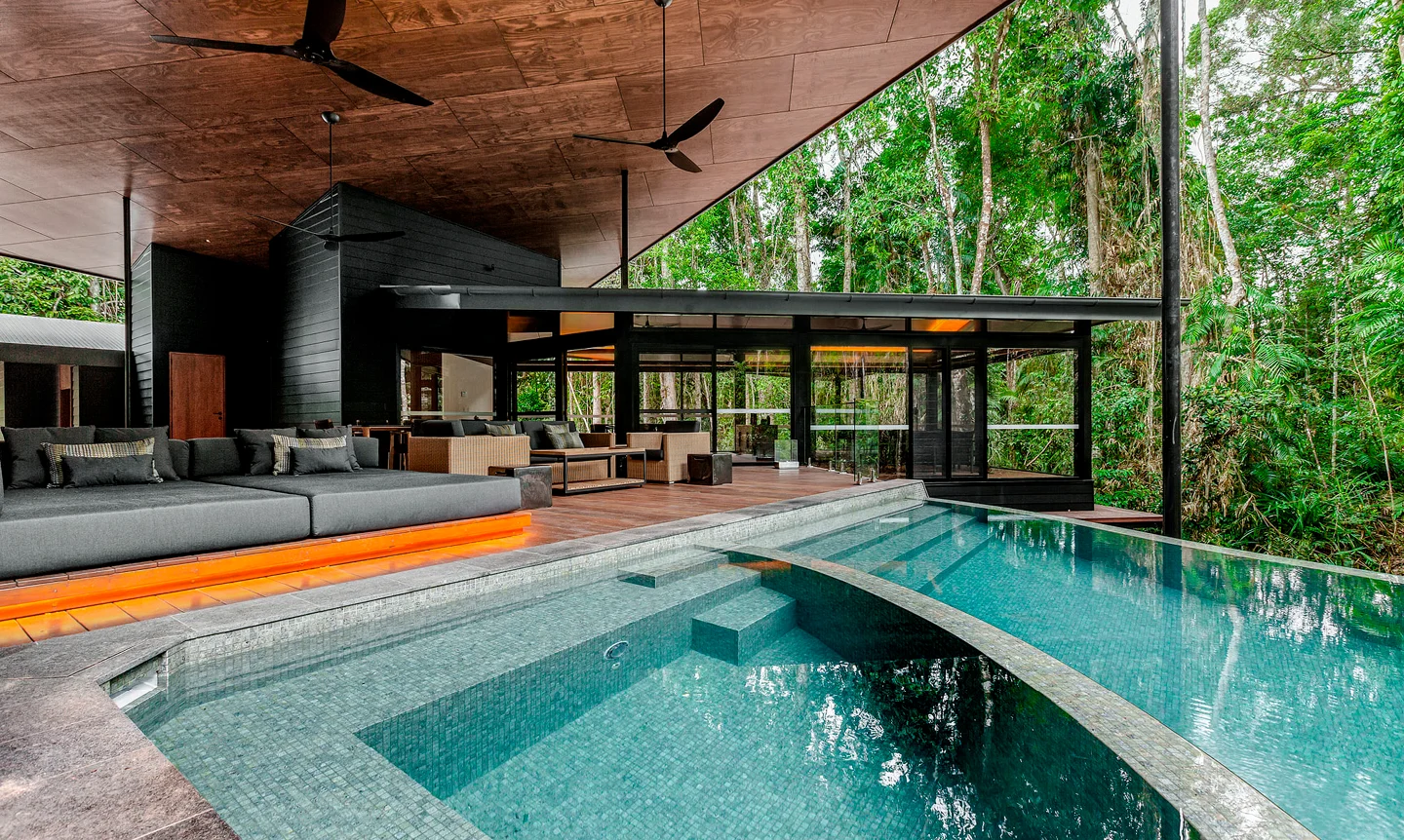
Everything about Silky Oaks is oriented toward the environment, designed quite literally to bring the outside in. Since the renovation, the hotel is bright with clean, minimalist interiors that contrast the moody shade of the forest. Still, though, the Baillies maintained the best parts of the original Silky Oaks, keeping the hotel’s playful look and feel; ‘90s-style lagoon pools with palm islands are a blast from the past, though there’s no need to swim in them when you can head to the natural healing pools nearby. In the lobby, it’s the cantilever roof— which they raised higher to open up the space— that makes all the difference.
The Rooms
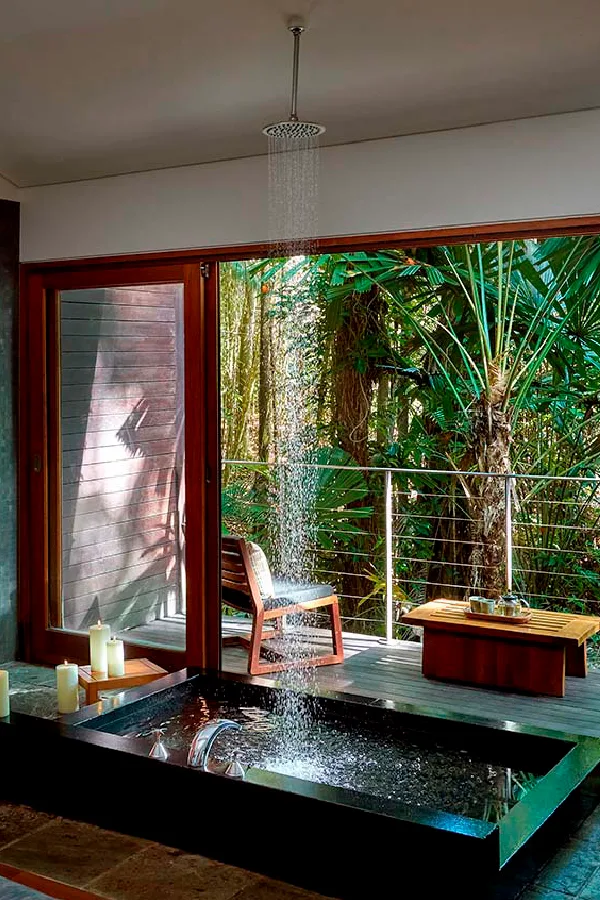
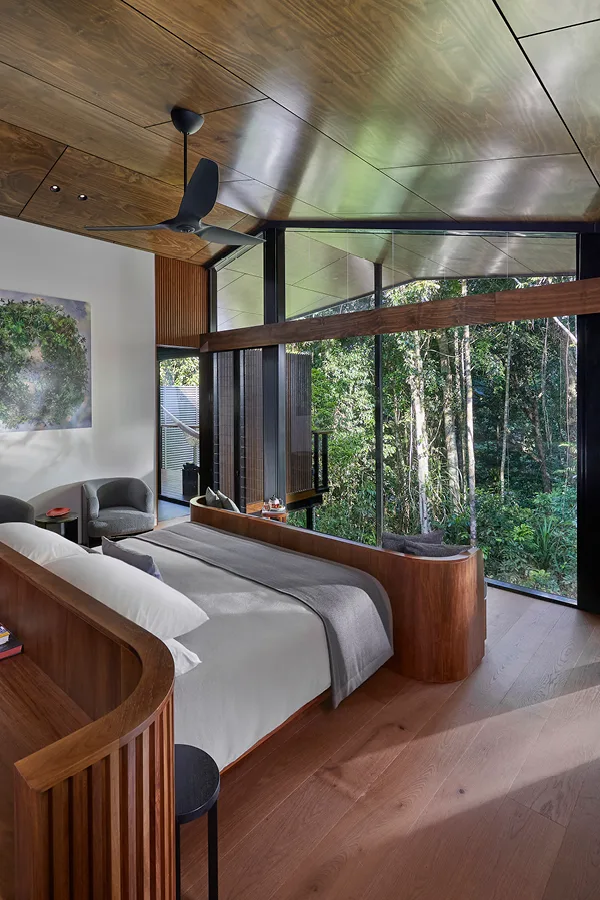
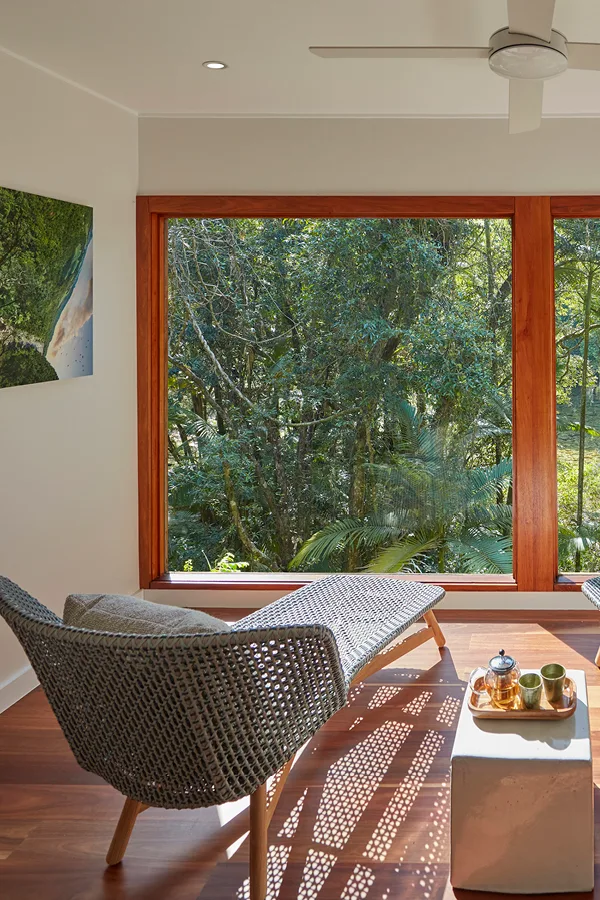
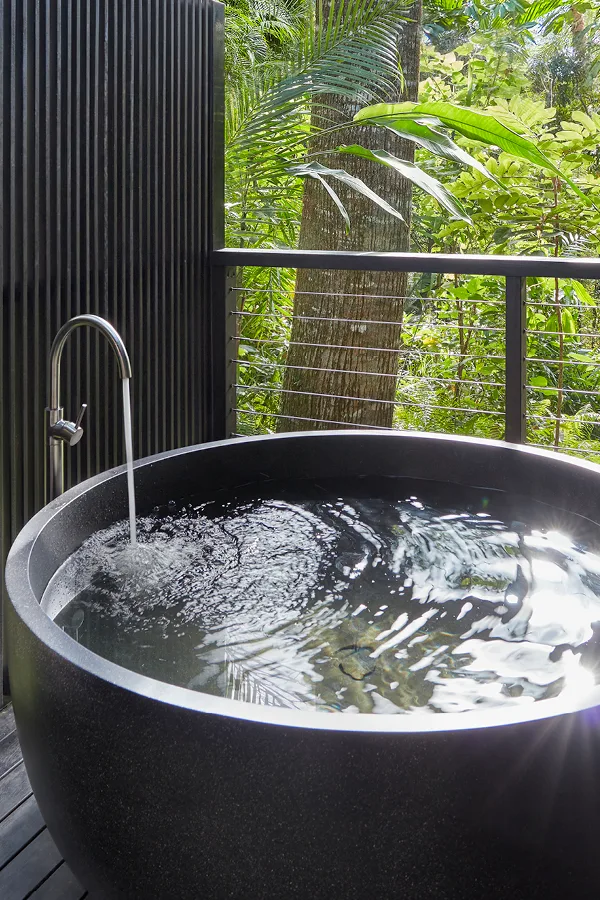
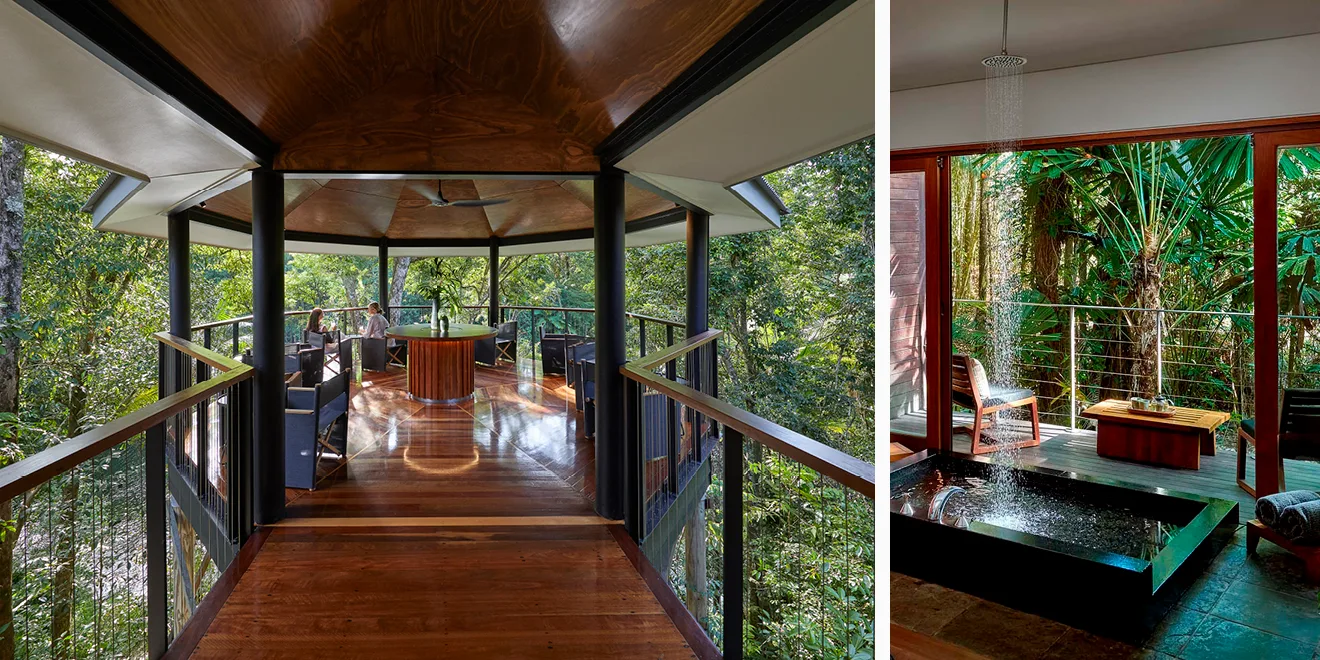
The forty rooms at Silky Oaks are clean and bright, all natural woods and white linens with floor-to-ceiling windows that allow greenery outside to shine in. There are various room categories: some smaller up toward the hills, other more expansive rooms overlooking the river. We’re particularly fond of the several-bedroom Daintree Pavillion, which feels removed from any feeling of a resort. The highlights, which you’ll find in most rooms, are the outdoor circular stone bathtubs, which allow you to bathe al fresco on the veranda as the brief nightly rain storms come in. We recommend opting for one of the rooms closer to the river, because there isn’t much like falling asleep to the faint sound of a trickling rainforest stream.
Food & Drink
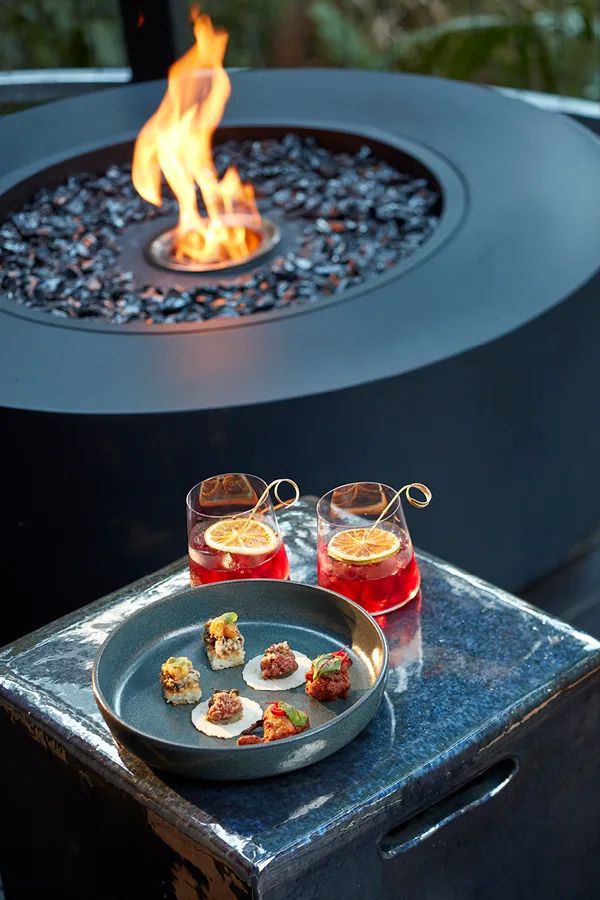
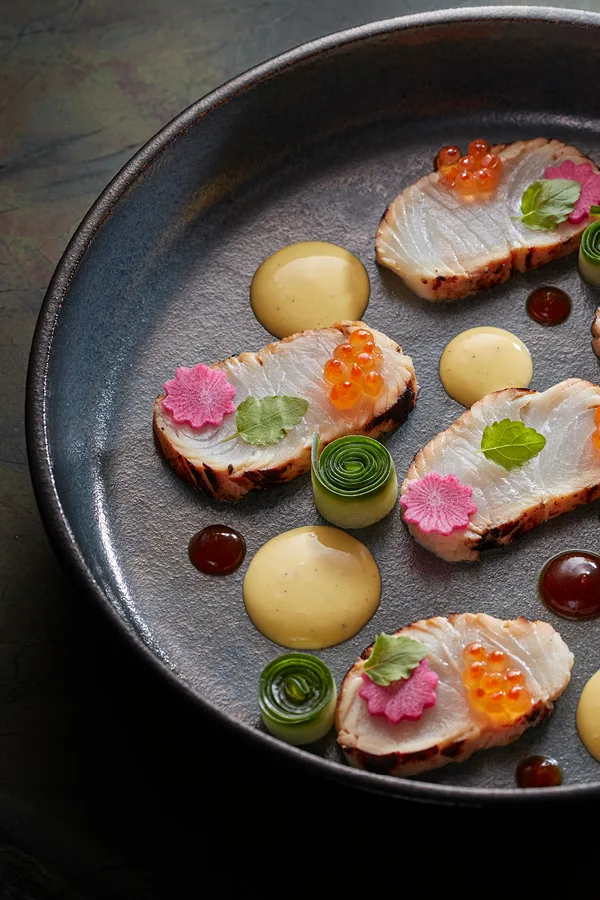
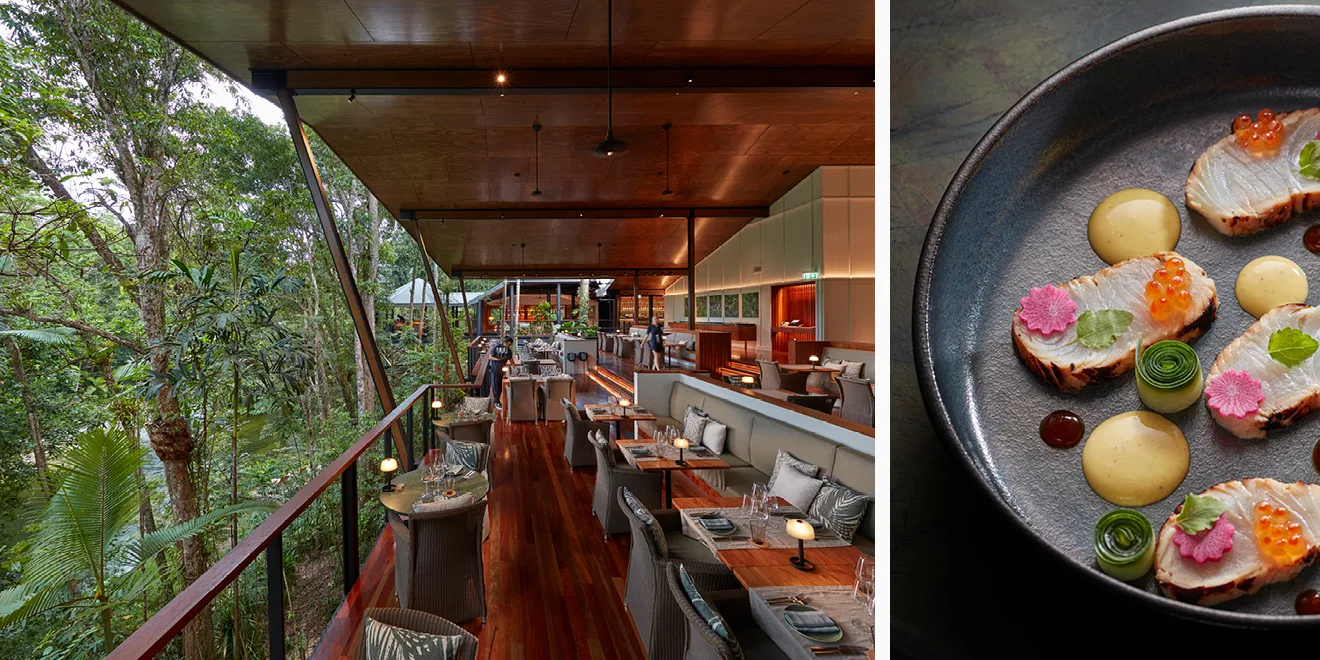
Fusion food can be tough to pull off, but here, the chefs do it in a way that feels like a true reflection of the place: at once Asian-inflected and drawing from European cooking traditions, always taking advantage of one of the most bountiful agricultural regions in the country. This is no more prevalent than in the hotel fruit plate— a sad staple of many hotels, but here it’s an elegant and exuberant bounty of fresh local varieties, like the rare Bowen mango. The food menu rotates enough not to tire; this isn’t the type of place where you’ll be forced to settle on a club sandwich after a few days of hit-and-miss dishes. There’s always a new culinary interpretation of the region that you somehow haven’t tried yet.
The Check-Out
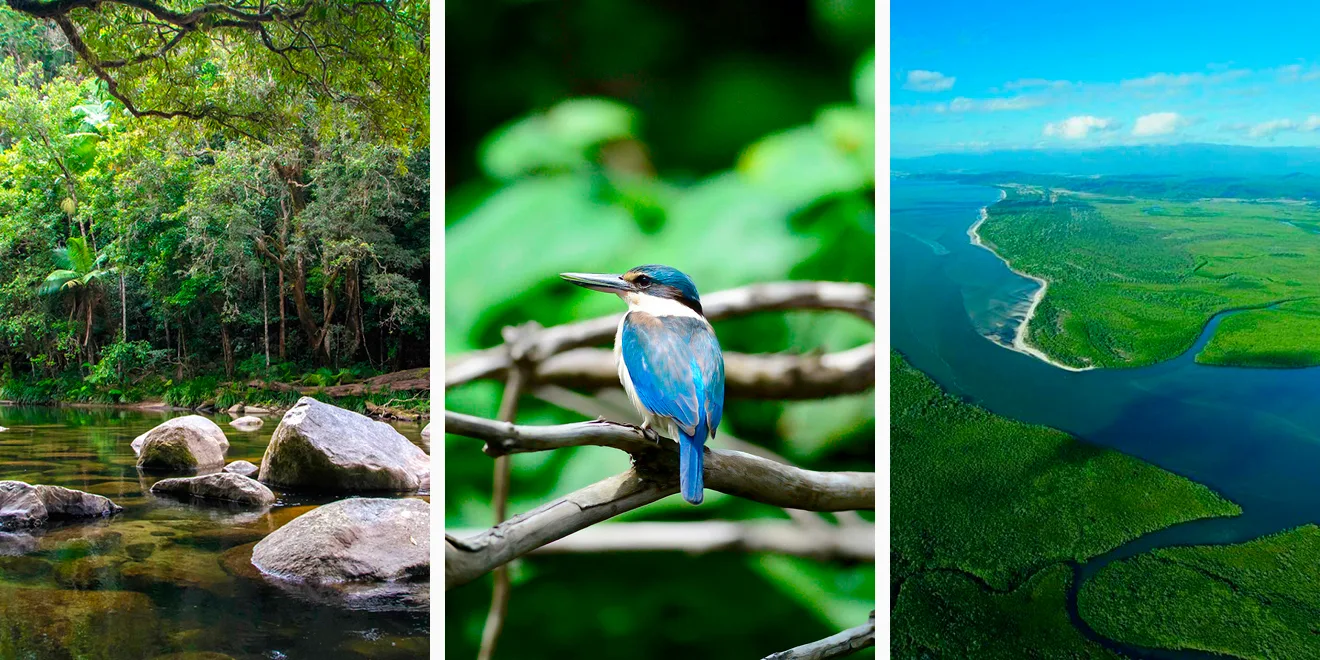
There’s no shortage of activities in the Daintree (swimming, snorkeling, rainforest walks), but our strongest recommendation for an essential rainforest experience is a float down the Mossman River, which is brimming with elkhorns, staghorn ferns, and tiny platypuses. The water has long been a significant spiritual source for the Kuku Yalanji people, for whom it has provided food and sustenance for thousands of years. You can join indigenious locals in spear fishing and spearing for mudcrabs with thin wood poles. They can also safely guide you through the river and its bewildering plants— about half of which are poisonous or have dangerously sharp spikes. Allow yourself to float along the river, and the river to flow through you, cleansing your body as it whispers tales of its storied ancient past.