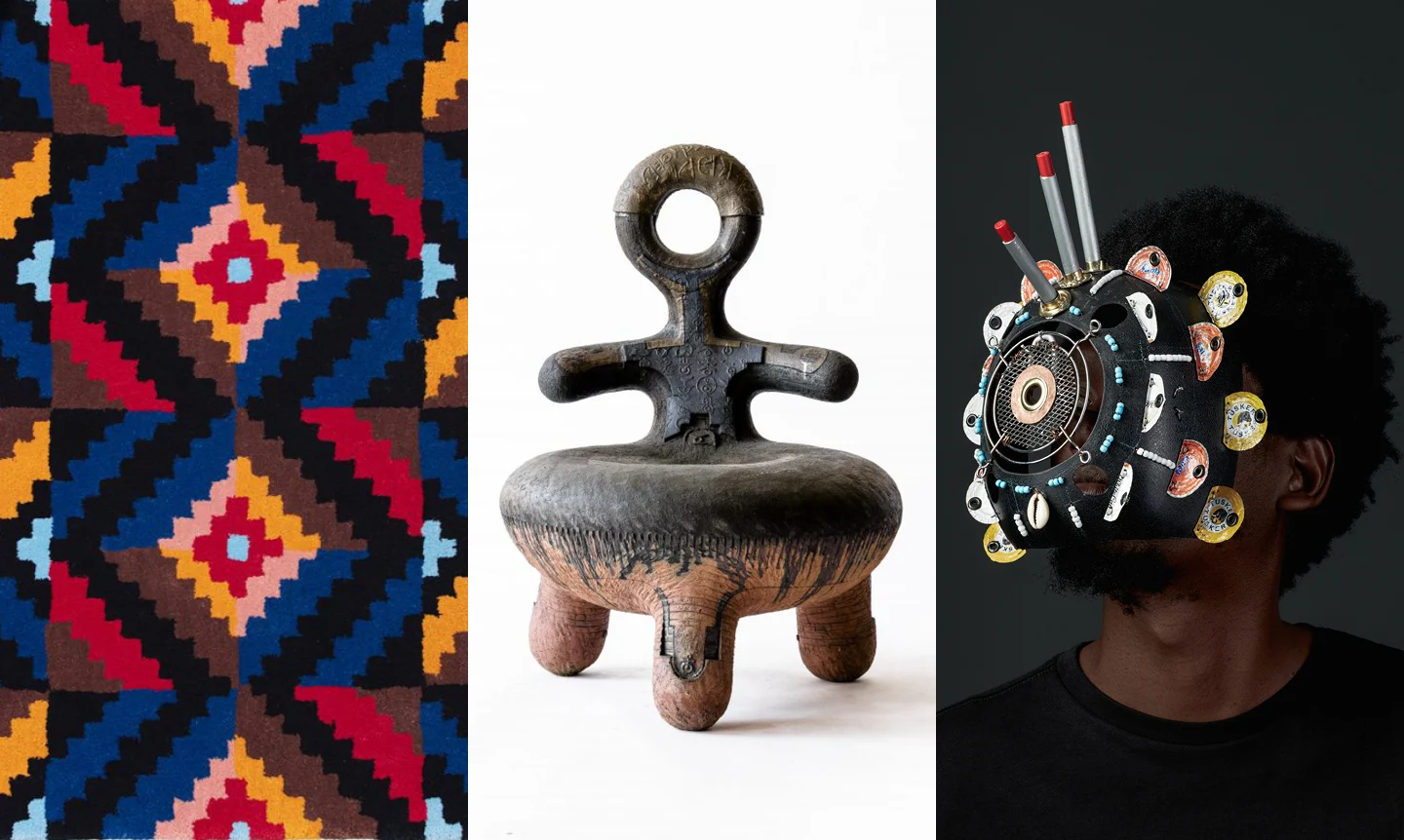
If design is a form of storytelling, the narratives being woven by designers across the African continent and the diaspora connect back to traditions of craft and artisanship, with many choosing to work with centuries-old materials or weave new threads with techniques that are age old.
In many ways, contemporary African design is an unbroken and yet dynamic conversation with tradition, custom and heritage. But to seek only the message is to miss the beauty of its aesthetic. Both are transporting.
One can define contemporary African design by its materials, by its reuse and reinterpretation, by age-old techniques brought to new ways of making, and by its designers’ connection to a continent. One can also define it by a sense of locality, and of authenticity, of using what is close at hand to create something new, whether it be discarded fishing wire or clay from the earth. But to confine it into any narrower definition would be folly when talking about 54 countries and a multiplicity of peoples, cultures, languages and traditions.
From weaving to beadwork, pottery to textiles, vivid patterns to the use of color, there’s a freshness and a sense of improvisation, and an immense store of ideas from which to draw. In many ways the future of African design is as much in its past as in the present, a continuum of cultural knowledge and production that has weathered the world’s many attempts to sever this knowledge from its source, and emerged triumphantly.
Cheick Diallo
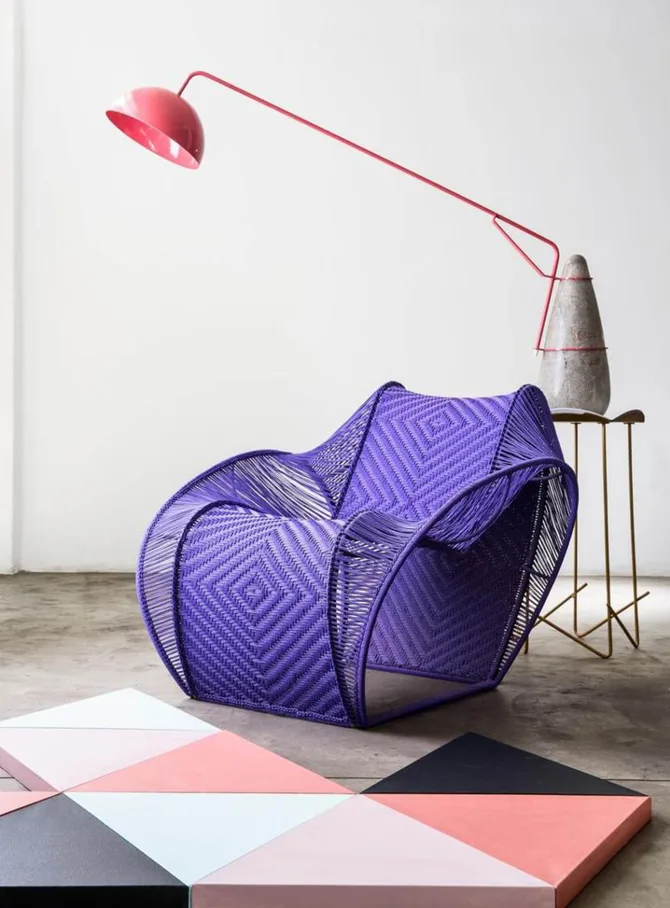
Using nylon and fishing wire, Cheick Diallo manages to elevate a chair to a museum object. A pioneer in contemporary African design since the mid-1990s, this Malian-born architect and designer trained in Paris and works from his studio in Bamako. His furniture designs have a strong architectural influence; they are fluid forms that draw from local traditions to create pieces by hand from everyday jettisoned materials, like bottle tops and used tyres. One of his signature works is a chair inspired by the shapes of traditional Malian fishing traps, woven from fishing wires on to a base constructed from fused rods of recycled metals. By reworking materials, Diallo makes detritus utterly covetable and collectable. He calls it “return to sender,” selling back to European collectors the remade “junk” that came from across the ocean. Diallo has also long been known for his experimental design workshops that have taken place around the continent, including in Mali, Togo and South Africa. Working with local craftspeople, he has made it part of his process to train local artisans, extending their skills to embrace a contemporary design language. See more of his work here and here.
Maxhosa by Laduma Ngxokolo
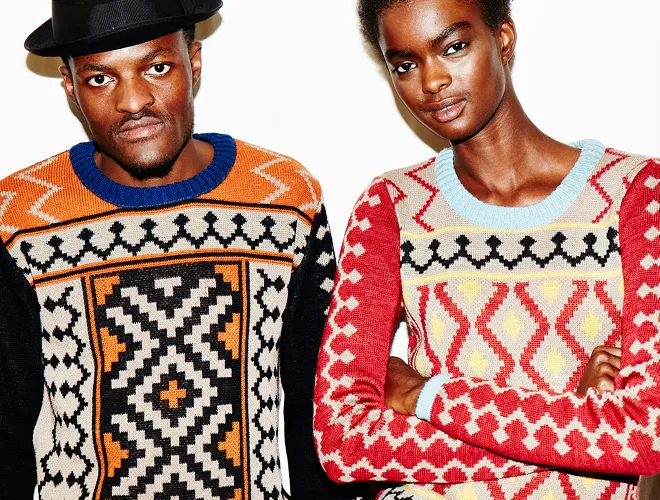
It’s easy to mistake Maxhosa’s gloriously color-rich patterned polo knits, cardigans and pleated skirts for simply a modern play on geometry—but this designer’s story is so much richer. Born in Port Elizabeth, now known as Gqeberha in the Eastern Cape, Laduma Ngxokolo set out to solve a problem and created a global movement. His designs have been called out by Beyoncé, showcased in Milan by Vogue Italia and featured in Black Panther. High school was where the seeds of Ngxokolo’s career were sown—at 15, his mother taught him to knit using a hand-operated machine, and a few local commissions followed. As his talent blossomed, he sought to create a knitwear range for young men—amakrwala, Xhosa initiates who had undergone a circumcision ritual and as custom received a new set of clothing to mark their passage into manhood. The geometry is drawn from traditional Xhosa beadwork and he uses these motifs to create his distinctive range of clothing, and now homeware. In South Africa, where Maxhosa was born and now works out of a studio in Johannesburg, to be wearing the Maxhosa brand is an unmistakeable badge of pride.
Mash T Design Studio by Thabisa Mjo
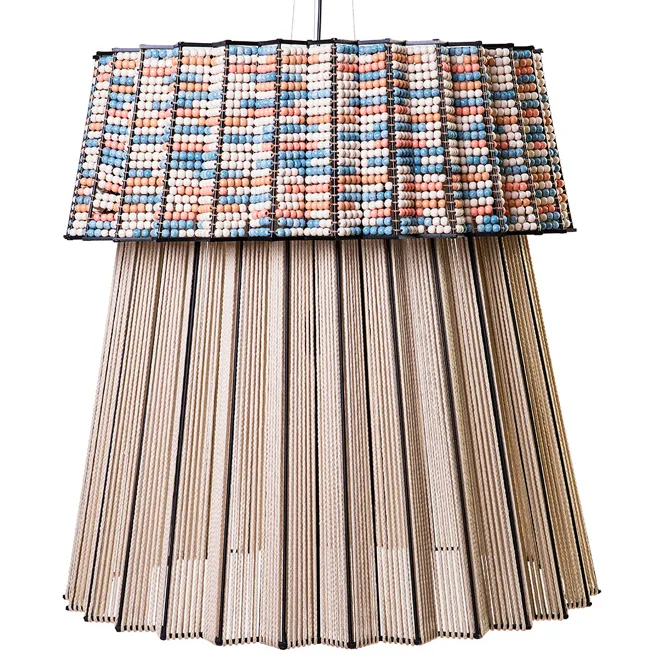
Picture the fast-paced rhythmic sway of hips encased in abundant pleated fabric—the celebratory xibelani dance of Tsonga women. When the hypnotic movement stops is where Thabisa Mjo’s award-winning Tutu 2.0 pendant light starts. Mjo’s luminous beadwork creation is modeled on the swirling pleated skirts made up of a shorter top layer and a longer underlayer. The light also resembles a ballerina tutu, striking an interesting conversation about culture and dance. Mjo majored in production design at film school and came to prominence by winning Nando’s Hot Young Designer competition in 2016 for her Tutu light—the prize was that the company would purchase 100 units. More recently, her work has been shown at the Musée des Arts Décoratifs in Paris. Another standout is her collaboration with Houtlander, a South African wood furniture design duo – the Hlabisa bench, with legs inspired by a traditional three-legged cast iron pot, and an undulating backrest woven by master weaver Beauty Bathembile Ngxongo and her team. Thabisa Mjo’s studio name Mash T combines her nickname, Tash, and first letter of her surname, but it’s also a play on the “mashing” of ideas so integral to her work.
Cyrus Kabiru
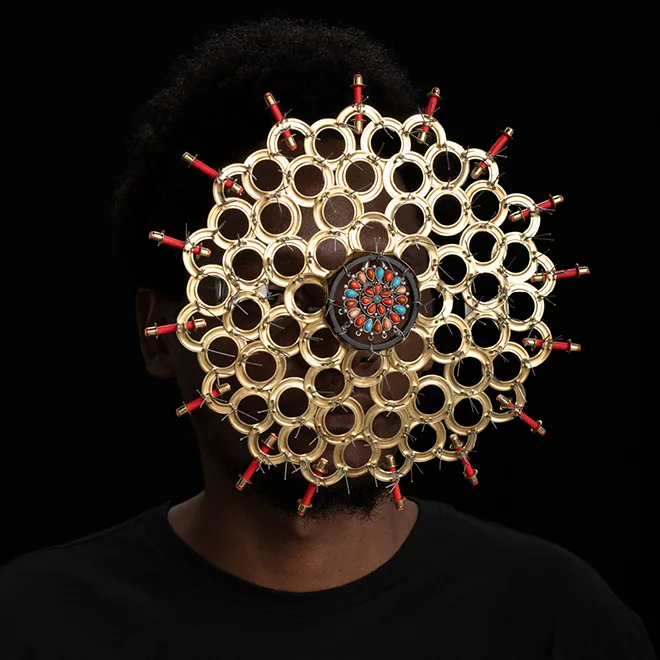
Self-taught painter and sculptor Cyrus Kabiru sees the world differently, his view framed by an array of eyewear masks meticulously fashioned from discarded objects. Where others see trash, Kabiru, who grew up near a Nairobi dumpsite, sees the potential for arresting beauty. Kabiru is best known for his range of work titled C-Stunners. The C stands for Cyrus, and the stunners, for his creations that have this effect on the viewer. These eyewear sculptures are social commentary, made of foraged metal and other items that have long ago lost their use in a consumer culture whose most long-lasting impact is heaps of waste. The spectacles are displayed both as objects and in his signature self-portraits. They look futuristic, resembling a facial suit of armour, as much as a work of intricate jewellery worthy of royalty. Bespectacled visionary or blinkered by the charms of consumer culture? Cyrus Kabiru leaves that question hanging.