Among international travelers, France’s Atlantic coast has long been overshadowed by the country’s glitzier Mediterranean coastline along the French Riviera. With those sparkling Mediterranean waters, iconic Art Deco hotels, a predictably warm climate and beguiling Provençal towns, it’s not immediately apparent why travelers would have a reason to look elsewhere.
Surely, I’ve fallen victim to some of those summer tropes over the years– especially after moving to Paris and having the French Riviera in my backyard. Though as temperatures, prices and over-tourism surge along France’s Mediterranean shores, making summer feel superficial, complicated or downright too hot, I became nostalgic for that simple, carefree spirit that defined the summers of my childhood on the Atlantic coast.

Growing up in a small coastal town in New England embedded in me this notion that summer should be simple. It should be about walking into a restaurant with sandy feet and no reservation; that exhilarating moment of finding an empty patch of sand on a crowded beach for basking all afternoon until perfectly sunkissed, then biking barefoot to pick up last-minute accouterments for a friend’s BBQ.
So within my first year living in France, I was determined to reclaim that summer feeling, and found a version of what I was looking for in pockets of France’s western coast, in towns like Guéthary, Cap Ferret and Île de Ré– and while the familiarity of the Atlantic and a certain laid-back sensibility in these places certainly signaled a simpler summer spirit, it wasn’t until I discovered the sweet rhythm of the Vendée, a department in the Loire region in western France, situated just south of Brittany, that I felt summer’s sweet simplicity had truly been restored.

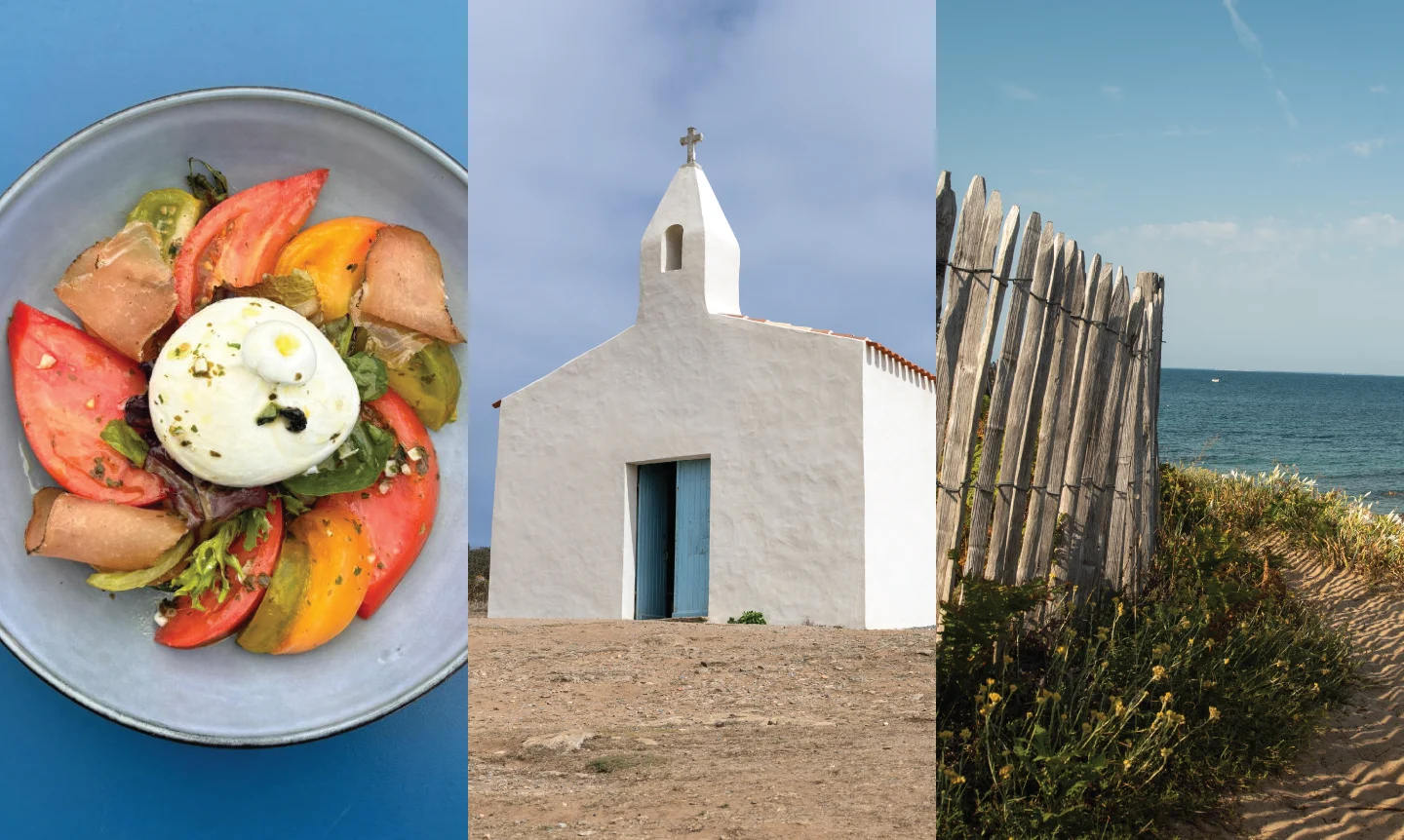
Île d'Yeu, the smaller of the two Vendée islands (the larger being Noirmoutier) is best discovered by bicycle– the main mode of transportation here. Cycling through the island roads, there’s a smooth and easy rhythm that incites a childlike sense of wonder characterized by its lively port, a rural white-washed village with colorful shutters that feels straight out of a storybook, and 30+ beaches– from long, white sandy stretches to scenic coves flanked by cliffs with translucent water that, at times, rivals the Mediterranean but with the refreshing chill of the Atlantic.

Much of the activity on Île d'Yeu unfurls around the island’s lively Port-Joinville in the north. As unassuming as it may appear, with the main strip lined with casual cafés and crepe spots (an influence of its neighboring Brittany), bike rental shops and a small daily market that’s open year-round selling local products, such as smoked fish from local canneries, as well as fresh vegetables and seafood, and prune jam– a local specialty here, ascending deeper into its labyrinth of backstreets, the island’s cultural nucleus reveals itself. Days on Île d'Yeu begin and end in Port-Joinville, flooded with a bevy of maritime home design shops and clothing boutiques– among them: Brigand des Mers, a young maritime brand helmed by three local friends who grew up on the island and were inspired by the unpredictable rhythm of the sea here, which led them to create a brand of stylish, but functional clothing and accessories for modern sailors and coastal inhabitants.

For an overview of the island’s rich fishing heritage, visitors can tour the Musée de la Pêche, where Jean-Michel, a former fisherman, serves as the official guide. After spending an afternoon on the beach, everyone returns to Port-Joinville in the evenings for a “night out”. For that, Port-Joinville offers a rich concentration of buzzy, casual restaurants and bars, such as BDM Café or L’escadrille for drinks, Snack Crêperie Martin for mussels and crepes, Ma Reserve Yeu for tapas on a rooftop terrace, and Les Bafouettes for the gourmands, who can feast on island specialties such as Banyuls foie gras and pan fried snails with chanterelles and boletus.
The place to stay by the port is Les Hauts de Mers, a Domaine de Fontenille property located on the main road, just a five-minute walk from the port. The building embraces the traditional architecture of the island, blending in with the small white houses with colorful shutters typical here. Each of the 17 laidback, nautical-inspired rooms and suites contain private terraces– most even feature sea views overlooking Ker Chalon beach. A fragrant garden with native plants, including maritime pines and hydrangeas, surround the swimming pool. The Vent Debout restaurant invites both hotel guests and visitors, serving a seafood-focused menu that includes oysters from Fromentine, locally-caught sea bass and sea bream and fresh lobsters and clams, all served in a warm atmosphere that hosts live music in the summer months.