Every year, I try to plan a solo holiday to a place that satisfies two simple criteria: it’s a destination where I can eat well and surf great waves. I found myself scouting for such a getaway after ten months living and working as a chef in Hong Kong. Soon to relocate to Paris—a city I’d never been to and where I knew absolutely no one—I was in need of a place to wind down and think through my next steps. I decided on the West Coast of Africa, and in a toss-up between Liberia and Senegal, the latter won.
A former French colony that won independence in the 1960s, Senegal has become one of the most stable democracies in Africa and an increasingly accessible destination for travelers. Occupying the westernmost tip of the continent, it is generously rewarded with rolling Atlantic swells from the north and south that are a particular drawcard for surfers. This is especially so around its capital Dakar, which sits on a finger of land that juts out into the ocean.
After a long haul from Hong Kong, I arrived there close to midnight with few preconceived ideas, a couple of surfboards and enough books to carry me through a month of solitude. From the airport I took a van to Ngor Beach on the Cap-Vert Peninsula. Here, rickety wooden canoes powered by outboard motors ferry people to the island of Ngor. These run fairly frequently throughout the day until sunset, but my arrival time meant that getting to the island was going to be a little tougher.
After some bartering and a few phone calls, a boat was sent from the island to collect me. In the dark of the night, with nothing more than the glow of a lit cigarette, we crossed the choppy channel to Ngor, my base for the next month.
IN SEARCH OF SURF
The next morning, I set out to find Ngor Rights, a wave made famous by Bruce Brown’s cult 1966 surfing documentary Endless Summer. The wave can either rifle or gently roll down the reef depending on the tides and direction of the swell, offering opportunities for both experienced surfers and novices to get their fix. The island boasts a few other breaks as well as some protected beaches that are popular with Senegalese tourists as places to swim safely and pass the day under umbrellas next to local vendors grilling-just speared fish.
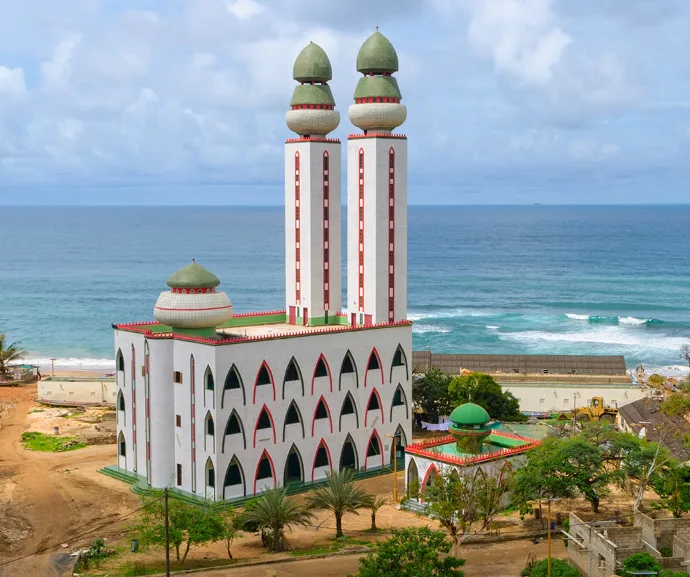
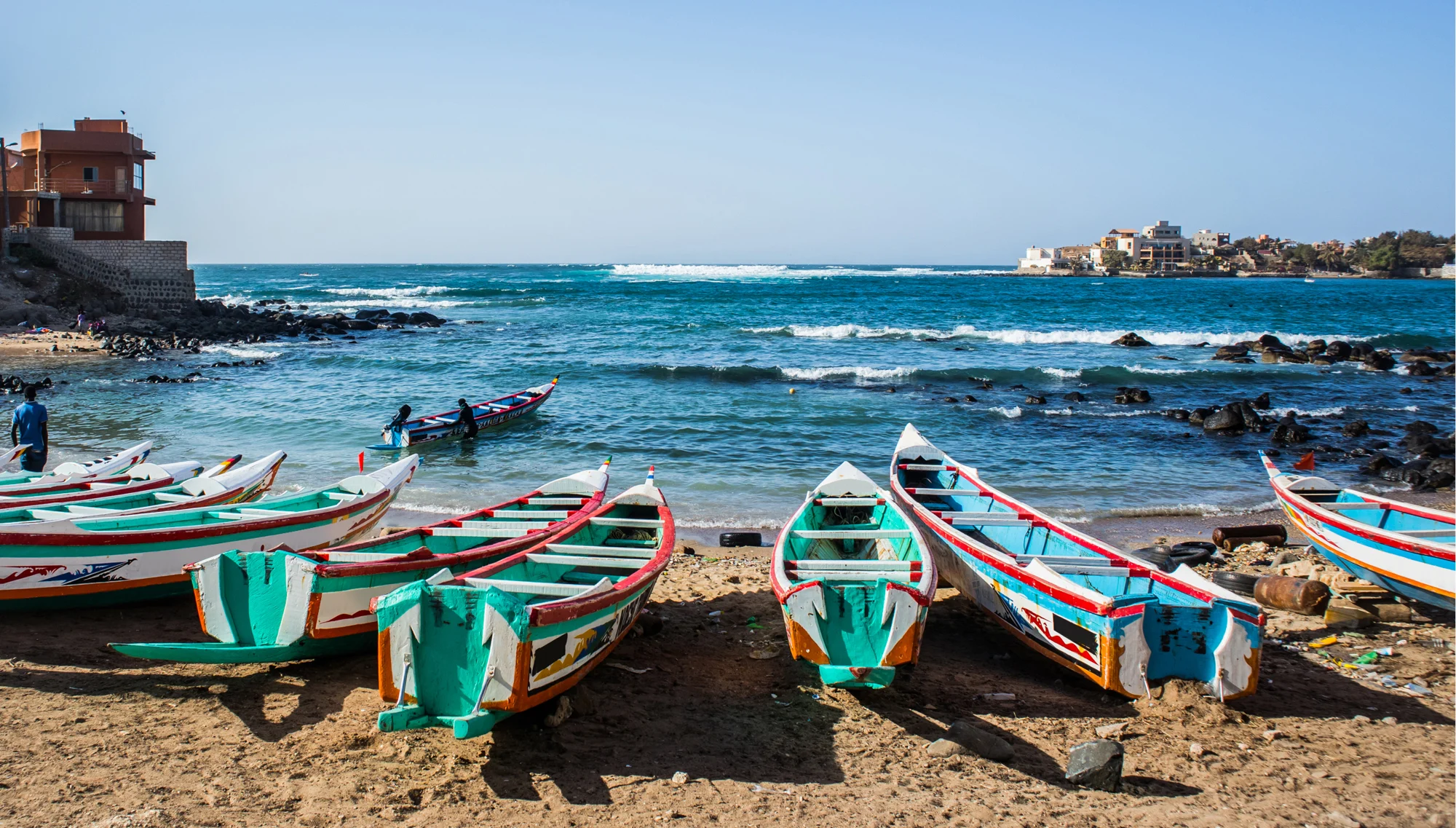
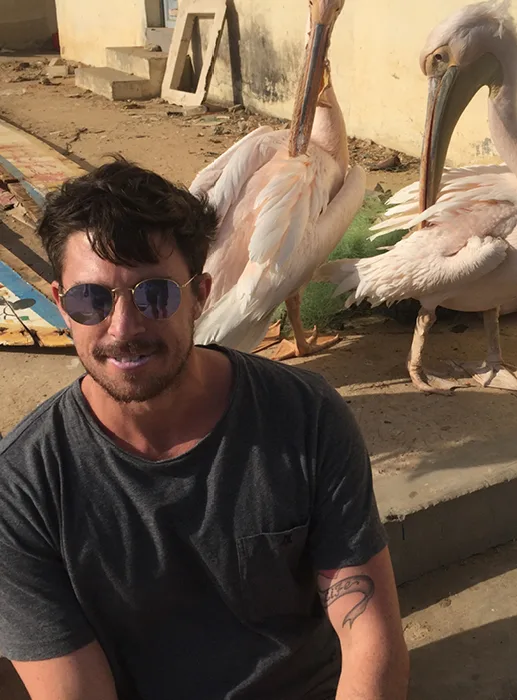
However, the real attraction for the traveling surfer is Ouakam, a bustling little fishing village 7 miles (11 kilometers) from the center of Dakar. Here, the striking Mosque of the Divinity towers over a beach scattered with hundreds of colorfully painted wooden fishing boats, locals either sorting through fish or mending nets (depending on the time of day), and some feisty and territorial pink pelicans who patrol the beach along with the always-present stray dogs and cats.
The left and right peak of the beach offer world-class waves that break over frighteningly shallow reefs blanketed in sea urchins. On one of the few occasions I got to surf this fickle wave, I copped a foot full of urchin spikes that kept me both out of the water and off my foot for the last week of my trip.
SENEGALESE CUISINE
The national dishes of Senegal bear an amalgam of influences including local Wolof traditions, the cuisine of Morocco, the cooking of the French and, where I was located, the abundant seafood of the Atlantic ocean.