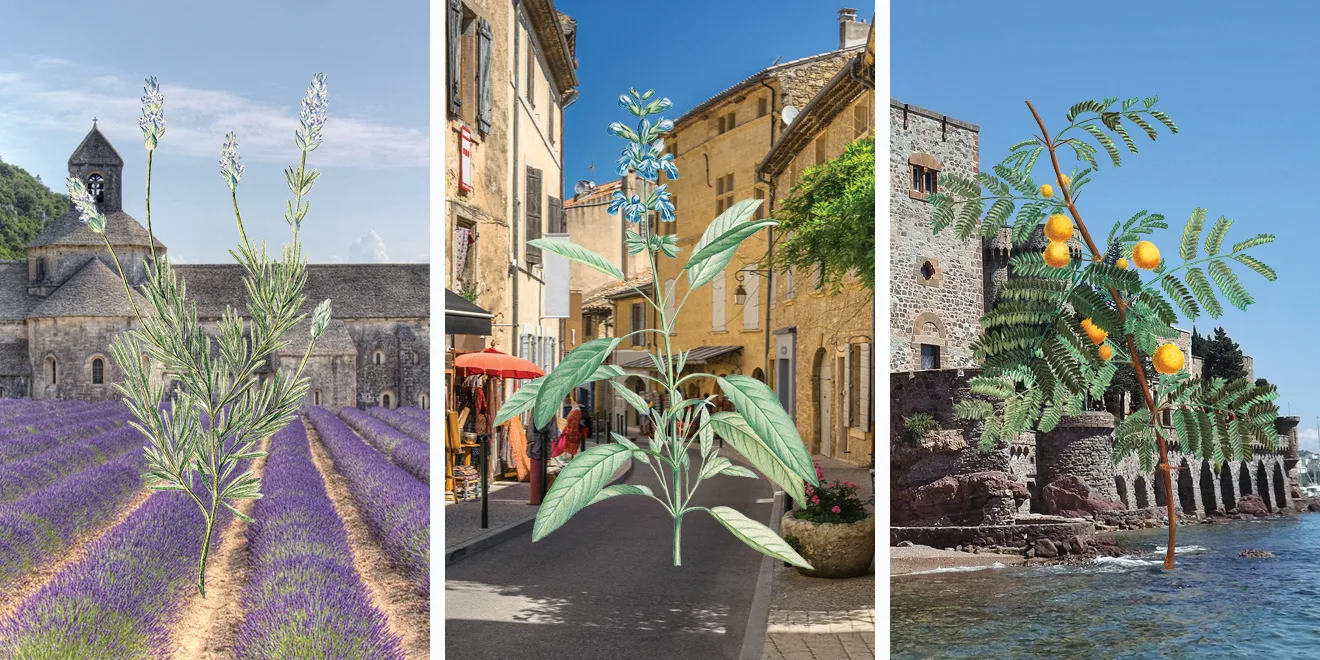
To stand in a Provençal lavender field on a July afternoon under a hot yellow sun and swimming-pool-blue sky, surrounded by a sea of spiky purple blooms and enthusiastically buzzing bees, is to be utterly engulfed by scent. The smell radiating from the flowers is rapturous and deeply calming. Inhale. Forget the troubles of the world—for here, at least, all is well.
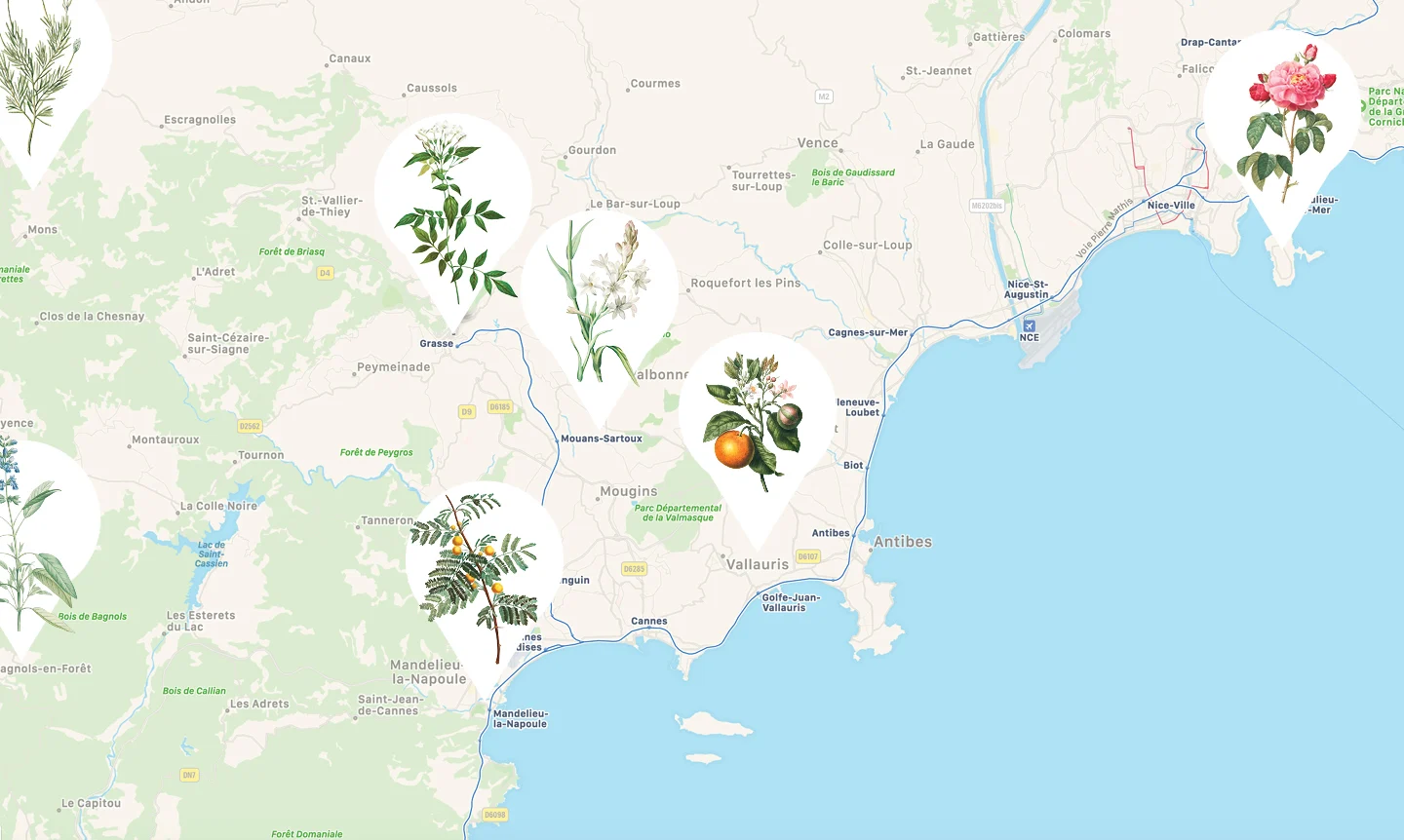
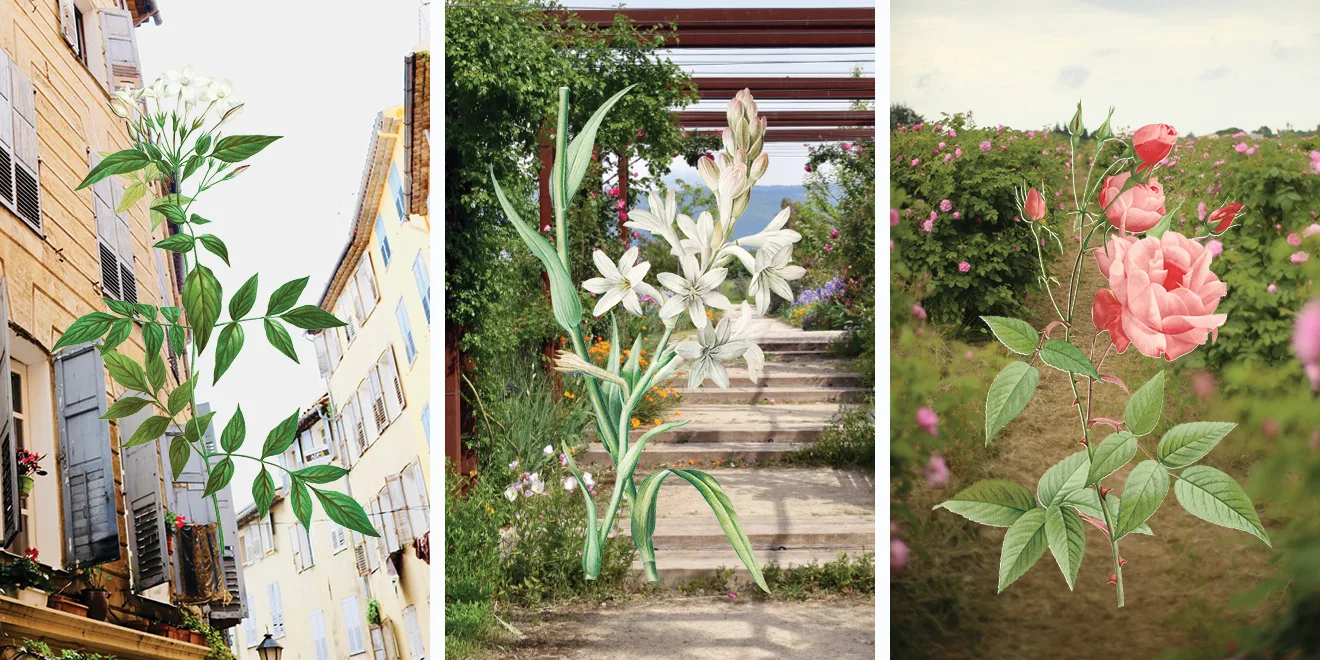
A meandering two-and-a-half-hour drive southeast, where the mountains soften into rolling hills before giving way to the Côte d’Azur, jasmine grandiflorum is reaching peak bloom in Grasse. The heady white floral aroma that fills the air will be distilled and bottled by Chanel and Dior, stoppered into fine fragrance flacons, and spritzed on wrists from Beijing to Boise. But nothing compares to smelling it at its source.
The South of France is a paradise for anyone who derives pleasure from scent. From fields of Rose de Mai to the gardens planted by 19th-century aesthetes along the rocky coastline, it is a region where fragrance is woven into the landscape itself. From Provence to Menton, here is the PRIOR guide to sniffing your way across the South of France.
The Lavender of the Luberon and the Sault Plateau
In July and August, the slopes of northern Provence are dashed with patches of purple, like swathes of brightly colored fabric that have caught on the wind and landed there, partially unfurled. Narrow roads wind through the Luberon Valley to the Sault Plateau, past medieval stone villages, vineyards and olive groves, with plenty of opportunities to pull off and gaze over fragrant vistas of what’s known locally as “blue gold.” Many of these lavender fields have small on-site distilleries and shops that sell bundles of flowers tied with twine and hand-crafted soaps in too-pretty-to-unwrap packaging. Among the best: the Distillerie Les Agnels, an organic farm near the village of Les Agnels, and the Château du Bois shop (family owned since 1890) and Lavender Museum in Coustellet, which offers a fascinating dive into the history of lavender cultivation in France. The town of Valensole hosts a wildly popular lavender festival on the third Sunday of July every year, and Sault celebrates annually on August 15th.
Abbaye Notre-Dame de Sénaque
Lavender fields don’t get much more picturesque than this one, which surrounds the Cistercian Abbaye Notre-Dame de Sénanque dating to 1148. The resident monks tend to the orderly rows of blooms and extract the lavender essential oil for use in soaps and candles, sold alongside lavender-flower honey and fresh produce in the small shop. (Tours of the abbey’s interior can be arranged by appointment.)
Ferme de Gerbaud Herb Farm
Just outside Lourmarin, one of the Luberon’s most charming villages, the Ferme de Gerbaud offers 90-minute guided tours through fields of rosemary, thyme, oregano, sage, marjoram, savory, and lavandin, the variety of lavender that thrives at lower elevations. The farm shop stocks herbs, oils, and blends made on site, including the region's signature Herbes de Provence. On select summer evenings, visitors can stay for a farm dinner served outdoors among the aromatic plots.
Route du Mimosa
From January to March, bright yellow mimosa flowers burst into bloom across the South of France, a welcome harbinger of spring. Members of the acacia family, mimosa trees are native to Australia but were introduced to the Côte d’Azur in the 19th century by foreign residents who planted them in the gardens of their winter homes. The trees quickly spread, and today mimosas blanket hillsides throughout the region. The best way to enjoy their golden glory is along the Route du Mimosa, a 130-kilometer drive that takes in eight “villages fleuri” (flowering villages) beginning in Bormes and ending in Grasse, where the blossoms’ honeyed scent is used in perfumery. Each town hosts themed events throughout the season, and local chocolatiers make celebratory mimosa-flavored treats (don’t miss the mimosa chocolates at La Muscadine in Saint-Maxime, or mimosette, a local brioche specialty decorated with mimosa seeds, in Pegomas). For some of the route's most memorable views, stop in Le Rayol-Canadel-sur-Mer, where the flowers' golden plumes spill toward the Mediterranean and the botanical gardens overlook the coastline.
Grasse
Grasse wasn't always synonymous with perfume. During the Middle Ages, it was a center of leather production, and by most accounts a rather pungent one. In the 16th and 17th centuries, scented gloves came into fashion—helped along by Catherine de' Medici's enthusiasm for them—and growers began cultivating jasmine, rose, and other fragrant flowers in the surrounding hills to supply the trade. Over time, perfumery eclipsed leather production, and Grasse emerged as the center of France's fragrance industry.