The guttural rumble of a lion’s roar is both deeply unnerving and soul-stirring. Even from miles away, the bellowing sound is so visceral it shakes one to the core. These are the kind of mirror neuron-stirring wild encounters that 15 months of streaming nature documentaries have primed us for. The things we see and hear on a safari–a pack of wild dogs on the hunt or a herd of elephants splashing in a pool of mud–draw us into a world so wild and so raw, the experiences don’t just immediately electrify but linger for weeks.
While the borders of many African countries have been open for months and travel requirements have remained relatively uncomplicated (countries like Kenya, Botswana, South Africa and Zimbabwe only require a negative PCR test within 72 hours of traveling), international travel saw a 75 percent drop in 2020, according to Naledi Khabo, CEO of the Africa Tourism Association. A safari-focused trip, as socially distanced as it naturally is, didn’t really feel viable—until now. Visitors are trickling back in (with some asterisks - South Africa was recently put back under a 2-week lockdown to fend off the Delta variant)—a reassuring sign, considering that tourism in Africa is a $167 billion industry that employs some 24.6 million people, with wildlife-based tourism generating over $29 billion of that. When travel came to a standstill, thousands of people with fragile livelihoods were laid off and wilderness areas suddenly had zero income and diminished security. “The good news is that as more guests return, the sector will bounce back, poaching will decrease, people will get their incomes back and donations to local NGOs will increase,” Khabo says.
Now, though, as vaccines gradually roll out and travelers once again board long-haul flights, planning safari travel in Africa for late 2021 or 2022 feels not just doable, but important—both for an overdue, boundary-pushing adventure and for the opportunity as travelers to inject tourism dollars into fragile wilderness areas that rely heavily on these to preserve them.
From Experience: How & When to Go
Planning a safari is complicated, with logistics to consider from tricky airplane travel—adjacent countries may have no easy connecting flights—to booking experienced guides, who quite literally might hold a traveler’s life in their hands when encountering a fired-up Cape buffalo or an elephant in musth (heat). To organize a smooth trip, don’t try to DIY it; rather, recruit an experienced safari travel planner with deep connections to regional lodges and guides. Make sure they are transparent about where your tourism dollars are really going.
And despite reputation, the new thinking is that there’s really no bad time to go. Summer (November through April), also known as green season, is warm and rainy and also attracts fewer tourists. The water brings life, but with it wild vegetation, making it harder to spot animals through the tall grass. Winter (May through October) is generally cooler and drier with shorter grass, so animals are easier to spot (as are other humans and safari vehicles). Traveling in the traditional off season not only means thinner crowds, but it can bring income to lodges and the communities that wildlife areas support when it’s most needed.
And while a multi-country-hopping, list-ticking safari once held appeal for those with limited time, now that border crossings are a bit stricter than in the past and thoughtful lodging can be found in a range of lesser-traveled ecosystems with abundant wildlife and little investment, a safari that goes deeper into just one or two destinations—taking it low and slow—feels right for right now. Here’s a country-by-country overview, from south to north.
SOUTH AFRICA
Here at the bottom of this massive continent, there’s opportunity for both land and marine safaris. South Africa is extraordinary, not just because it’s remarkably culturally diverse, but it offers every type of bush experience, from high-end and exclusive to affordable and family friendly. (There’s no malaria here, so it’s ideal for kids.) Along the coast, travelers can dive through kelp forests in the icy Atlantic Ocean and watch seasonal pods of whales propelling through the water. South Africa is also extremely accessible–not only are international flights to Johannesburg frequent, but the country’s largest national park is reachable by car, making it very easy to navigate.
Spaces and species
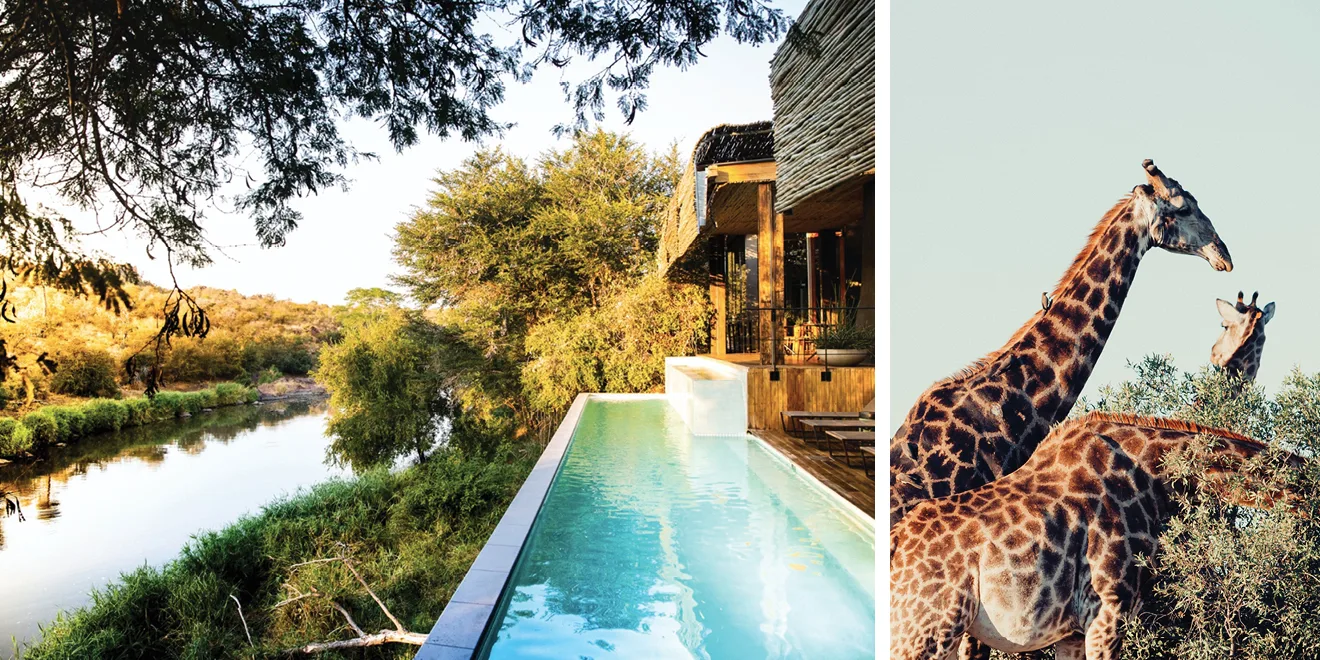
The Kruger National Park, as large around as Wales, is South Africa’s most popular wilderness space, a thicketed landscape crawling with elephants, buffalos and lions. On the outskirts of the park, several private conservancies offer more isolated experiences, such as the leopard-packed Sabi Sands Game Reserve. In the Kalahari, in the east of the country, Tswalu is an exclusive, privately-owned reserve, where red earth stretches for miles. It’s an arid, less animal-dense area, but more obscure and endangered animals like wild dogs, aardvark and pangolin can (sometimes!) be found. For a marine safari, De Hoop, a few hours east of Cape Town, has some of the best whale spotting in the country. The beaches are shockingly beautiful and rare bontebok antelope sometimes make an appearance.