If the eyes are a window into the soul, the house is a window into the mind. Even before the pandemic forced everyone into their domestic quarters, a visit to someone’s home has been the most apt shorthand for a 400-page biography on the person, offering a bounty of obsessive curiosities, peculiar particulars, and design fantasies made real, whether it’s a spare midcentury home with hilltop views or a London flat brimming with labyrinthine optical illusions. Luckily, for the nosy and design-curious, the world’s musées biographiques are open to visitors, offering a portal into the well-designed lives of modernist masters. From Carlo Mollino’s gilded Turin bachelor pad to George Nakashima’s naturalist woodland art complex in New Hope, Pennsylvania, there’s something humbling about the fact that many of the twentieth century’s greatest design minds seem to have preferred to live and work in rooms no larger than a pied-à-terre. To make a house a home, at least according to the Castiglionis and Eameses of the world, you just need to think outside four walls.
Museo Casa Mollino - Turin, Italy
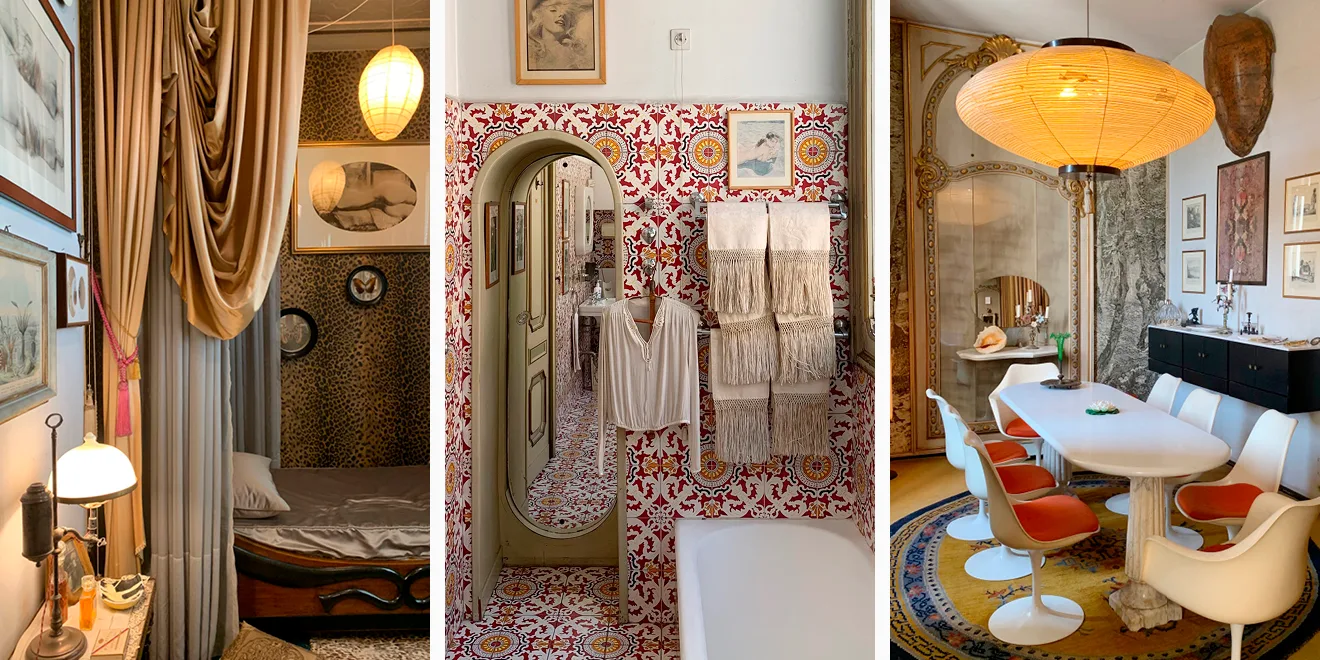
For eight years in the 1960s, the Italian architect Carlo Mollino designed a hidden apartment on the first floor of a nineteenth century villa in the heart of Turin for himself in secret. The eclectic, if not downright enigmatic, property is a monument of Mollino’s three obsessions: sex, death, and ornate furniture. Although the space has now been meticulously reconstructed into a private museum by the curator Fulvio Ferrari and his son Napoleone, Casa Mollino was originally built to become his “final residence,” a louche bachelor pad where Mollino hoped to spend his golden years surrounded by gilded egg-shaped mirrors and a framed collection of 316 taxidermied butterflies. Mollino died at the age of 68 before ever having spent a single night there, but any lingering melancholy in the space is drowned out by the spectacle of leopard-skin wall coverings and white fiberglass Tulip chairs by Eero Saarinen for Knoll. The house brims with Tollino’s singular brand of highbrow kitsch, which somehow feels equal parts an homage to the royal tombs of Ancient Egypt—a sleigh bed that sits on top of an aqua-blue carpet is meant to recall the boat that ferried dead souls towards the sacred city of Abydos—and Botticelli’s “The Birth of Venus,” with two giant clam shell statues perched suggestively on the outdoor balcony. Make sure to swing by the study, where drawers are packed with Tollino’s erotic Polaroids, which include a revealing portrait of a woman in a wedding dress, representing the imaginary wife the playboy architect said he planned to settle down with once he made it to the afterlife.
Studio Museum Castiglioni - Milan, Italy
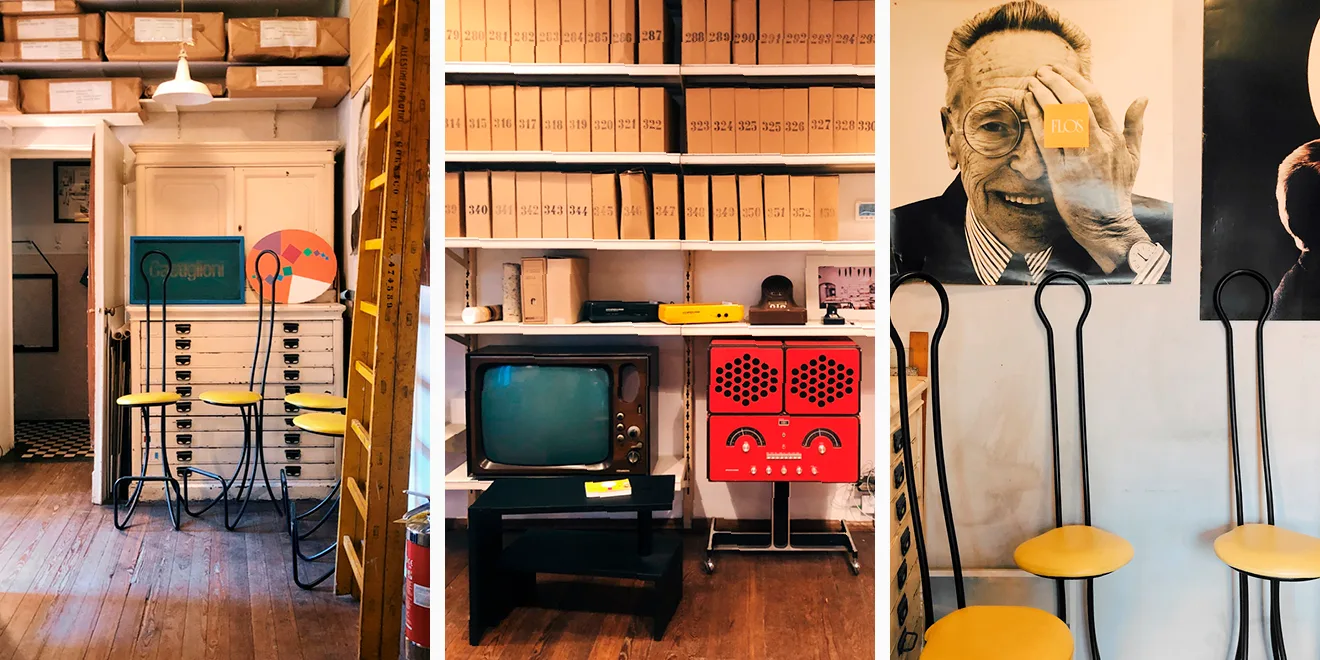
If you’ve ever been curious where real genius resides, head to the disheveled apartment that lives inside an eighteenth-century palazzo beside Parco Sempione, where Achille Castiglioni, one of the twentieth century’s greatest designers, lived, worked, and smoked cigarettes from 1944 until his death in 2002. The drawings, prototypes, material samples, and research books cluttering the studio’s four rooms are just as Castiglioni left them during his packed days creating objects like the Arco and Toio lamps, modernist mayonnaise spoons for Alessi, and other masterworks of industrial design that are still being produced today. More than merely a window into Castiglioni’s chaotic workflow, the space is a glimpse at the person behind the products; pinned on the wall, you’ll find doodles sketched by Castiglioni’s close friends, the designers Ettore Sottsass and Max Huber. His trusty Spirale ashtray, a silver bowl with steel springs, contains faint imprints from where he rested his office cigarettes for over three decades. If anything, the space, as haunting as it is inspiring, proves how much of the designer’s grand craftsmanship boiled down to the smallest of details. An oversized rectangular mirror, for example, remains tilted just at the precise angle Castiglioni kept to keep tabs on his assistants and the hullabaloo around him without ever getting up from his desk.
Sir John Soane's Museum - London
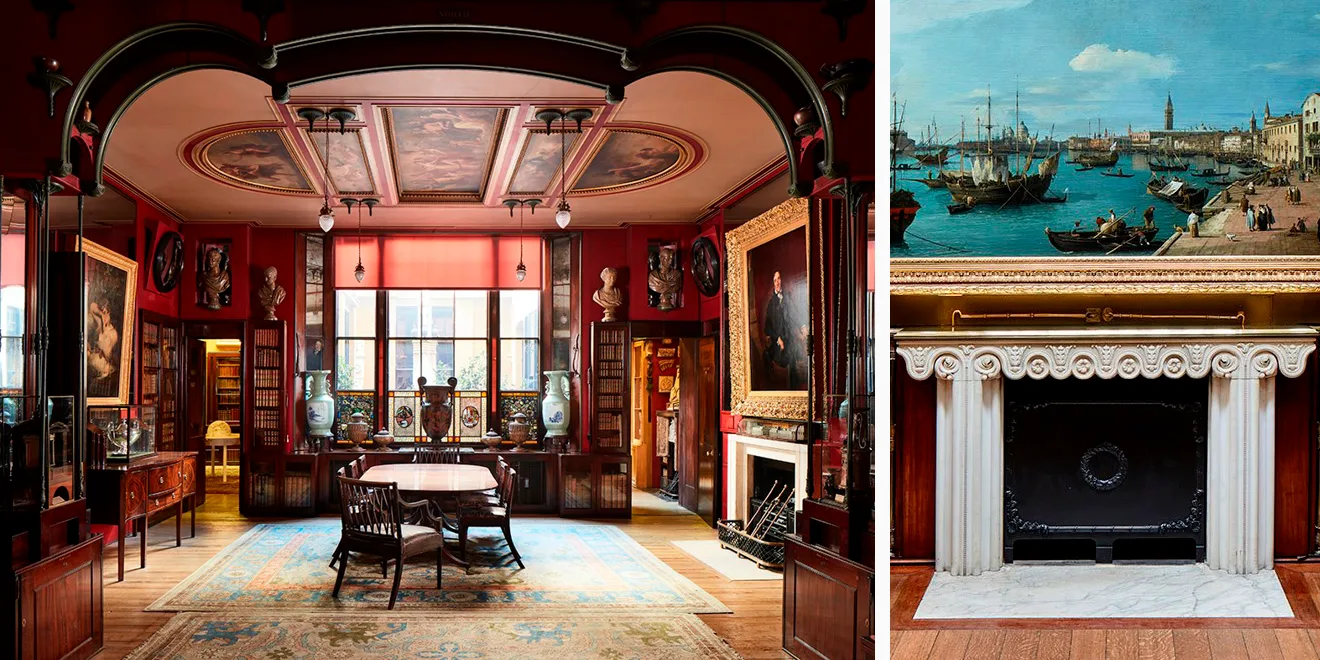
The best time to visit the historic house and library once belonging to the neoclassical architect Sir John Soane is after dark. Come night, the museum lights are dimmed and the dizzying collection of antique curios and interwoven rooms are illuminated solely by a constellation of small spotlights. The flickering shadows casted by the museum’s assortment of marble busts, Renaissance bronzes and medieval drawings seems to allow Sloane’s maze-like home, a trio of adjoining townhouses that were built between 1792 and 1824, to be experienced as he intended: a madcap rabbit hole of architecture and antiquities. In many ways, the building behaves according to its own set of metaphysics. In lieu of flat ceilings, there is a meticulous arrangement of arches, truncated domes and triangulated skylights. In rooms containing Sloane’s personal collection of ancient sculpture, sporadic windows in the ceilings create disorienting columns of vertical light. At first, a small breakfast nook appears to be illuminated by an octagonal skylight filled with panels of colored glass. In actuality, it’s an “illusion box” filled with tilted and concave mirrors, including some built discreetly into the fireplace or disguised as windows, that toy with light and shade for dramatic optical effect. Centuries after the house was built, it continues to offer new portals for the public to explore. This June, the house will debut a virtual-reality installation by the experimental architectural studio Space Popular, a bit of metaverse sorcery that promises to “bridge the technologies of Soane’s time and ours.”
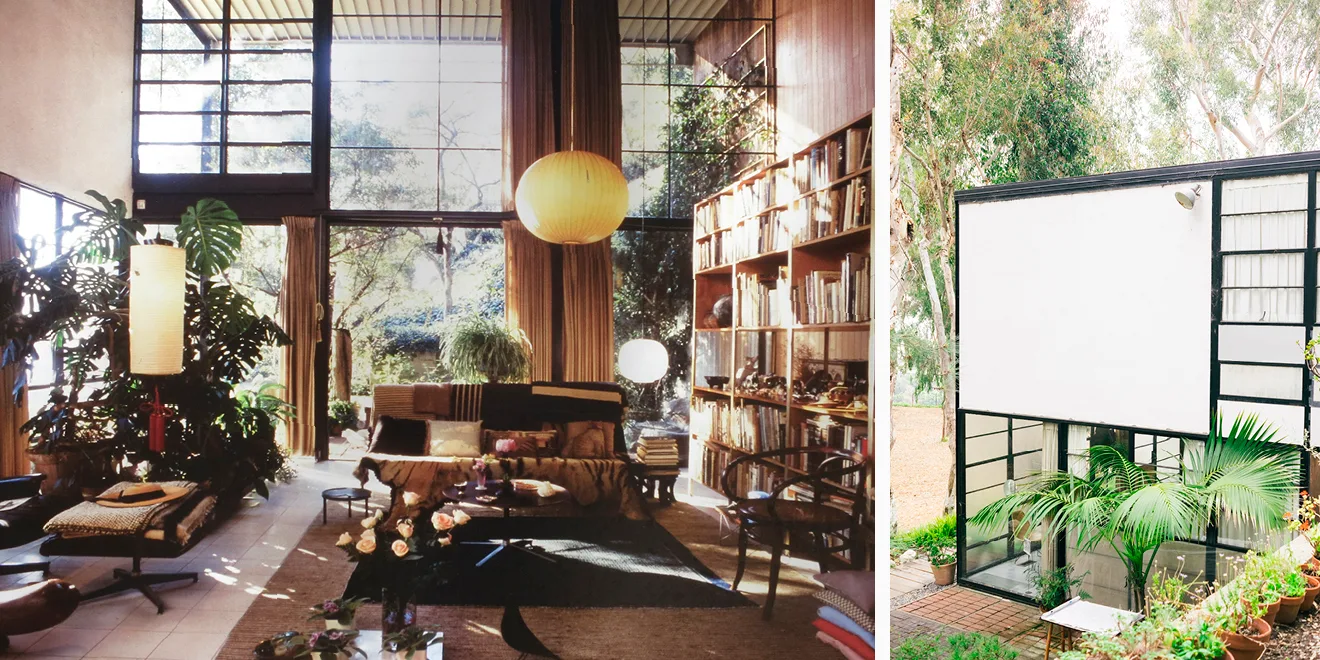
Eames House - Los Angeles
When minimalism so often equates to sterile design defined by negative space, the Eames House in Los Angeles remains a peerless example of bold pragmatism. Easily one of the most influential homes of the 20th century, the property was assembled in a eucalyptus grove in Pacific Palisades in 1949 with Ikea-like efficiency from readymade panels of glass, steel, and stucco. Charles and Ray Eames, the husband-and-wife design duo who built the home and lived there for the remainder of their lives, painted the blocks of electric blue and orange on the building’s graphic facade using cans of paint purchased from their local Sears. Pre-engineered Cemesto sheeting on the interior and exterior wall surfaces was used so the spindly trees enveloping the property could remain undisturbed. The Eames’s vast library of books, textiles, Mexican folk art, shells, rocks, and straw baskets remain inside the home as totems of the couple’s curiosity and creativity. Experts have pushed for the residence, which was deemed a National Historic Landmark in 2006, to be hermetically sealed in order to prevent deterioration. But conservation managers balked at anything that might suffocate the property’s personality. To this day, the house is maintained as the Eames kept it: Doors are left open, bringing light and fresh air to the array of potted plants; vases are constantly refreshed with bouquets of flowers, adhering to Ray’s preference for never displaying double azaleas or daisies with a ”too-large eye-to-petal ratio.”
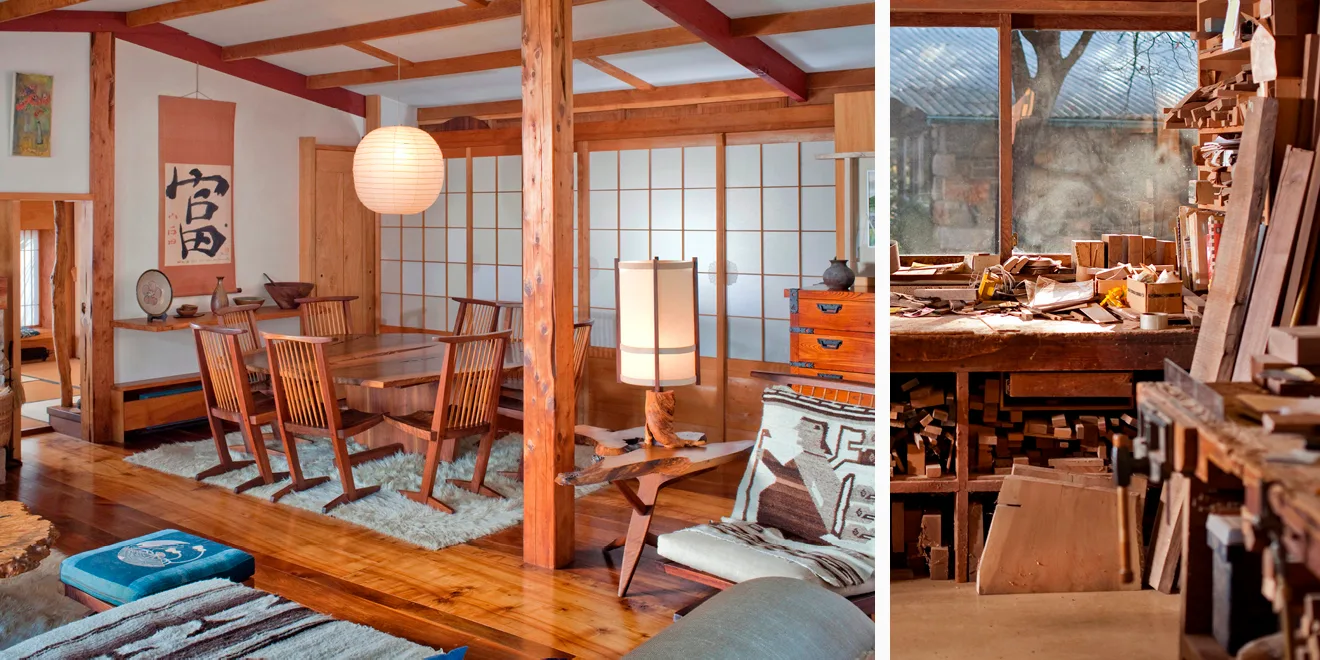
George Nakashima Woodworker Complex - New Hope, Pennsylvania
Before his death in 1990 at the age of eighty-five, George Nakashima, the Japanese-American architect and master craftsman, built a fourteen-building housing complex stretching across eight-point-eight acres of verdant land in New Hope, Pennsylvania. The grounds, where Nakashima’s two children continue to live and offer tours to visitors, are radical studies in Japanese craftsmanship and naturalism. Centered on a South-facing slope that Nakashima personally manicured into a cozy woodland, a constellation of artist studios and modest ranch homes are, in the Nakashima family’s hands, showcases for poetic gravel gardens, mid-century craft furniture, doorways in the shape of Japanese shrine gates and flooring made with scraps of black walnut. Beyond the tranquility, Nakashima understood the urgency of the present moment, allowing his cherry coffee tables and hand-whittled rocking chairs to double as defiant statements against the egoism and elitism of industrial life. In fact, Nakashima intentionally celebrated the wear and tear of furniture as reminders of the fragility of the trees from which they are designed.
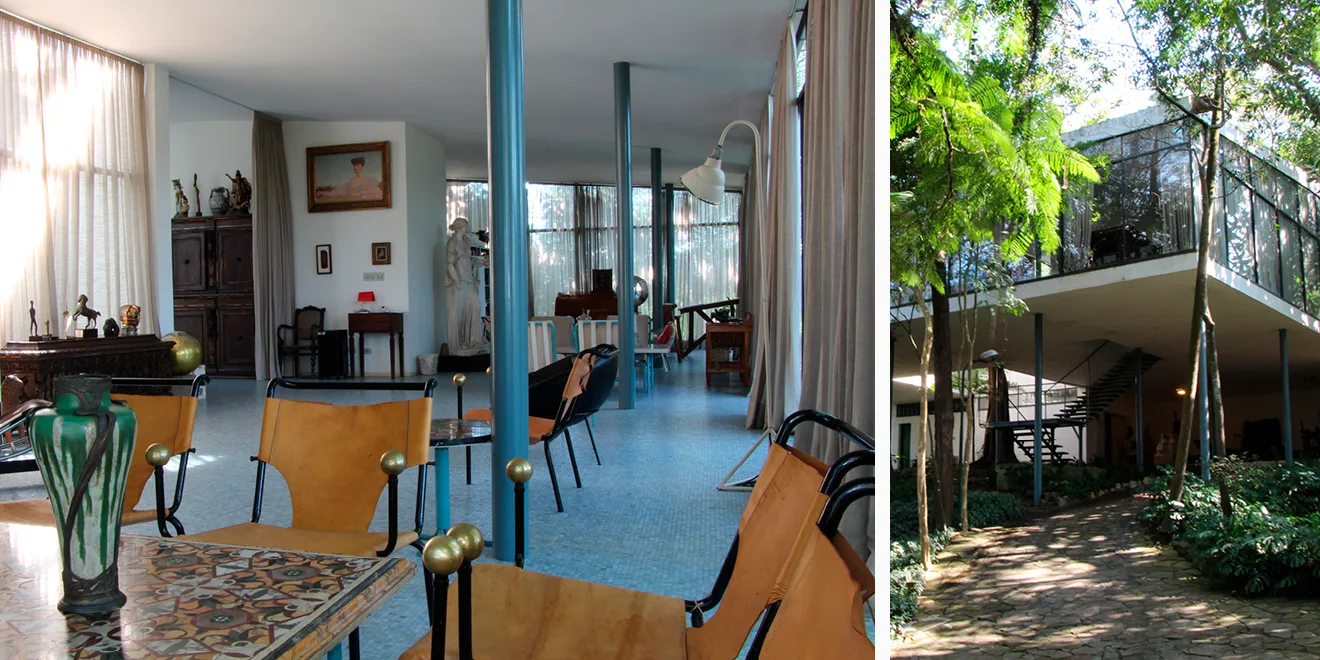
Casa de Vidro - São Paulo
Last year, the Italian-Brazilian architect Lina Bo Bardi became the first female architect to receive the Golden Lion award for Lifetime Achievement. Recognition of Bo Bardi is long overdue. One of the most important voices in postwar architecture, her legacy is largely due to two of her most monumental works: São Paulo Museum of Art (1968), a glass-paned rectangle suspended on two enormous concrete beams that levitates over a community plaza in the city’s main commercial avenue; and SESC-Fábrica da Pompéia (1986), an abandoned factory turned community center built from distinctive concrete towers bridged by jagged, conjoining skywalks. Yet, one of her most intimate (and overlooked) masterpieces happens to be her very first: a Modernist glass house known as Casa de Vidro, the São Paulo home she created in 1951 and shared with her husband, Pietro M. Bardi, for over forty years. Tucked away in one of São Paulo’s few urban rainforests, the Casa de Vidro (“House of Glass”) features glass walls that wrap around the first floor on three sides. When they slide fully open, Bo Bardi intended to blur the boundary between the works of art inside her home and the natural splendor outside it. More than just an escapist paradise, the glass house hosted some of the most creative minds of her generation, including Saul Steinberg, Alexander Calder, John Cage, and Gilberto Gil. In 1986, Bo Bardi built a new addition, the “casinha” (“little house”), a studio sitting on the southeast end of the grounds. Inside, sketches for a rooftop rain-water conservation system, which she planned to build before her death in 1992, serve as a final window into her brilliant mind.
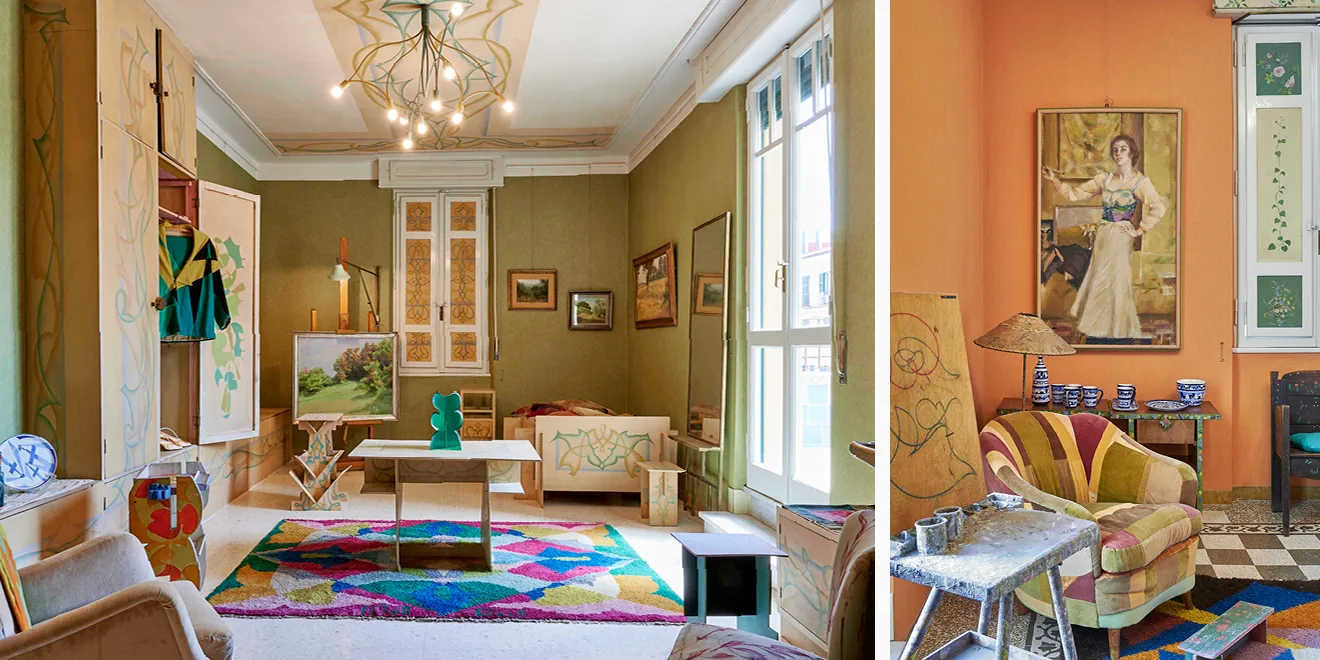
Giacamo Balla - Rome
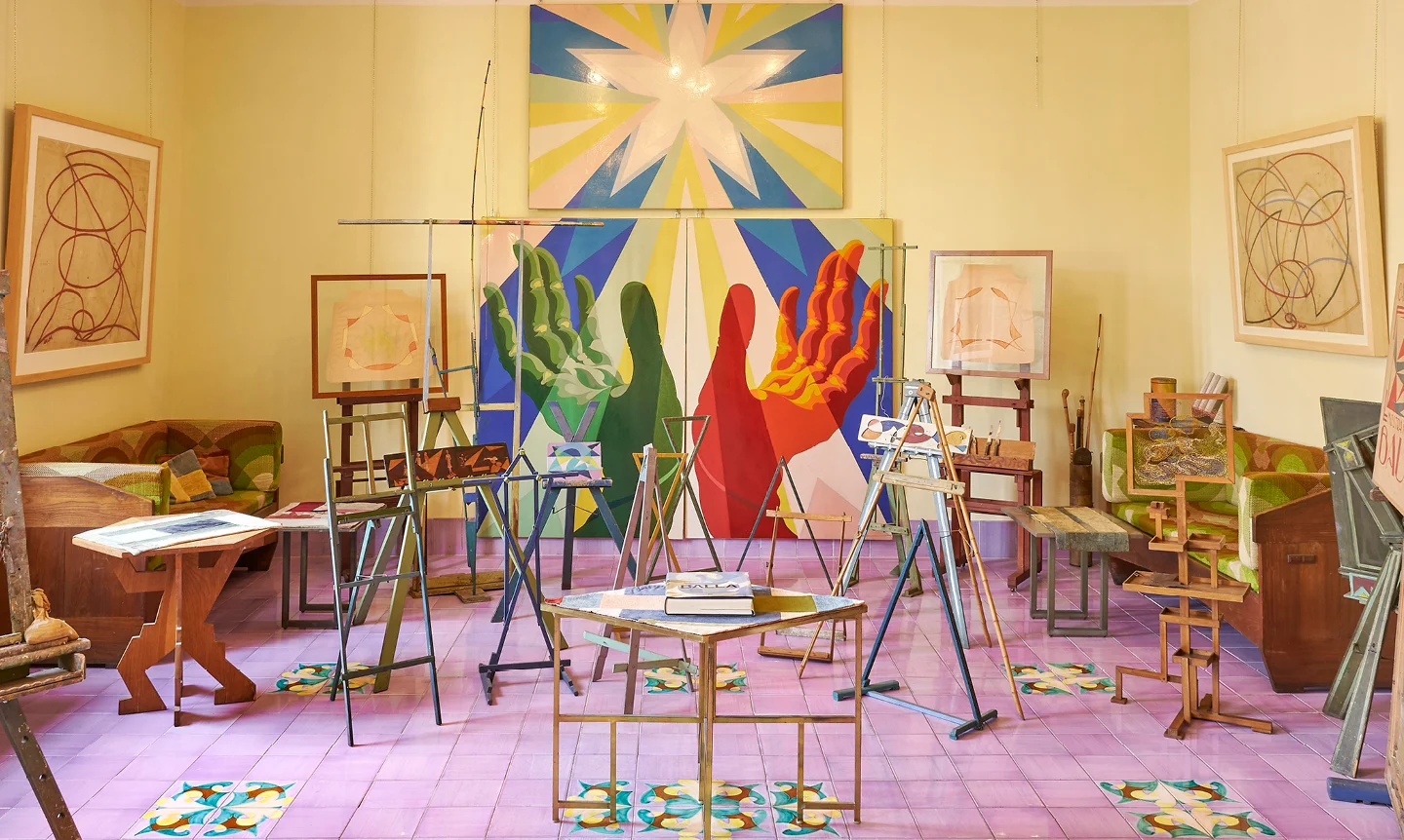
Last year, on the 150th anniversary of the birth of Italian futurist artist Giacomo Balla, curators at the MAXXI, the National Museum of 21st Century Arts in Rome, opened the doors of Balla’s apartment to the general public. But the house, where he lived from 1929 until the early 1990s with his wife, Elisa Marcucci, and their two daughters, Luca and Elica, is not so much a residence as it is a portal into a parallel universe. The Balla clan designed everything and the kitchen sink in rainbow hues, as if they took a communal acid trip and forgot to buy a return ticket. Hallways are painted bright peach overlaid with a pattern of green and yellow amoeba blobs. Anything too industrial, like unsightly water pipers, is masked by square panels splashed with abstract squiggles. Plexiglass ceiling lamps in the shape of clouds float above clusters of unripe banana-yellow armchairs, which, naturally, sit atop a ceramic tile floor of bright lilac. Within Casa Balla’s mural-lined walls, nothing is as it seems. Floral sculptures double as side tables. Desks resemble creatures from the Balla daughters’ fairytale books. Even kitchen utensils become handmade objets d'art. Taken as a whole, the cacophony of patterns and styles come together as a singular work of art, at once a fever dream and a unified family vision.