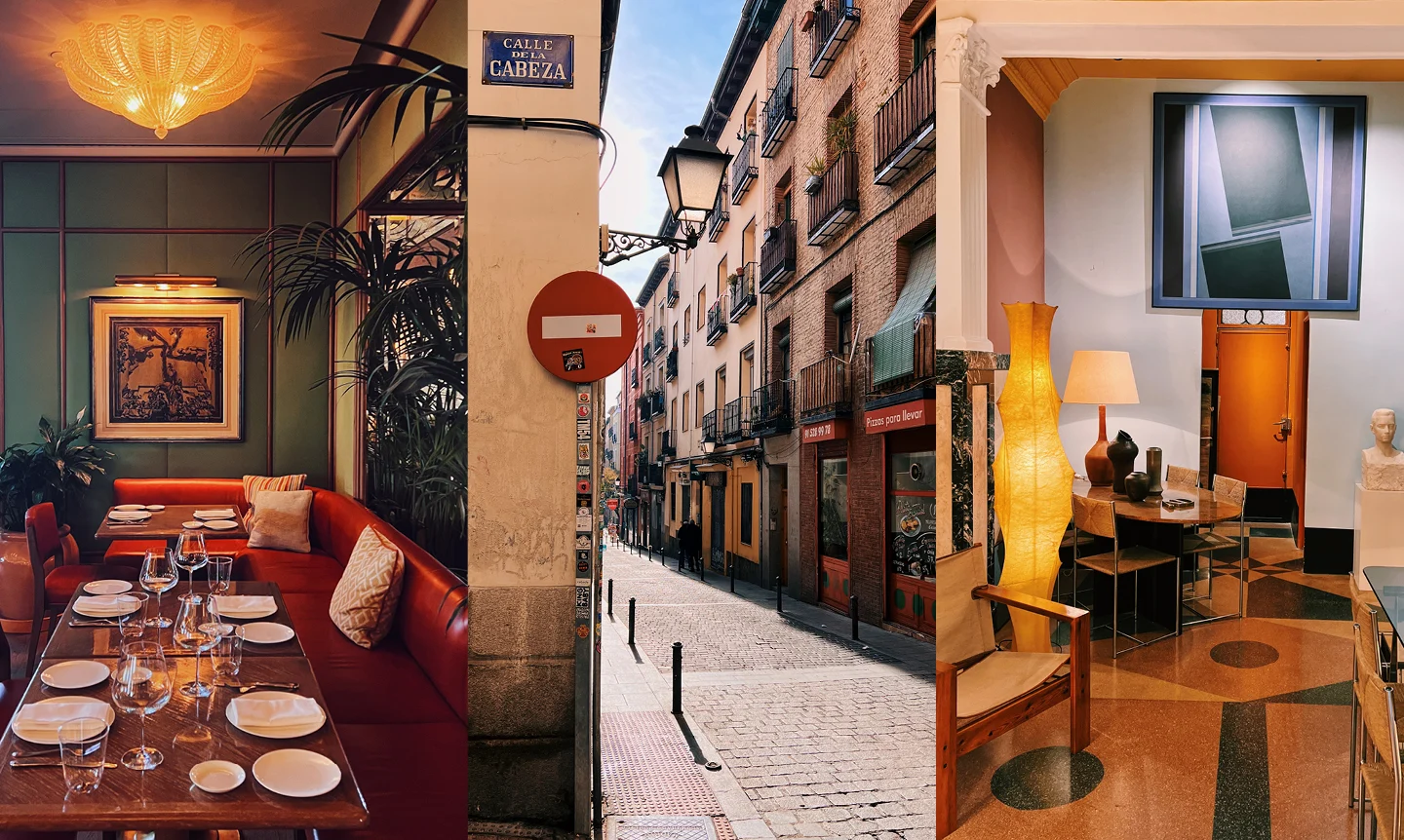
In a seemingly short time, Madrid has snatched from Barcelona the status of Spain’s most charismatic city, a development that is especially improbable and marked in its food and design scenes. Its restaurants combine tradition, the avant-garde and are the best value for money in Europe (Michelin-starred menus at neighborhood restaurant prices), luxury hotels are growing exponentially (Four Seasons and Mandarin Oriental have just opened their flagships, The Edition is on its way) and a new wave of creatives and artisans is reinventing contemporary Made in Spain from their small stores and workshops.
It’s the downtown neighborhoods where this vein of both tradition and new creativity is felt the most palpably. Los Austrias combines the dynastic imprint of the Royal Palace with the popular air of the Plaza Mayor; in La Latina, home to the El Rastro flea market, tapas is a way of life; Lavapiés, one of the most multicultural neighborhoods, has become artistic and cool; Las Letras, where the great writers of Spanish literature of the 16th century lived, is a food and local shopping destination; and Chueca and the adjoining Malasaña, combine culture, latest trends and fun in a bohemian and welcoming neighborhood. These addresses, classic and new, have a true appeal to visitors and locals alike. Here, a guide to the architecture, interior design shops, and 19th century salons of Central Madrid.
What to see in Central Madrid
Contemporary Art in Lavapiés
After visiting the Museo Nacional Centro de Arte Reina Sofia for a stop by Picasso’s dramatic 25-feet wide Guernica mural, the best way to take the pulse of the new Spanish contemporary art is to walk along the neighboring Calle Doctor Fourquet, in the middle of the emerging Lavapiés neighborhood, which houses a dozen galleries. Among them, do not miss three classics: the white temple of Helga de Alvear (Doctor Fourquet, 12), owner of one of the best collections in the country, Espacio Mínimo (Doctor Fourquet, 17) with its beautiful transgressive art, Moisés Pérez de Albéniz (Doctor Fourquet, 20), whose works occupy even its facade. For emerging art, two musts: Maisterravalbuena (Doctor Fourquet, 6) and Nogueras Blanchard (Doctor Fourquet, 4). Between exhibitions, sit for an espresso at Hola Coffee (Doctor Fourquet, 33), tapas at La Fisna Vinos (Calle del Amparo, 91) or a cocktail at the cool Savas Bar(Calle de la Sombrerería, 3).
Casa Museo Lope de Vega
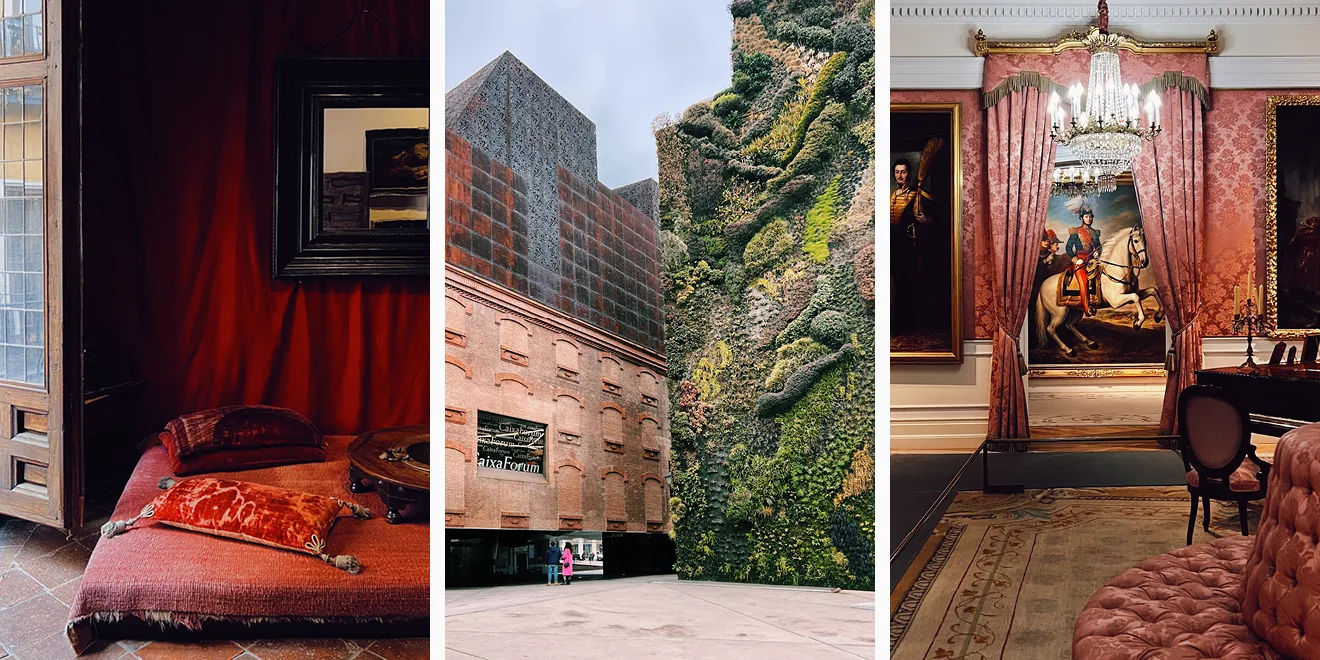
The house where Lope de Vega (1562-1635), a famed poet and playwright from Madrid who revolutionized world literature, spent the last 25 years of his life, is now a museum. On its three floors, period furniture, paintings of the 16th and 17th centuries, and part of the literary legacy he left to his daughter. The small back garden, with its flowers and trees, was a source of inspiration for Lope and, in the summer, the museum hosts theatrical performances of his works in it. Admission is free, but reservations are recommended. Calle de Cervantes, 11
CaixaForum
Housed in a 1900 brick power station that Swiss architects Herzog & De Meuron drilled into, covered with Corten steel and raised almost three meters off the ground, this exhibition center of the bank La Caixa now seems to float, giving a suggestive aesthetic contrast to the 200-year-old Museo del Prado just down the road. With a focus on design and contemporary culture, one of the more exciting exhibitions of the 2022 season will arrive in April, dedicated to the relationship and influences between the film and fashion industries through the eyes of Jean Paul Gaultier. Paseo del Prado, 36
Museo del Romanticismo
The Romanticism movement that swept Europe in the early 19th century, emphasized subjectivity and emotions, creative freedom and escapism. It made such an impact in Spain that it needed its own museum. In this small palace in the Chueca neighborhood, the daily life and customs of the time are recreated. Its 26 rooms display a large collection of furniture, porcelain, paintings, textiles, and everyday objects. A Spotify playlist created by the museum provides the intimate atmosphere needed to tour this cabinet of curiosities. Tea and homemade cakes are served in its garden. Calle de San Mateo, 13
Architectural Wonders
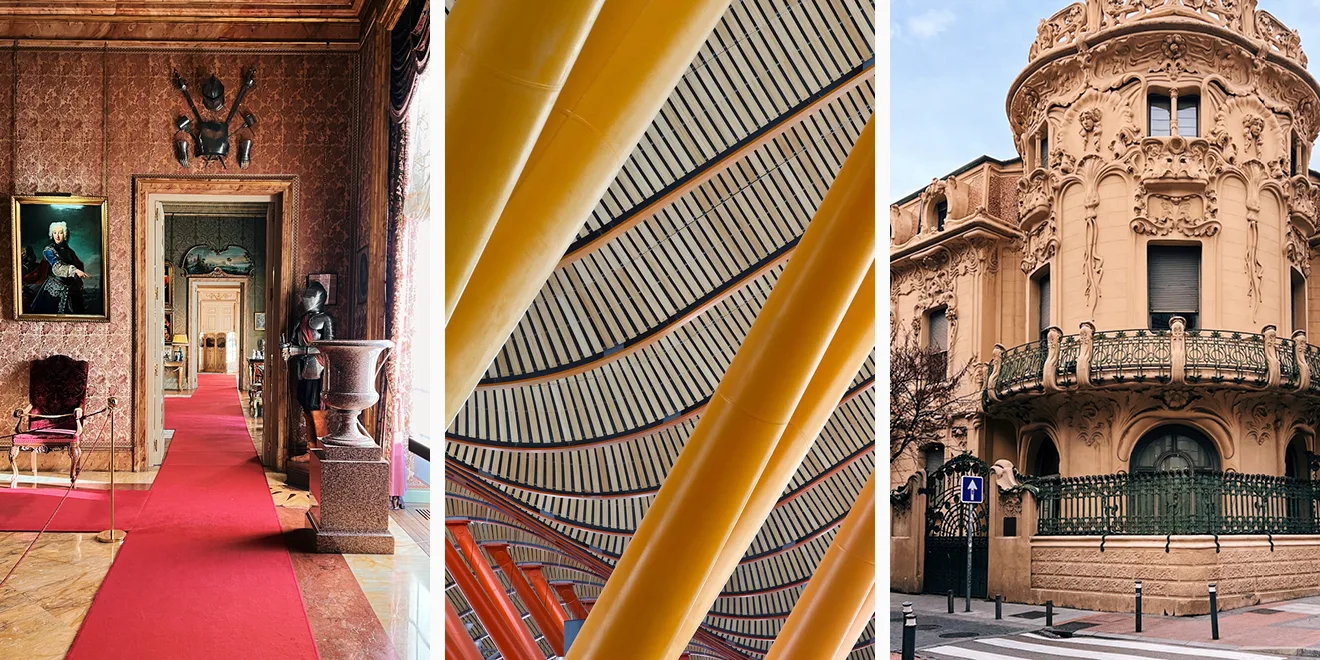
Landing at the cathedral-like, colorful Barajas Airport Terminal 4, designed in 1998 by Richard Rogers and Antonio Lamela, already suggests that Madrid's architecture is a source of inspiration. When it comes to grand mansions, the neoclassical Palacio de Liria (Calle de la Princesa,20) offers a fascinating tour of the 18th century, and the nearby Museo Cerralbo (Calle de Ventura Rodríguez, 17) has one of the great collections of 19th-century decorative arts. The Iberian version of Art Nouveau can be seen in the reddish façade with white columns of Cine Doré (Calle de Santa Isabel, 3) in Lavapiés, which houses the Filmoteca Española, and in the luxurious and ornate exterior of the Palacio de Longoria (Calle de Fernando VI, 4), headquarters of the Sociedad General de Autores in Chueca. On Gran Vía, the Edificio Capitol (Calle de Jacometrezo, 2) and its mythical neon light is the bastion of 1930s Art Deco, as is the Círculo de Bellas Artes (Calle de Alcalá, 42) and its impressive terrace crowned by a statue of the Goddess Minerva. In the 1950s, the era of the city's skyscrapers, the recently remodeled Edificio España (Calle de la Princesa, 19) is a neo-baroque mass of brick and limestone, 117 meters high, with views of the square of the same name.
Where to shop in Central Madrid
Oteyza
Having exported the mastery of the Basque couturier Cristóbal Balenciaga to Paris and the world in the ’40s and ’50s, and with the exception of Zara, Spanish fashion has had little international presence. Oteyza, a young fashion house founded eight years ago by Paul García de Oteyza and Caterina Pañeda, is changing this. Their work has been shown in the Florence and Paris fashion shows, vindicating classic Spanish fashion with a resounding contemporary twist. Their collections rescue historical garments such as the cape or the Cordovan hat, with movement, geometry and simplicity are at their core. Calle del Conde de Xiquena, 11, +34 914 48 86 23