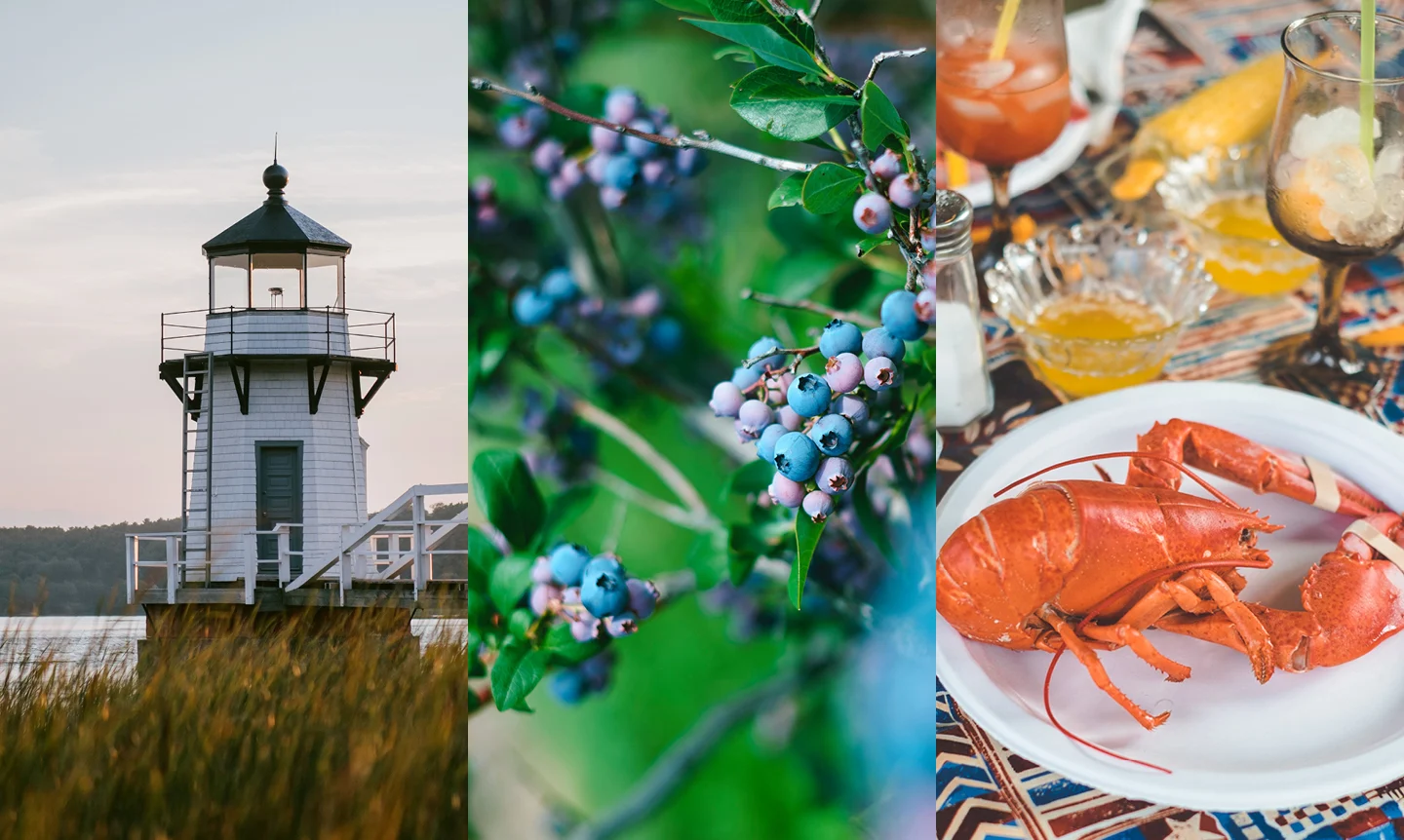
Thousands of years ago, the land that is now Maine was buried under a mile-high glacier which slowly moved across it, scraping away at the soil beneath. When the ice receded, the state’s signature rocky coast, rugged landscape, and acidic soil were left in its wake. Wild lowbush blueberries, which thrive on rocky terrain, naturally sprung up along the glacial outwash plains. Now the state is the largest producer of wild blueberries in the world, covering 44,000 acres with more than 1,500 varieties including the Sourtop, Polaris, and Bilberry.
These tiny, super-charged versions of the common, farmed (high-bush) variety thrive as they have for thousands of years. The berries are not picked but raked from the barrens where they grow using long-tined hand-held rakes, a backbreaking pursuit and probably best left to the professionals (these days most outfits have switched over to mechanical picking).
The season when they abound is also peak time to visit Maine, especially the coastline—longer than California’s. The Atlantic gets just warm enough to take a plunge, hikes are scented by balsam and sea air, and lobster pounds seem to steam around the clock. The berries are easy to find: sold off of card tables by the roadside, baked into pastries and pie, brewed into beer, cooked into jam. Or should you be curious to see a barren, point the car North, toward Cherryfield, the berry capital. As the season progresses, the berry fields turn crimson, making a stunning case for a late-summer foray. But here are the places to be, berries or not, during Maine’s short but incredible high season.

Bar Harbor
One of the state’s most beloved destinations and the gateway to Acadia National Park, this coastal town has long been a destination for the wealthy, who built (and continue to build) exquisite estates to escape the cities. It’s also a favorite for hardcore hikers, seafood cravers, and those needing time on the water. For the latter, the four-masted windjammers of the Down East Windjammer fleet are the known way to cruise Frenchman’s Bay under full sail. It’s particularly special at sunset, after which Abel’s Lobster—in a spruce grove on Somes Sound—is one of the best places to check all the boxes of a New England seafood feast: local oysters, lobster roll on brioche, and seawater-steamed lobsters with a pool of butter. Ice cream is ubiquitous in coastal Maine, but great ice cream is harder to find. At Mt. Desert Ice Cream the handmade scoops change with the seasons (but if it’s on the board, try the blueberry buttermilk). For a balanced dose of the outdoors, do a day or do at Acadia, where foot trails or horseback riding can culminate at the Terramor, a glamping retreat with well-appointed tents, a pool and hot tub, stargazing lectures, and a lodge with specialty cocktails. Or, if weather pushes a day indoors, walk the Abbe Museum—the only Smithsonian Affiliate in Maine—to learn about the Wabanaki Nations who not only first inhabited the region but were the first great cultivators of its wild berries.

Kennebunk and Kennebunkport
Kennebunk and it’s little port area across the bridge are picturesque villages divided by the Kennebunk River where shipbuilding once boomed and brought well-to-do sea captains and merchants to settle. The proximity to Boston and New York, abundance of clam huts, and long and wide beaches with mellow waves, make this a family favorite. The architecture, a staggering mix of Georgian homes, Colonial Revivals, and then shingled macro cottages make it one of the most beautiful. The historic White Barn Inn has been a fixture for 150 years, but don’t expect a musty country inn. A recent comprehensive redesign has given it a welcome lift (flagstone pool, in-room fireplaces), but its small size means it has retained its intimacy and charm. Little Barn, inside, has a small menu of well-executed bistro classics. But the dinner you’re really there for is Mabel's Lobster Claw. Around since the 50’s, the cove-front restaurant has a lobster stew lashed with sherry and cream, local steamers cooked in beer and, of course, heaps of fried seafood, all for eating on its tiny porch or wooden booths. On non-beach days, winding through the aisles at the Old House Parts Company, a treasure trove housed in a freight warehouse, are all antiques and architectural salvage dating back to the 1700s. And Snug Harbor Farm has five greenhouses for exploring, with a dovecote and a shop for hand-thrown terracotta pots and fresh bouquets.

Camden, Rockland, and Rockport
Two hours farther North, the Camden area is the jewel of mid-coast Maine, with excellent restaurants and antique shops. To get the lay of the land, hike or drive Mount Battie to take in the incredible view of Penobscot Bay and islands. Salt Water Farm, a breezy, oceanfront cooking school, has classes on Mexican food (owner Annemarie Ahearn spends a portion of each year in Mexico City) and Maine seafood among others, each concluding with a feast. It’s fortification for combing through vintage Irish fishermen's sweaters at Curator shop, or lugging home hefty but worthwhile prizes from Ank Ceramics, where mugs with chubby handles, pale pink dinner plates, and organically shaped vessels for wildflowers are among potter Ariela Nomi Kuh’s signatures. The best seats for dinner are on the deck of chef Sara Jenkins’ Nina June, where you can watch boats bobbing in Rockport Harbor while you start your Italian tasting menu with cheese and sparkling wine, or on a wool picnic blanket with dishes from Long Grain, a pan-Asian restaurant and market which features Maine-grown, raised, and caught ingredients. The spicy, Thai-inspired Night Market soup, larded with pork and peanuts, is just the thing to be spooning when the air cools.

Blue Hill, Brooklin, and Brooksville
These neighboring towns have a reputation as an artist’s enclave, and the close-knit year-round community has its fair share of painters, writers, and craftspeople. It’s less-touristy than other coastal parts, and a drive on Route 172 offers just enough cell service to pull up local real estate listings. Tinder Hearth provides excellent respite from a long drive in the form of wood oven pizzas (and, in the mornings, pastries and bread). The dining room is the garden—picnic tables arranged around the property are yours for the claiming—and the sole dessert is an ice cream sandwich. In high season, ordering ahead is essential; the phone lines open at 9am each Tuesday for the week ahead. After a morning flat white with beans roasted nearby at Bucklyn Coffee, Blue Hill Books is a well-stocked independent store, fitting for a place with a long legacy as a writers’ haven (E.B. White wrote Charlotte’s Web from his saltwater farm in town). The Brooklin Inn has four sweet, simple rooms and a restaurant with an equally wonderful, simple bistro menu (salt cod brandade, local rib-eye with salsa verde) heavy on local ingredients. Or if you’re up for a drive, down at the tip of Deer Isle is Aragosta at Goose Cove, a special occasion place with a parade of marvelous dishes that source religiously from the surrounding fields and water. The view from the deck is vacation-making, and Aragosta also has a smattering of elegant cottages and four guest suites if you’d rather—for however long—put off the drive back.