On some evenings in pre-pandemic times, when one still sought the proximity of other people, the line of guests in front of Paris’ Bouillon Pigalle would reach around the corner. On all other evenings since the restaurant opened in 2017, it has been only marginally shorter.
There are several reasons for the rush to fill the 320 seats in the former red light district of Pigalle. One is prices almost ridiculously low for the French capital and its signature dishes. Nearly all starters cost less than five euros, and most main courses less than ten. Another is the simple, honest Parisian home cooking, such as grilled marrow bones, onion soup au gratin, boeuf bourguignon, and veal blanquette with rice, all accompanied by artisan sourdough baguettes. The desserts to finish are equally comforting and familiar: éclair au chocolat (2.90) or tarte tatin (3.60). And yet, it wasn't just because of the excellent value that “le tout Paris” flocked to Pigalle. There was also the nostalgic retro concept that the term "bouillon" conveys. In a bouillon, a type of restaurant that once teemed in Paris in the 19th century, one would not only be served the strong beef broth from which it takes its name, but also traditional fare, quickly and at reasonable prices.
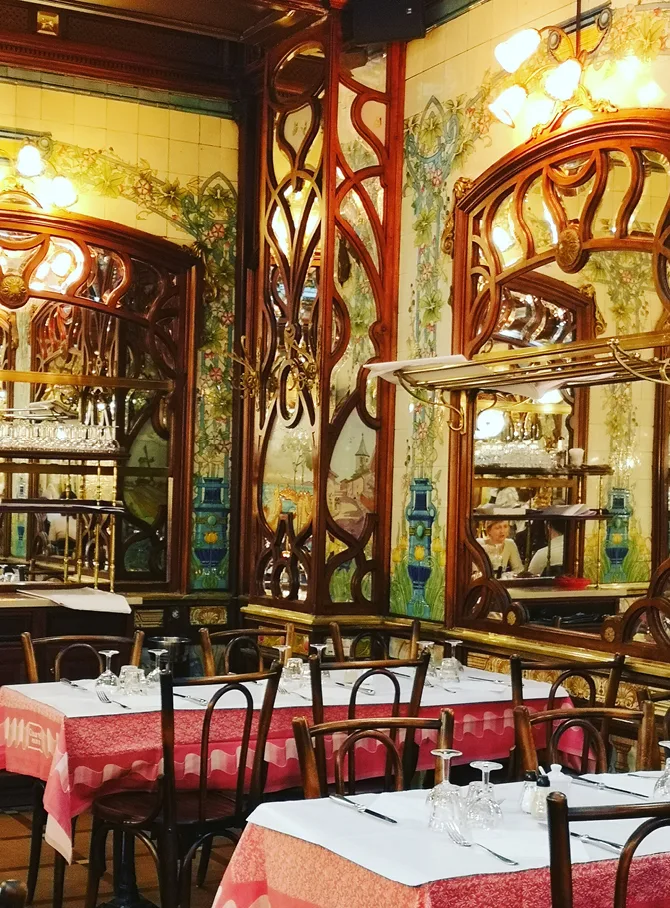
Of the some 250 establishments of this type that once existed in Paris, only one had survived to the present day: the legendary Bouillon Chartier on Rue du Faubourg-Montmartre, near the Palais Garnier opera house. But then, the opening of the Pigalle triggered a veritable new boom. Lately, several more bouillons have opened or been revived, some of them in magnificent premises from the time of the Belle Époque and the Art Nouveau. Among these are the Bouillon Julien, Le Petit Bouillon Pharamond, and the Bouillon Chartier Montparnasse, an offshoot of the aforementioned. Pigalle is the most contemporary in design, though they couldn’t help but rely on classic patterns.
Not long ago, those who managed to get a seat would sit, as befits Paris, very close to one another on long red benches and under hat and coat racks. The atmosphere was exuberant, the noise level obviously high, but correspondingly coherent. The quick and, contrary to the usual Paris clichés, friendly waiters wore (according to the clichés) long white aprons and traditional rondins, tight black gilets with lots of little pockets on them, and moved elegantly, almost like dancers, between the rows of closely standing tables.
There is a high probability that this type of restaurant will be at least as popular post pandemic. And for that, too, there are several reasons. For many, it's not the food which they missed most during the months of restaurant closures, but the experience: the atmosphere, the conviviality, to see and meet other people—things for which the bouillon stands as much as its classier counterpart, the traditional Parisian brasserie.
The two types of eateries are similar in many ways. Both differ from the modern restaurant in the sense that their chef is usually unknown by name, but there to master the classics and to manage a kitchen brigade. (At Pigalle, there are 25 chefs in addition to more kitchen staff.) It takes craftsmanship and personal restraint, and apart from Paris, there are only a few cities where skilled staff can be found in sufficient numbers to operate a restaurant of this type and size. Bouillons and brasseries are the home of the familiar, and yet also a certain form of impersonality that distinguishes them from any restaurant or the much more intimate bistro.
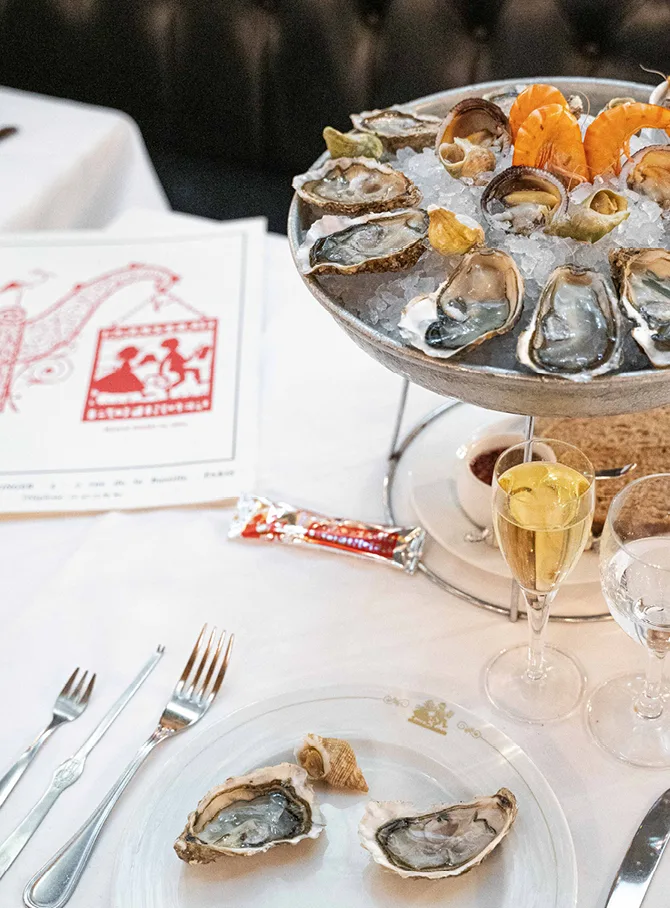
Just like bouillons, brasseries originated in the second half of the 19th century. At that time, after France's defeat by the Prussians and the accompanying loss of Alsace-Lorraine, numerous Alsatians and Lorrains loyal to France emigrated to Paris, where they opened breweries (brasserie = brewery). Over the years, beer took a back seat and the brasseries became more bourgeois. Today, in addition to the classic dishes that can be found in a bouillon, such as boiled calf's head with its sauce gribiche, choucroute garnie, or entrecôte with French fries, they also offer, unlike a bouillon, sumptuous seafood plateaus and lobster dishes, foie gras, and an extensive wine list.
There is one not insignificant commonality between a bouillon and the restaurant: the designation. Just like bouillon, the term “restaurant” once simply referred to a hearty, concentrated beef broth—with a reputation for strengthening and building one up—which was the only dish able to be purchased at food service places in Paris at the time of the Revolution. It was only when one “restaurateur” managed to get permission by law to sell other dishes that the restaurant in its current form was born.
Recently, the creators of Bouillon Pigalle have taken over a traditional brasserie, the long-established Chez Jenny near the Place de la République, with 420 seats and an opulent interior design from 1932. The new Bouillon République is scheduled to open before the end of the year, and without a doubt, Parisians will flock there as well. Just like in the Pigalle, they will not necessarily come for cuisine unparalleled in excellence or to be surprised by the chefs’ new creations. They will come to eat familiar food in a familiar atmosphere and to celebrate their city—a city that is not only the birthplace of the institution of the restaurant, but also where eating out and together is celebrated as in no other.
Paris’ Most Beloved Brasseries and Bouillons
Where to find traditional French comfort cuisine in typically flamboyant historical settings.
La Poule au Pot
Two years ago, star chef Jean-François Piège took over this 80-year-old brasserie in the neighborhood around the former market halls. Since then, it offers one of the best versions of traditional cuisine in the capital, with onion soup, frog legs and a silver-plated serving trolley. Reserve several weeks in advance. 9 Rue Vauvilliers
Bouillon Chartier
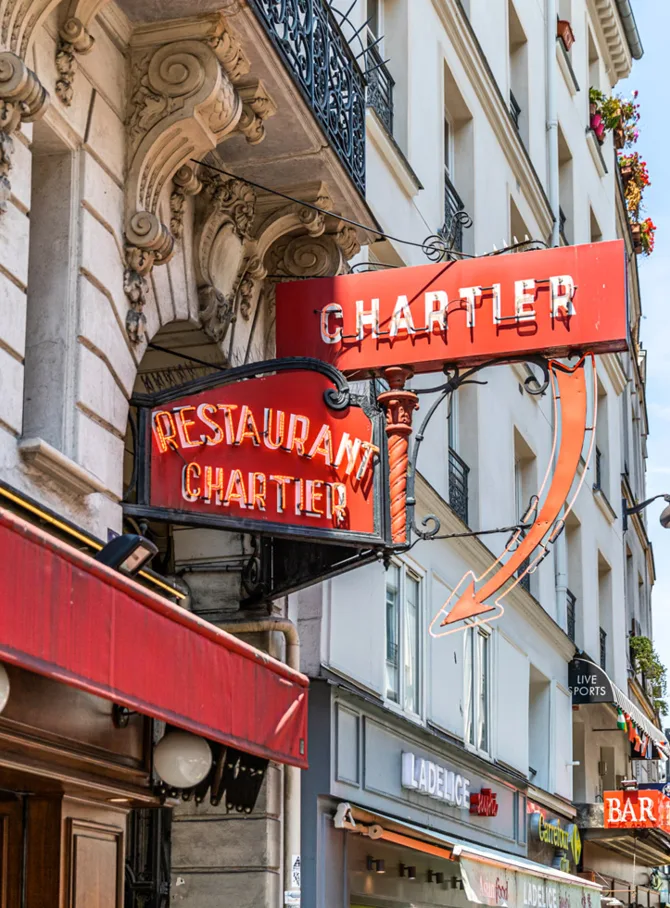
For a very long time, and until the renaissance of the bouillons a few years ago, Chartier was the only remaining establishment of its kind in Paris. The pricing is extremely low, the stunning décor unchanged since the Belle Époque, the "ballet des serveurs" downright dizzying. 7 Rue du Faubourg Montmartre
Bouillon Chartier Montparnasse
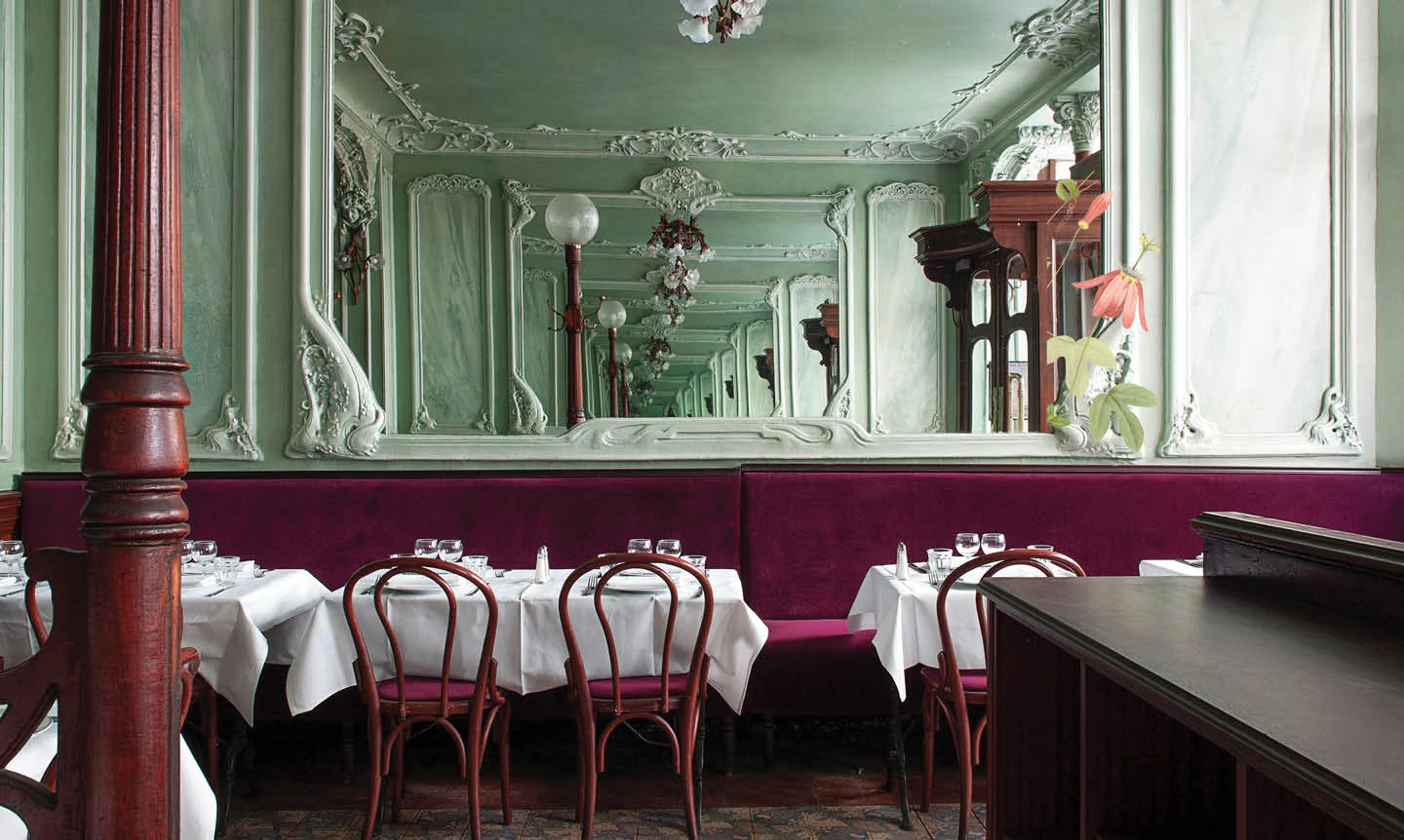
After the great success of their first restaurant in the Montmartre district, the Chartier brothers opened a second in 1903 in what was then the artists' district of Montparnasse. They furnished it in the Art Nouveau style and sold it a few years later. Since then, it has changed owners and names several times until the current operators of Chartier Montmartre bought it back two years ago, to more success. 59 Boulevard du Montparnasse
La Closerie des Lilas
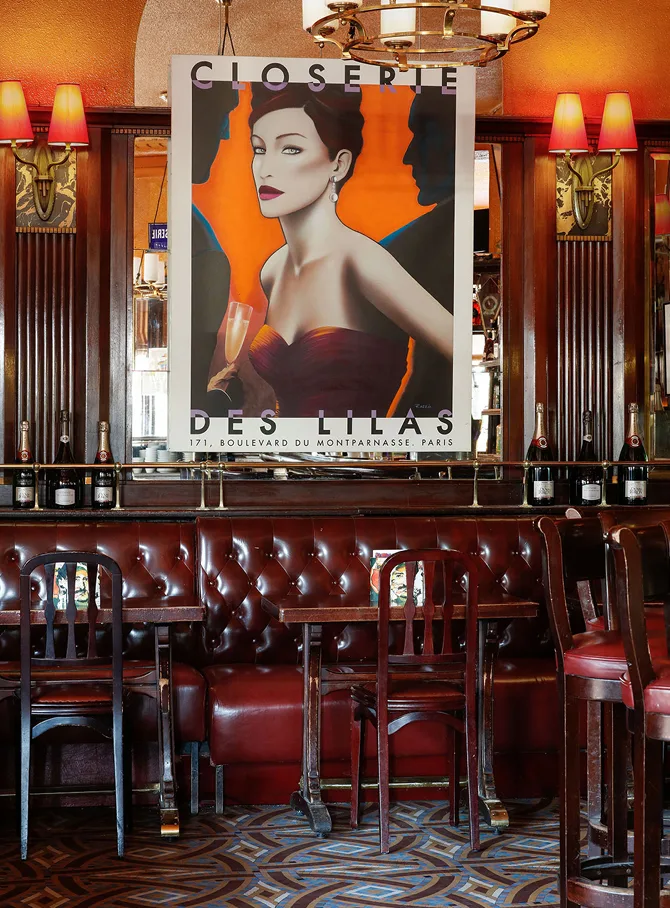
An elegant upscale brasserie with corresponding prices, the Closerie's beautiful space at the end of the Jardin du Luxembourg in Montparnasse is also famous for its magnificent bar. 171 Boulevard du Montparnasse
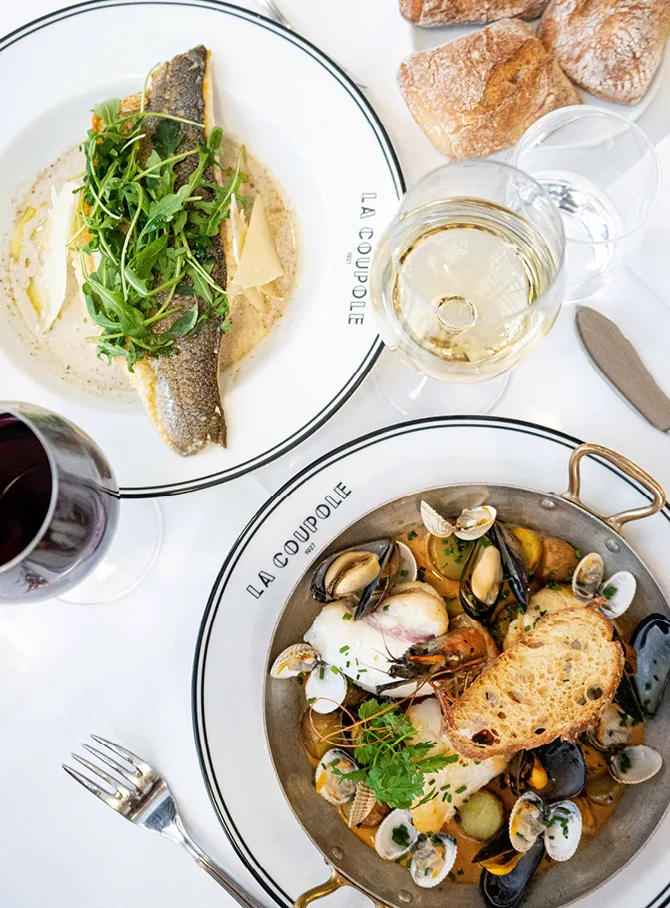
La Coupole
A spacious brasserie steeped in history in the former artists' district of Montparnasse, its splendid Art Deco style of the late 1920s is worth a visit on its own. So are the magnificent paintings by local artists from the same period on the nearly 30 columns of the dining room. Find brasserie classics like choucroute (sauerkraut with smoked meat and sausages) and lamb curry, but also a spectacular selection of seafood plateaus. 102 Boulevard du Montparnasse
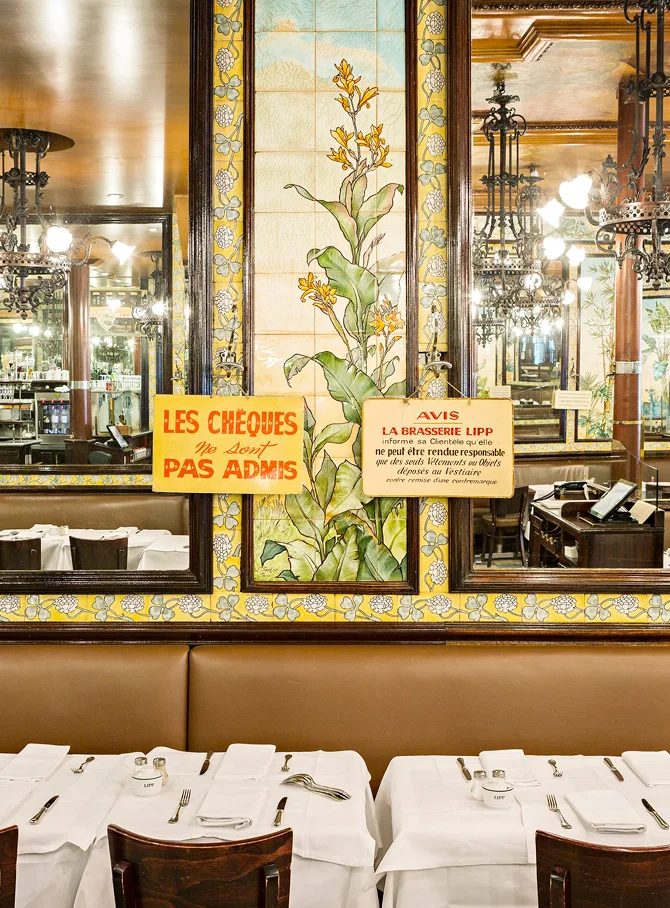
Brasserie Lipp
This beautiful, two-story-brasserie dates from 1880 and is located in the former literary district of Saint-Germain. It is frequented to this day by numerous writers, personalities and politicians, who come to enjoy traditional Parisian cuisine of Alsatian origin, such as cervelas rémoulade and Bismarck herring. 151 Boulevard Saint-Germain
Le Train Bleu
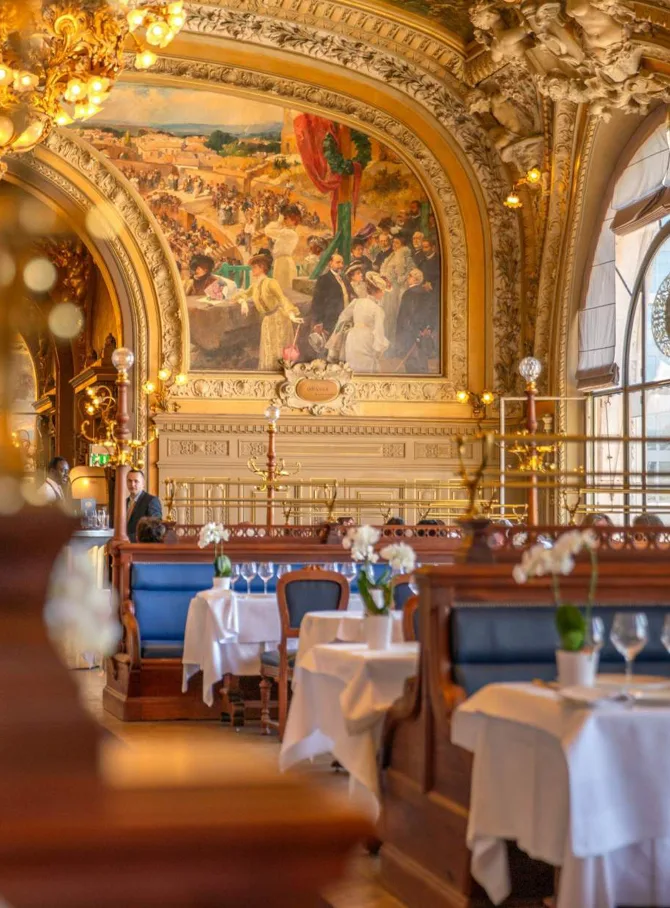
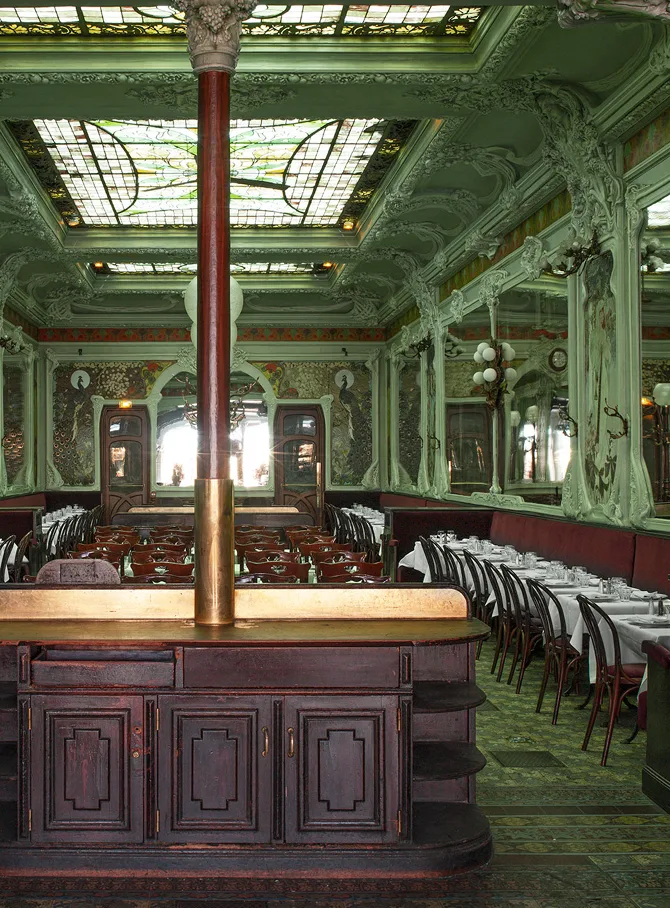
Since a new takeover a few years ago, the cuisine has been overambitious for a brasserie-style restaurant. But the flamboyantly and breathtakingly decorated Belle Époque dining room alone is worth a visit—undoubtedly one of the most beautiful restaurants in the whole world. Place Louis-Armand
Bouillon Julien
It was only a few years ago and following the general trend that the concept of Julien was changed to a bouillon. Decently prepared dishes come at extremely reasonable prices, but above all, the setting is stunning and Art Nouveau-like. 16 Rue du Faubourg Saint-Denis
Bofinger
One of the great classics of Parisian brasseries (it was allegedly the first place in Paris to serve beer on tap), Bofinger is also listed as a historic monument. It has a large and varied range of sauerkraut dishes and abundant seafood offerings. 5-7 Rue de la Bastille